Application guides
Each guide names the hardware for one application, shows where the sensors go, and lists the checks that prove the readings before anyone relies on them.
Energy and cost allocation
Energy monitoring-
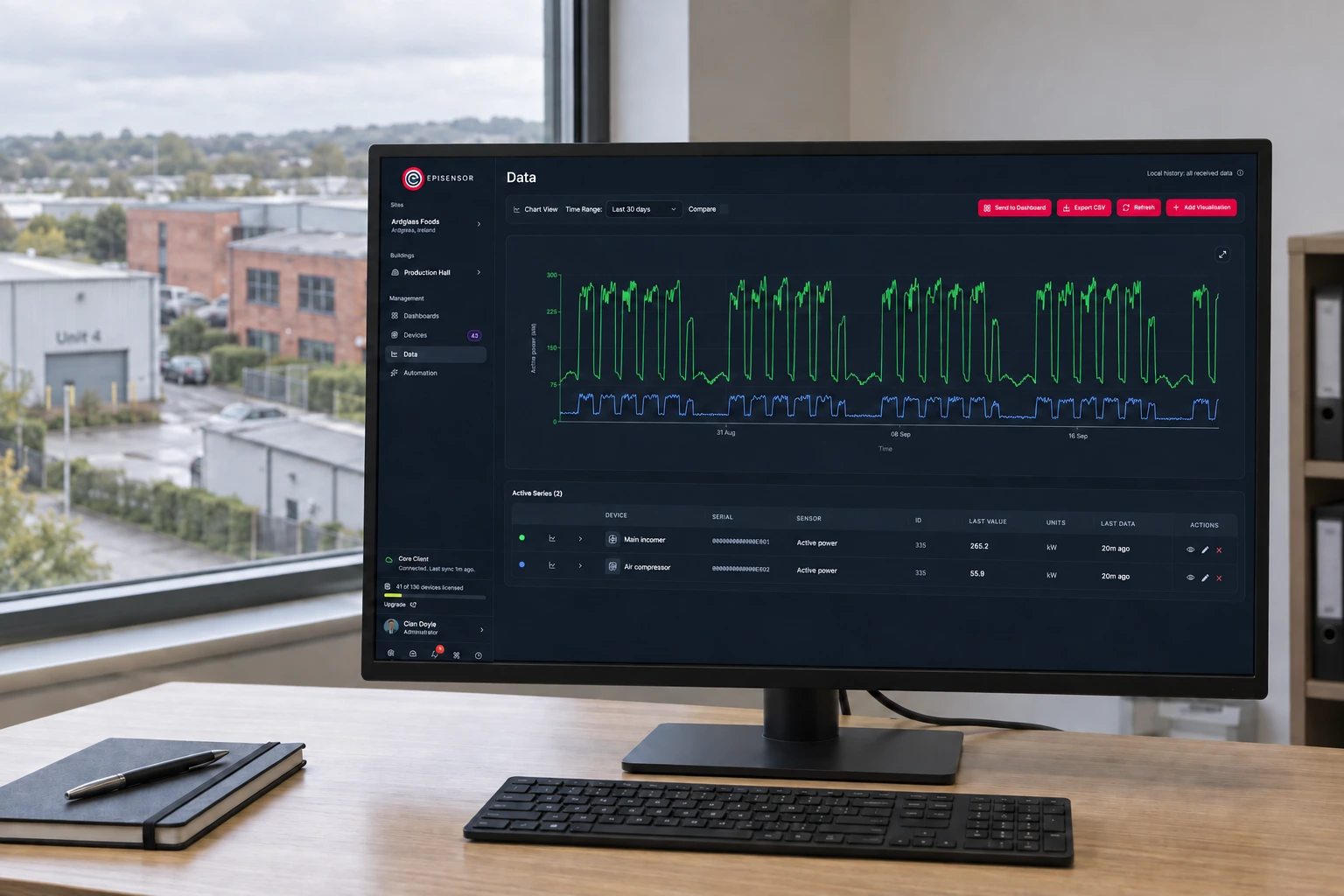
Multi-site energy monitoring
A Gateway on every site supports remote energy monitoring with local data continuity, a consistent point register and named owners for connections, credentials and change. -
Building energy management systems (BEMS)
Use the Gateway to build a trustworthy operating record across meters, HVAC, lighting and indoor conditions, with explicit point ownership, alarm response and control authority. -
Hotel energy management systems
Build a trustworthy energy and operating record across guestrooms, central plant and guest facilities without taking authority from approved hotel systems. -
Industrial energy monitoring
Measure significant energy uses alongside production context so engineers can separate operating changes, waste and genuine performance improvement. -
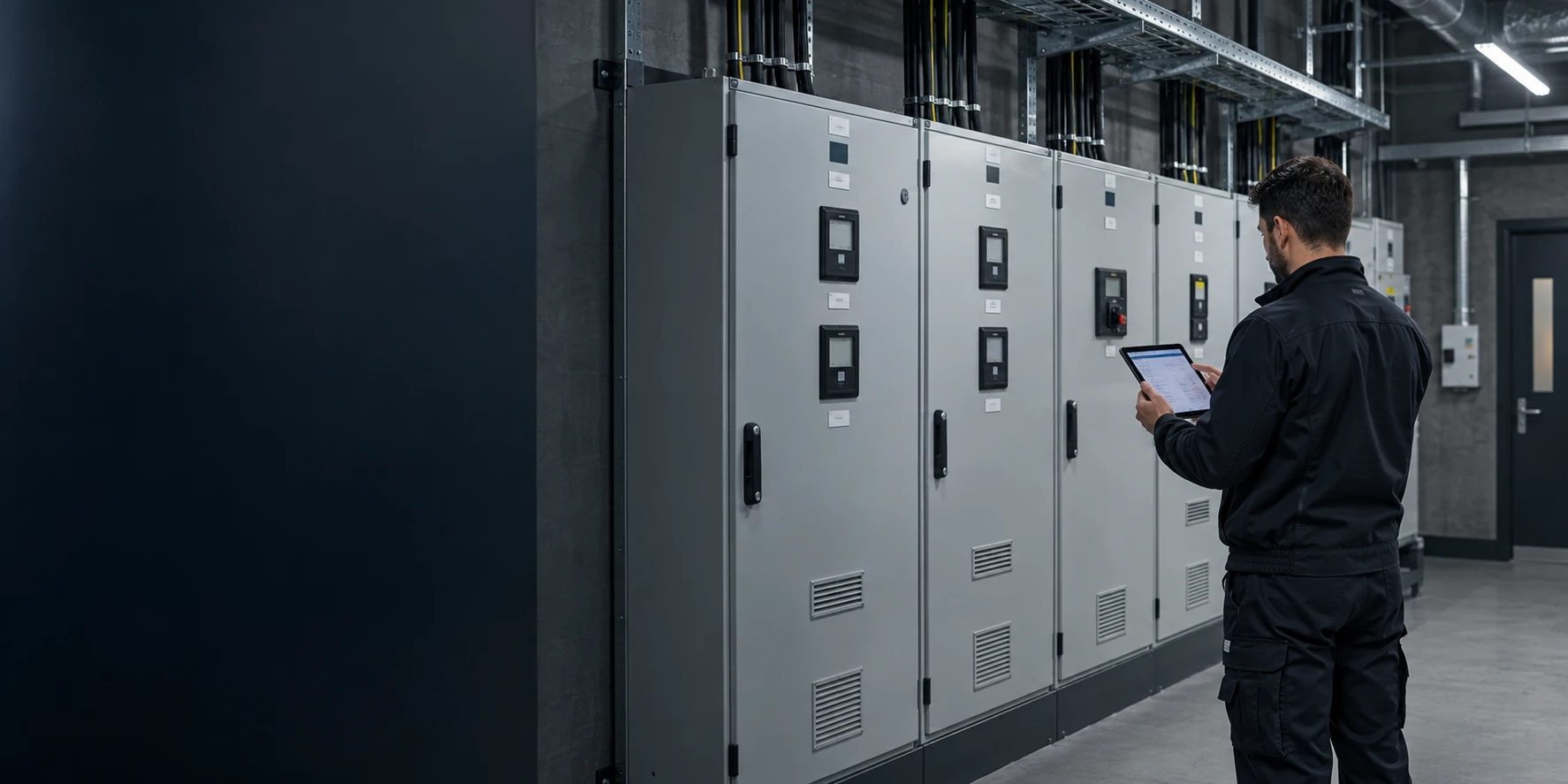
Tenant submetering and cost allocation
Meter each tenancy, the landlord supply and common services, and export a dated record that reconciles with the main meter. -
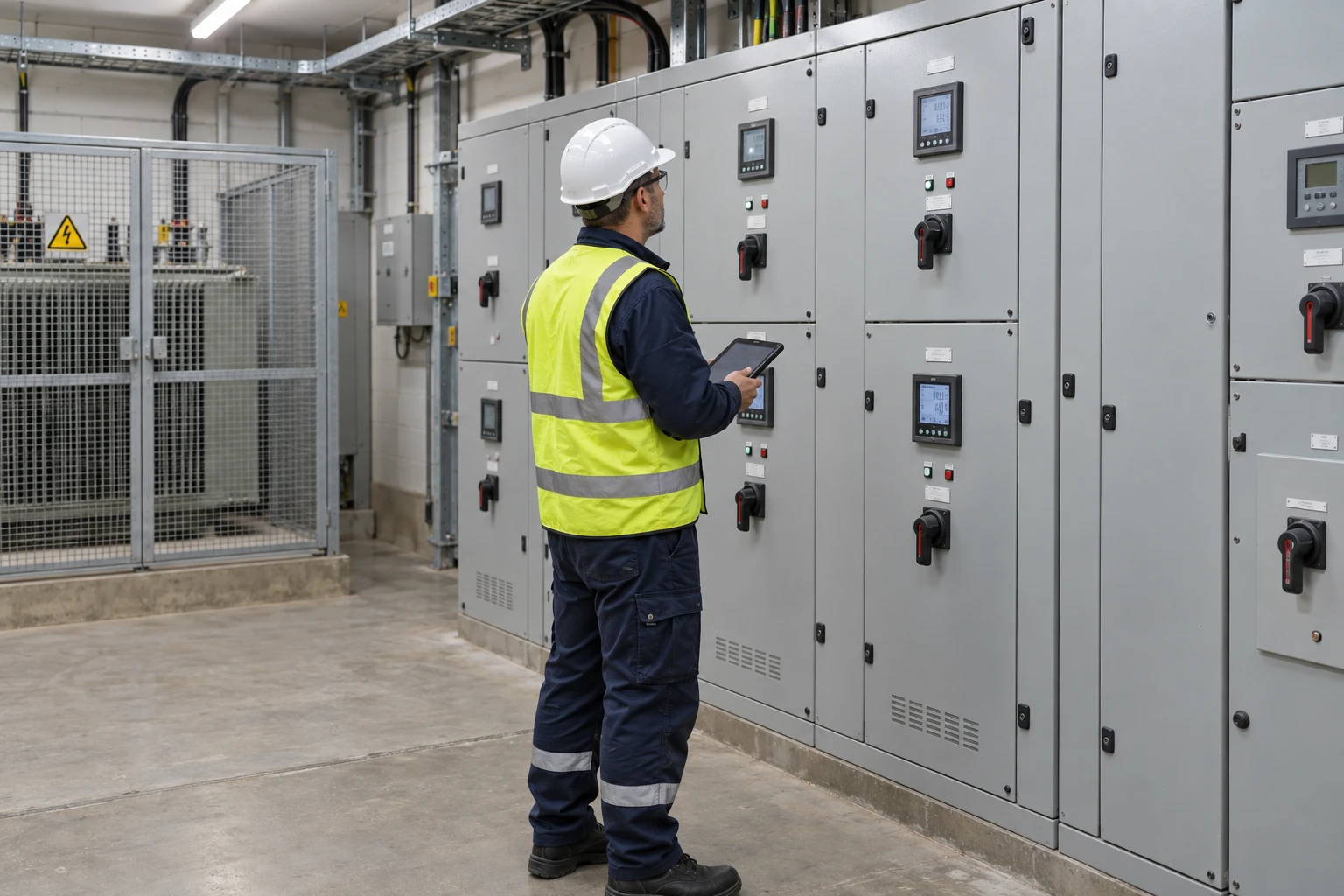
Transformer and distribution board monitoring
A meter at the incomer, meters on the feeders worth explaining, and a temperature probe where loading has to be read against heat. -
Power quality and transformer capacity monitoring
Combine a suitable power quality instrument with demand, phase loading and temperature records to investigate disturbances and make a cautious transformer headroom assessment. -
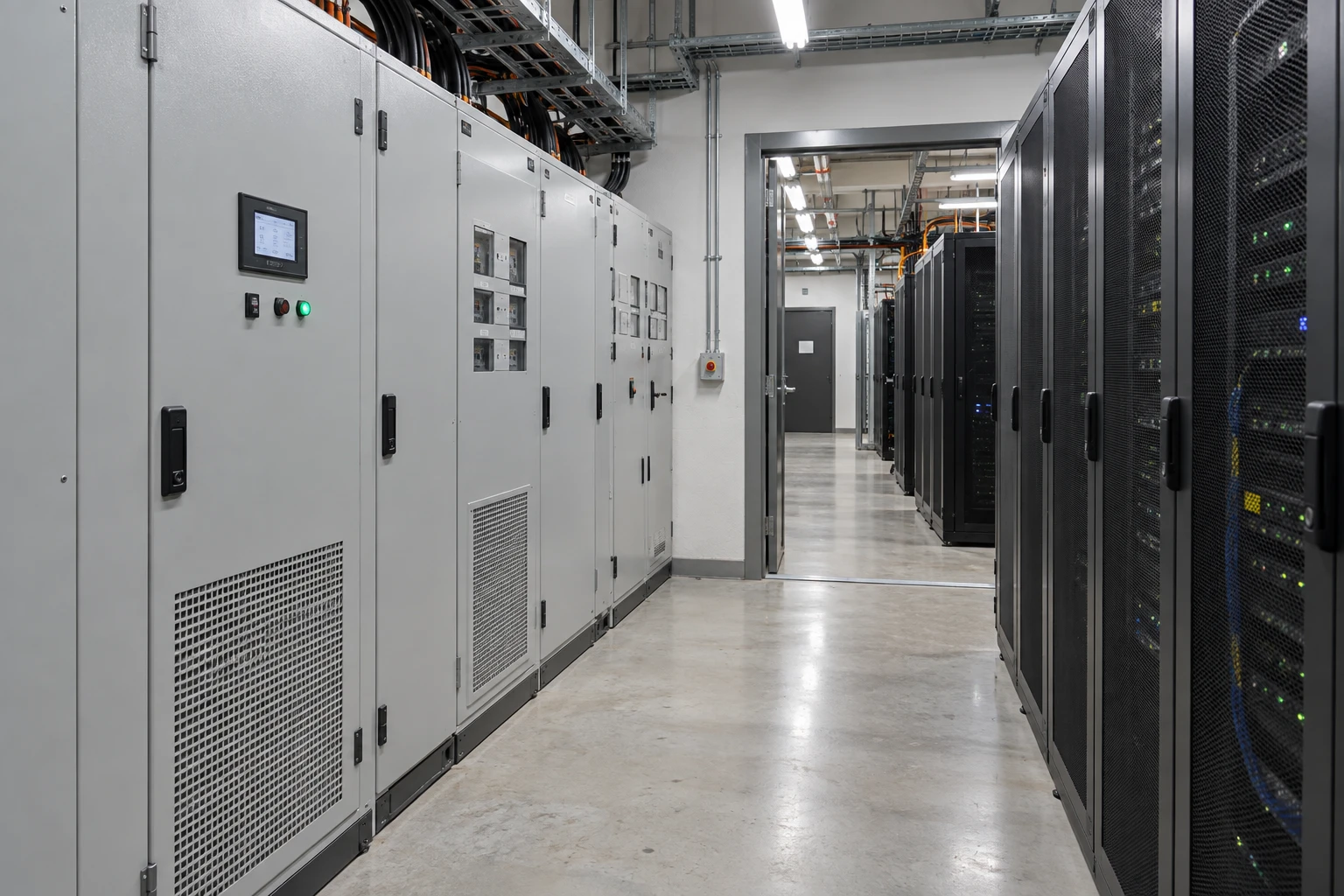
Data centre power monitoring and PUE inputs
Meter the facility incomer, UPS and IT supplies, and get matched energy totals for PUE and capacity reviews. -
Water consumption monitoring for commercial buildings
Bring main and branch water meters into Edge through a Pulse Counter, keep each meter’s units and totals, and compare like-for-like periods. -
Healthcare energy management
Build a reliable energy and operating record across a hospital campus while clinical, infection-control, life-safety and emergency-power systems keep authority. -
Pharmaceutical energy management
Build a trustworthy energy and utility record across pharmaceutical buildings, cleanrooms and production without bypassing validated systems or the quality process.
Equipment performance
Energy monitoring-
Chiller performance monitoring
Cooling output from a flow reading and a matched entering-and-leaving temperature pair, divided by the metered electrical input. -
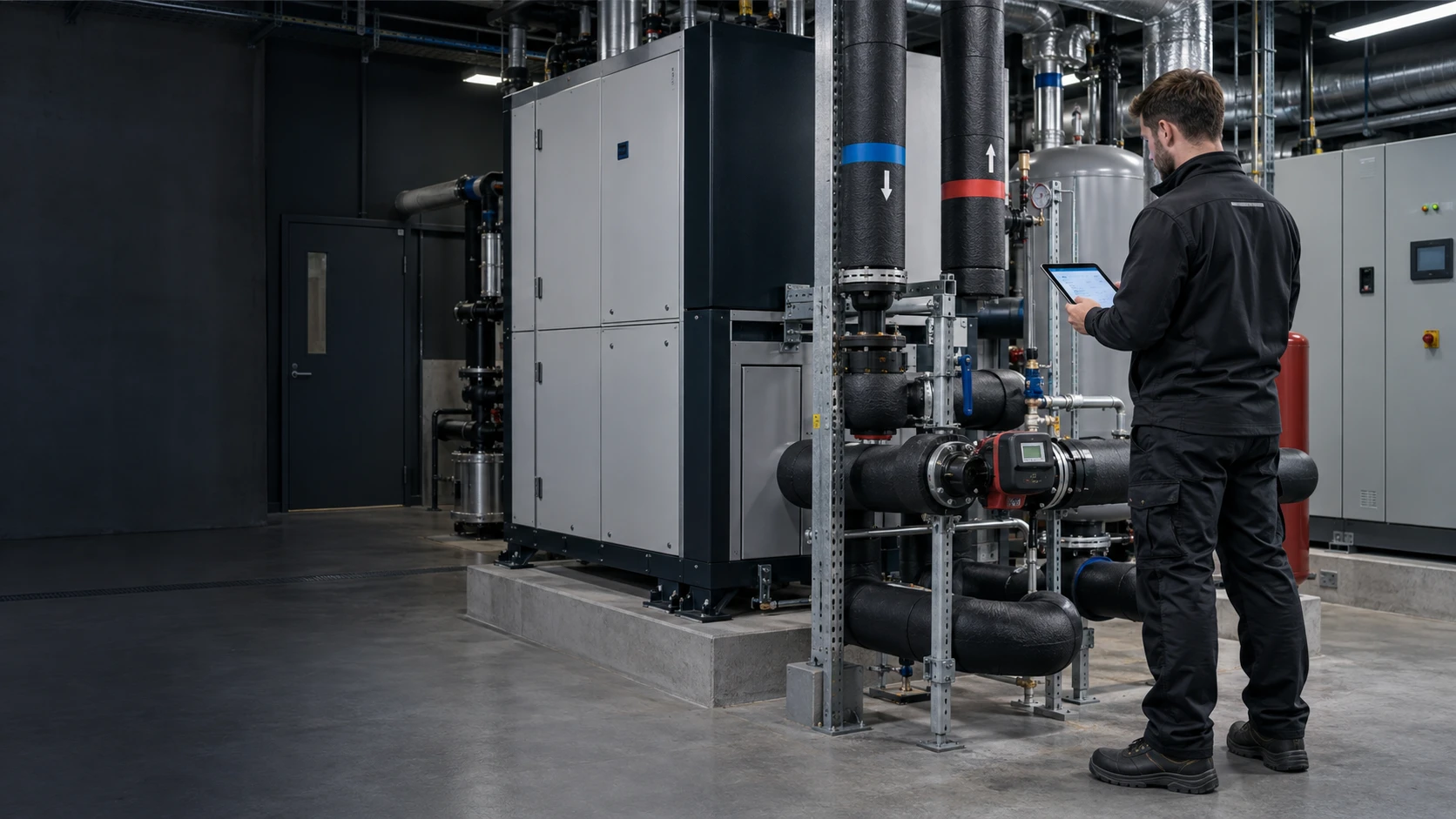
Heat pump performance monitoring
Read the heat meter over M-Bus, meter every electrical input, and compare COP over complete periods. -
Boiler performance monitoring
A pulse counter on the fuel meter coming in, a heat meter on the way out, and the firing state that tells you which periods are worth comparing. -
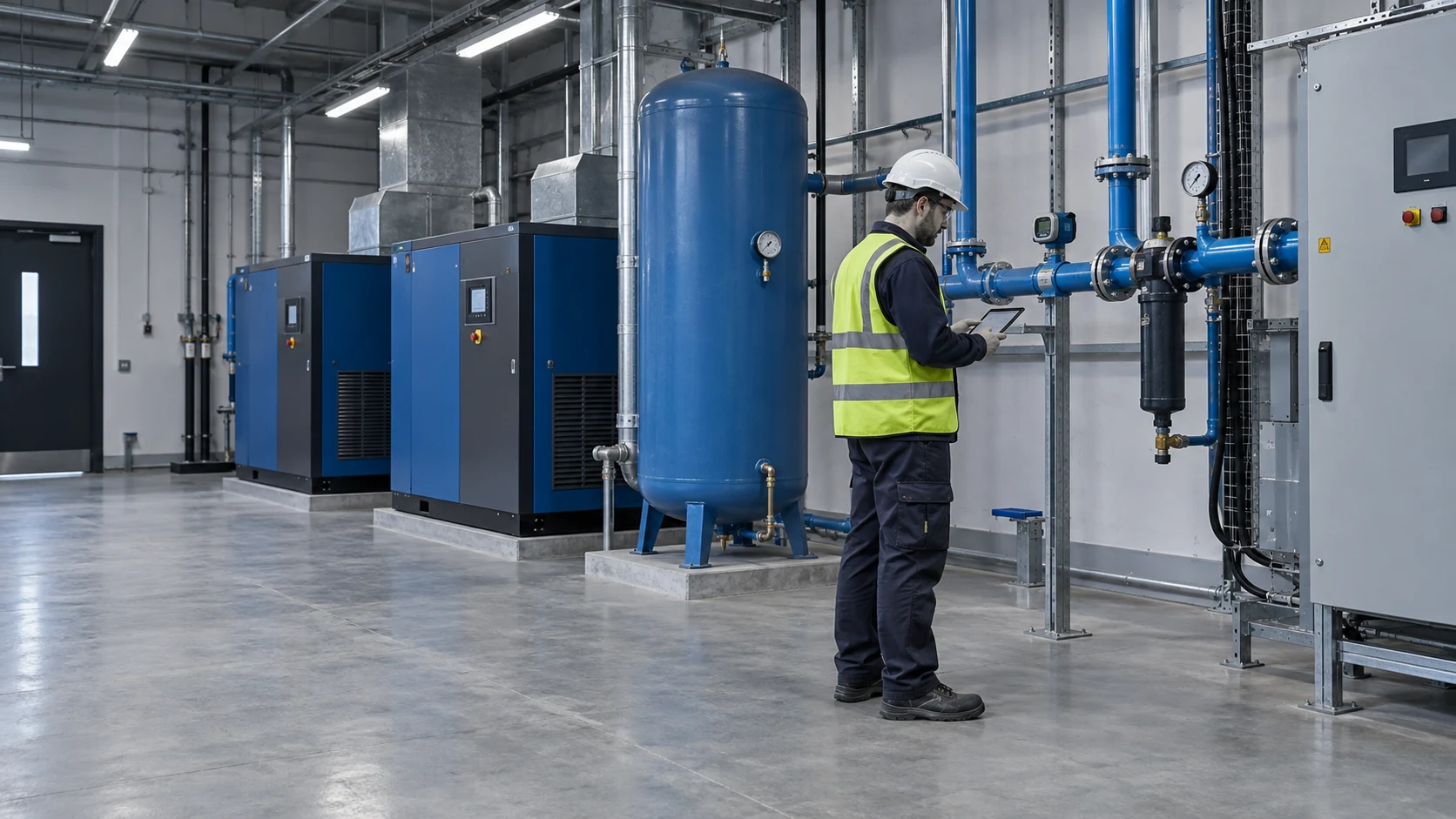
Compressed air energy monitoring
Measure compressor electricity alongside delivered air and header pressure, then compare complete operating periods before deciding what to investigate. -
Pump performance monitoring
Motor electrical input, delivered flow and the pressure either side of the pump, so a drop in power can be explained rather than guessed at. -
Supermarket energy monitoring
Monitor each store and its refrigeration, HVAC, lighting, food preparation, hot water, solar and EV charging loads, then compare like-for-like operating periods across the portfolio. -
Commercial kitchen energy management
Monitor cooking, refrigeration, extract, hot water and dishwashing electricity, then compare it with service activity and closed-hours baseload. -
Refrigeration energy monitoring
Meter the whole refrigeration plant, split out compressors and fans, and compare periods with the same controller state and load. -
HVAC energy monitoring for commercial buildings
Separate HVAC electricity by supply, see what runs outside the agreed schedule, and choose which heating, cooling, fan or pump system to look at first. -
Water and wastewater energy monitoring
Relate energy use to treated volume, hydraulic duty and treatment load without displacing SCADA, process control, permit monitoring or laboratory evidence. -
Warehouse and logistics energy monitoring
Measure the site incomer and non-overlapping warehouse electrical service boundaries, then explain demand with shifts, occupancy, throughput and equipment state.
Temperature and hygiene
-
Cold room and cold store temperature monitoring
Probes at the warm and cold points a mapping study found, one in the product zone, and alarms that carry a delay so a door opening is not an incident. -
Legionella temperature monitoring
Wireless pipe probes on the calorifier flow and return, the end of each loop and the cold feed. Edge trends every point and raises an alarm when a temperature drops or a sensor goes quiet. -
Indoor environmental monitoring
A probe where people actually are, an outdoor reference to compare it with, and the ventilation state that explains the difference. -
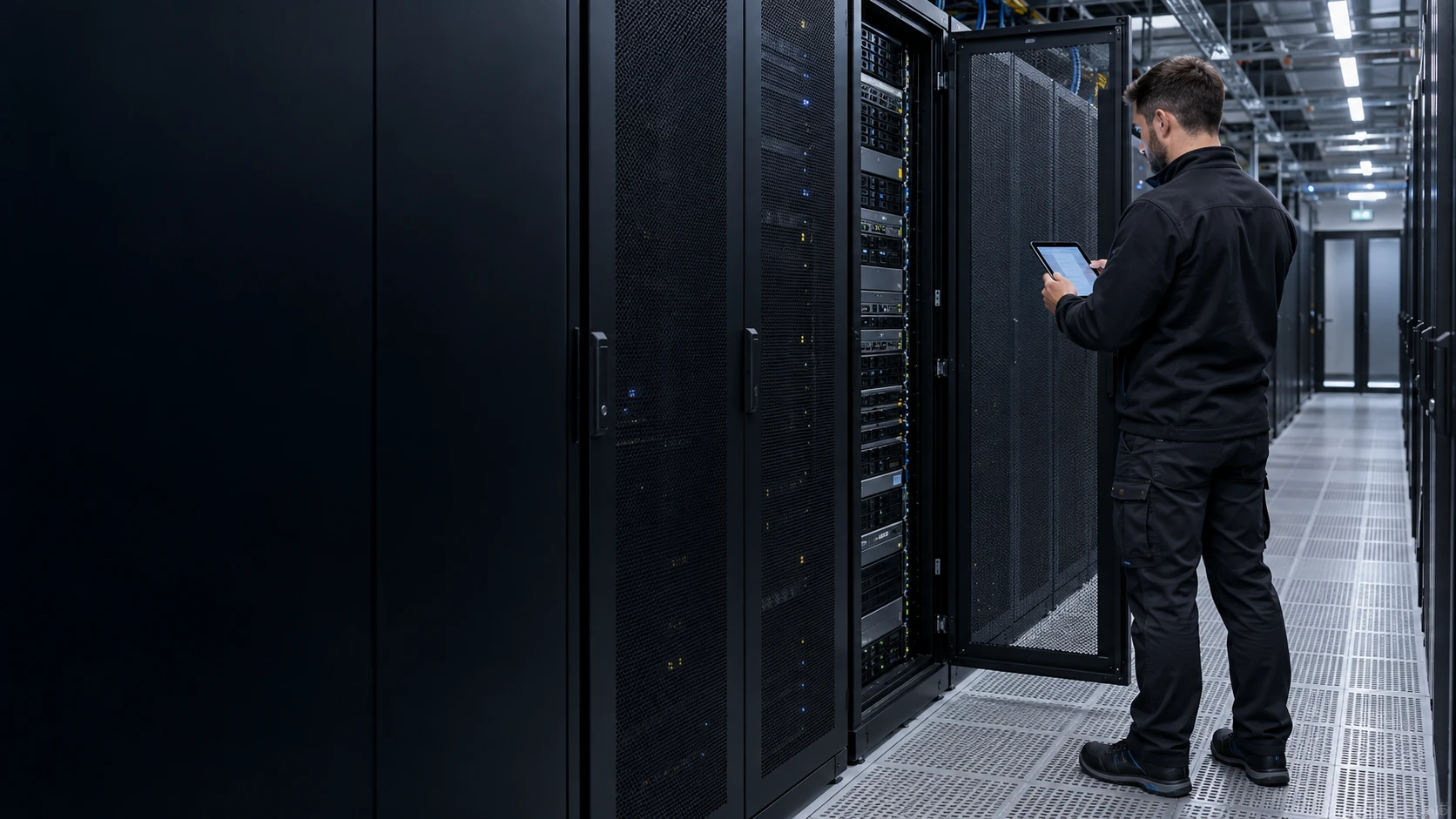
Server room and rack temperature monitoring
Probes at the rack inlet and exhaust, a separate humidity transmitter, and each point’s position, history and alarms kept together in Edge.
Distributed energy
Energy monitoring-
Solar PV monitoring
An independent meter on the PV output, another at the grid connection, and the inverter's own registers beside them for context. -
Solar inverter monitoring across a PV fleet
Collect documented readings from every inverter, preserve each device's state and timestamp, and compare the fleet total with an independent electrical boundary. -
Zero-export solar monitoring
Measure the point of common coupling with an independent electricity monitor, retain the controller state beside it, and prove whether low PV output was curtailment or a fault. -
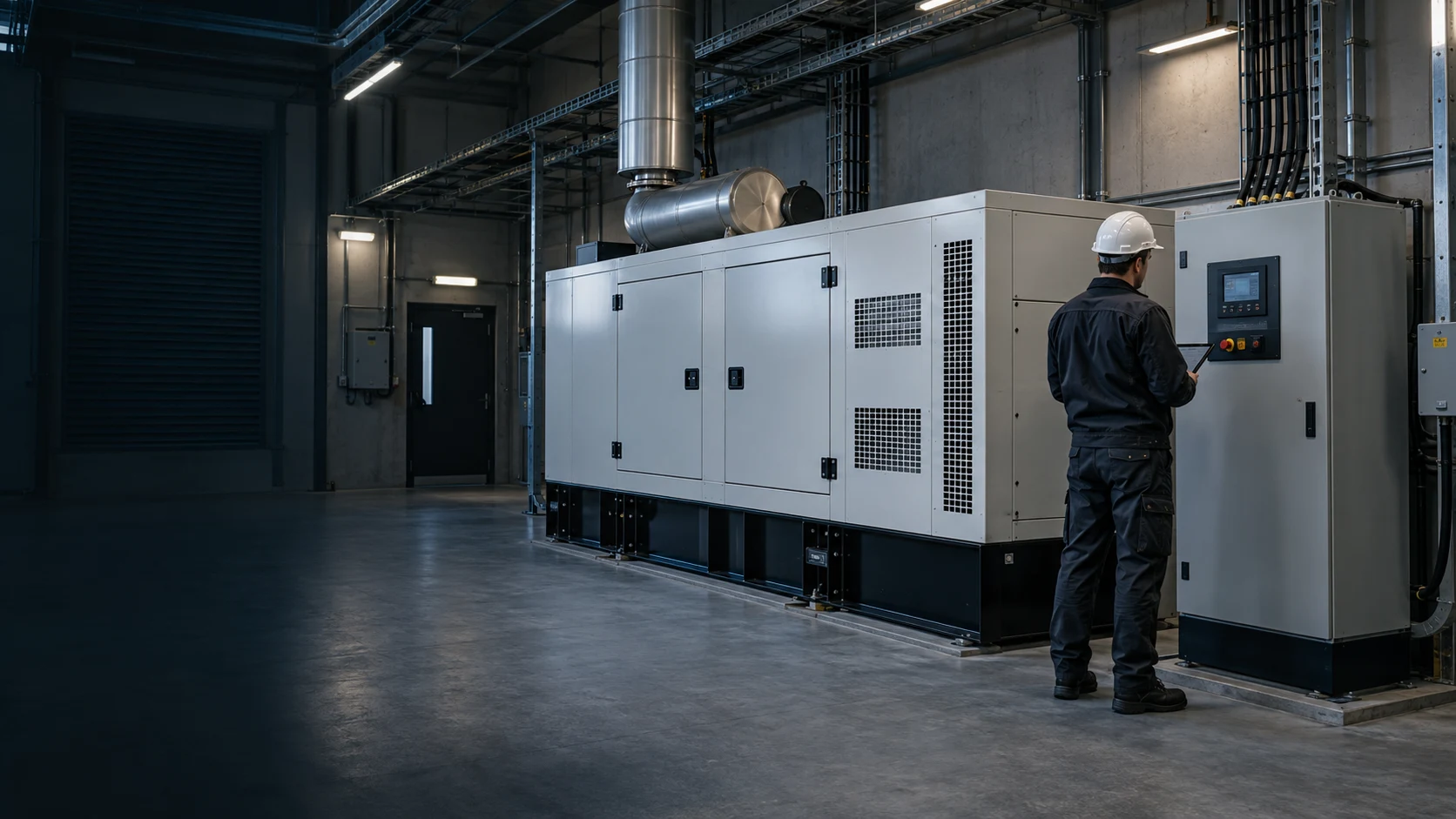
Generator remote monitoring
An independent meter proves what the generator carried, the controller says what it thought it was doing, and the fuel signal says how long it can keep going. -
Hybrid renewable energy monitoring
Use a Gateway to bring solar, wind, battery and connection measurements into one local record, then explain the site balance without losing each asset’s contribution. -
Microgrid energy management
A Gateway brings the PCC, sources, storage, priority loads and controller states into one time-aligned record while the approved microgrid controller retains control authority. -
Wind farm monitoring system and availability
A Gateway brings turbine states, feeder measurements, the point of common coupling and dispatch limits into one time-aligned operating record without adding another control path. -
EV charging load management
A meter at the connection and another on the charger board, so the headroom the chargers may use is measured rather than assumed. -
Battery energy storage monitoring and local control
Measure the battery, its connection and operating limits as separate records. Where the exact approved contract exists, a Demand Response Controller can send and verify a local request. -
District heating network monitoring
Align plant, network and substation measurements to explain heat delivery, return temperatures, pumping demand and distribution losses.
Demand response
Demand response and VPP-
Battery demand response
A controller that follows grid frequency and sends a set point to the inverter, with independent metering at the connection and the battery. -
Electric boiler demand response
A controller that sheds heating stages, a thermal store that says how much can be shed, and a record of what the site took back afterwards. -
Refrigeration demand response
Probes in the product zone can veto an event. A representative site trial sets the permitted duration, and plant protection stays independent of the controller.
Integration and instrumentation
Energy monitoring-
Modbus meter integration for a BMS or SCADA system
A Modbus interface reads the meters and instruments on site, and Edge serves what it collects onward over Modbus TCP, MQTT or HTTP to the system that needs it. -
Wired M-Bus heat meter integration
One M-Bus interface per meter reads the meter's own energy, volume and temperature records over wired M-Bus, and Edge keeps them with their timestamps. -
Pulse meter remote monitoring
A counter on the meter's existing pulse output, the pulse weight recorded once, and a totaliser reading that lets you prove the counts later. -
4-20 mA remote monitoring for process instruments
Current-loop and voltage instruments read by a mains-powered analogue signal sensor, with the range, the scaling and the fault current recorded beside the value.
No guides match these filters.
Not listed? System Builder maps your site to the devices and interfaces it needs. Build a system