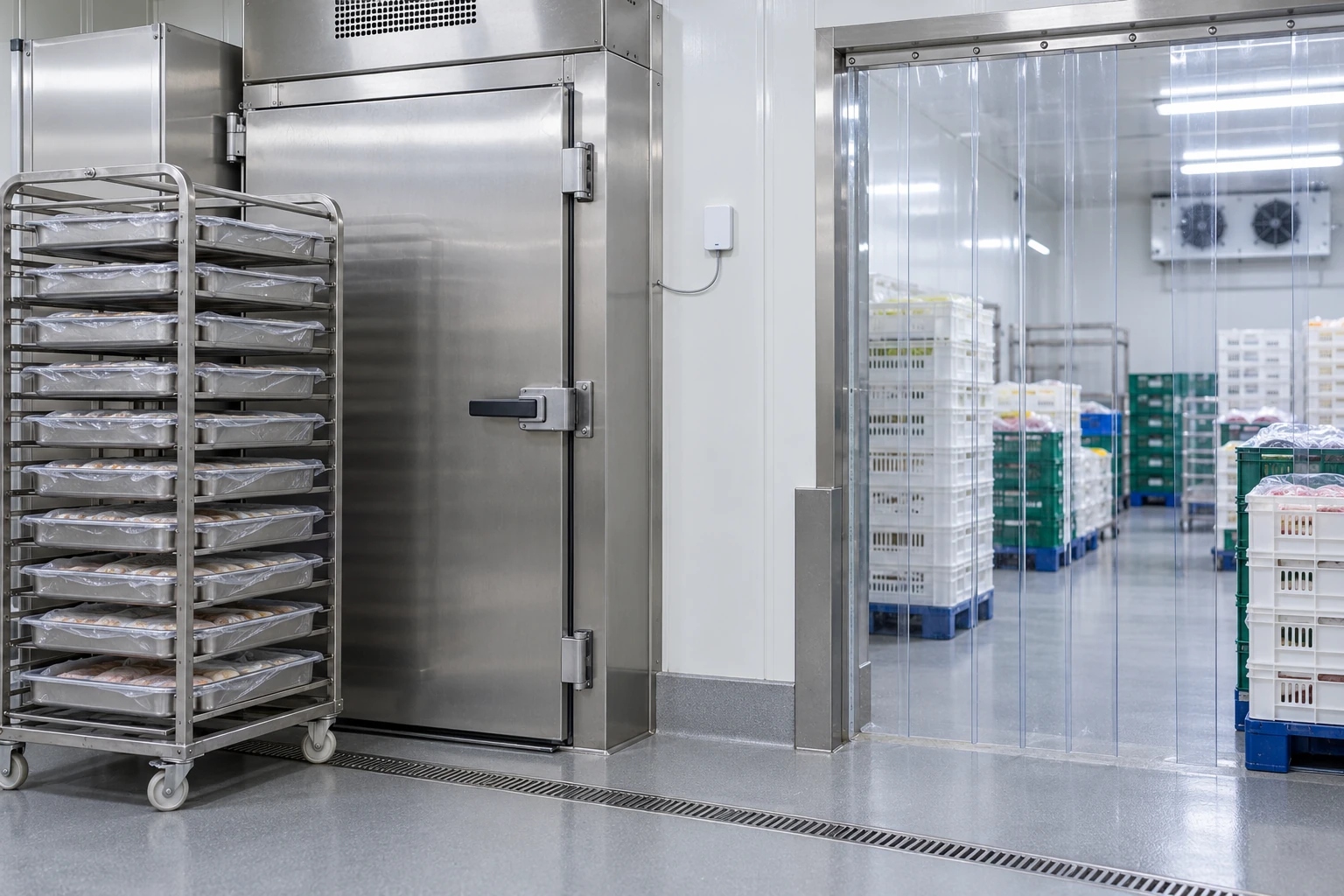
Food processing temperature monitoring
Probes in chill stores, cutting rooms, blast chillers and the dispatch bay, the plant's refrigeration controllers read over Modbus, and cooling-time alarms tied to each chiller cycle.
- Measure
- Food production temperature monitoring of cooling, chilled holding, cutting rooms and dispatch, with each chiller's cycle state
- Calculate
- Minutes from the end of cooking to the target core temperature, batch by batch FSAI Guidance Note 20
- Good practice
- Refrigerated rooms with devices that monitor and record temperature, and an alarm that signals loss of control Codex CXC 46-1999
- On site
- ZGW-20 Gateway, Edge combines probe and controller signals in one rule and keeps the trail
Cooling time or holding temperature
A plant has two kinds of temperature control point. A store or room is held below a limit, and a limit rule with a delay watches it. A cooling step has to bring product from cooking to a target core temperature within a validated time, and a rule can only time it if it knows when the batch went in. That start comes from the blast chiller's own cycle register over Modbus, or from a simulant probe that travels with the batch.
| Control point | What to measure | Rule in Edge |
|---|---|---|
| Holding: chill store, freezer store | Warmest point of the room, in air or a product simulant | A limit with a delay, held through scheduled defrosts |
| Cooling: blast chiller, chill tunnel | A simulant sized like the thickest item, plus the chiller's cycle state | Simulant above target while the cycle has run past the validated time |
| Open product: cutting room, dispatch bay | Room air where product is handled or waits | A limit with a delay that fits a shift or a loading window |
Hardware for blast chiller and chill room temperature monitoring
One two-probe sensor per blast chiller or tunnel, one per room or bay, a Modbus interface for each controller network on the plant, and a Gateway sized for the site after a radio survey.
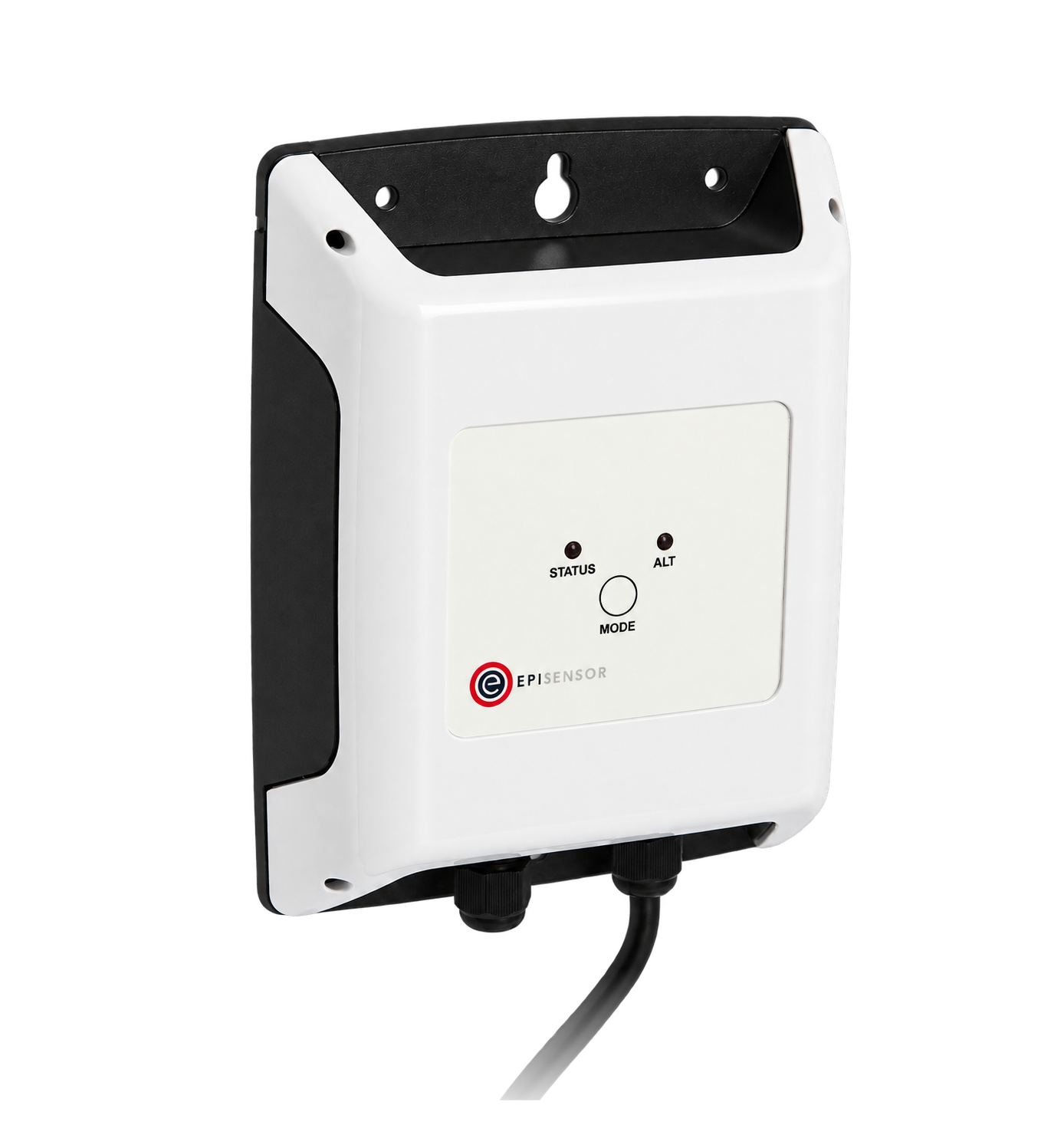
A blast chiller or chill tunnel: one probe in a simulant that goes in with the batch, one in the cabinet air
1 per chiller or tunnel two stainless probes, 2 m leads
 2 stainless steel probes, 2 m leads
±0.2 °C from 0 to 70 °C, ±0.5 °C from −40 to 105 °C, 0.01 °C resolution
A chill store, freezer store, cutting room or dispatch bay: the warmest point in air and a simulant where product stands
1 per room or bay two waterproof probes, 2.5 m leads
 2 waterproof probes, 2.5 m leads
±0.2 °C from −20 to 70 °C; a freezer store colder than −20 °C reads to ±0.5 °C
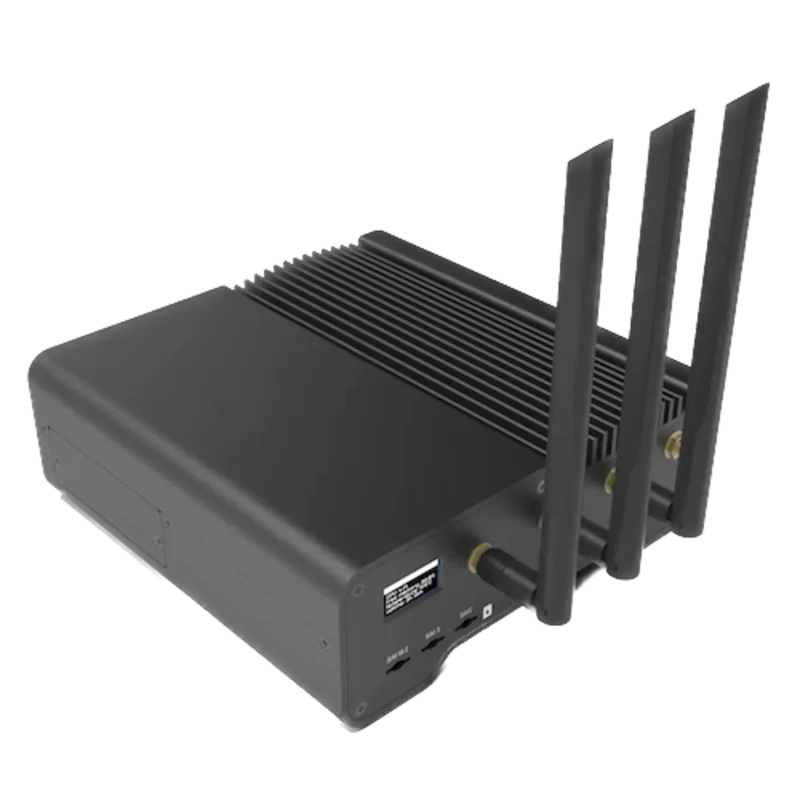
Times each cooling step against its cycle, holds the room limits and keeps the batch record and the alert trail on site
1 per surveyed coverage area up to 250 wireless devices
If the chillers and evaporator controllers have Modbus
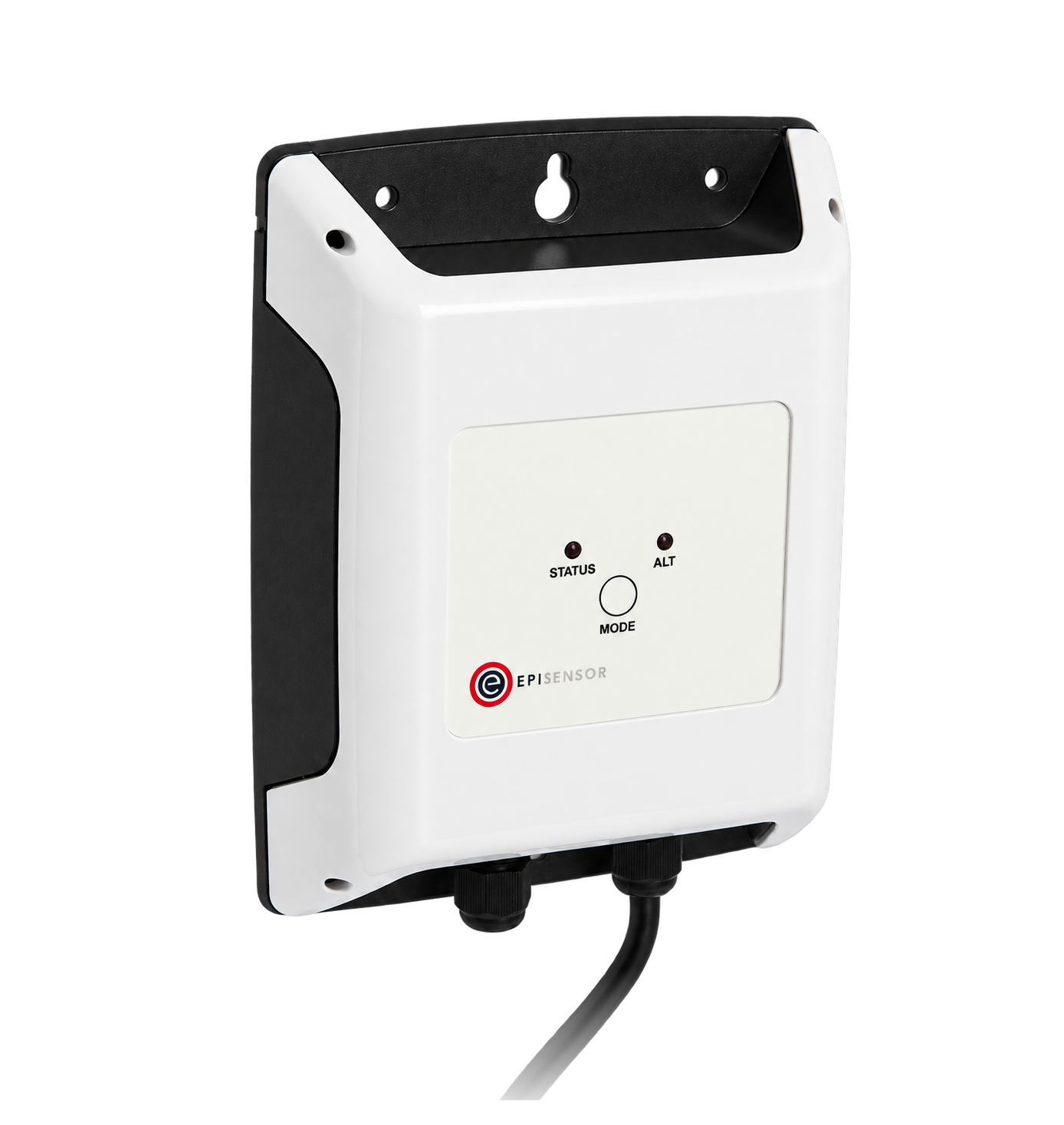
Reads blast chiller cycle and core probe registers, evaporator defrost state and rack controller temperatures from the plant's RS-485 network
1 per RS-485 network up to 30 registers
Modbus RTU master, function codes 1 to 6, 15 and 16, cable runs to 1,000 m
Where to measure cooling, chilling and dispatch
Follow the product from intake to the loading door and put a probe at each step the HACCP plan treats as a control point. Name each probe after the step, the room and the position, so a probe moved during a refit is caught.
How plant temperatures and chiller cycles reach Edge
Product and room probes report on their own, and the chiller and evaporator controllers report through one Modbus interface. Edge brings the two together in the same rule.
- Wired
- Zigbee
- Edge
- Platforms
| Position | What it tells you | Reference | Sensor |
|---|---|---|---|
| Raw material chill store | Intake product held below its limit from delivery until it goes to the line | Meat at no more than 7 °C, offal 3 °C, poultry 4 °C EU 853/2004 | TES-22 (on this page), warmest point |
| Cutting and boning room | Room air while open product is handled, and whether the meat on the line keeps its temperature | Meat kept at 7 °C or below by a room at no more than 12 °C, or an equivalent system EU 853/2004 | TES-22 (on this page), line height |
| Blast chiller or chill tunnel | The cooling curve of each batch, from the end of cooking to the target core temperature | Heat-chill foods: chilling starts within 90 minutes and goes from 55 °C to 10 °C within 120 minutes FSAI Guidance Note 20 | TES-22 (on this page), simulant and air |
| Finished goods chill store | Packed product held at its storage temperature until it is picked for dispatch | Heat-chill foods at 5 °C or below through the chill chain, 3 °C recommended FSAI Guidance Note 20 | TES-22 (on this page), warmest point |
| Dispatch bay | How warm the air gets and for how long while loads wait and doors stand open | The cold chain is not to be interrupted, apart from limited periods for handling EU 852/2004 | TES-22 (on this page), loading door |
| Chiller and evaporator controllers | Cycle start and end, the chiller's own core probe, evaporator defrost state and the rack's suction and discharge temperatures | Read only, from the controller maker's register map, with model and firmware recorded Modbus Interface datasheet | ZMB-31 (on this page) |
Time the cooling from the cycle. A cooling limit means nothing without a start time. Take it from the blast chiller's cycle register, or from the moment the simulant probe goes into the chiller, and keep it with the batch number.
A simulant stands in for the product. Size it like the thickest item on the tray and validate it against core readings in real product over several cycles. Repeat when the recipe, the tray or the load pattern changes.
Scheduled defrosts warm the room. Chill room evaporators defrost on a timer and the air rises with them. Reading the defrost state lets a rule ignore a programmed defrost and still catch one that does not end.
Cooling-time and chill room alarms in Edge
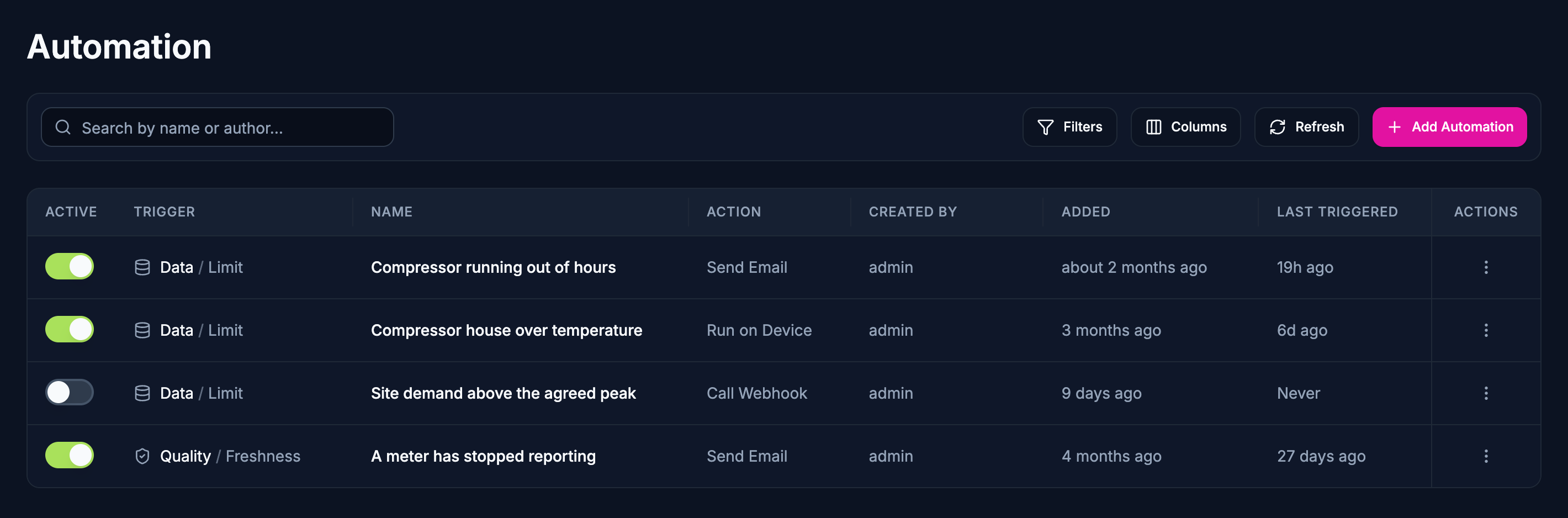
Rules run on the Gateway and can join a probe and a controller register in one condition, so a cooling step is judged against its own cycle rather than the clock on the wall.
- Cooling that runs late
- A limit rule on the simulant probe with the chiller's cycle register as a second condition and a duration equal to the validated cooling time. If the batch is still above target when the cycle has run that long, the rule raises an alert.
- Rooms held, defrosts allowed
- A limit with a delay on each room, with the evaporator's defrost state as a second condition so a programmed defrost does not alarm. A separate rule on the defrost register catches a defrost that runs past its programmed length.
- An owner for every alert
- Assign each alert to the shift's quality lead. The acknowledgement and the resolution each carry a note, and the trail names the person and the time for every step, ready to copy into the corrective-action log.
- Batch records out of Edge
- Export a batch's cooling curve as CSV from the Data page, or publish readings over MQTTS or HTTPS to the plant's quality or production system, where release sign-off and long retention belong.
Commissioning checks
Run these when the system goes in, then repeat the simulant and alarm checks whenever a product, a tray or a chiller changes.
-
The simulant matches the product
Run the simulant beside core readings in the thickest real product through at least three full cycles.
Pass when the simulant never reaches the target before the product does, so it cannot show a batch as cooled early.
-
The cycle start is captured
Start a chiller cycle and watch the cycle register and the simulant probe in Edge.
Pass when Edge shows the start within one reporting interval, and the late-cooling rule counts from it.
-
A late batch raises an alert
On a test load of water trays, not food, leave the chiller door ajar so the simulant stays above target past the rule's duration.
Pass when the alert reaches the quality lead, who acknowledges it with a note, and the trail records both.
-
Room probes agree with a reference
Compare each room and bay probe with a calibrated thermometer at the same point once readings settle.
Pass when the differences are inside the plan's tolerance and the comparison is filed with the reference certificate.
-
Defrost and loading do not alarm
Observe a programmed defrost in each chill room and a full loading window in the dispatch bay with the rules live.
Pass when neither raises an alert, and a defrost forced to overrun does.
-
Batch data reaches the quality system
Export one batch's cooling curve and compare it with the copy in the quality or production system.
Pass when timestamps, values and batch identity match, and the retention period meets the plant's record policy.
Limits of process temperature monitoring
The plant's HACCP team owns the critical limits, the validation of each cooling step and the corrective actions. This system monitors and records against them.
- Monitoring a cooling step does not validate it. Validation is a study in real product, and the simulant and its rule only follow the process that study approved.
- These sensors are not certified to EN 12830 or EN 13485. Stores holding quick-frozen food fall under Regulation (EC) No 37/2005, which names recording instruments to those standards.
- The ZMB reads controller registers and writes none. Chiller cycles, setpoints and defrost programmes stay with the plant's own controls and its refrigeration contractor.
- The temperatures on this page are examples from Regulation (EC) No 853/2004 and FSAI guidance. Customer specifications and the product's own shelf-life study may set tighter limits.
- Edge keeps local history for up to two years. Batch release records kept longer than that belong in the quality system, fed from Edge.
Sources
- Regulation (EC) No 853/2004 laying down specific hygiene rules for food of animal origin (opens in a new tab) (opens in a new tab) European Parliament and Council
- Regulation (EC) No 852/2004 on the hygiene of foodstuffs (opens in a new tab) (opens in a new tab) European Parliament and Council
- Code of Hygienic Practice for Refrigerated Packaged Foods with Extended Shelf Life, CXC 46-1999 (opens in a new tab) (opens in a new tab) FAO and WHO Codex Alimentarius Commission
- Guidance Note No. 20: Industrial Processing of Heat-Chill Foods, revision 1 (opens in a new tab) (opens in a new tab) Food Safety Authority of Ireland
- Guidance on Temperature Control Legislation in the United Kingdom (opens in a new tab) Food Standards Agency and Food Standards Scotland
- Commission Regulation (EC) No 37/2005 on the monitoring of temperatures of quick-frozen foodstuffs (opens in a new tab) (opens in a new tab) European Commission
- Probe Temperature Sensor datasheet (opens in a new tab) EpiSensor. Specifications, ranges and ordering codes.
Related
-
HACCP temperature monitoring
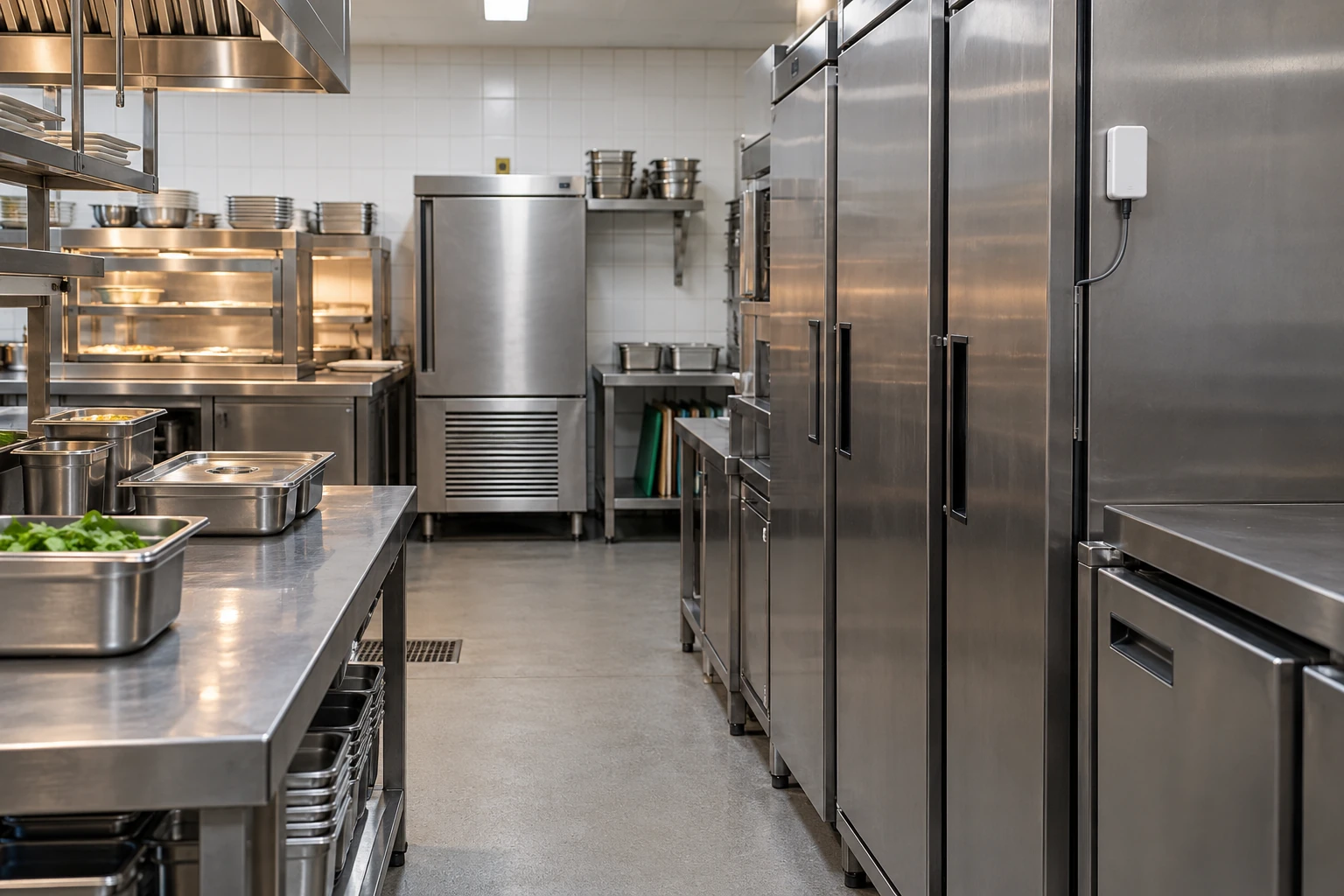
An independent probe at the warmest point of every fridge, freezer, cold room and hot cupboard, the refrigeration controllers read over Modbus, and every alarm answered with a note in Edge. -
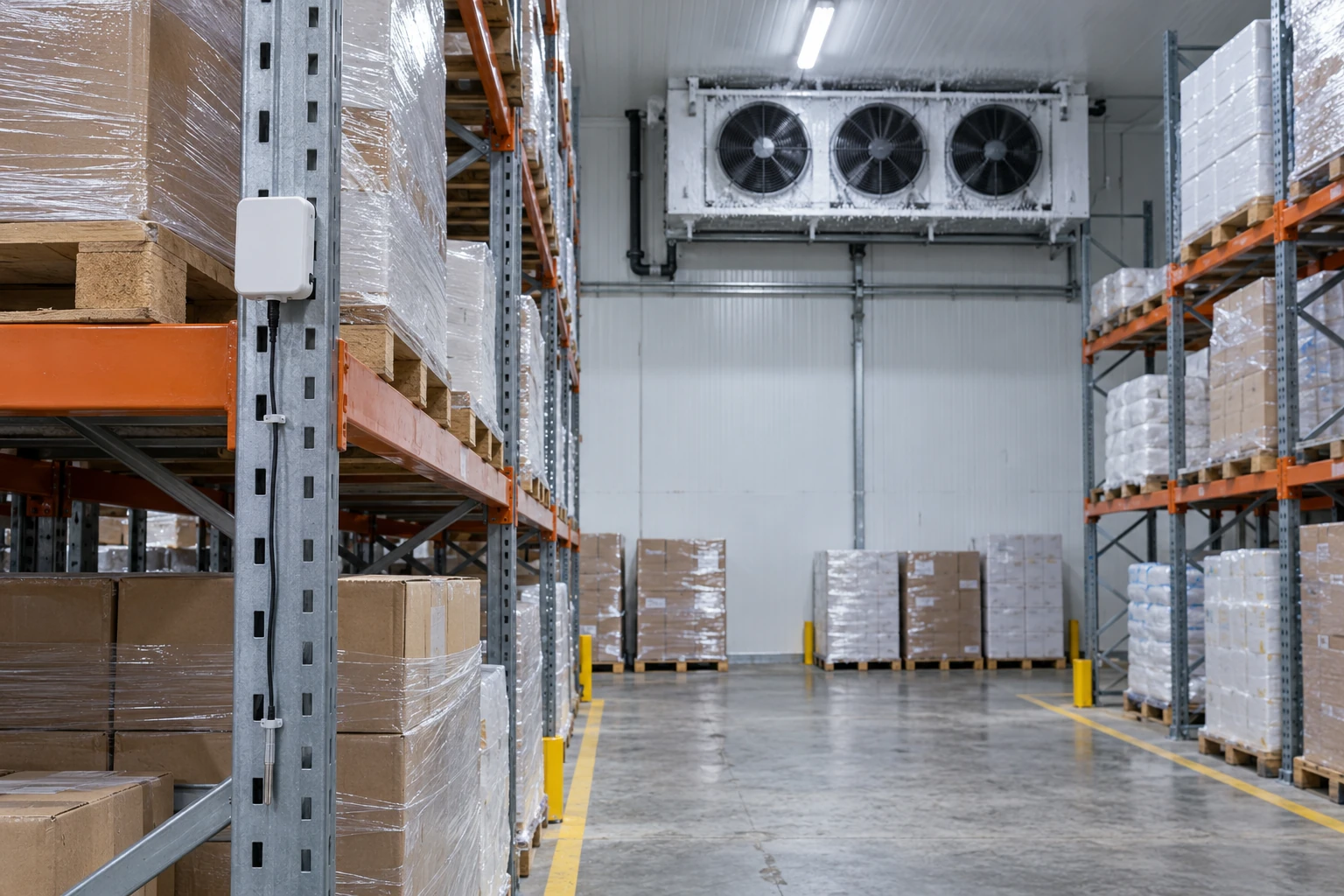
Cold room and cold store temperature monitoring
Probes at the warm and cold points a mapping study found, one in the product zone, and alarms that carry a delay so a door opening is not an incident. -
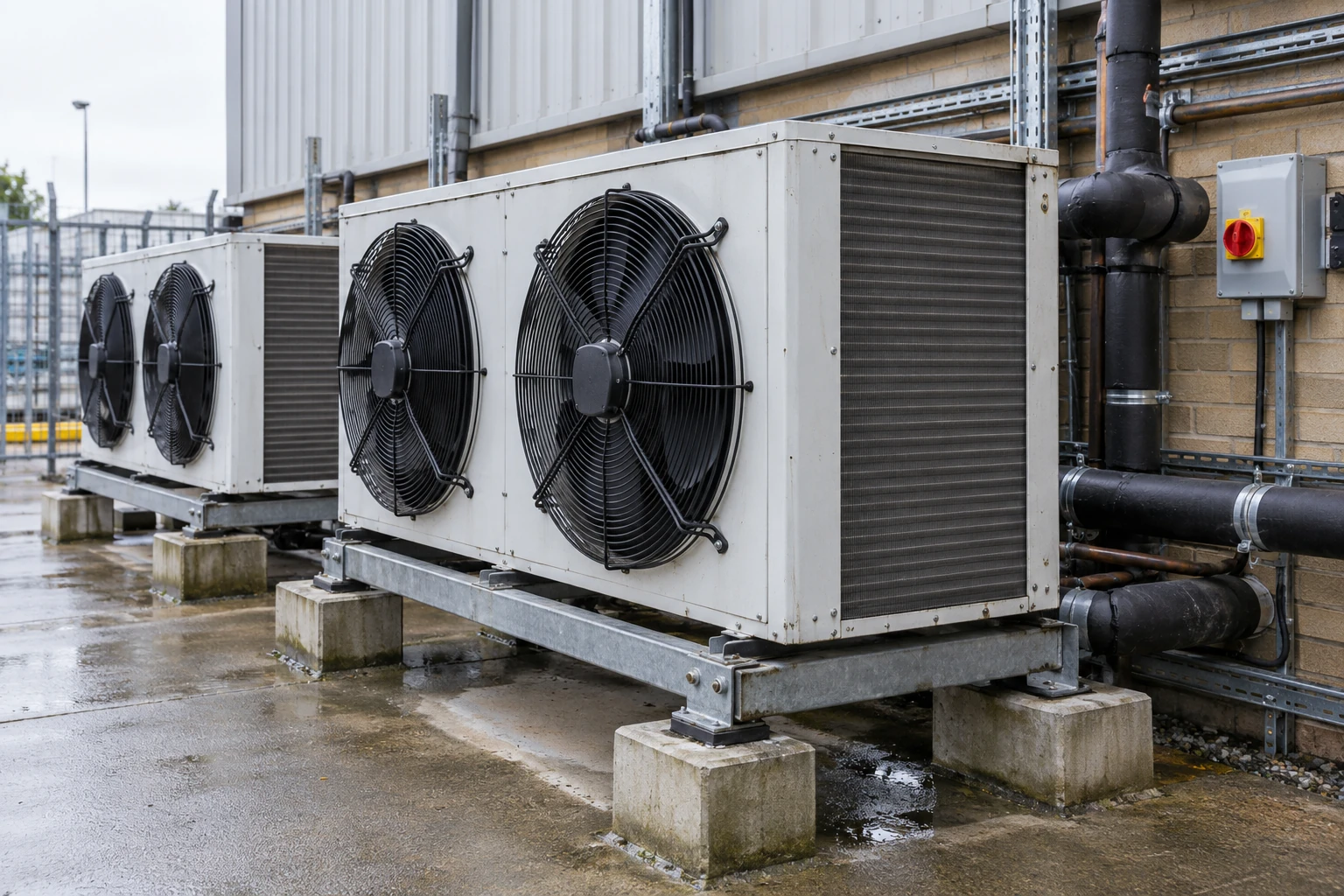
Refrigeration energy monitoring
Meter the whole refrigeration plant, split out compressors and fans, and compare periods with the same controller state and load.
- CalculatorModbus address converter
- GuideHACCP temperature control: critical limits, monitoring and records
- GuideTemperature probe placement in cold rooms, fridges and display cases
Third-party devices for this application
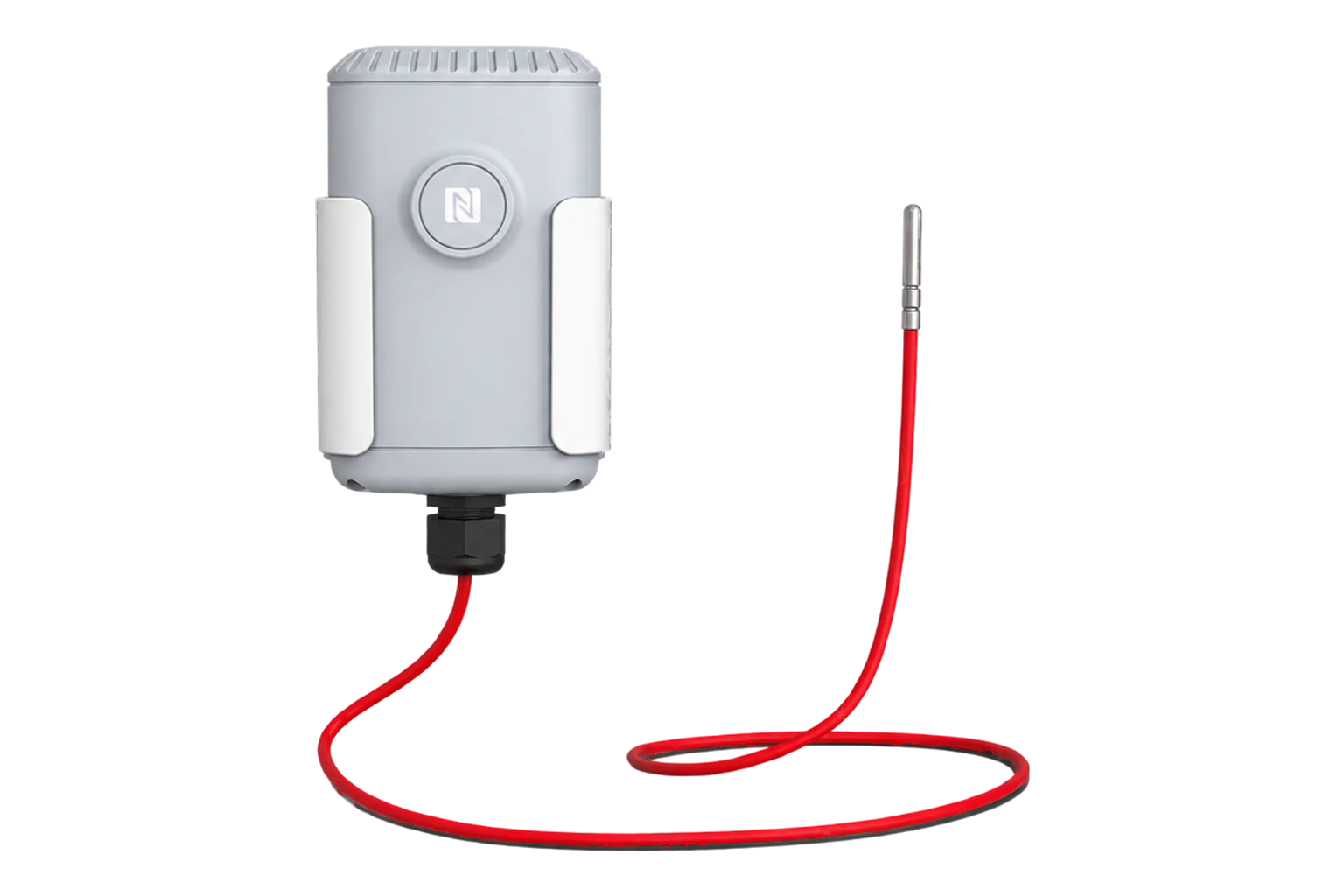
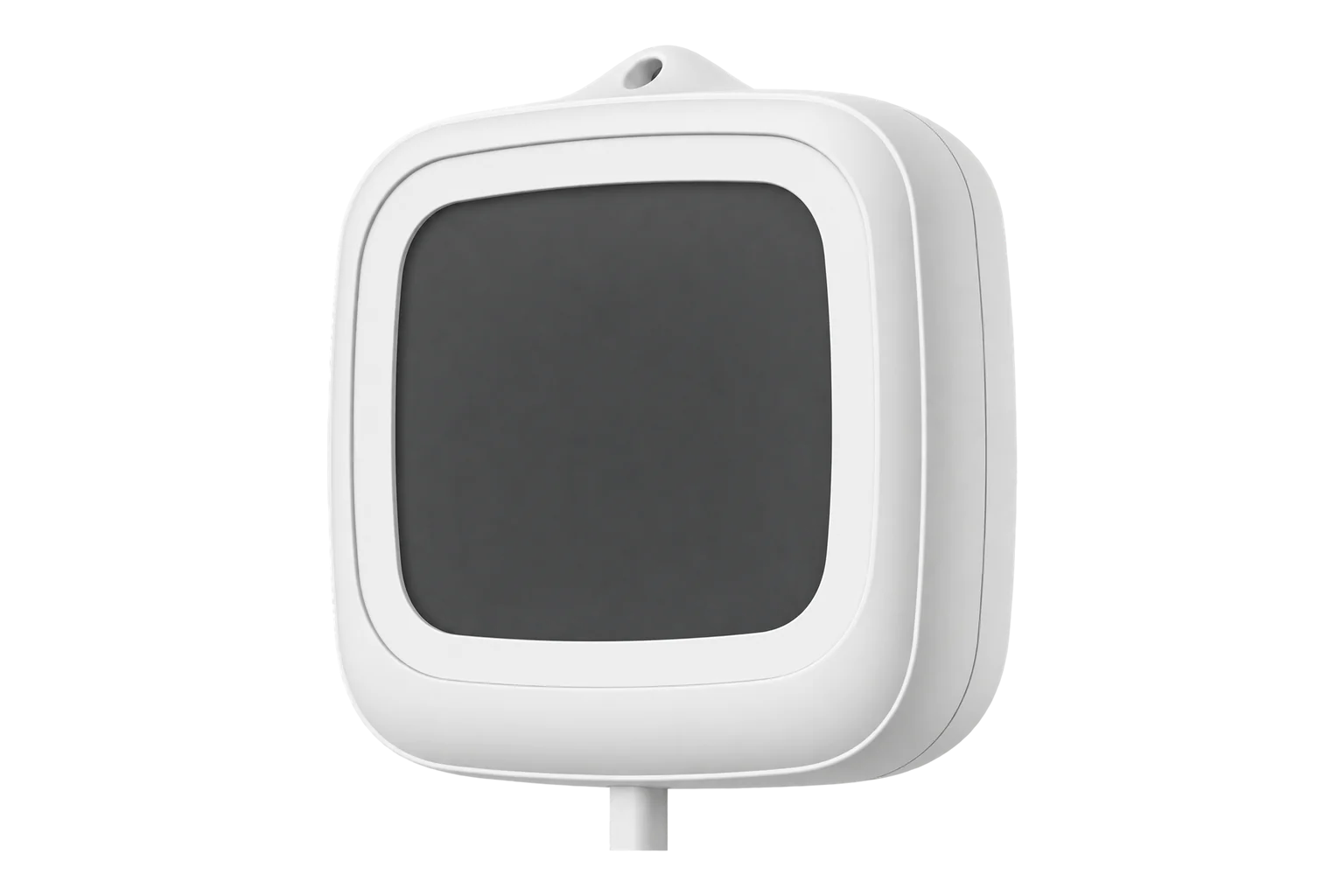
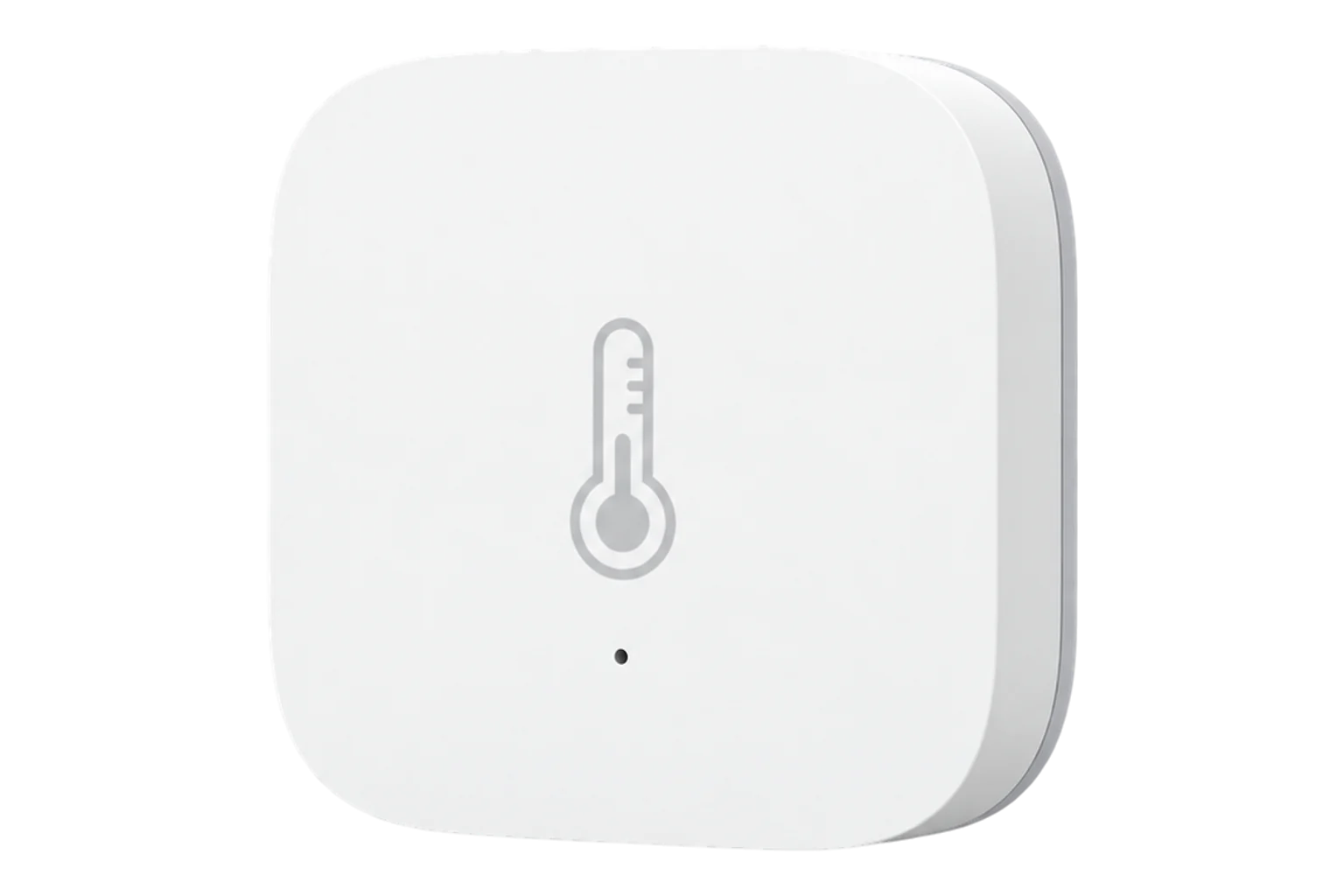
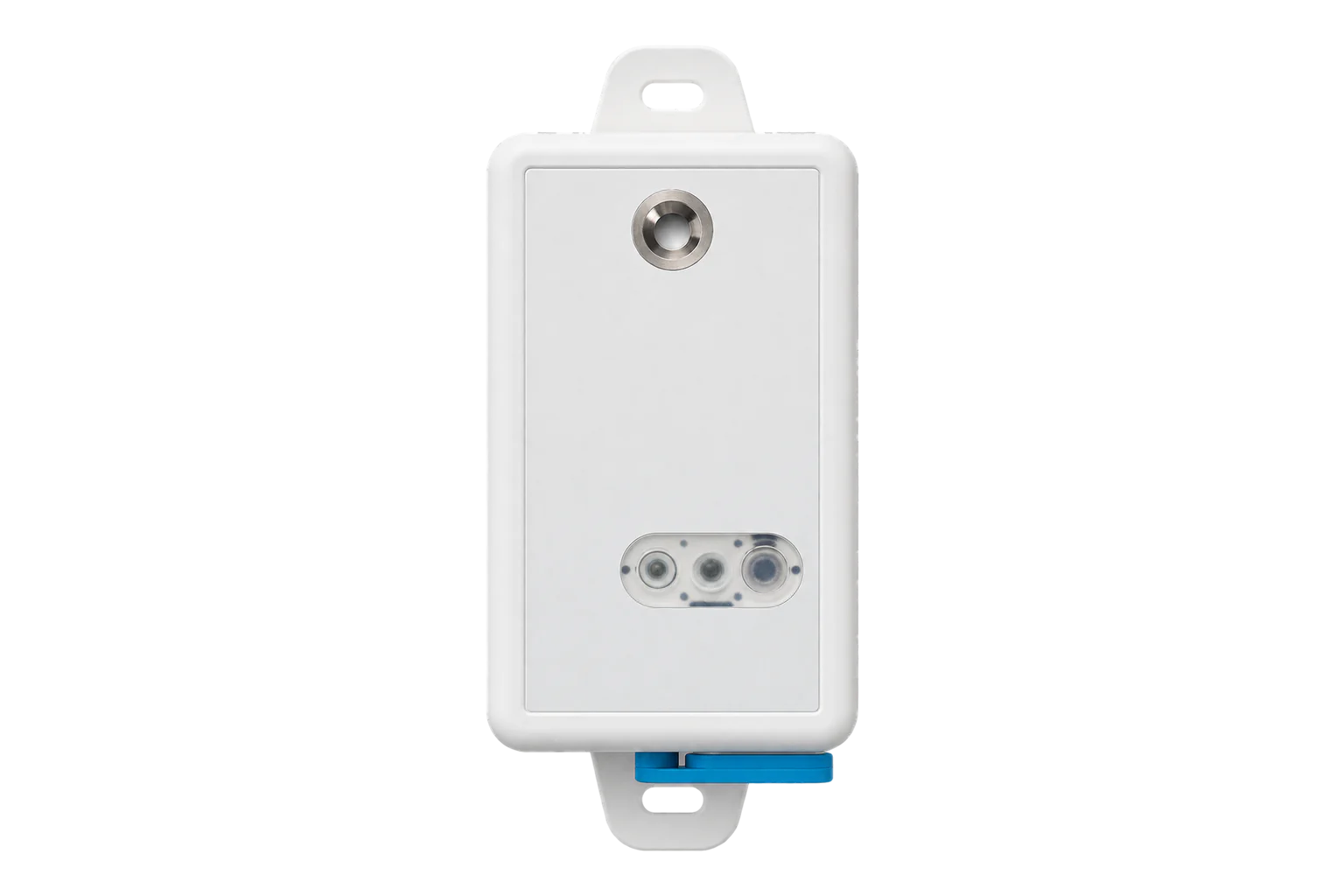
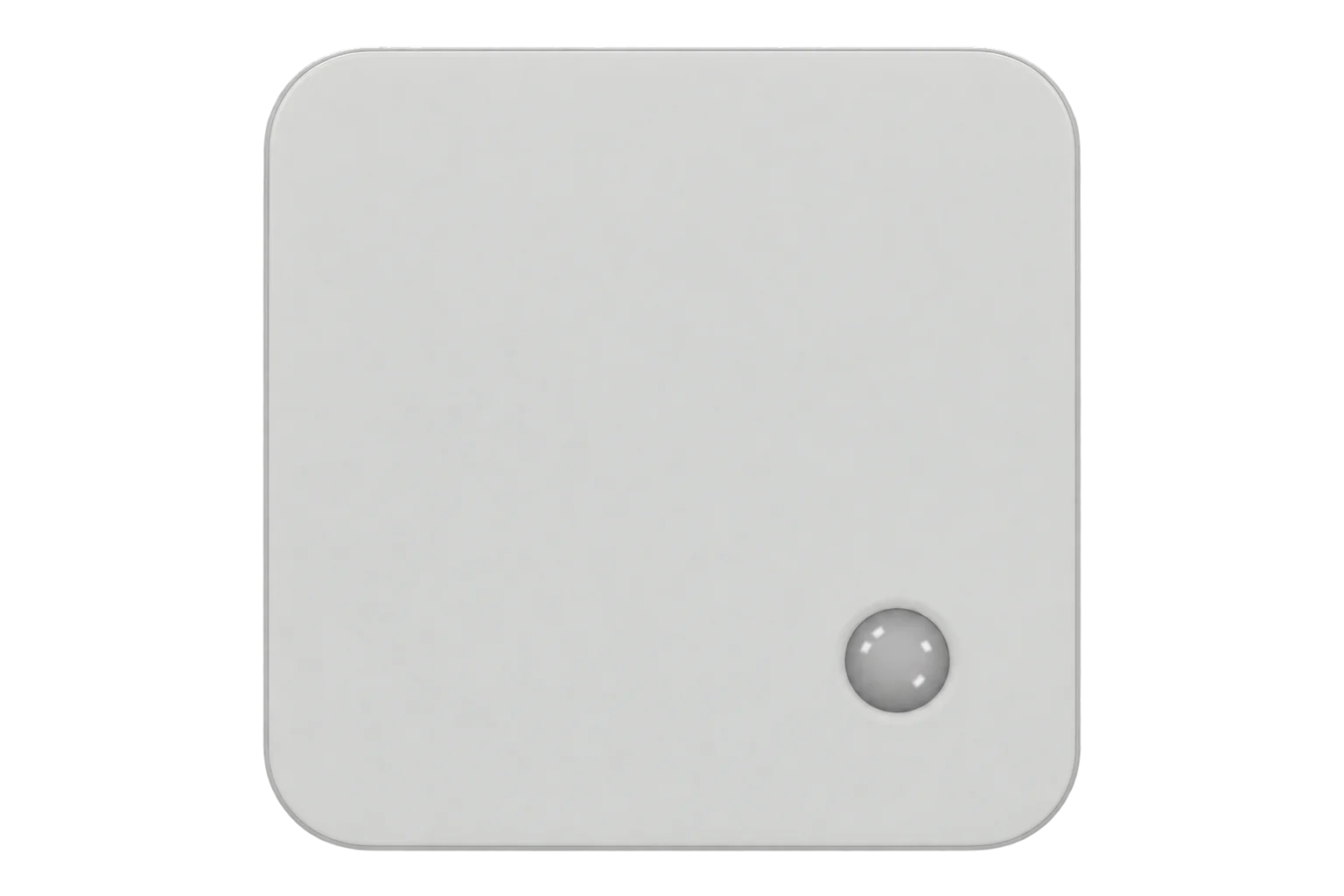
More in the Device Directory: Temperature and humidity sensors (21)
Map the line from intake to dispatch
Share the process flow, the cooling validations and the controller models on the plant. An engineer can place the simulants and room probes, check which controllers expose their cycle state, and size the radio coverage.