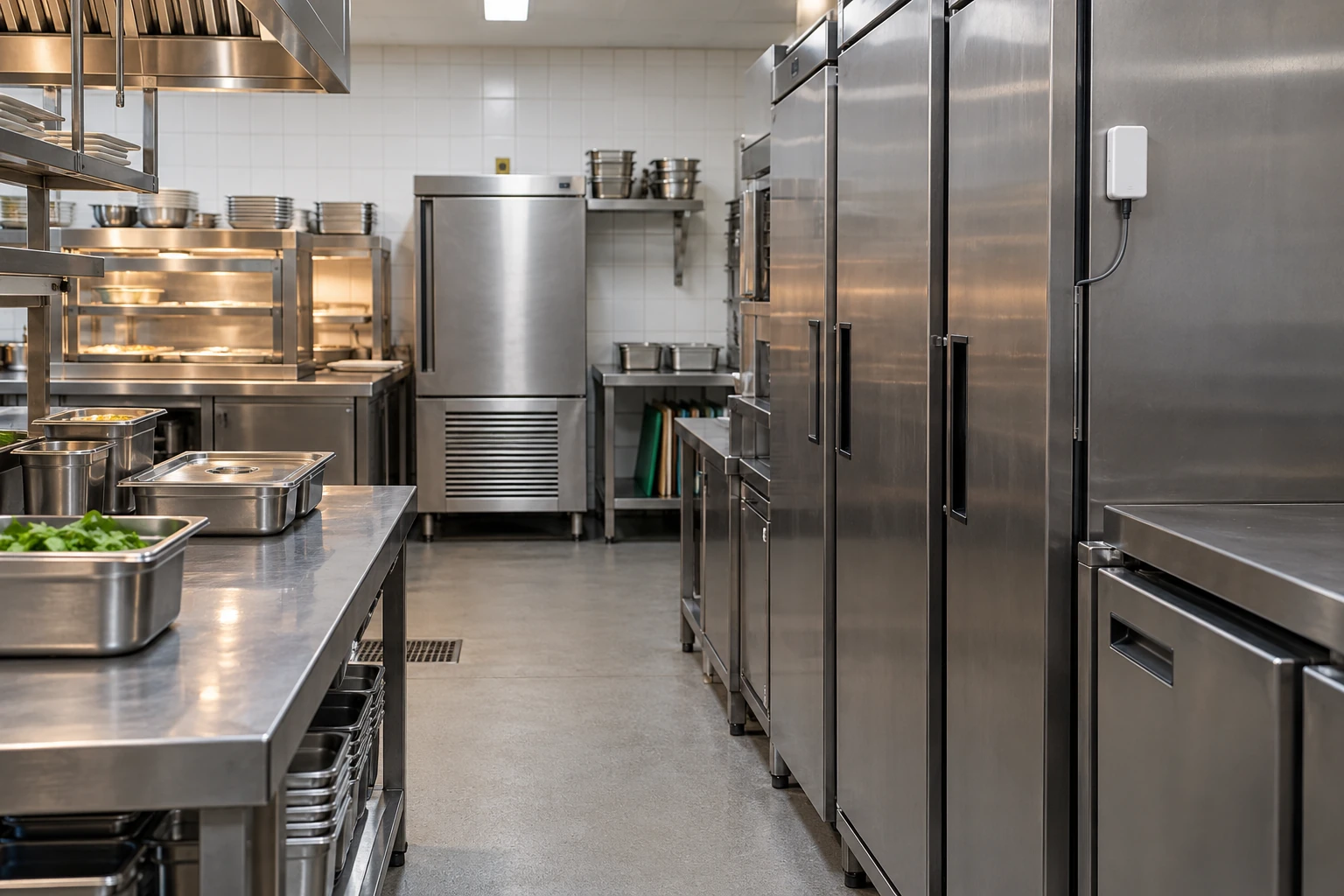
HACCP temperature monitoring
An independent probe at the warmest point of every fridge, freezer, cold room and hot cupboard, the refrigeration controllers read over Modbus, and every alarm answered with a note in Edge.
- Measure
- Food safety temperature monitoring of chilled, frozen and hot-held food at each unit on the plan, plus the state of its refrigeration controller
- Good practice
- Monitor a critical control point continuously where you can, and record the deviations and what was done Codex CXC 1-1969
- Sensors
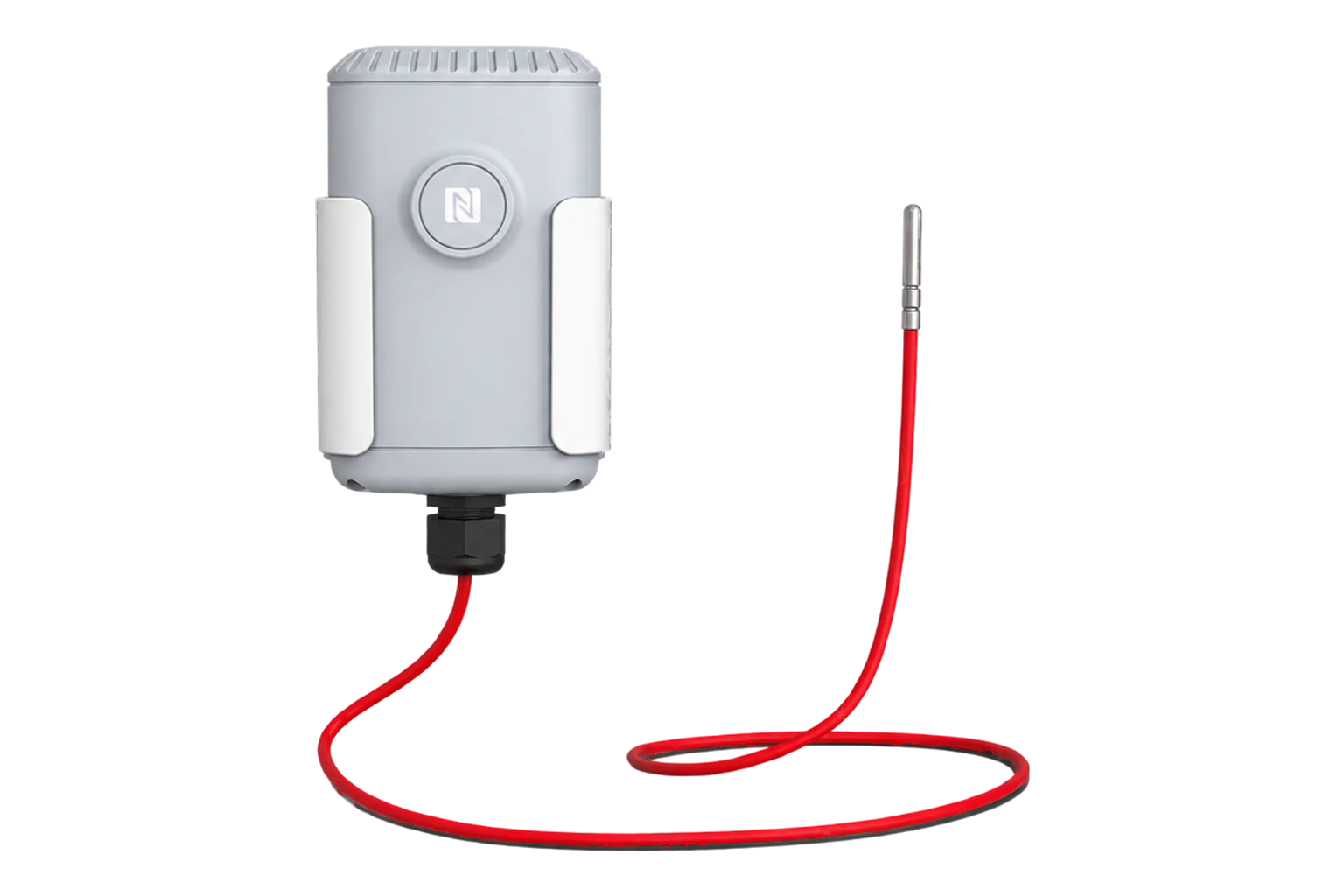
- TES-22 waterproof probes, ±0.2 °C from −20 to 70 °C, ±0.5 °C to −40 °C Probe Temperature Sensor datasheet
- On site
- ZGW-20 Gateway, Edge runs the alarms and keeps the response trail on site
Independent probe or controller reading
A refrigeration controller already measures temperature, but its probe sits in the return air so it can switch the compressor, and it belongs to the system it would be checking. For the HACCP record, fit an independent probe where the food is at most risk. Read the controller as well when you want the reason for an excursion: setpoint, defrost, evaporator temperature and its own alarms.
| Signal | Where it reads | What it is for |
|---|---|---|
| Independent TES probe | Warmest point of the unit, in air or in a product simulant | The temperature record, the alarm and the corrective action |
| Controller air probe | Return air at the evaporator, wherever the installer put it | A second signal and a cross-check on the independent probe |
| Controller state | Setpoint, defrost, evaporator probe and alarm registers | Why a unit warmed up: a defrost, a raised setpoint or a fault |
Hardware for fridge and freezer temperature monitoring
Count one probe channel for each fridge, freezer, cold room, hot cupboard and blast chiller on the HACCP plan, one Modbus interface for each controller network, and one Gateway for the site.
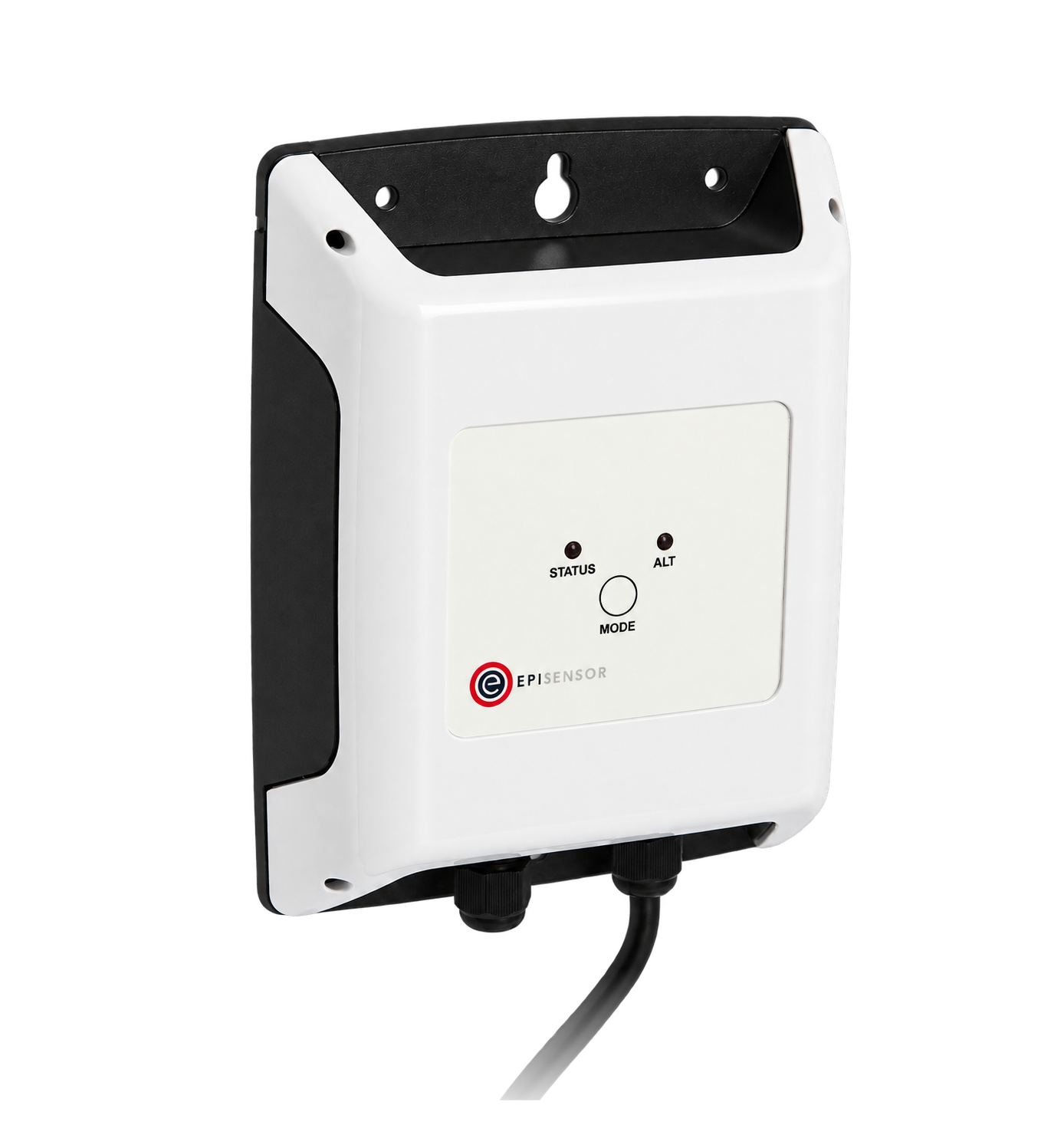
Two refrigerated units side by side, or a cold room's warmest shelf and a product simulant in the same room
1 per two units within reach of 2.5 m leads
 2 waterproof probes, 2.5 m leads
±0.2 °C from −20 to 70 °C, ±0.5 °C from −40 to 105 °C, 0.01 °C resolution
A hot cupboard, bain-marie or blast chiller, with the sensor body fixed outside the heat or the cold
1 per hot or blast unit one stainless probe, 2 m lead
 1 stainless steel probe, 2 m lead
±0.2 °C from 0 to 70 °C, ±0.5 °C from −40 to 105 °C; the sensor body is rated for −30 to 55 °C
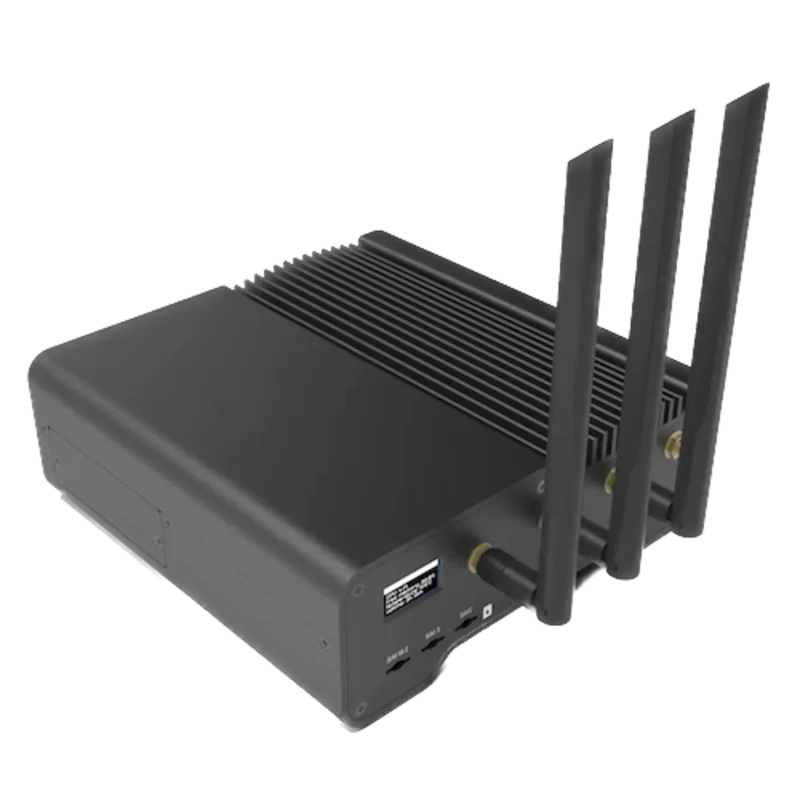
Holds the temperature record on site, runs the limit and silence rules, and keeps who answered each alert
1 per site wireless coverage checked on site
If the controllers have a Modbus port or interface card
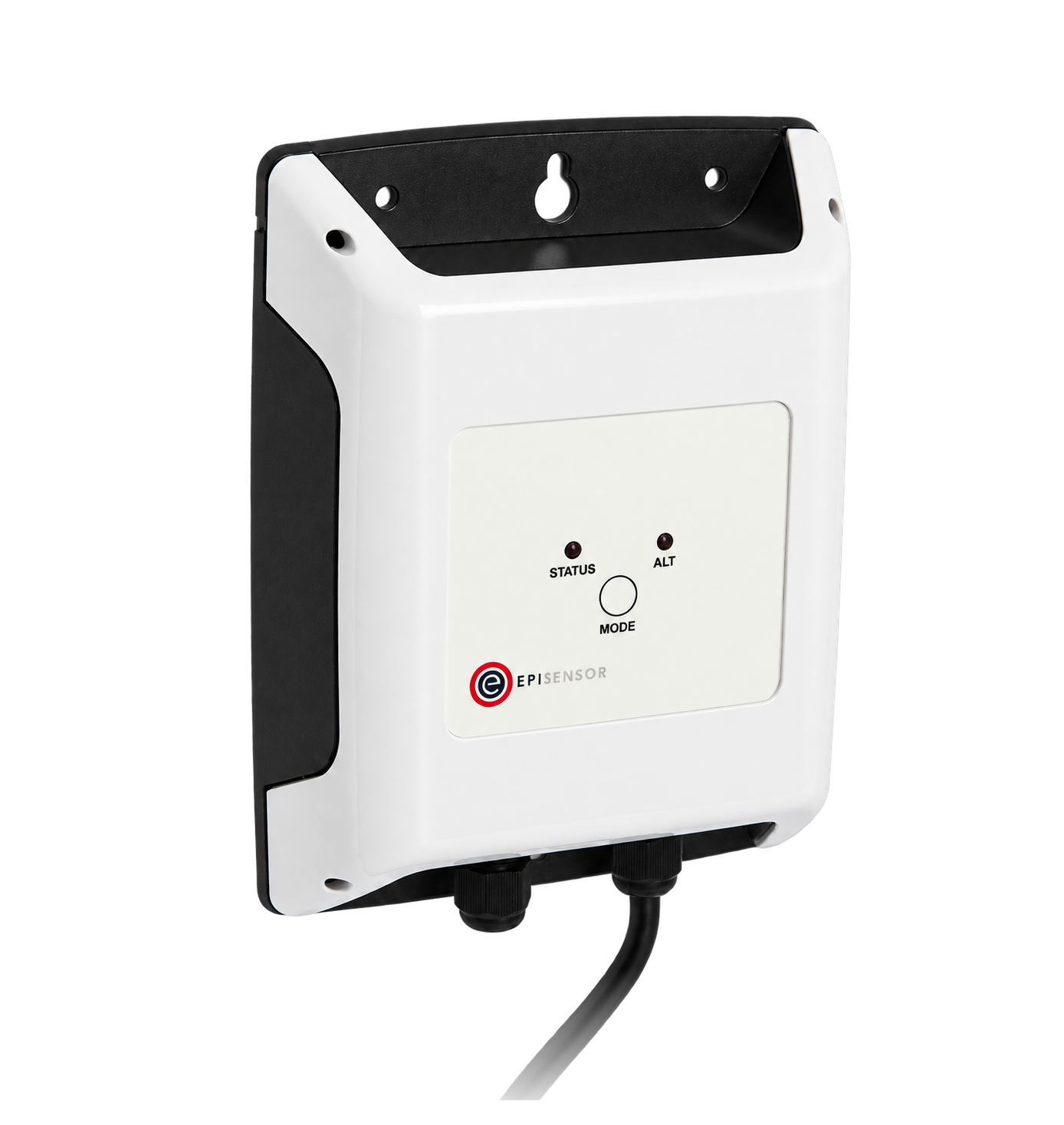
Reads air and evaporator temperature, setpoint, defrost and alarm registers from the refrigeration controllers on one RS-485 line
1 per controller network up to 30 registers
Modbus RTU master over RS-485 or TTL serial, 300 to 115,200 baud, up to 30 configured registers
Probe positions in fridges, freezers and hot cupboards
Put each probe where the food is at most risk: the warmest part of a fridge or cold room, away from the cold air leaving the evaporator and out of the draught from the door. Name every probe in Edge after the unit on the HACCP plan.
How kitchen and store temperatures reach Edge
Probe readings and controller registers take separate paths to the Gateway, where Edge keeps the record and runs the alarm rules without depending on an internet connection.
- Wired
- Zigbee
- Edge
- Platforms
| Position | What it tells you | Reference | Sensor |
|---|---|---|---|
| Fridges and chilled display | Whether chilled food stays at or below the plan's limit through service, deliveries and the night | England: 8 °C in law; the FSA recommends setting fridges at 5 °C or below FSA chilling | TES-22 (on this page), probe 1 |
| Freezers | Whether frozen stock holds its temperature, and how long the unit takes to recover after a defrost or a door left open | Quick-frozen food at −18 °C or colder, with a tolerance of up to 3 °C in retail display cabinets Directive 89/108/EEC | TES-22 (on this page), probe 2 |
| Walk-in cold room | The warmest shelf in the room, usually near the door or furthest from the evaporator | Measure air in the warmest part of a refrigerated unit FDA Food Code | TES-22 (on this page), warmest shelf |
| Hot holding | Whether hot food stays above the holding limit for as long as it is out on the pass or the counter | Keep hot food above 63 °C FSAI temperature control | TES-21 (on this page), hot cupboard |
| Blast chiller | How fast the cabinet pulls down after a load goes in, and whether each cycle reached its end | Cook-chill: food at 3 °C or below within 150 minutes of cooking ending FSAI Guidance Note 15 | TES-21 (on this page), cabinet |
| Controller registers | The unit's own air and evaporator probes, its setpoint, whether it is in defrost, and its alarm flags | Read only. Some controllers need the maker's RS-485 card or TTL adapter first | ZMB-31 (on this page) |
Follow the food, not the door. A bare probe in air jumps each time the door opens. A probe in a small sealed bottle of glycol or a product simulant changes about as slowly as the stored food, so the rule can use a shorter delay without false alarms.
Air is not core temperature. A cabinet probe shows the blast chiller pulling down and the hot cupboard holding. Whether the food itself reached its limit is still a core reading with a probe thermometer, noted against the batch.
Keep the sensor body outside. The TES enclosure is rated for −30 to 55 °C, the probe to 105 °C. Fix the body outside freezers, hot cupboards and blast chillers, and bring the lead in without damaging the door seal.
Temperature alarms and HACCP records in Edge
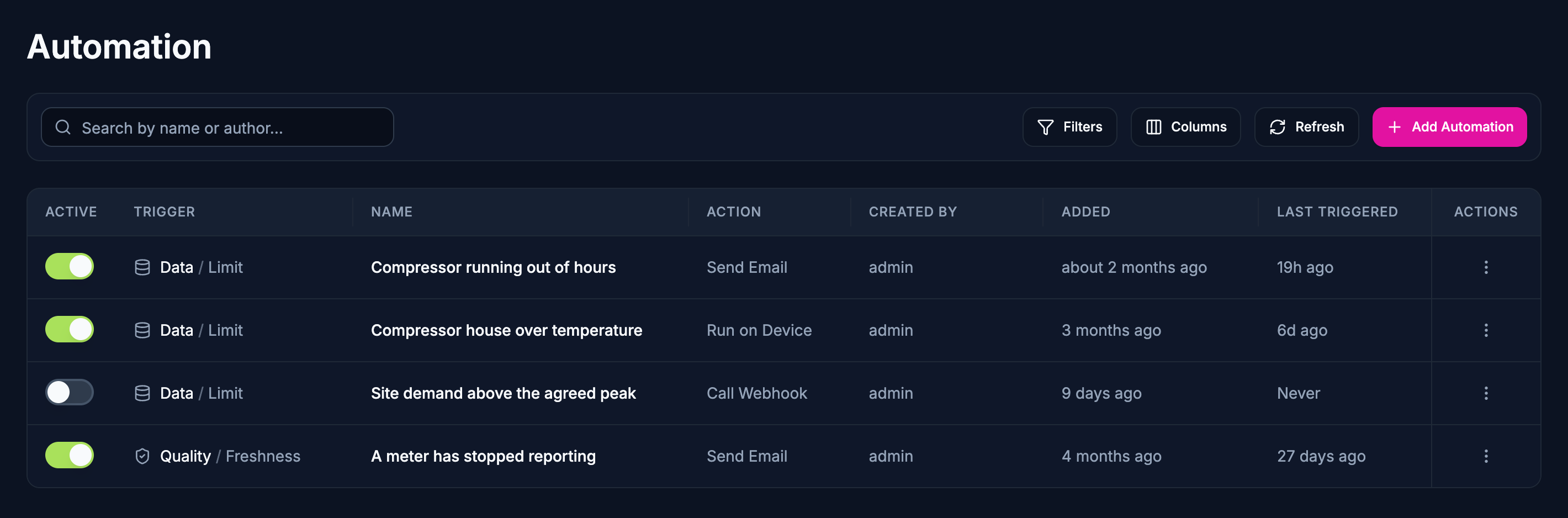
Edge runs on the Gateway, so the rules keep running and the record keeps growing when the internet connection does not. Take every limit and delay from the HACCP plan.
- A limit with a delay
- One limit rule per probe, with a hold time, so a delivery or a busy service does not alarm and a unit that stays warm does. The rule fires only when the reading has stayed past the limit for the whole delay.
- A probe that goes quiet
- An activity rule raises an alert when a probe has not reported for a set time, anywhere from one minute to a day. A flat battery or a blocked radio path is then found before the record has a hole in it.
- Who answered, and what they did
- A raised alert emails or texts the named people, can be assigned to one of them, and is acknowledged and resolved with a note of up to 500 characters. Edge keeps who took each step and when: the corrective action, written where the alarm is. Email and SMS need the Gateway's notification settings and a connection.
- As long as the plan needs
- Edge keeps local history for 30 days unless you set it longer, up to two years. Export a chosen period from the Data page as a CSV file, or send the readings on to a platform, when the plan or an inspector asks for more.
Commissioning checks
Run these before the system replaces any manual reading, and again after a unit is moved, replaced or re-gassed.
-
Every unit on the plan has a probe
List each temperature control point on the HACCP plan with its probe, position and limit, and photograph the probe in place.
Pass when every point on the plan has one named probe, and every probe in Edge belongs to one point.
-
Probes agree with a calibrated thermometer
Put a calibrated reference thermometer beside each probe and compare once both have settled.
Pass when each difference is inside the tolerance the plan accepts, and the comparison is kept with the reference certificate.
-
Warm, cold and silent all reach someone
Warm one fridge probe in a cup of water, leave a freezer door open past its delay, and take the battery out of a third sensor.
Pass when each alert reaches the person on the rota, who acknowledges it with a note, and the trail in Edge shows both steps.
-
Delays fit service and deliveries
Leave the rules running through a full service and a delivery, and note every door opening that lasted more than a minute.
Pass when routine openings do not raise an alarm, and a unit that stays warm past its delay does.
-
Controller values match the display
Compare the air temperature, setpoint and defrost state in Edge with the controller's own display, and record its model, firmware and register profile.
Pass when values, signs and the divide-by-ten scaling agree, and the ZMB writes to no register.
-
Clock and retention are set
Check the Gateway's time zone and clock, the local history period and how readings are exported or forwarded.
Pass when the retained record covers the period the plan keeps temperature records for.
Limits of HACCP temperature monitoring
The food business operator stays responsible for the HACCP plan, its critical limits and its corrective actions. This system measures, records and alerts; it does not write the plan or certify it.
- No EN 12830 or EN 13485 certification is claimed for these sensors. Where Regulation (EC) No 37/2005 applies to quick-frozen food in transport, warehousing and storage, it calls for recording instruments that comply with those standards.
- National limits differ. England sets 8 °C for chilled food in law, Scotland sets no figure, and France sets maximums from +2 °C to +8 °C depending on the food. Set each limit from the rules that apply to the site.
- Cooking, cooling and reheating are checked in the food. A probe in air or a simulant does not replace a core reading where the plan calls for one.
- Reading a refrigeration controller gives no permission to change it. Setpoints and defrost settings stay with the refrigeration contractor.
- Alerts depend on a working notification path and someone on the rota to receive them. Edge keeps the latest 200 alerts by default, so export the records the plan keeps for longer.
Sources
- Regulation (EC) No 852/2004 on the hygiene of foodstuffs (opens in a new tab) (opens in a new tab) European Parliament and Council
- General Principles of Food Hygiene, CXC 1-1969, revised 2022 (opens in a new tab) (opens in a new tab) FAO and WHO Codex Alimentarius Commission
- Commission Regulation (EC) No 37/2005 on the monitoring of temperatures of quick-frozen foodstuffs (opens in a new tab) (opens in a new tab) European Commission
- Council Directive 89/108/EEC on quick-frozen foodstuffs for human consumption (opens in a new tab) (opens in a new tab) Council of the European Communities
- The Food Hygiene (England) Regulations 2013, Schedule 4: temperature control requirements (opens in a new tab) (opens in a new tab) legislation.gov.uk
- Food hygiene for your business: chilling and freezing (opens in a new tab) (opens in a new tab) Food Standards Agency
- Temperature control for caterers (opens in a new tab) (opens in a new tab) Food Safety Authority of Ireland
- Guidance Note No. 15: Cook-Chill Systems in the Food Service Sector, revision 2 (opens in a new tab) Food Safety Authority of Ireland
- Arrêté du 21 décembre 2009 relatif aux règles sanitaires applicables aux activités de commerce de détail (opens in a new tab) (opens in a new tab) Légifrance
- Food Code 2026 (opens in a new tab) (opens in a new tab) U.S. Food and Drug Administration
- Probe Temperature Sensor datasheet (opens in a new tab) EpiSensor. Specifications, ranges and ordering codes.
Related
-
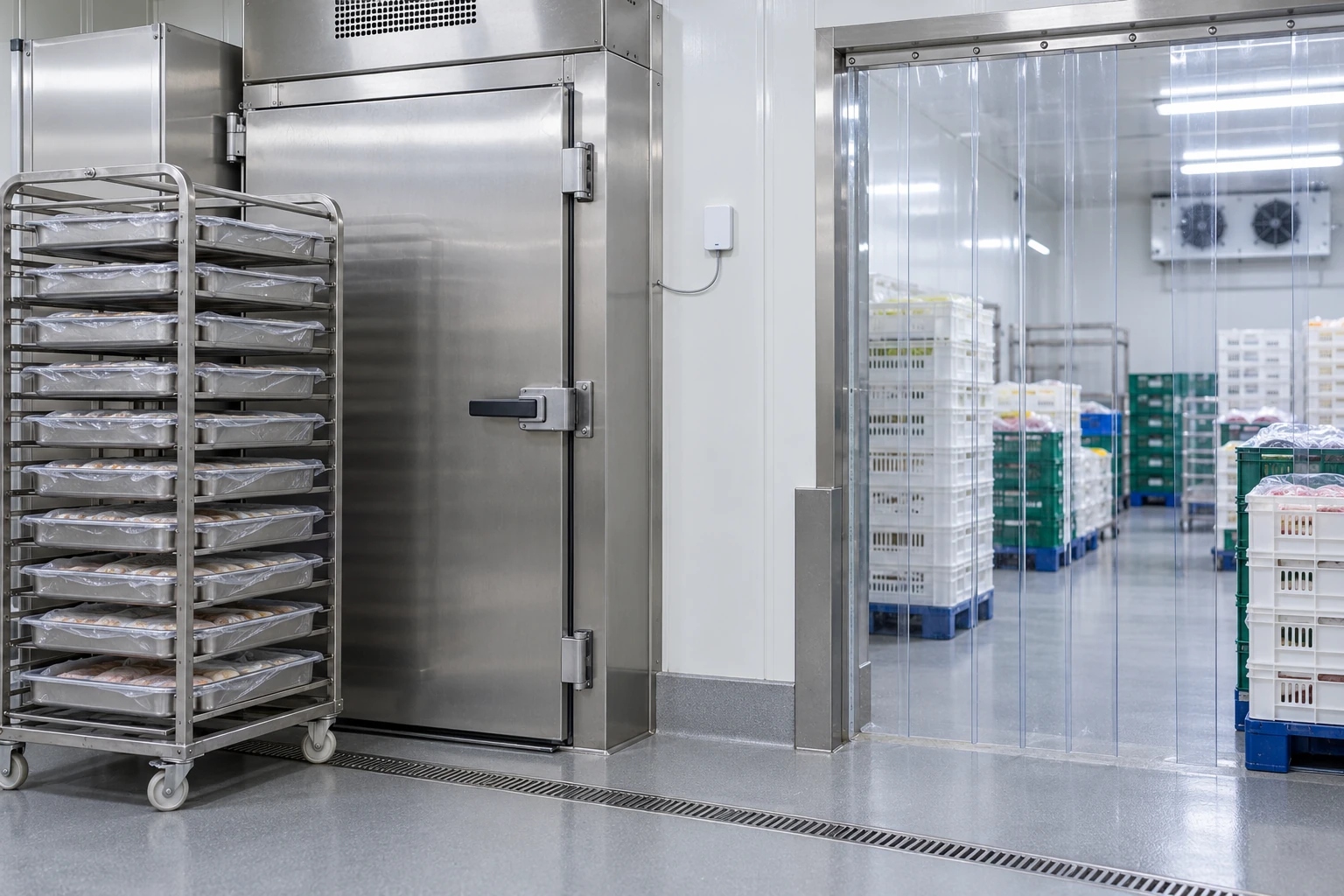
Food processing temperature monitoring
Probes in chill stores, cutting rooms, blast chillers and the dispatch bay, the plant's refrigeration controllers read over Modbus, and cooling-time alarms tied to each chiller cycle. -

Cold room and cold store temperature monitoring
Probes at the warm and cold points a mapping study found, one in the product zone, and alarms that carry a delay so a door opening is not an incident. -
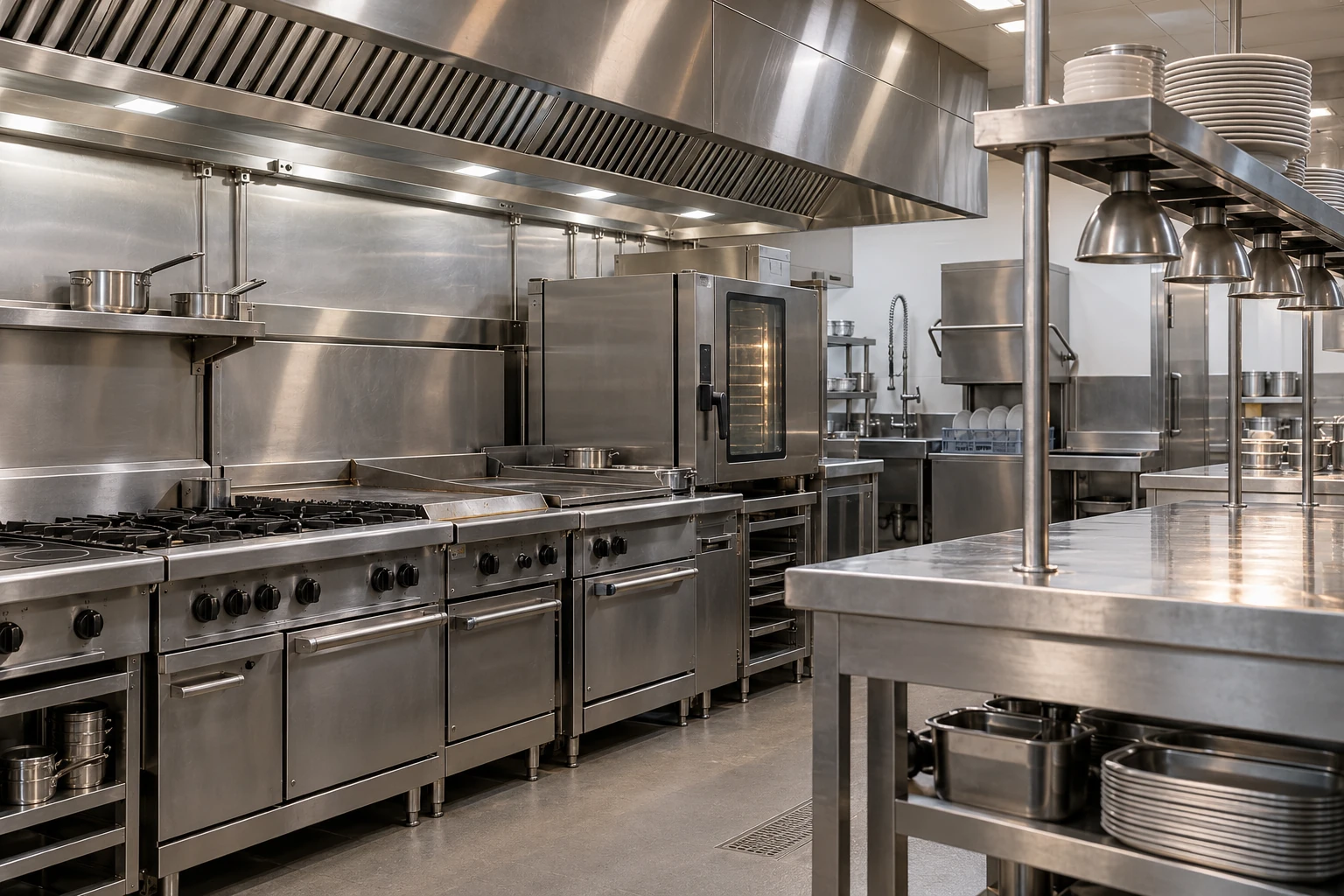
Commercial kitchen energy management
Monitor cooking, refrigeration, extract, hot water and dishwashing electricity, then compare it with service activity and closed-hours baseload.
- CalculatorModbus register decoder
- GuideHACCP temperature control: critical limits, monitoring and records
- GuideFood storage temperatures: chilled and frozen limits by country
Third-party devices for this application
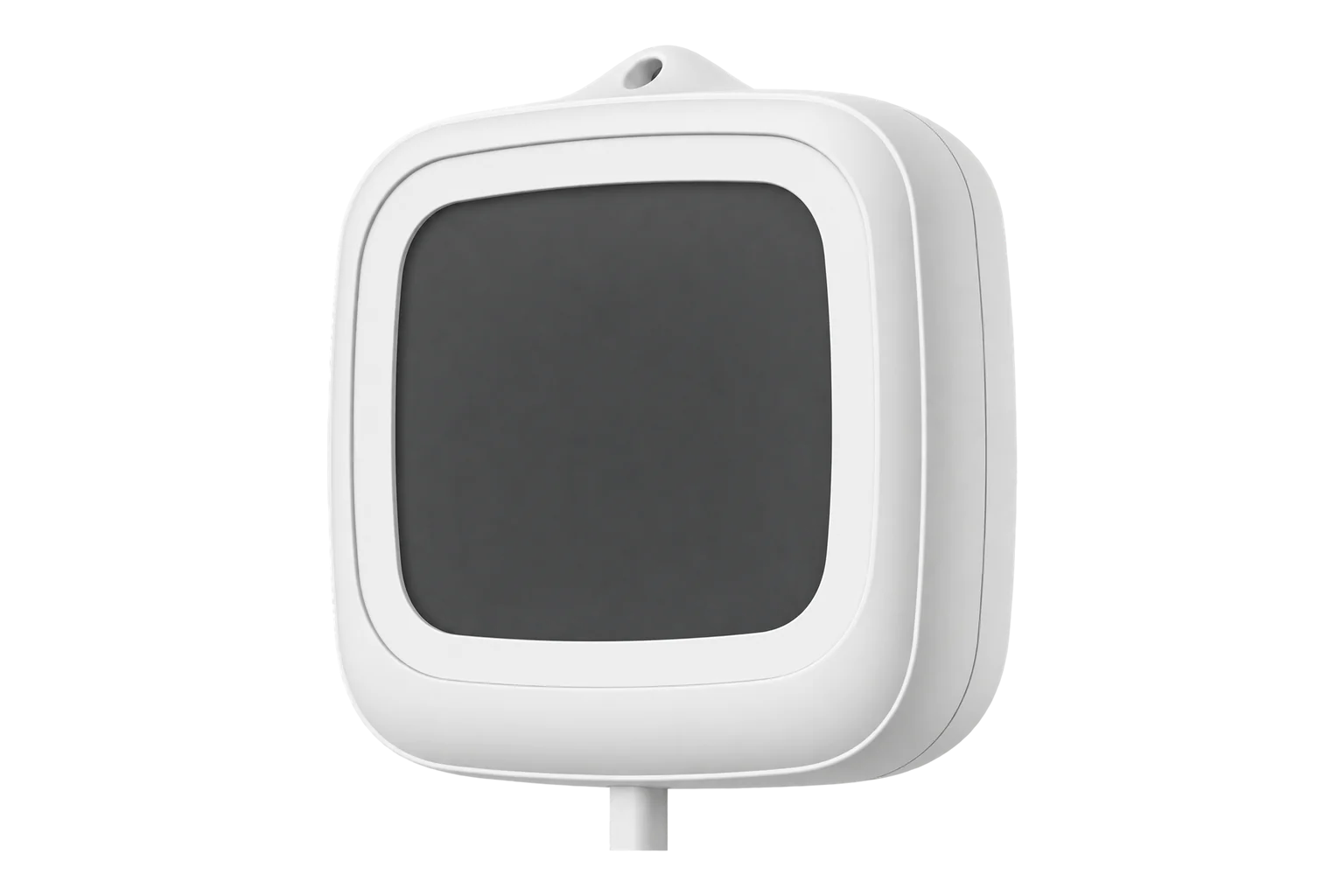
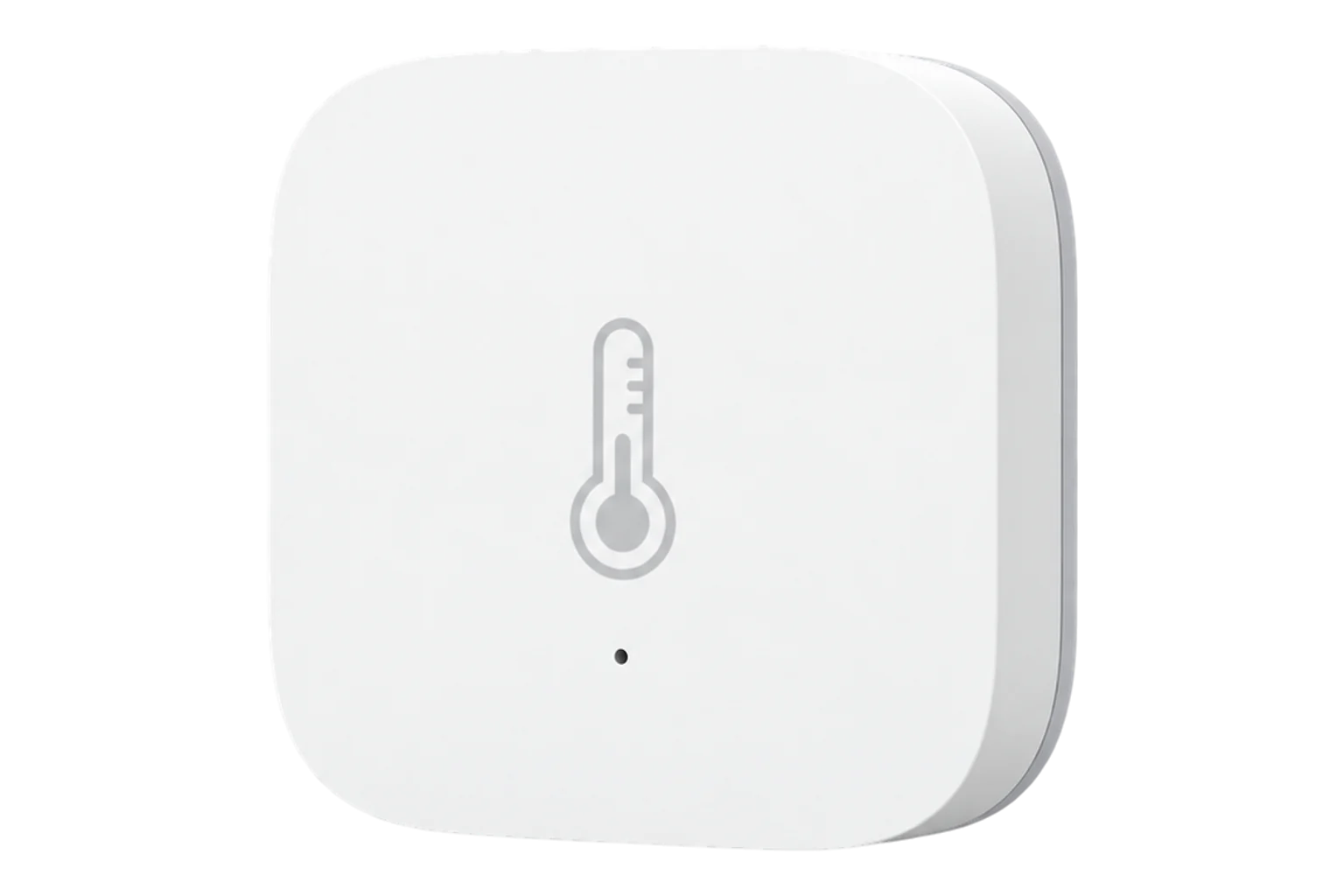
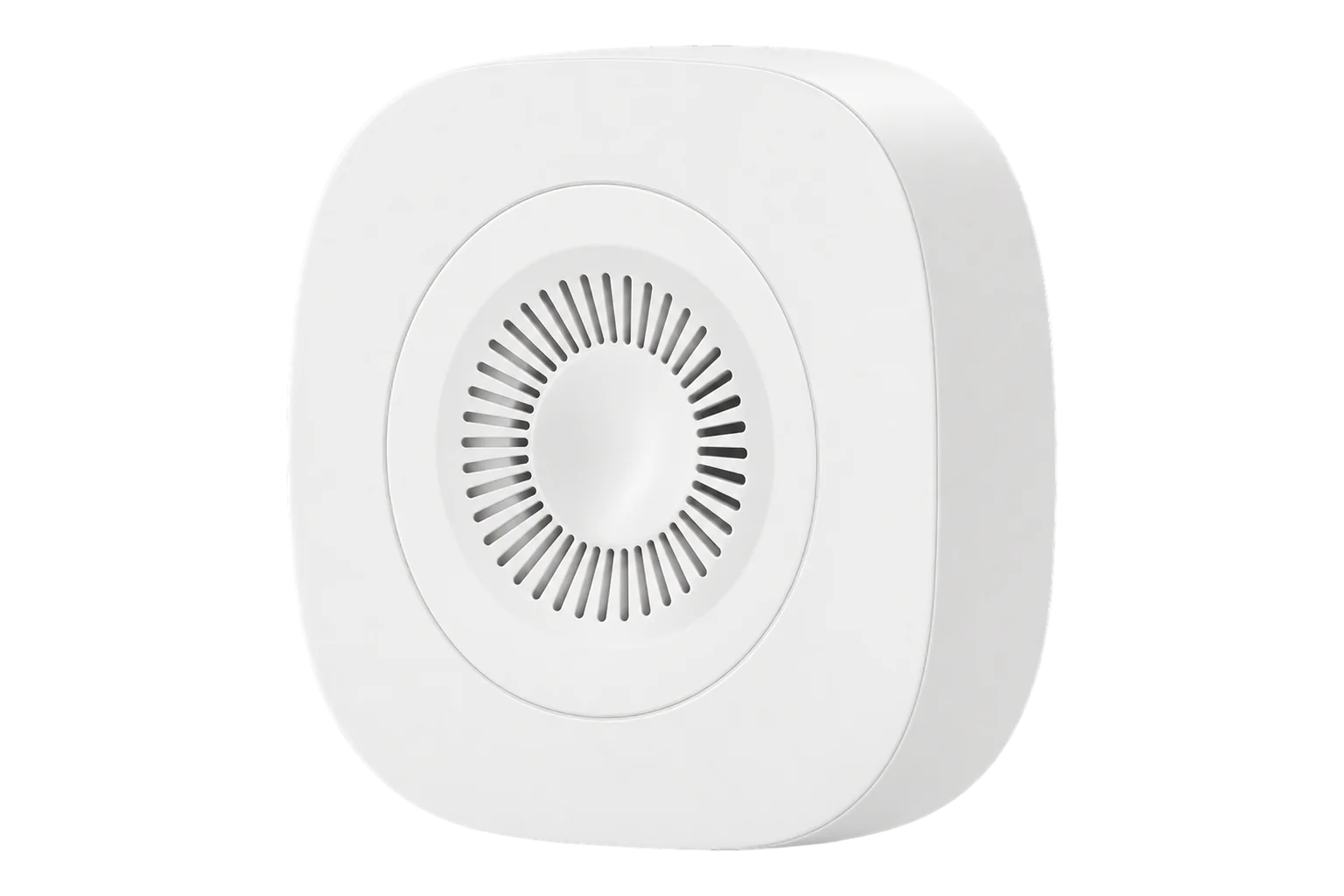
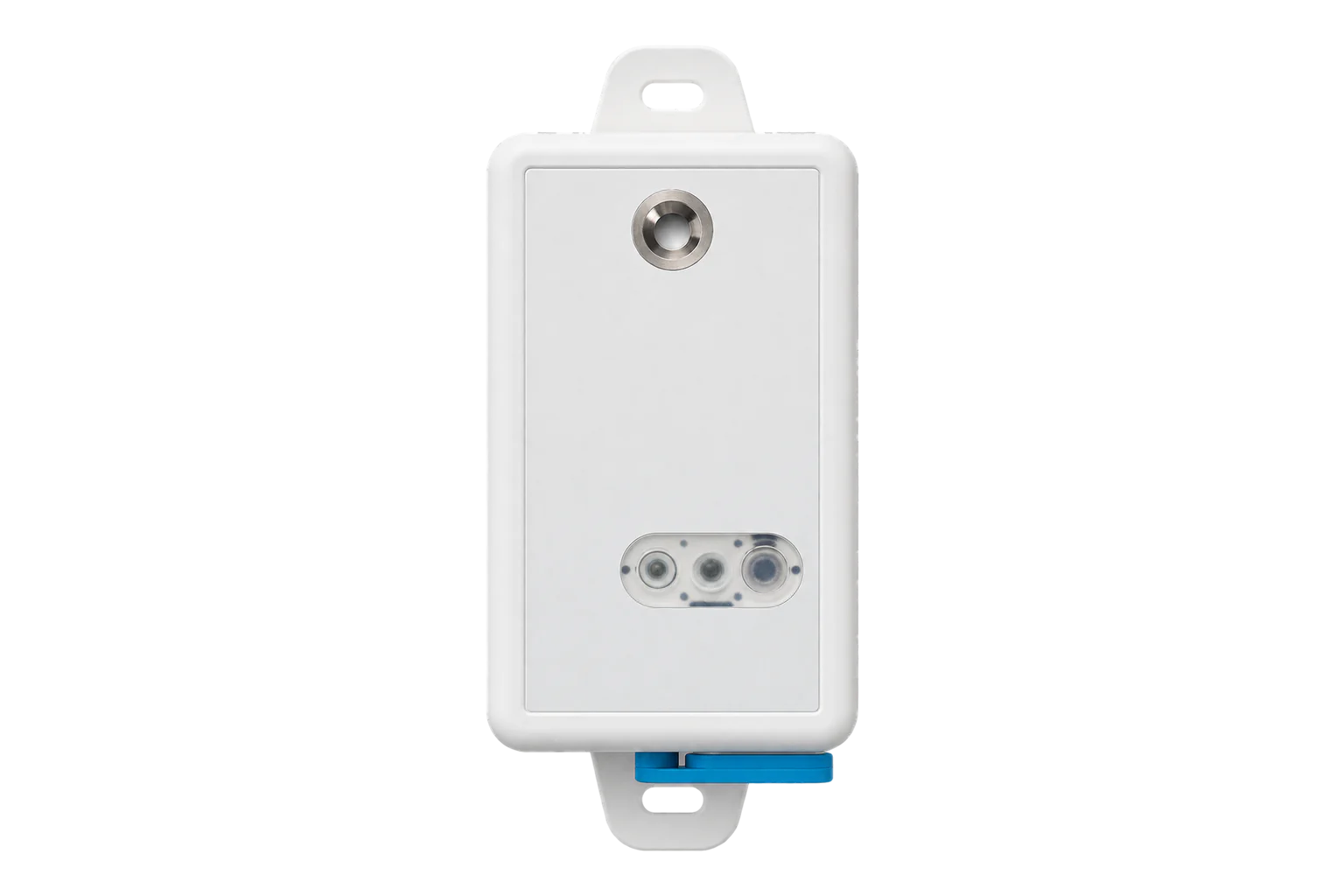
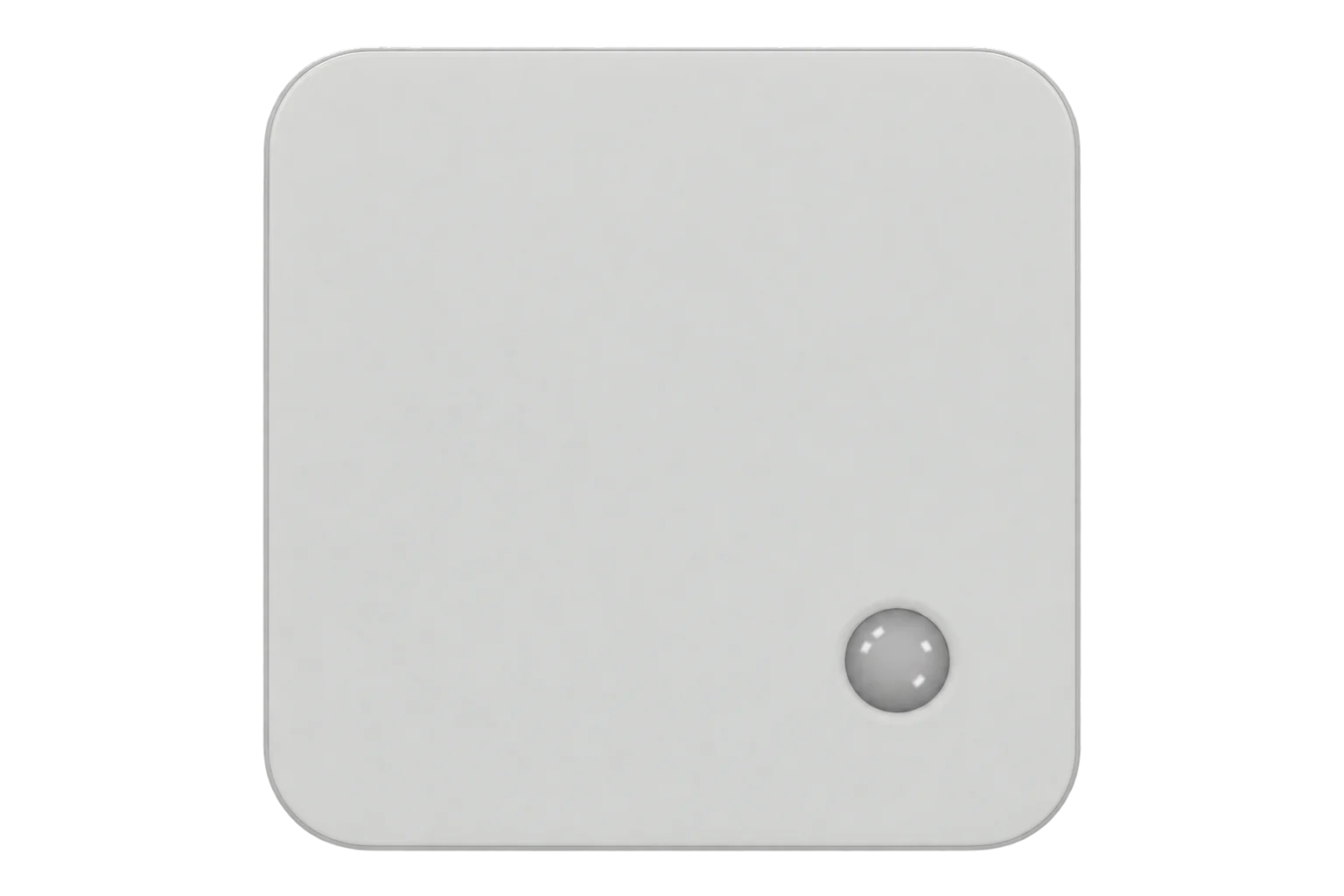
More in the Device Directory: Temperature and humidity sensors (21)
Turn the HACCP plan into probe positions
Share the plan's list of fridges, freezers, cold rooms, hot holding and blast chillers, and the controller models. An engineer can place the probes, check the controllers' Modbus ports and size the Gateway.