Wireless 3-Phase Electricity Monitor

ZEM-65

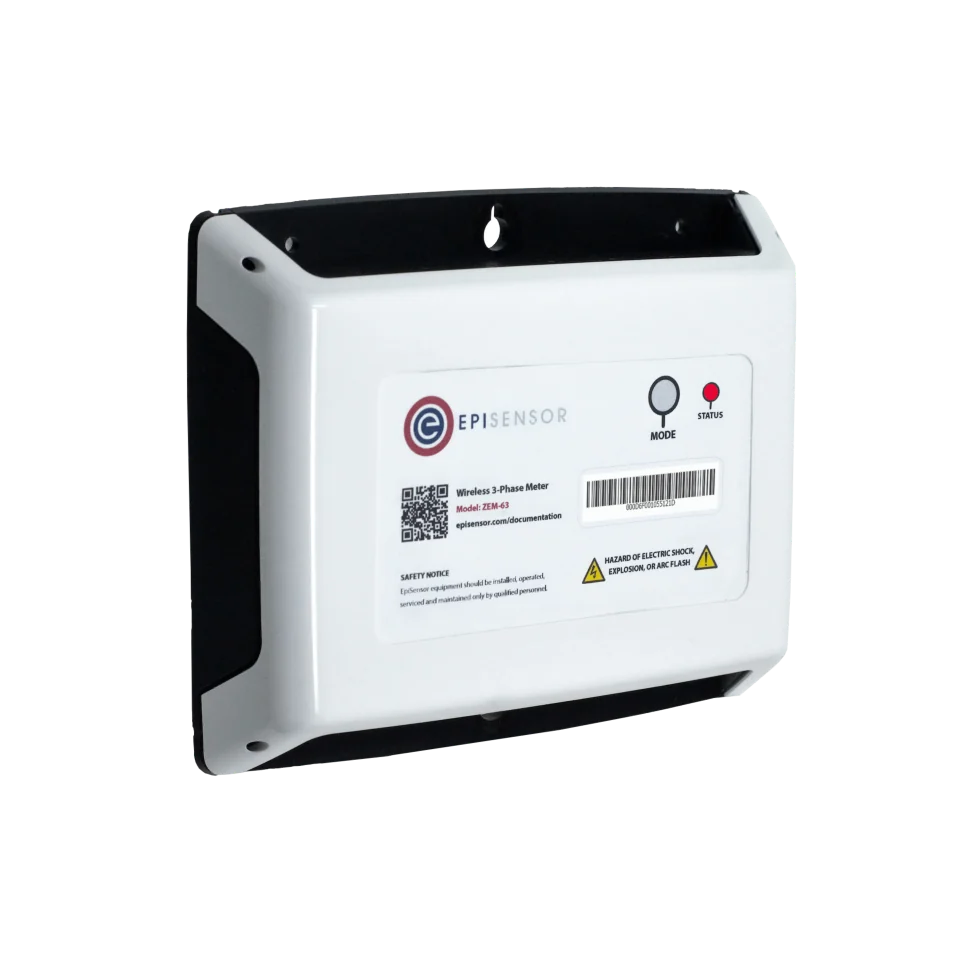
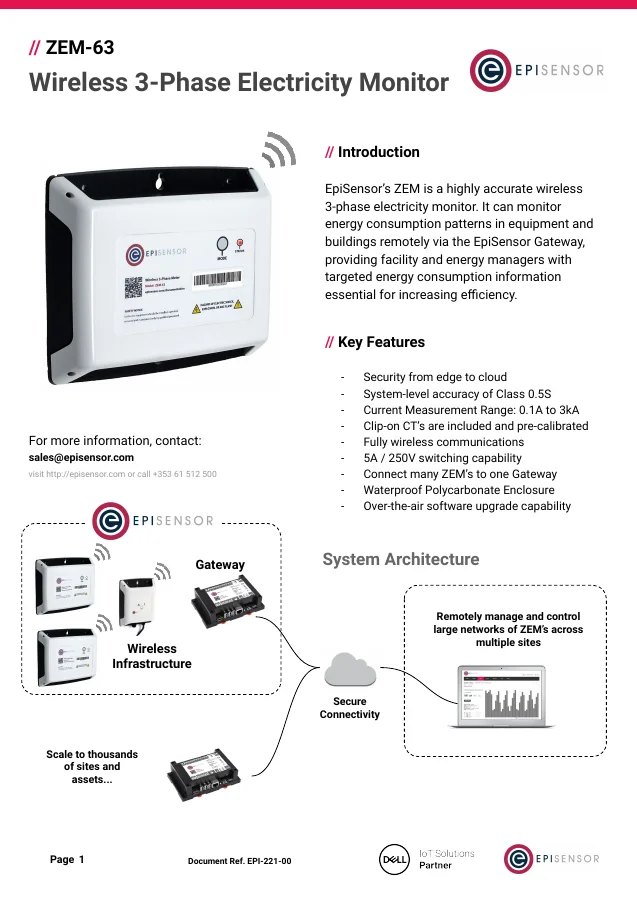
Three-phase metering at Class 0.5S for the whole measurement, with the current sensors connected and calibrated before it ships. Rogowski coils connect directly, with no integrator, and readings travel over the Zigbee mesh to the Gateway.

From €625 ex VAT Works with the Gateway

EpiSensor Wireless 3-Phase Electricity Monitor

Features

The CTs arrive connected and calibrated

Most three-phase meters are sold on their own, and the accuracy class covers the meter alone. A ZEM’s current transformers are fitted and calibrated against that meter before it ships, so Class 0.5S describes the whole measurement. Nothing to size, match or calibrate on site.
0.5S accuracy class, system level

Rated to IEC 62053-22 for the meter and its current sensors together, from 0.1 A to 3 kA, with frequency to ±0.01 Hz.

Rogowski coils, no integrator

A Rogowski coil normally needs an integrator between it and the meter: another box to buy, power and wire. The ZEM takes the coil directly, on the same terminals as a split-core CT.

One device, no data cable

Readings travel over Zigbee, so nothing has to be run back to a panel or a gateway, and there is no serial bus to address, terminate or commission. Mount it, clip the CTs on, reference the voltage, and it reports.

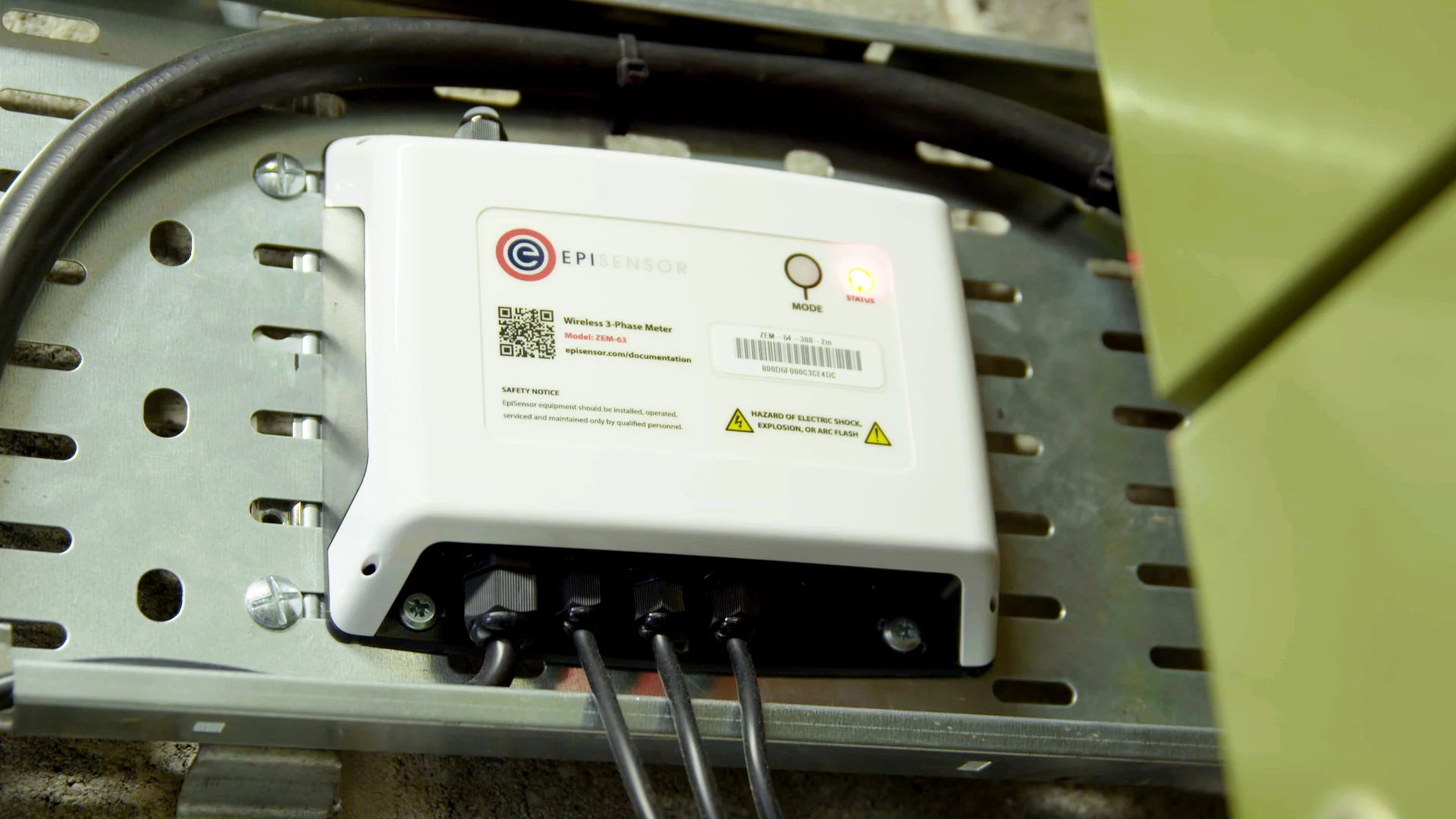
Mounts inside or outside panels

IP67 and double-insulated, so it can go inside or outside an electrical panel, indoors or out, from −30 °C to 60 °C. Standard supplies: 110–480 V AC line to line, 3-wire or 4-wire, 50 or 60 Hz, rated CAT III at 480 V.

Up to 30 data feeds

Turn each feed on or off individually to suit the site.

  • kWh
  • kVAh
  • RMS voltage
  • RMS current
  • Power factor
  • Frequency

Security

AES-128 on the mesh and TLS 1.2 or later from the Gateway onwards. No EpiSensor cloud service is required, and customer data never passes through our servers.

Every ZEM extends the mesh

Readings reach the Gateway over a self-healing Zigbee mesh. Each mains-powered device adds about 1,000 m² of coverage, and one Gateway carries 250 devices.

Configure and buy

Choose the options for your site. The summary shows the line that goes into your cart.

Not sure this is the right product for your site? Build a system

Works with

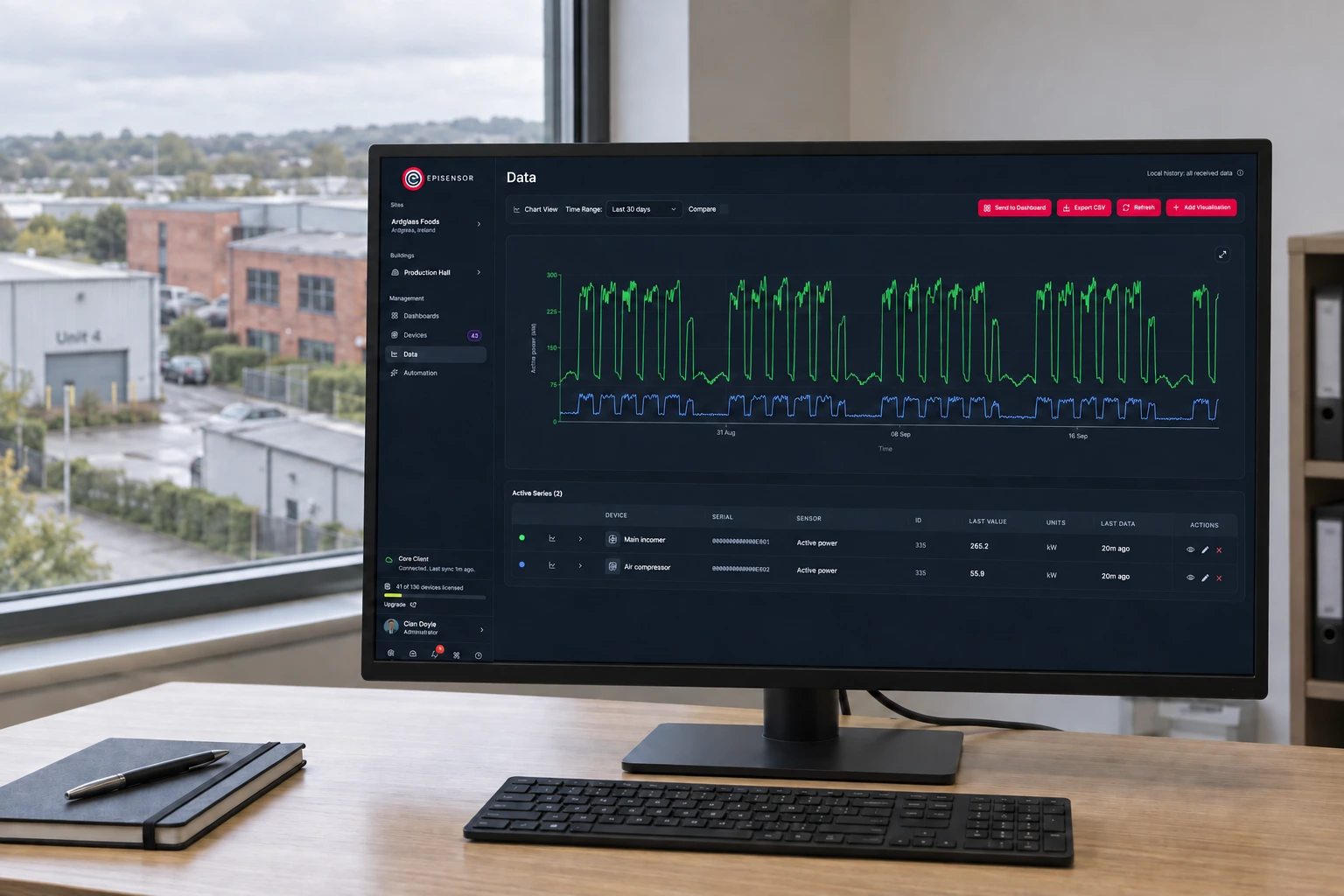
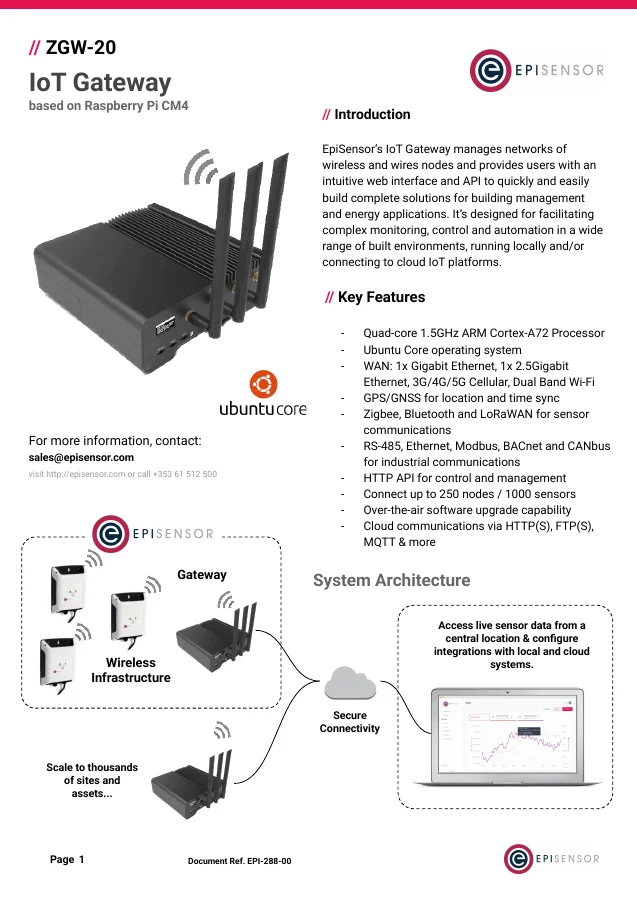
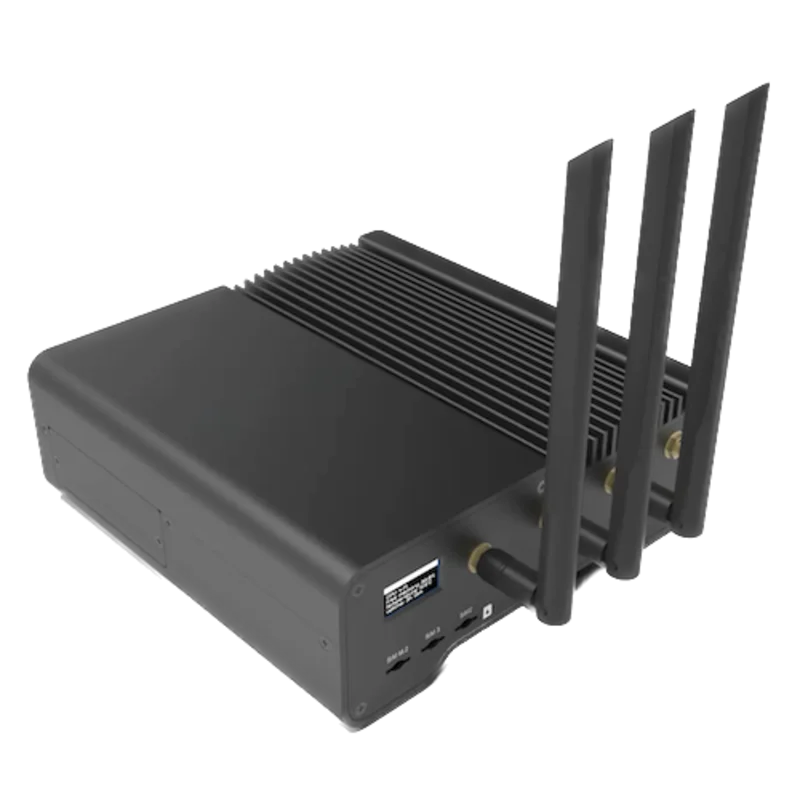
It reports over the Zigbee mesh to the Gateway, which runs Edge on site.

Used in

27 more applications for this product

All application guides

Questions engineers ask

What does system-level Class 0.5S mean?

What does system-level Class 0.5S mean?

Class 0.5S is the active-energy accuracy class in IEC 62053-22. A meter is normally tested on its own, and the current transformers fitted on site add their own error. Each ZEM is calibrated with the current sensors it ships with, so the class describes the meter and its sensors together, from 0.1 A to 3 kA.

Which current sensor should I choose?

Which current sensor should I choose?

Size it to the per-phase current of the circuit and to the conductor it has to go around. The 120 A split-core CT has a 14 mm aperture. For larger cables and busbars the flexible Rogowski coils go around 70 mm (300 A) or 120 mm (1000 A and 3000 A) conductors.

Do Rogowski coils need an integrator?

Do Rogowski coils need an integrator?

Not with a ZEM. The coil lands on the same terminals as a split-core CT and the ZEM integrates the signal itself, so there is no separate integrator to buy, power or wire.

Who can install it, and where?

Who can install it, and where?

A qualified electrician, to local wiring rules. The ZEM is IP67 and double insulated, so it can go inside or outside a panel, indoors or out, from −30 °C to 60 °C. It needs a voltage reference and an auxiliary supply of 85 to 480 V AC.

How far does the radio reach?

How far does the radio reach?

Up to 50 m indoors and 300 m outdoors between devices. Every mains-powered EpiSensor device also relays for its neighbours, so coverage grows as the network grows: on average each one adds about 1,000 m² of commercial floor area.

Does it need an EpiSensor cloud service?

Does it need an EpiSensor cloud service?

No. Readings go to the ZGW-20 Gateway, where Edge stores and shows them and sends them to the platforms you choose. No customer data passes through EpiSensor servers.