A 100/5 CT close to its meter
At 60 A the CT gives 3 A. A short lead loop of 0.1 Ω uses 5² × 0.1 = 2.5 VA and the meter 1 VA, so 3.5 VA of the 5 VA rating is used.
Secondary current 3 A Open in the calculator
Check an existing current transformer: its secondary current at the measured load, and whether the meter and the secondary wiring stay within its rated burden.
gives3on the secondary, 60% of its rated 5 A
Primary current against the rating
60In the range the accuracy class covers
Burden at the rated 5 A
1.5 VA spareLongest lead run each way, copper at 75 °C, within 5 VA
Secondary current
3A
Check the values to see a result.
Meter and lead burden are added as magnitudes, which errs on the safe side. Never open a CT secondary while the primary carries current.
Is = Ip ÷ (Ip,rated ÷ Is,rated)burden = VAmeter + Is,rated² × Rloop
A 100/5 CT carrying 60 A gives 3 A on its secondary. The meter and leads use 3.5 VA of its 5 VA rated burden.
Tip: With a 5 A secondary, the leads use burden 25 times faster than with 1 A: a long run to the meter is where 1 A CTs earn their place.
A current transformer’s burden is everything connected to its secondary: the meter input, the wiring out and back, and the terminals. Each is a load in VA at the rated secondary current, and together they must stay within the CT’s rated burden, or the CT loses accuracy. The calculator gives the secondary current at your load and checks the burden, including the leads.
Is = Ip × Is,rated ÷ Ip,rated
A 100/5 CT has a ratio of 20. At 60 A in the primary it delivers 60 ÷ 20 = 3 A.
VAleads = Is,rated2 × Rloop
Rloop is the resistance of the whole secondary loop, out and back. It is worked out at the rated secondary current, the point the CT’s rating refers to.
VAtotal = VAmeter + VAleads ≤ VArated
Add the meter burden from its datasheet. Adding the two as plain numbers slightly overstates the total, which errs on the safe side.
Because burden goes with the square of the current, a 5 A CT puts 25 times the load on the same leads as a 1 A CT. On long runs between the CT and the meter, 1 A secondaries are the usual answer.
At 60 A the CT gives 3 A. A short lead loop of 0.1 Ω uses 5² × 0.1 = 2.5 VA and the meter 1 VA, so 3.5 VA of the 5 VA rating is used.
Secondary current 3 A Open in the calculator
The meter is 20 m away on 2.5 mm² copper, a loop of about 0.3 Ω. At 5 A the leads alone use 7.5 VA, so with the meter the burden is 8.5 VA, well over a 5 VA rating. The CT gives 3.125 A at 250 A, but its accuracy class no longer holds.
Secondary current 3.125 A Open in the calculator
With a 400/1 CT the same leads use 1² × 0.3 = 0.3 VA. With a 0.5 VA meter input the total is 0.8 VA, comfortably within 5 VA. At 250 A the secondary carries 0.625 A.
Secondary current 0.625 A Open in the calculator
The burden the secondary wiring adds at rated current. For the loop resistance, take the conductor resistance per metre times twice the one-way length: 2.5 mm² copper is about 7.4 mΩ per metre at 20 °C, and the conductor resistance calculator works out others.
| Loop resistance (Ω) | 5 A secondary (VA) | 1 A secondary (VA) |
|---|---|---|
| 0.02 | 0.5 | 0.02 |
| 0.05 | 1.25 | 0.05 |
| 0.1 | 2.5 | 0.1 |
| 0.15 | 3.75 | 0.15 |
| 0.2 | 5 | 0.2 |
| 0.3 | 7.5 | 0.3 |
| 0.5 | 12.5 | 0.5 |
| 0.75 | 18.75 | 0.75 |
| 1 | 25 | 1 |
| 1.5 | 37.5 | 1.5 |
| 2 | 50 | 2 |
The load on the CT’s secondary, in VA at the rated secondary current. It includes the meter or relay input, the wiring and the connections. A CT meets its accuracy class only while the burden is within its rating.
For short runs inside a panel, either works. For long runs, 1 A: the wiring burden is 25 times lower for the same cable. Match the secondary to the meter input.
The CT needs more voltage to drive its current through the load. Its ratio and phase errors grow, and at high currents it can saturate and under-read.
A current-output CT forces its current into whatever is connected. With the secondary open and the primary carrying current, the voltage across the terminals can rise to dangerous levels and damage the CT. Short the secondary with the shorting link before disconnecting the meter.
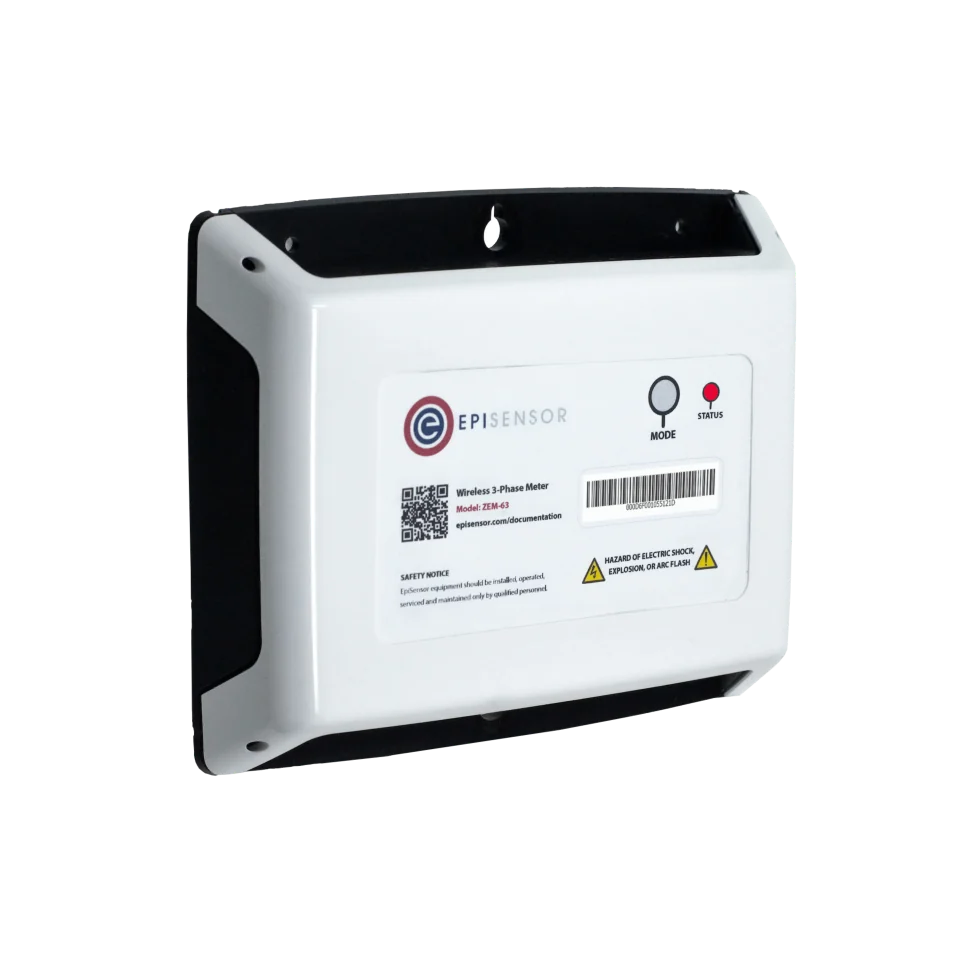
A ZEM ships with its CTs connected and calibrated to the meter, and Class 0.5S describes the whole measurement, so there is no burden to work out on site.