Sinopé TH1124ZB
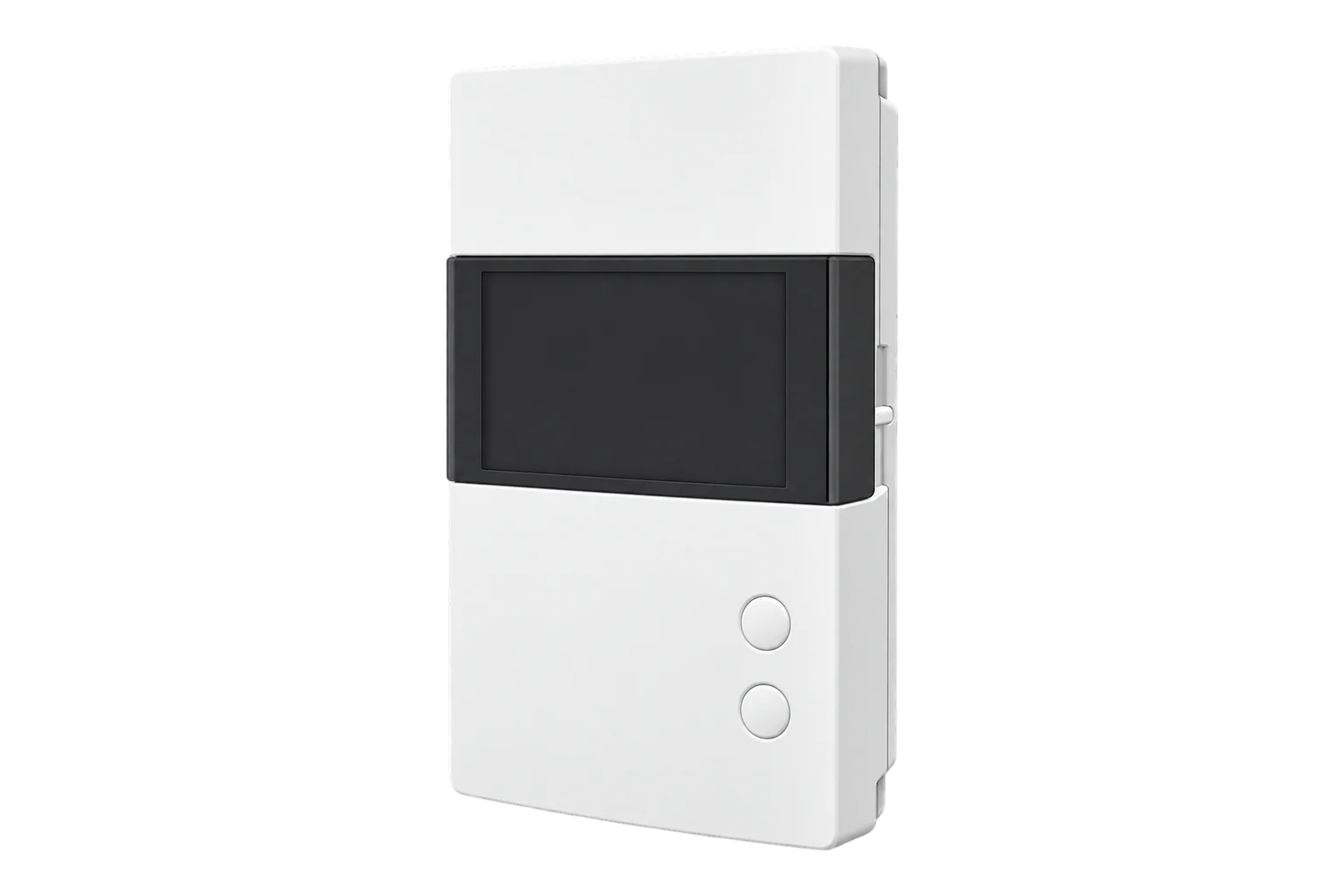
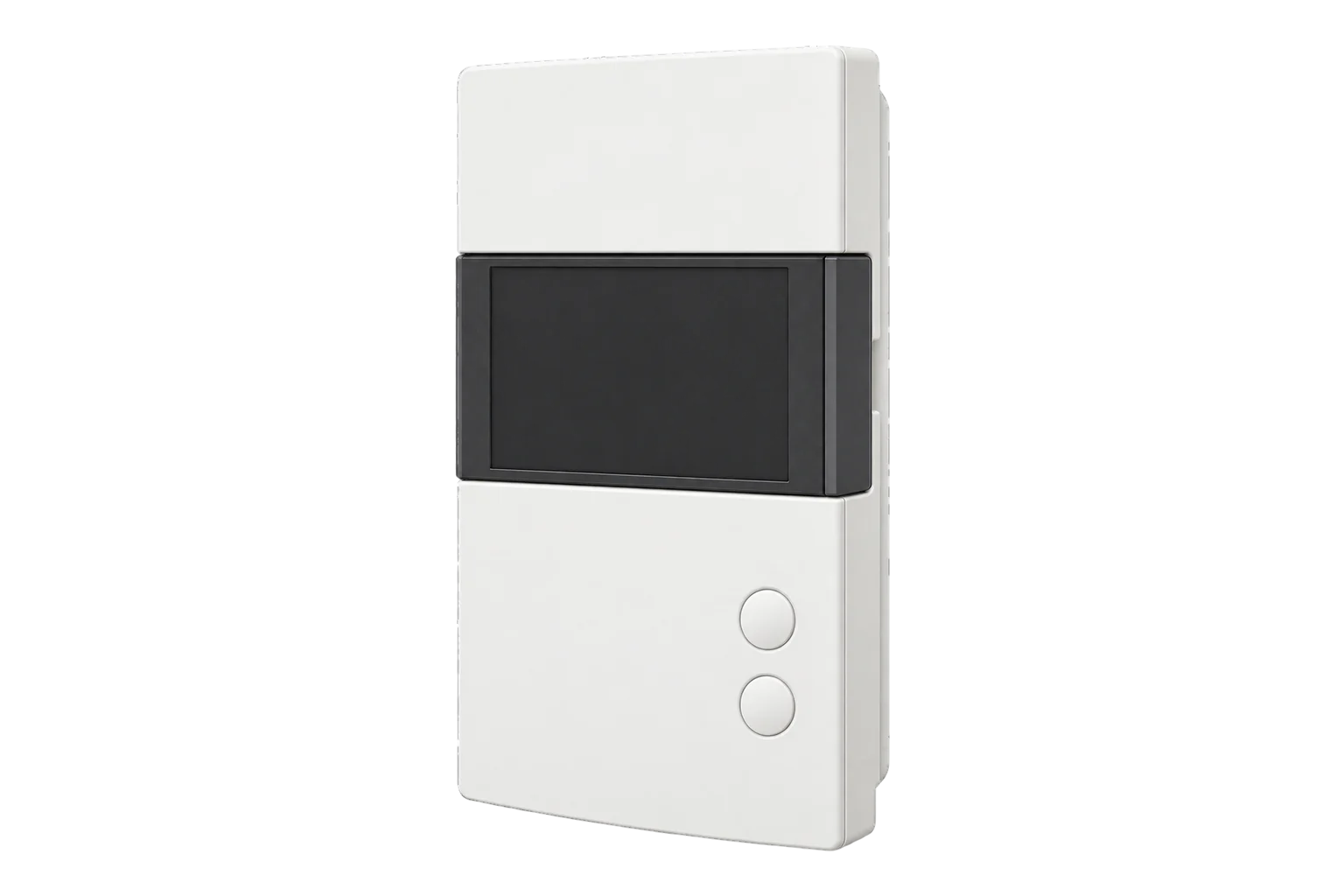
Line-voltage thermostat
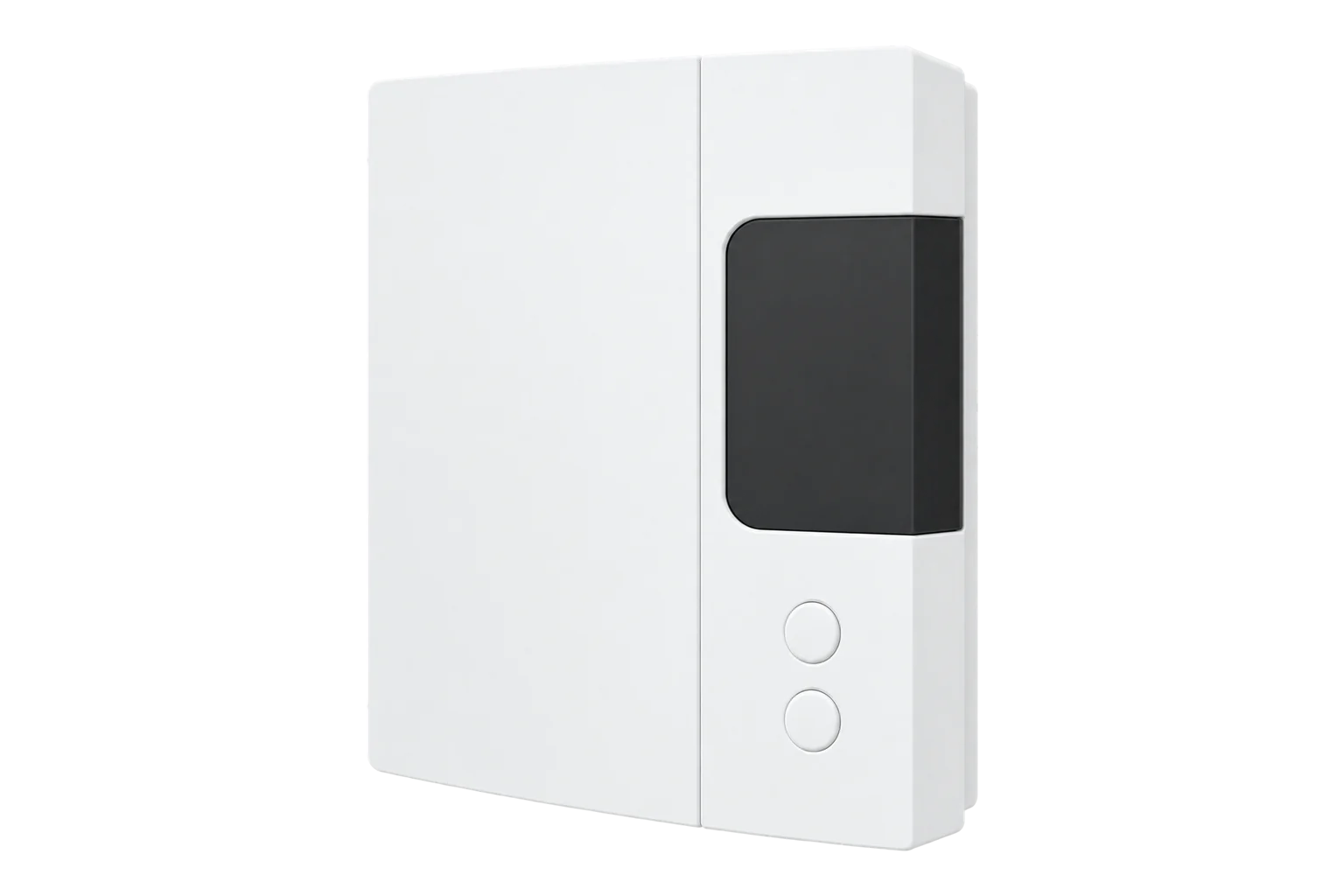
The 4000 W version of Sinopé’s Zigbee 3.0 baseboard thermostat, for electric heaters drawing up to 16.7 A at 240 V. It switches the heater through a triac and reports the heater’s voltage, current, power and energy.
- Zigbee
Line-voltage thermostat
Compatibility
Compatible with EpiSensor Edge over Zigbee.
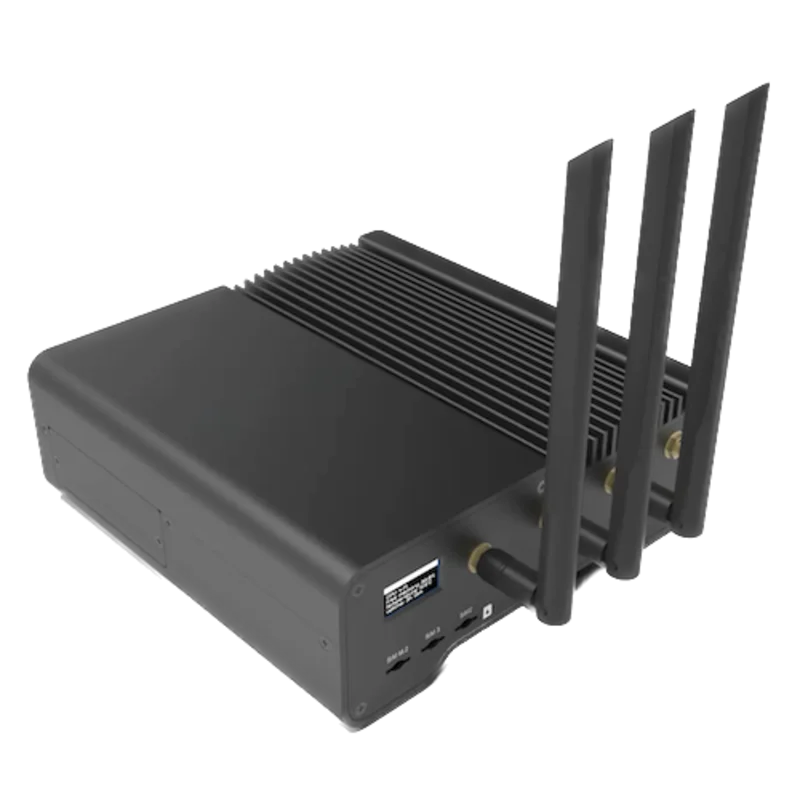
Pair it with the Zigbee radio on an EpiSensor Gateway. Edge reads it locally on the Gateway.
Edge reads 20 values from it, listed under Interface.
Connect it with
-
Gateway ZGW-20From €899 ex VAT Configure Gateway
Specifications
The extra current allows more baseboard length, or several heaters, on one thermostat. Sinopé rates it for resistive loads only. The minimum load is the same as the TH1123ZB: 2 A (500 W at 240 V) for a baseboard, convector or radiant ceiling, and 4.16 A (1000 W at 240 V) for a fan-forced convector. The housing is 115 mm wide, against 85 mm for the TH1123ZB. Sinopé notes that a warm housing is normal.134
- Power
- Mains. Powered from the heating circuit it controls, so it needs no battery or separate supply.1
- Supply voltage
- 120, 208 or 240 V AC, 60 Hz1
- Switching
- Triac1
- Maximum load
- 16.7 A: 4000 W at 240 V AC, 2000 W at 120 V AC1
- Minimum load, baseboard, convector or radiant ceiling
- 2 A: 500 W at 240 V AC, 250 W at 120 V AC1
- Minimum load, fan-forced convector
- 4.16 A: 1000 W at 240 V AC, 500 W at 120 V AC1
- Load type
- Resistive only1
- Setpoint range
- 5 to 30 °C1
- Display range
- 0 to 50 °C1
- Resolution
- ±0.5 °C1
- Operating temperature
- 0 to 50 °C1
- Storage temperature
- -20 to 50 °C1
- Wiring
- Two-wire or four-wire, non-polarised2
- Wireless
- Zigbee 3.0, 2.4 GHz, +20 dBm transmit, -108 dBm receive sensitivity, AES-1281
- Size (H × W)
- 127 × 115 mm3
- Standard
- CSA C828-191
- Warranty
- 3 years1
Where it is used
Heating energy per room or zone in buildings heated by long electric baseboard runs, from each thermostat’s own power and energy readings.
HVAC energy monitoring for commercial buildingsRoom temperature and setpoint history for comfort checks and heating schedules.
Indoor environmental monitoringReducing electric heating load during a peak period with the eco mode setpoint offset.
Interface
Readings and settings, with units and ranges where Sinopé publishes them. readable, readable and writable.8
| Reading | Unit | Range or values | Access |
|---|---|---|---|
| Measurements 7 | |||
| Room temperatureThe temperature the thermostat regulates to. | °C | - | Read only |
| Heating demandHeating output the thermostat’s control loop is calling for. | % | 0 to 100 % | Read only |
| Heating stateWhether the output is heating. | - | idleheat |
Read only |
| PowerPower drawn by the heater. | W | - | Read only |
| VoltageSupply voltage at the thermostat. | V | - | Read only |
| CurrentCurrent through the heater. | A | - | Read only |
| EnergyCumulative energy delivered to the heater. | kWh | - | Read only |
| Controls 3 | |||
| Occupied setpointTarget temperature while occupied, in 0.5 °C steps. | °C | 5 to 30 °C | Read and write |
| ModeHeating on or off. | - | offheat |
Read and write |
| Eco mode offsetSetpoint offset for demand response, in 0.5 °C steps. A preset turns it off. | °C | -10 to 10 °C | Read and write |
| Settings 10 | |||
| Unoccupied setpointTarget temperature while unoccupied, in 0.5 °C steps. | °C | 5 to 30 °C | Read and write |
| OccupancyWhich of the two setpoints applies. | - | occupiedunoccupied |
Read and write |
| Control cycle15 seconds for baseboards and convectors, 15 minutes for fan-forced heaters. | - | 15_sec15_min |
Read and write |
| Second displayWhat the small line of the display shows. | - | autosetpointoutdoor temp |
Read and write |
| Outdoor temperature shownAn outdoor temperature written to the thermostat for its display. | °C | -99.5 to 99.5 °C | Read and write |
| Outdoor temperature timeoutHow long a written outdoor temperature stays valid. | s | 30 to 64,800 s | Read and write |
| Display unit | - | celsiusfahrenheit |
Read and write |
| Time format | - | 24h12h |
Read and write |
| BacklightBacklight dimming: on demand or sensing. | - | on_demandsensing |
Read and write |
| Keypad lockLocks the thermostat’s buttons. | - | unlocklock1 |
Read and write |
Occupied and unoccupied heating setpoints are written in 0.5 °C steps from 5 to 30 °C. System mode is off or heat.8
Voltage, current and power come from the standard electrical measurement cluster, and the energy total from the metering cluster, in kWh.8
The control cycle is 15 seconds for baseboards and convectors and 15 minutes for fan-forced heaters. Set it to match the heater before relying on the regulation.28
Eco mode shifts the active setpoint by -10 to +10 °C in 0.5 °C steps for demand response, and has a value that turns it off.8
Setup
-
Check the load first
Add up the heaters on the circuit. The total must stay under 16.7 A (4000 W at 240 V) and, for baseboards and convectors, above 2 A. Only resistive heaters may be connected.1
-
Wire it with the heating off
Switch off the heating breaker at the panel. Connect the thermostat’s wires to the circuit with the connectors supplied; they are not polarised. Use CO/ALR connectors on aluminium conductors and tighten each connector firmly. Sinopé requires a certified electrician for the installation.2
-
Close it and restore power
Replace the cover, lock it and switch the breaker back on. The display shows the room temperature.2
-
Join the Zigbee network
Open pairing on the Gateway’s Zigbee network in Edge, then press the thermostat’s two buttons briefly at the same time. The network icon blinks while it connects and stays lit once it has joined.2
-
Check one reading
Confirm that Edge identifies it as a Sinopé TH1124ZB. Raise the setpoint above room temperature and check that the power reading matches the heaters’ rated load.
Common questions
- When should I use the TH1124ZB instead of the TH1123ZB?
- When the heaters on the circuit draw more than 12.5 A (3000 W at 240 V). The TH1124ZB takes up to 16.7 A (4000 W at 240 V). Below 3000 W either will do.1
- Does the TH1124ZB need a Sinopé GT130 hub?
- No. Sinopé’s installation guide covers pairing with the GT130 or with a compatible Zigbee gateway. It joins the Zigbee radio on an EpiSensor Gateway and Edge reads it locally, without Neviweb.2
- Does it report the heater’s energy use?
- Yes. It reports voltage, current, power and cumulative energy in kWh. Sinopé’s documents give no metering accuracy class for these readings, so use them to compare rooms and schedules rather than to bill.18
- Why does the thermostat feel warm?
- That is normal. Sinopé’s support page for the TH1123ZB and TH1124ZB states that the housing can feel warm to the touch.4
- How do I reset it to factory settings?
- Hold the upper button until the display changes menu, then hold both buttons until CLR appears. Press the upper button once to change N to Y, then press both buttons and release them at once. DONE appears and the thermostat restarts.5
- How do I remove it from a Zigbee network?
- Hold the up and down buttons together for 10 seconds. The network icon disappears from the display and the thermostat is ready to pair again.6
Related devices
Sources
- TH1123ZB and TH1124ZB smart thermostat for electric heating technical sheet (opens in a new tab) (PDF)
- TH1123ZB-G2 and TH1124ZB-G2 installation guide (opens in a new tab) (PDF)
- TH1123ZB and TH1124ZB technical specifications (opens in a new tab)
- TH1123ZB and TH1124ZB support (opens in a new tab)
- How do I reset my smart thermostat? (opens in a new tab)
- How do I remove my thermostat from the Zigbee network? (opens in a new tab)
- Sinopé TH1124ZB device documentation (opens in a new tab)
- Sinopé TH1124ZB Zigbee definition (opens in a new tab)
Further reading
Product names and trademarks belong to their owners. Publication does not imply endorsement or a commercial relationship.