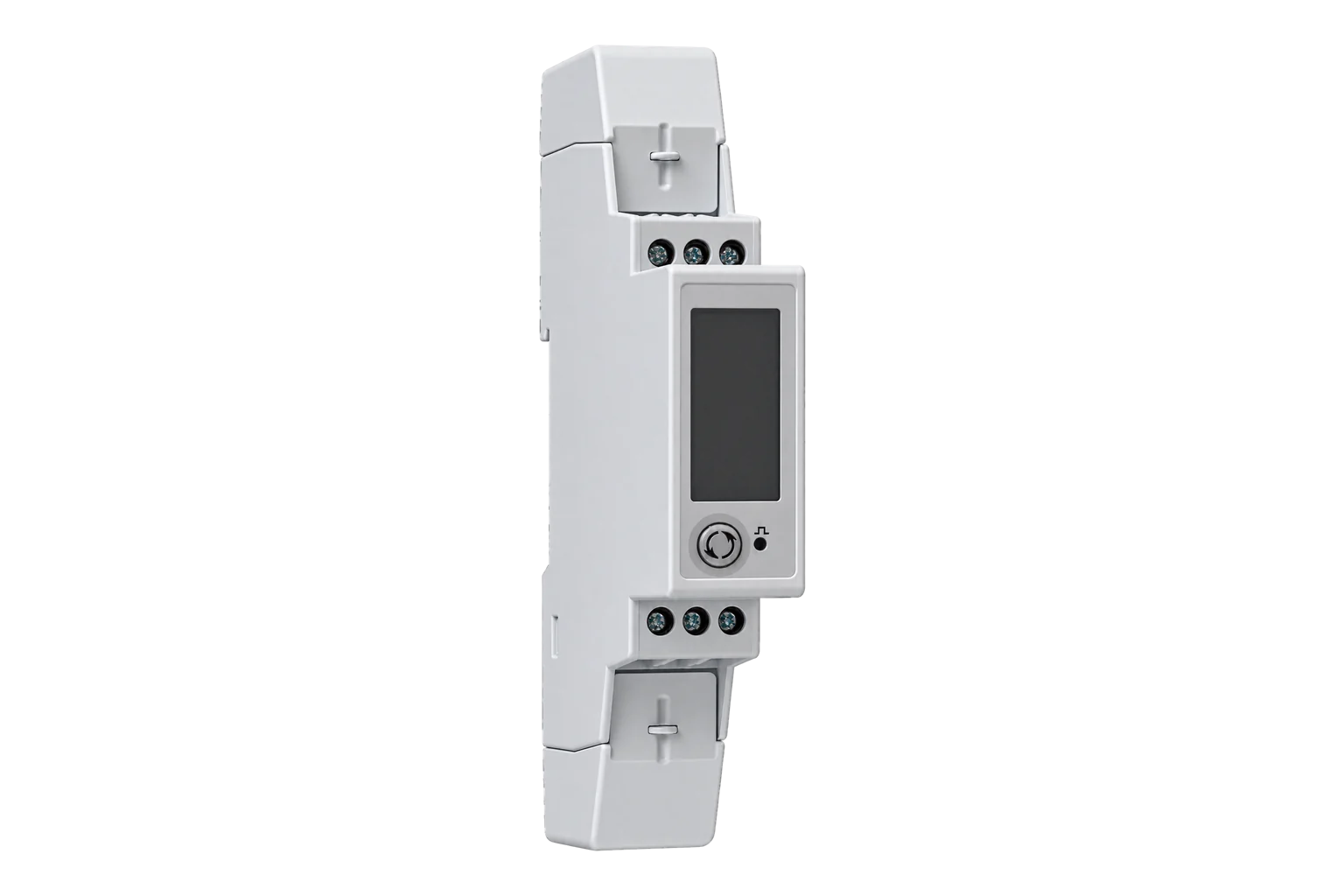
Eastron SDM120-Modbus
Single-phase energy meter
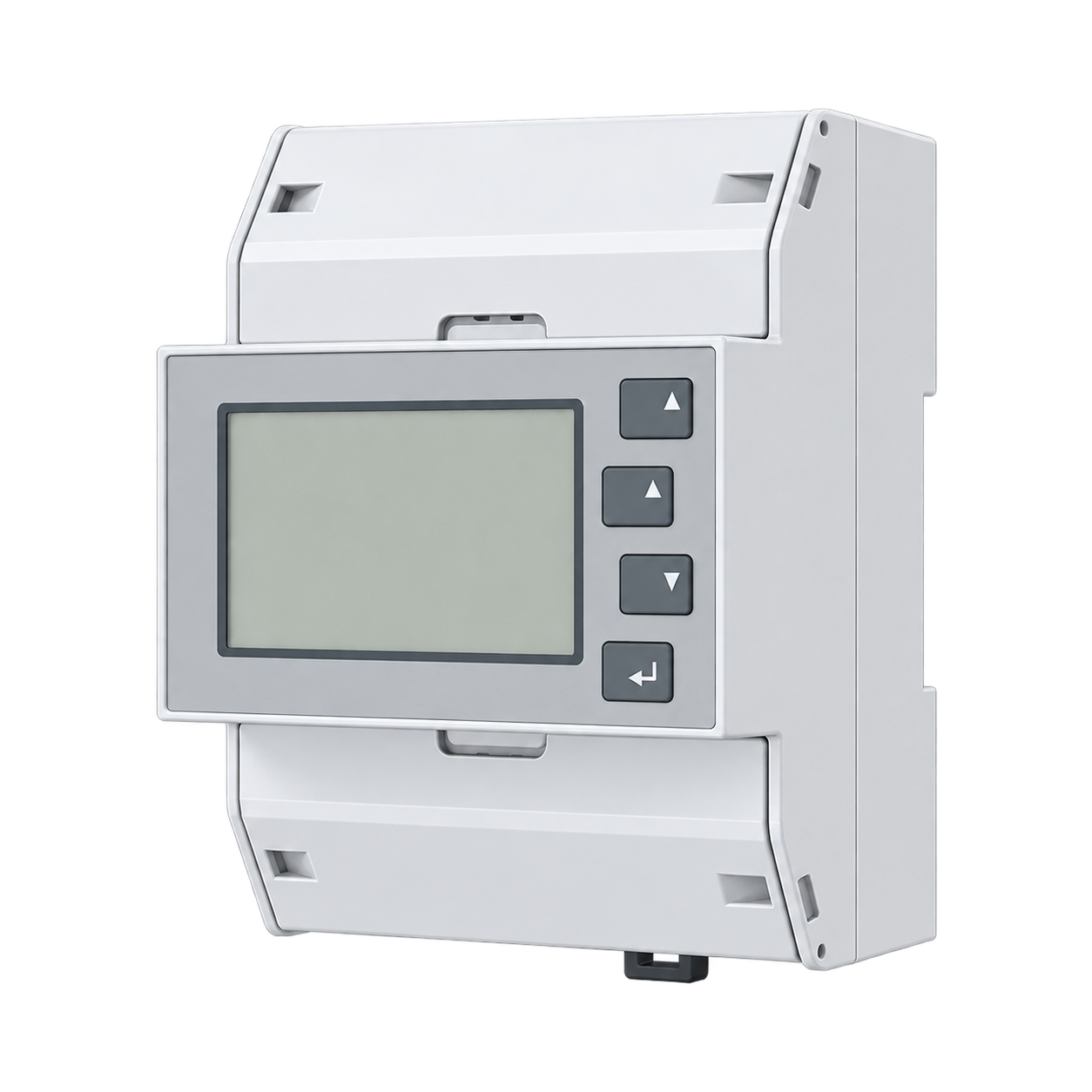
A single-phase DIN-rail meter for direct connection up to 45 A, with separate import and export energy counters and an RS-485 Modbus RTU port. Match the SDM120-Modbus or newer SDM120-M generation before setting communications.
Also sold asSDM120MSDM120-M
Compatibility
Compatible with EpiSensor Edge over Modbus RTU.
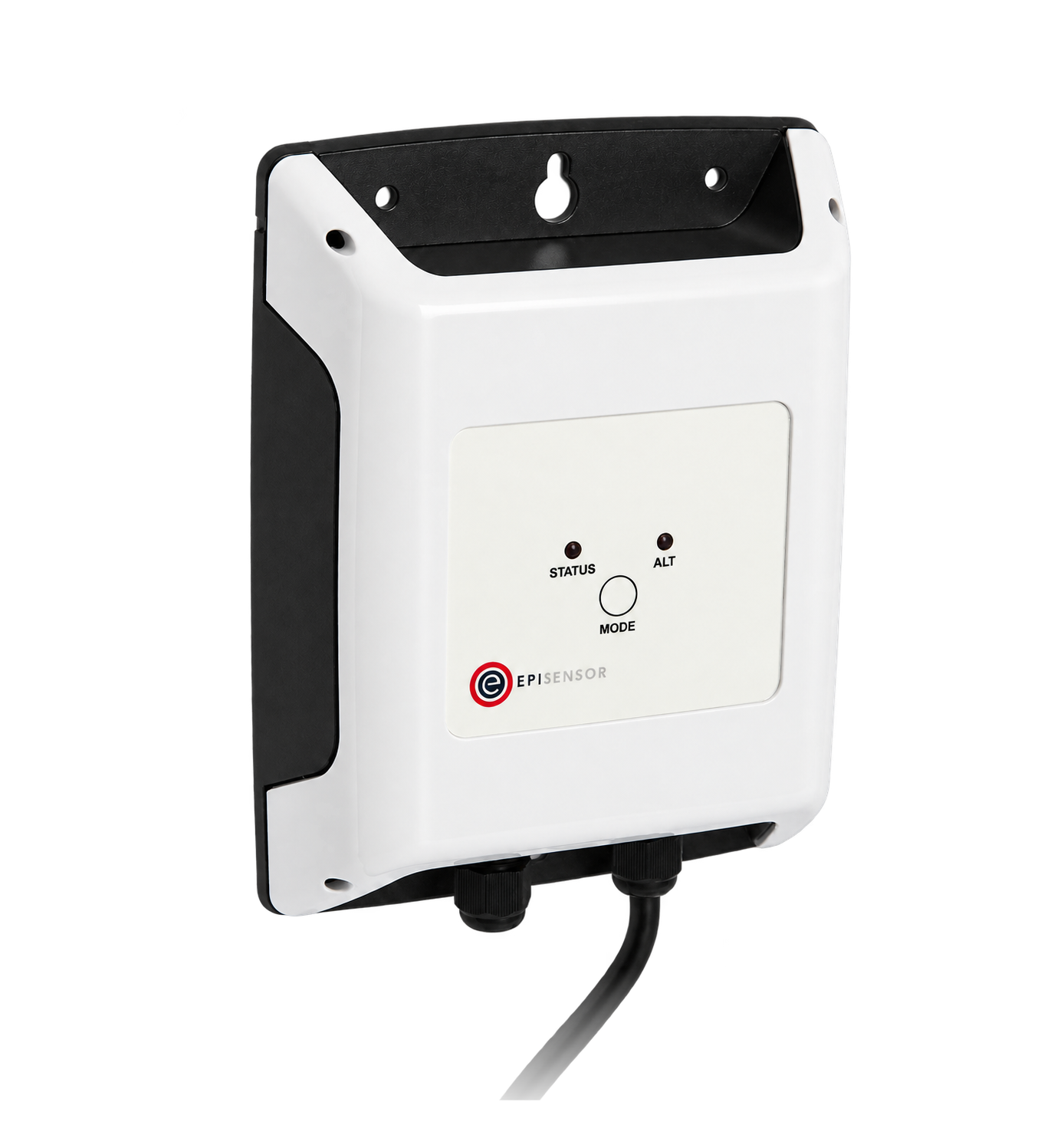
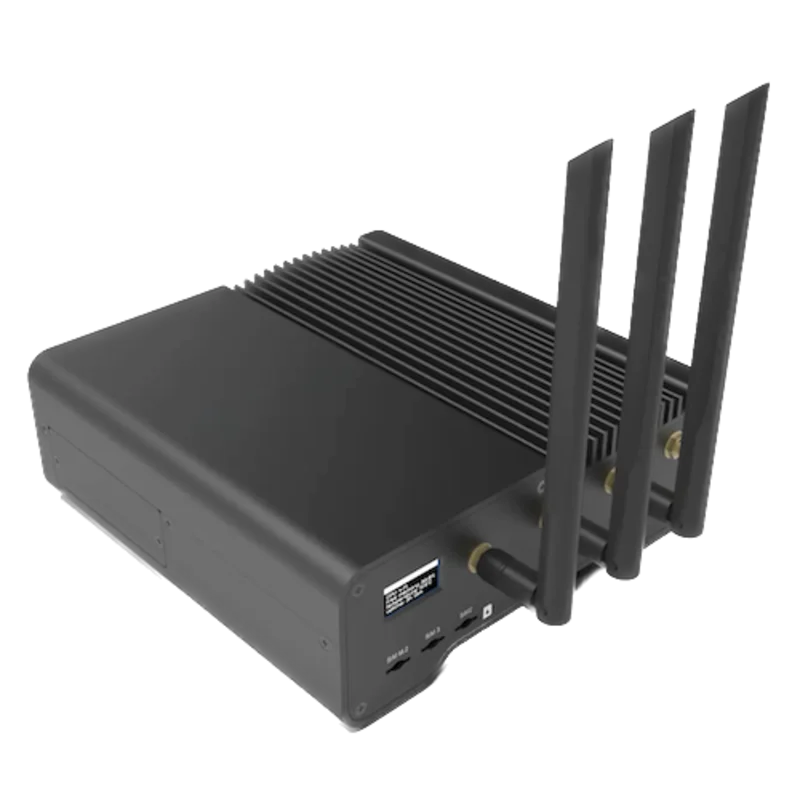
Connect its RS-485 port to a Modbus Interface or to a serial interface on the Gateway. Edge polls it with its Modbus client.
Edge reads 21 values from it, listed under Interface.
Connect it with
-
Modbus Interface ZMB-3XFrom €399 ex VAT Configure Modbus Interface
-
Gateway ZGW-20From €899 ex VAT Configure Gateway
Specifications
Separate import and export counters make the meter useful at a single-phase grid connection or on a generation circuit. The installation point determines what those counters mean: generation measured at the inverter is different from export measured at the site boundary. For tenant charging, establish that the exact purchased variant and installation meet the applicable metering requirements; an accuracy class alone is not billing approval.13
- Power
- Self-powered from the measured supply. Draws no more than 2 W and 10 VA from the circuit it measures.1
- Nominal voltage
- 230 V or 120 V AC, operating from 80 to 120 % of nominal1
- Current
- 0.25 to 5(45) A direct connected1
- Frequency
- 50 or 60 Hz1
- Active energy accuracy
- Class 1 (IEC 62053-21); Class B (EN 50470-3)1
- Reactive energy accuracy
- Class 21
- Voltage and current accuracy
- 0.5 %1
- Legal metrology
- MID B+D certified, certificate 0120/SGS01411
- RS-485 port
- Modbus RTU, up to 64 meters and 1,000 m per bus1
- Pulse outputs
- Two passive outputs: one fixed at 1000 imp/kWh, one configurable1
- Display
- Backlit LCD, up to 999999 kWh1
- Dimensions
- 18 × 118 × 64 mm (W × H × D), one DIN module1
- Protection
- IP51, indoor use1
- Operating temperature
- -25 to 55 °C, up to 90 % RH non-condensing1
Where it is used
Solar PV generation and export metering on single-phase inverters, from the separate import and export kWh registers.
Solar PV monitoringTenant and departmental consumption monitoring on single-phase circuits; select the approved meter variant and installation arrangement separately where readings support billing.
Tenant submetering and cost allocationBringing single-phase meters already on a Modbus bus into a BMS or SCADA system through Edge.
Modbus meter integration for a BMS or SCADA system
Interface
This register map is for the SDM120-Modbus.
Communication settings
- Protocol
- Modbus RTU over RS-485
- Unit address
- 1 to 247, default 1; broadcast not supported
- Baud rate
- 1200, 2400, 4800 or 9600 bit/s, default 2400
- Parity and stop bits
- None, even or odd parity with 1 stop bit, or no parity with 2 stop bits; default no parity, 1 stop bit
- Read functions
- FC04 for measurements, FC03 for settings; FC16 writes settings
- Register pairs
- Start address and register count must both be even
- Read with
- FC04 (input registers)
- Word order
- High word first on every value
- Addresses
- Zero-based PDU addresses, as sent on the bus
From SDM120Modbus smart meter Modbus protocol implementation V2.42.
Register map
| Point | Address | Hex | Format | Scale | Unit |
|---|---|---|---|---|---|
| Voltage | 0 | 0x0000 |
FLOAT32 | ×1 | V |
| Current | 6 | 0x0006 |
FLOAT32 | ×1 | A |
| Active Power | 12 | 0x000C |
FLOAT32 | ×1 | W |
| Apparent Power | 18 | 0x0012 |
FLOAT32 | ×1 | VA |
| Reactive Power | 24 | 0x0018 |
FLOAT32 | ×1 | VAr |
| Power Factor | 30 | 0x001E |
FLOAT32 | ×1 | - |
| Frequency | 70 | 0x0046 |
FLOAT32 | ×1 | Hz |
| Import Active Energy | 72 | 0x0048 |
FLOAT32 | ×1 | kWh |
| Export Active Energy | 74 | 0x004A |
FLOAT32 | ×1 | kWh |
| Import Reactive Energy | 76 | 0x004C |
FLOAT32 | ×1 | kVArh |
| Export Reactive Energy | 78 | 0x004E |
FLOAT32 | ×1 | kVArh |
| Total Power Demand | 84 | 0x0054 |
FLOAT32 | ×1 | W |
| Maximum Total Power Demand | 86 | 0x0056 |
FLOAT32 | ×1 | W |
| Import Power Demand | 88 | 0x0058 |
FLOAT32 | ×1 | W |
| Maximum Import Power Demand | 90 | 0x005A |
FLOAT32 | ×1 | W |
| Export Power Demand | 92 | 0x005C |
FLOAT32 | ×1 | W |
| Maximum Export Power Demand | 94 | 0x005E |
FLOAT32 | ×1 | W |
| Current Demand | 258 | 0x0102 |
FLOAT32 | ×1 | A |
| Maximum Current Demand | 264 | 0x0108 |
FLOAT32 | ×1 | A |
| Total Active Energy | 342 | 0x0156 |
FLOAT32 | ×1 | kWh |
| Total Reactive Energy | 344 | 0x0158 |
FLOAT32 | ×1 | kVArh |
Read the complete four data bytes, high register first as in the manufacturer voltage example. Keep transport bytes and the RTU CRC out of the float decoder.2
Separate import and export counters preserve flow direction. A configurable total-energy counter is not automatically the same as imported energy.2
The newer SDM120-M V1.0 manual specifies 9600 bit/s by default. Check the installed generation and its display instead of applying the older protocol default.3
Edge template
This JSON file supplies the register map. Applying it to an existing meter replaces its sensor list while retaining the site connection, unit ID and enable state.
| Model | Connection | Points | Version | Updated | Download |
|---|---|---|---|---|---|
| SDM120-Modbus | Modbus RTU over RS-485 | 21 | 1.0.0 | Download |
Downloads need a signed-in account with Edge download access.
Use the template in Edge
- Import the JSON file
In Edge, open Settings, then Devices and Templates. Choose Import JSON and select the downloaded file. Confirm that the model and template name match your device.
- Load the map for your meter
For a new Modbus device, use Load Template before entering the manufacturer or model; it fills those fields and the register list. Set the name, site connection and unit ID, check the polling enable state, then test before saving. For an existing device, apply only to the matching model; this replaces its sensor list but retains its connection, unit ID and enable state.
- Test a reading
Use Test in the wizard and compare a known reading with the meter display. Check its unit, sign and scale, then confirm that timestamps keep advancing. These starter maps are read-only and leave exports off until you configure them.
Setup
-
Check the model
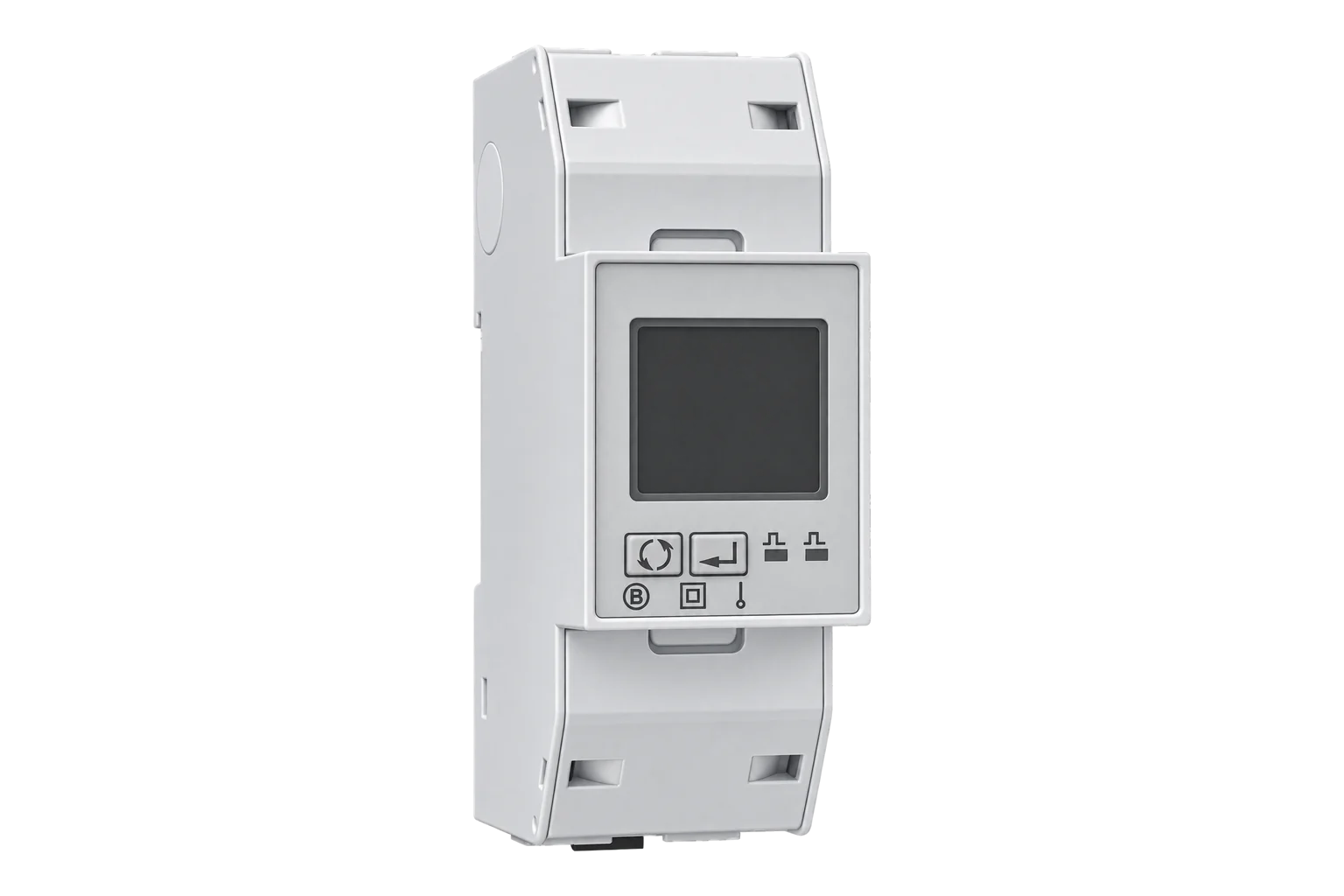
Only the SDM120-Modbus, and the newer SDM120-M, has the RS-485 port. The SDM120-Pulse has pulse outputs only and the SDM120-Mbus speaks M-Bus.1
-
Wire the bus
Run a two-wire RS-485 pair from a ZMB-31 or the Gateway's serial interface to the meter's A and B terminals, A to A and B to B. One bus can carry 64 meters over up to 1,000 m.1
-
Set the address and speed
Scroll to the address, baud rate or parity page and hold the front button for 3 seconds to change it. Each digit is stored 4 seconds after the last press. Give every meter on the bus its own address from 1 to 247.3
-
Match Edge to the meter
Set the Edge Modbus client to the meter's address, baud rate and parity. The SDM120-Modbus protocol document gives address 1, 2400 bit/s, no parity and 1 stop bit as the defaults.2
-
Prove a complete voltage read
For device address 1, request RTU bytes 01 04 00 00 00 02 71 CB: FC04, PDU address 0, quantity 2, CRC low byte first. Eastron’s example response carries 43 66 33 34 as its four data bytes. High-register-first float32 gives approximately 230.2 V. Compare against the simultaneous display before enabling the rest of the template.2
Common questions
- What baud rate does the SDM120-Modbus use?
- The SDM120-Modbus protocol document gives 2400 bit/s as the default, with 1200, 4800 and 9600 bit/s as the other choices. The newer SDM120-M ships at 9600 bit/s and adds 19200 and 38400 bit/s. The meter shows its rate on the display, so check it there if a new meter does not answer.23
- Why does the meter return an error when I read one register?
- Every value is a 32-bit float held in two registers. The meter rejects a request whose start address or register count is odd, because it would split a float, so always read in pairs from an even address.2
- Are the register addresses zero-based?
- Yes. Eastron numbers the input registers from 30001, and this page gives the address sent on the wire. Voltage, register 30001, is address 0, and Total active energy, register 30343, is address 342 (0156 hex).2
- Does it measure exported solar energy?
- Yes. It measures active and reactive energy in both directions and keeps separate counters, with import active energy at address 72 and export active energy at address 74.12
- What does the total active energy register count?
- By default it counts import plus export. A holding register at F920 hex switches it to import only, or to import minus export, which matters if you use the total for billing.2
- Can the SDM120-Modbus be used for billing?
- Check the approval markings and certificate for the exact meter variant and the requirements that apply to the installation. Class B describes metrological performance; it does not on its own establish that any SDM120 installation is approved for tenant billing. Use import energy explicitly where the charging basis is imported electricity.1
Related devices
Sources
- SDM120 series DIN rail mounted, single phase, 45A datasheet (opens in a new tab) (PDF)
- SDM120Modbus smart meter Modbus protocol implementation V2.4 (opens in a new tab) (PDF)
- SDM120-M user manual V1.0 (opens in a new tab) (PDF)
- SDM120M series product page (opens in a new tab)
- Eastron SDM120-Modbus device template (opens in a new tab)
- Eastron SDM120-Modbus register driver (opens in a new tab)
Further reading
Product names and trademarks belong to their owners. Publication does not imply endorsement or a commercial relationship.