ABB A44 112-100
Power and energy meter
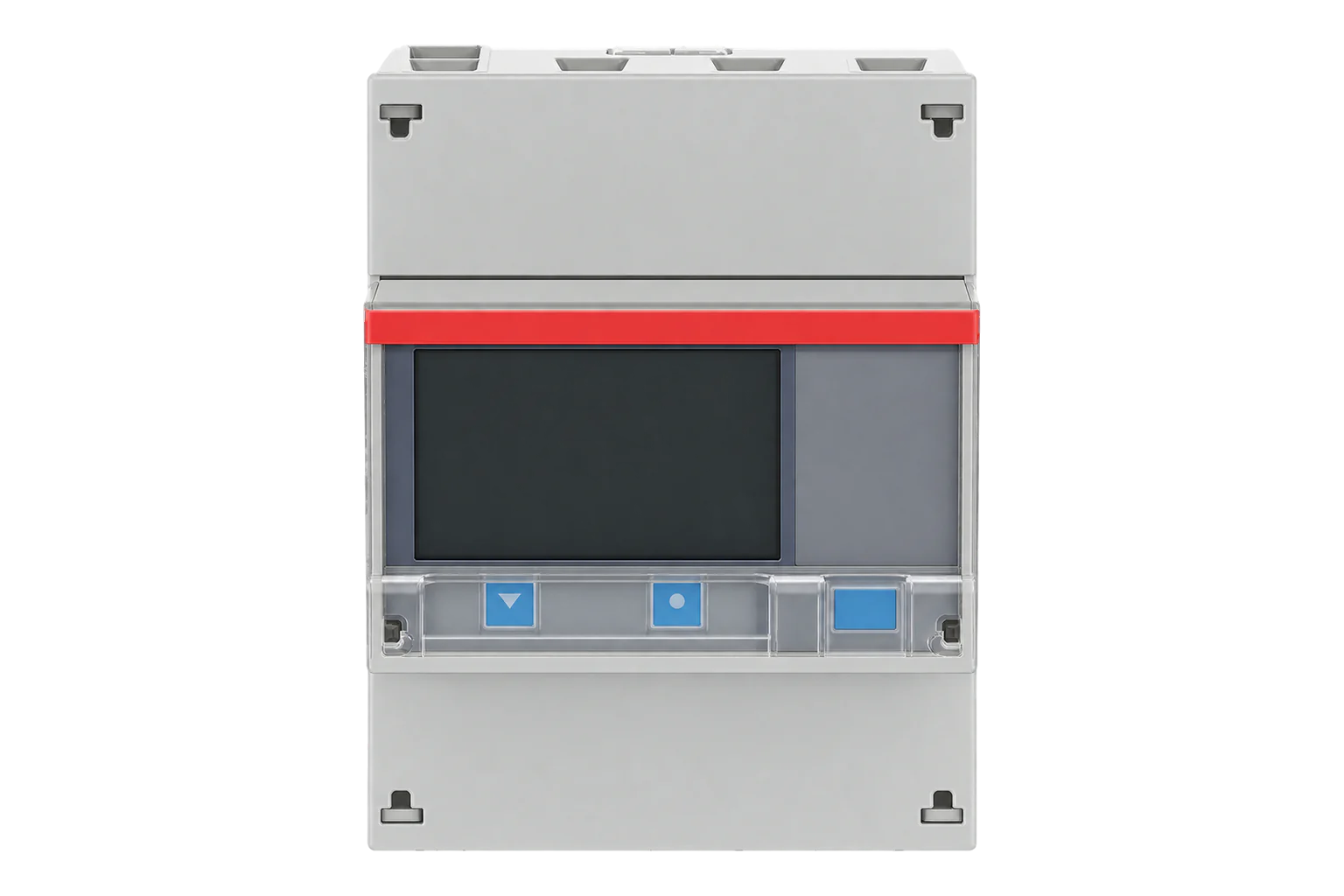
A44 112-100 (2CMA100248R1000) is the Steel-functionality, RS-485 version of ABB’s transformer-connected A44. It suits active-import energy monitoring where external current transformers, and optionally voltage transformers, are required. It is a seven-module DIN meter, rather than the direct-connected A43. Higher A44 tiers add functions that this entry does not claim.
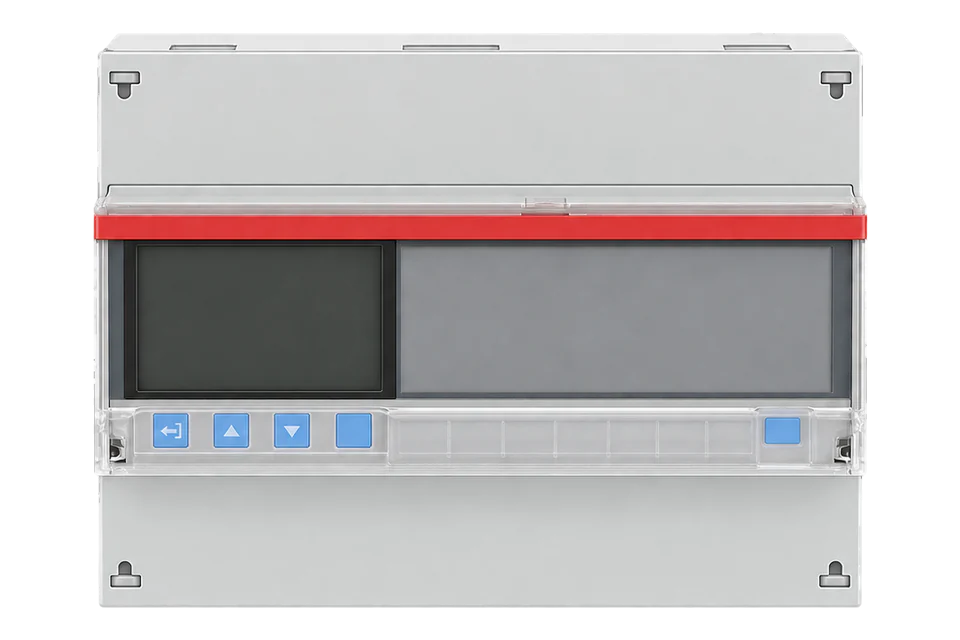
- Modbus RTU
Power and energy meter
Compatibility
Compatible through Modbus RTU
ABB documents RS-485 Modbus RTU measurement reads with literal addresses, integer types and scaling.
A44 112-100, order 2CMA100248R1000, with Steel functionality. Use revision E of the A43/A44 manual as a best-effort starting map. Select Steel-supported measurements, reject unavailable raw values before scaling and compare the display. Energy registers already contain primary values based on the configured CT/VT ratio.
Connect it with
-
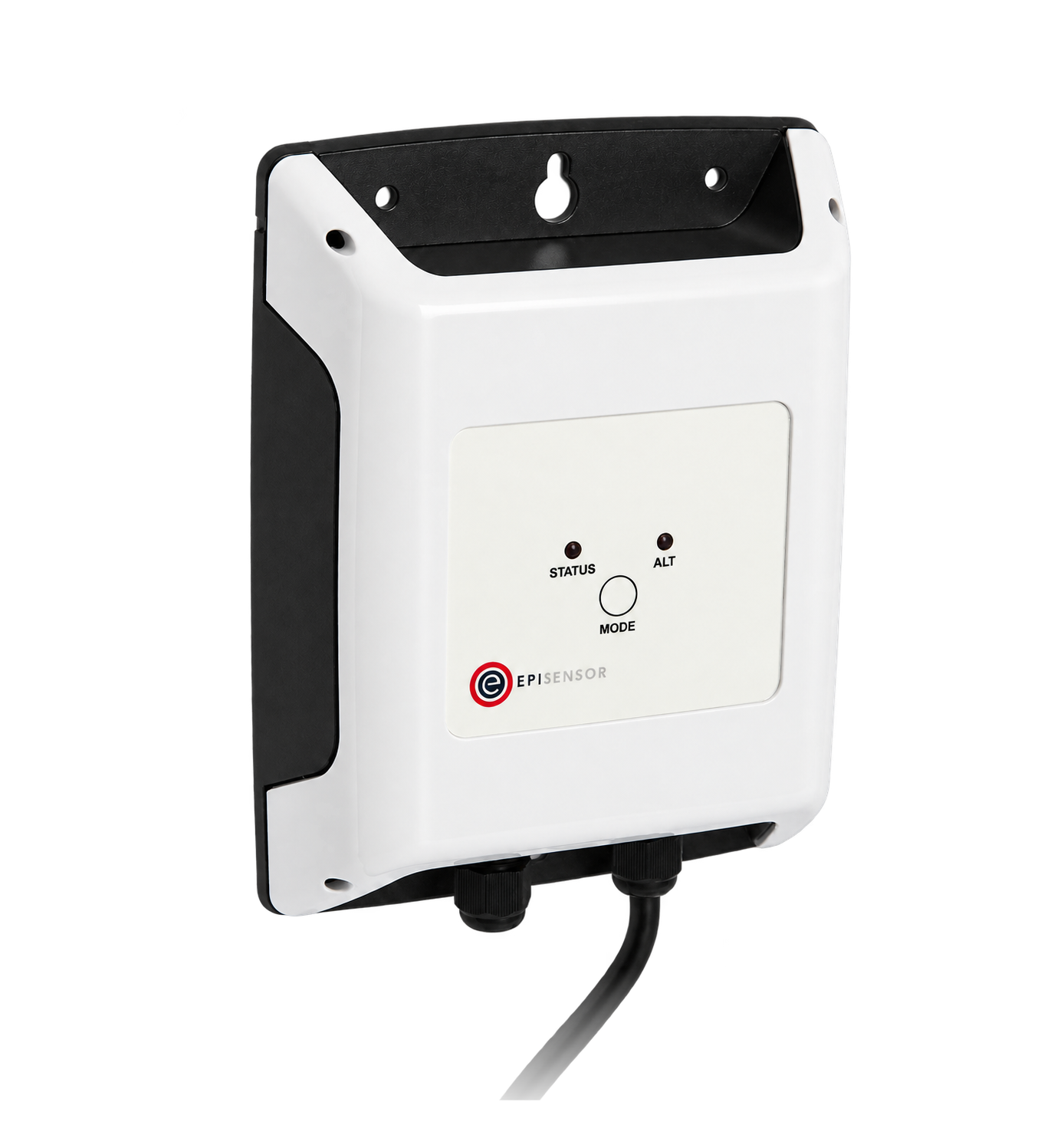
Modbus Interface ZMB-3XFrom €399 ex VAT Configure Modbus Interface
-
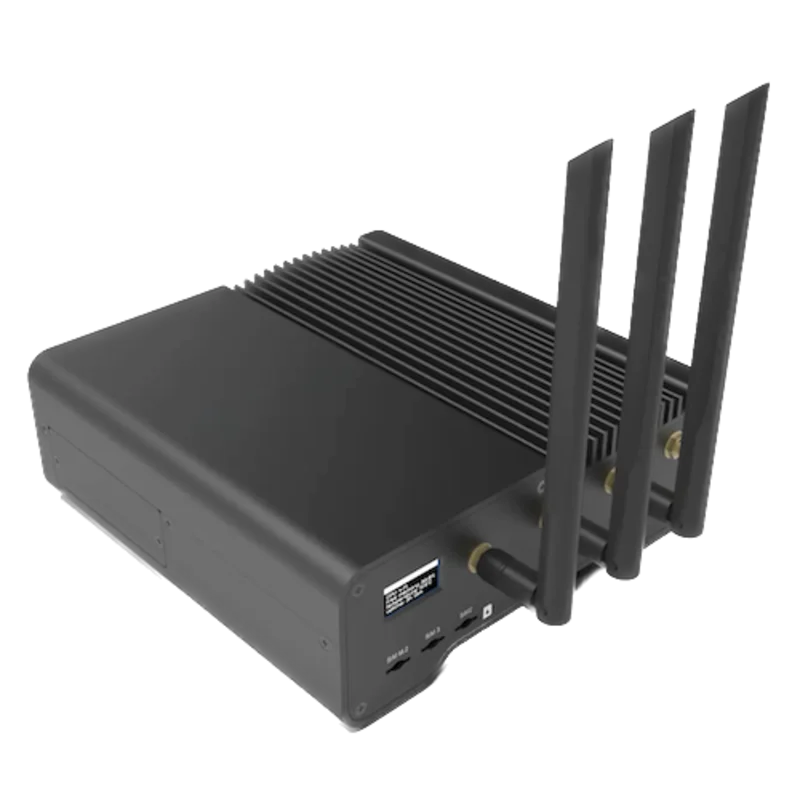
Gateway ZGW-20From €899 ex VAT Configure Gateway
For the exact RS-485 order code described here
- Modbus
- Wireless
- Edge
- Platforms
Models
| Models | Interface | Route into Edge |
|---|---|---|
| A44 112-100 / 2CMA100248R1000 | RS-485, Steel functionality, transformer-connected inputs | Modbus RTU; select Modbus rather than EQ-Bus in the communication settings. |
| A44 113-100 | M-Bus version of the Steel meter | Not the RS-485 hardware described here. |
| A44 Bronze, Silver, Gold and Platinum | Different energy, tariff, history and analysis capabilities | Do not copy their function list merely because the family register map contains those addresses. |
| A43 | Direct-connected current input | Different electrical installation; this guide concerns external-transformer A44 hardware. |
Specifications
The useful distinction is both electrical and functional: A44 uses external transformers, while the 112-100 order selects Steel active-import metering and RS-485. The common manual also covers richer models, so register presence alone does not establish a function on this meter.12
- Exact model
- A44 112-100, 2CMA100248R1000; Steel, class B / class 1 active energy.2
- Current input
- Transformer connected; reference current 1 A, maximum secondary current 6 A. Configure the actual primary and secondary CT values.1
- Voltage input
- 3 × 57.7/100 to 288/500 VAC for this standard version; the 690 V A44 variants have different order codes.2
- Functions
- Active-import energy, instrumentation and pulse/alarm output; not the higher-tier tariff, export-energy or load-profile package.1
- Mounting
- Seven DIN modules; indoor installation. IP20 terminals without protective enclosure, IP51 in protective enclosure.1
- Environmental envelope
- Operating −40 to +70 °C; humidity limits and protective enclosure requirements remain applicable.1
- Serial settings
- Modbus address 1–247; 1200–115200 bit/s choices; none, odd or even parity. Match the actual installed settings.1
Interface
Documented measurements and integration boundaries for A44 112-100.
- L1-N voltage at literal 0x5B00: two unsigned registers, 0.1 V resolution.
- Active import energy at 0x5000: four unsigned registers, 0.01 kWh resolution; stored energy already includes the configured transformer ratios.
- Phase current and active power are available as instrumentation; use the table’s individual sign, width and resolution.
- Steel provides active-import energy. Export, reactive-energy totals, tariffs, load profiles and harmonic features in other tiers are not promised here.
- Unavailable unsigned quantities return FFFF in every register; unavailable signed quantities use the maximum positive code for their width.
Assessment
A44 112-100, order 2CMA100248R1000, with Steel functionality. Use revision E of the A43/A44 manual as a best-effort starting map. Select Steel-supported measurements, reject unavailable raw values before scaling and compare the display. Energy registers already contain primary values based on the configured CT/VT ratio.
- InteroperabilityWell supported
- An explicit FC03 request, literal register convention, type table and multi-register ordering establish the local read interface.1
- AccuracySupported with conditions
- The exact Steel order offers class B / class 1 active energy; external CT/VT selection and ratio configuration affect the result.12
- SecurityNot yet assessed
- No authenticated or encrypted Modbus transport has been demonstrated for this exact order code.1
- ReliabilitySupported with conditions
- Primary energy storage and invalid-value encodings are documented; reject missing values rather than record them as valid readings.1
- RuggednessSupported with conditions
- Indoor DIN mounting, enclosure-dependent ingress protection and a stated temperature envelope are documented.1
- ScalabilitySupported with conditions
- Unique addresses and a documented RS-485 line topology support multiple meters; capacity still depends on wiring and polling schedule.1
Setup
Verify L1-N voltage with ABB’s documented frame
Revision E includes this FC03 readout example. It is a manufacturer example, not a capture from an EpiSensor test installation.
- Function
- FC03 Read Holding Registers
- Literal PDU address
- 0x5B00 = 23296 decimal
- Quantity
- 2 registers, 4 data bytes
- Request PDU
- 03 5B 00 00 02; configured slave address and CRC surround the PDU
- Response data
- 00 00 09 05; high word first, high byte first
- Decode
- Unsigned 2309 × 0.1 V = 230.9 V
- Acceptance
- Use a wiring system with L1-N measurement and compare against the simultaneous front display
Acceptance: The address and response are from ABB’s worked example, independently decoded here. This validates the documented representation, not the wiring, transformer configuration or physical communications of an installed meter.
-
Identify the Steel RS-485 meter
Read A44 112-100 and 2CMA100248R1000 from the device documentation. Record firmware. Use the installation diagram for the actual three- or four-wire circuit, and have the authorised installer confirm the CT and VT connections.
-
Check transformer ratios before collecting energy
Record primary and secondary CT values and any VT ratio. The manual states that energy registers store primary values; do not multiply energy by the CT/VT ratio again in Edge. Compare current and voltage with the meter display before adding derived calculations.
-
Select Modbus and match the bus
In Settings, open the communication interface and choose Modbus, not EQ-Bus. Match speed, address and parity in Edge. Follow the three-wire A/B/Common line topology and terminate the two bus ends as documented.
-
Read the literal voltage address
Send FC03 to 0x5B00, decimal 23296, for quantity 2. ABB says Start Reg is sent exactly as printed: do not subtract one or add a 40000 prefix. Decode an unsigned 32-bit value, high word first, then multiply by 0.1 V.
-
Reject unavailable values and verify energy
Reject all-FFFF unsigned values before scaling. Add only Steel-supported quantities and compare the change in 0x5000 energy with the front display over a known interval. Leave configuration, output, reset and history-selection writes outside this monitoring setup.
Common questions
- Why does the common map contain functions absent from my meter?
- It covers A43 and A44 across several functionality levels. Steel is active-import energy; higher tiers add other counters and history. Unsupported quantities can return a normal response containing an invalid value, so a successful reply is not proof that the measurement exists.1
- Should I apply the CT ratio to imported kWh again?
- No. ABB states that transformer-connected energy registers store primary values using the configured total transformer ratio. First verify that ratio in the meter; multiplying the returned energy again would overstate consumption.1
- Is 0x5B00 a one-based reference?
- No. The manual explicitly says Start Reg is the value sent on the bus and must not be decremented or reduced by 40000. The worked FC03 request uses bytes 5B 00.1
- How should I expand the initial read?
- Add active import energy at 0x5000: FC03, four registers, unsigned64, high word first, × 0.01 kWh. The manual allows up to 125 registers per read. Start with complete individual values, then group nearby supported quantities. Treat all-FFFF unsigned values and the maximum positive signed value as unavailable, before scaling.1
Related devices

Sources
- A43/A44 user manual, 2CMC484001M0201 revision E (opens in a new tab) (PDF)
- ABB energy-meter catalogue, A44 ordering table (retained official reader extract) (opens in a new tab) (PDF)
Further reading
Product names and trademarks belong to their owners. Publication does not imply endorsement or a commercial relationship.