Siemens SENTRON PAC1600
Power and energy meter
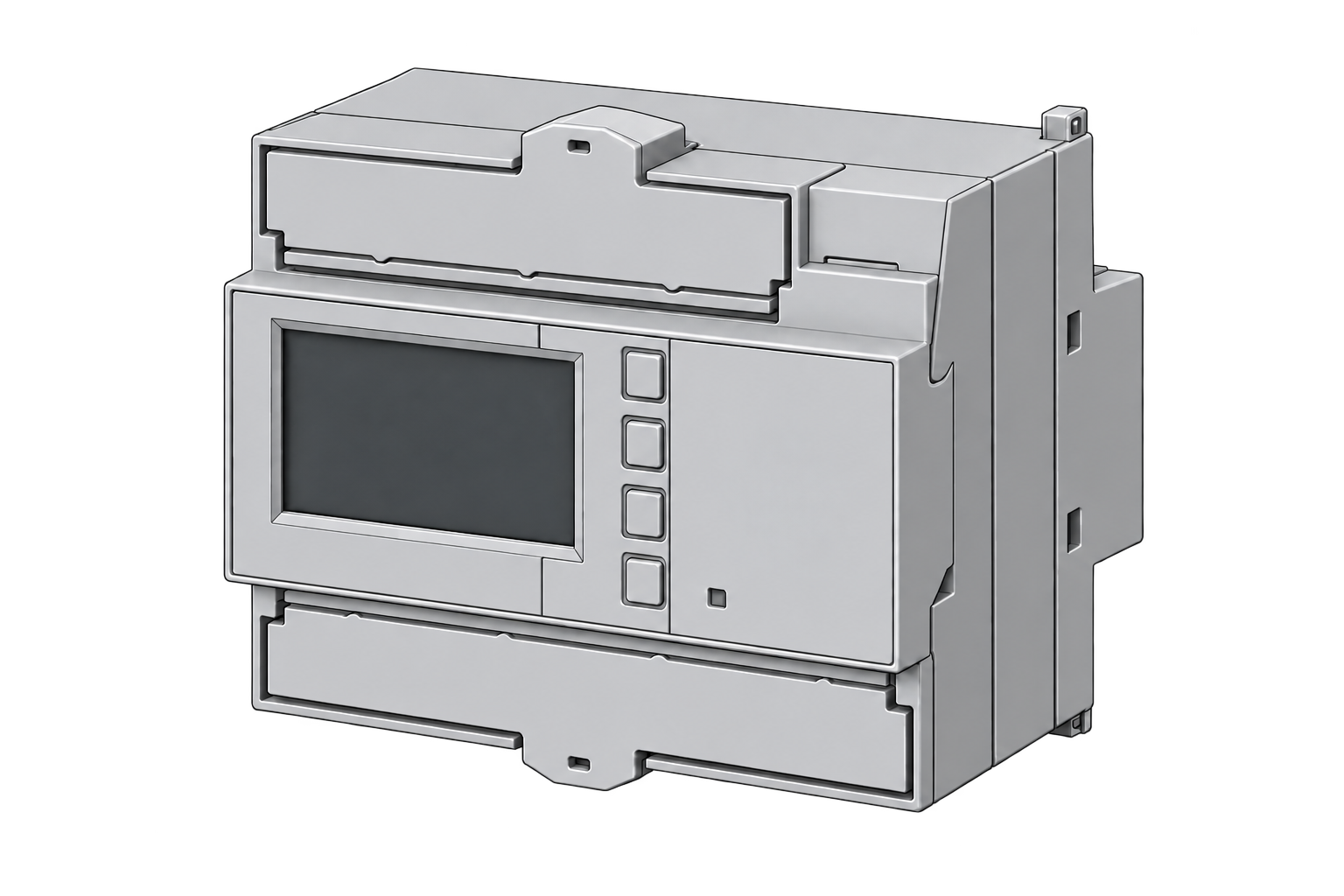
The SENTRON PAC1600 is a family of 7KT16 DIN-rail energy meters. Six order numbers carry an RS-485 port with Modbus RTU: 7KT1651 and 7KT1652 (single-phase, 63 A direct), 7KT1661 and 7KT1662 (three-phase, x/5 A current transformers) and 7KT1665 and 7KT1666 (three-phase, 80 A direct); the even numbers are the MID versions. Siemens publishes a separate Modbus table for each of the three groups, with hexadecimal and decimal addresses, function codes 03 and 04, integer data types and a scaling factor per value.

Compatibility
Compatible with EpiSensor Edge over Modbus RTU
Siemens documents Modbus RTU on the RS-485 versions of the PAC1600 and publishes register tables with hexadecimal and decimal addresses, function codes 03 and 04, data types, units and scaling factors. The manual does not print the word order of two- and four-register values, so the first read settles it against the display. This is documented compatibility, without a physical Edge test.
PAC1600 energy meters with RS-485: 7KT1651 and 7KT1652 (single-phase 63 A), 7KT1661 and 7KT1662 (three-phase x/5 A) and 7KT1665 and 7KT1666 (three-phase 80 A), using the register tables in equipment manual 2514284147-07 (07/2023) as a best-effort starting point. Each group has its own table; compare the first read with the meter display. The 7KT1682 multimeter has a separate map, and the M-Bus and S0 versions have no Modbus port. Read-only monitoring.
Connect it with
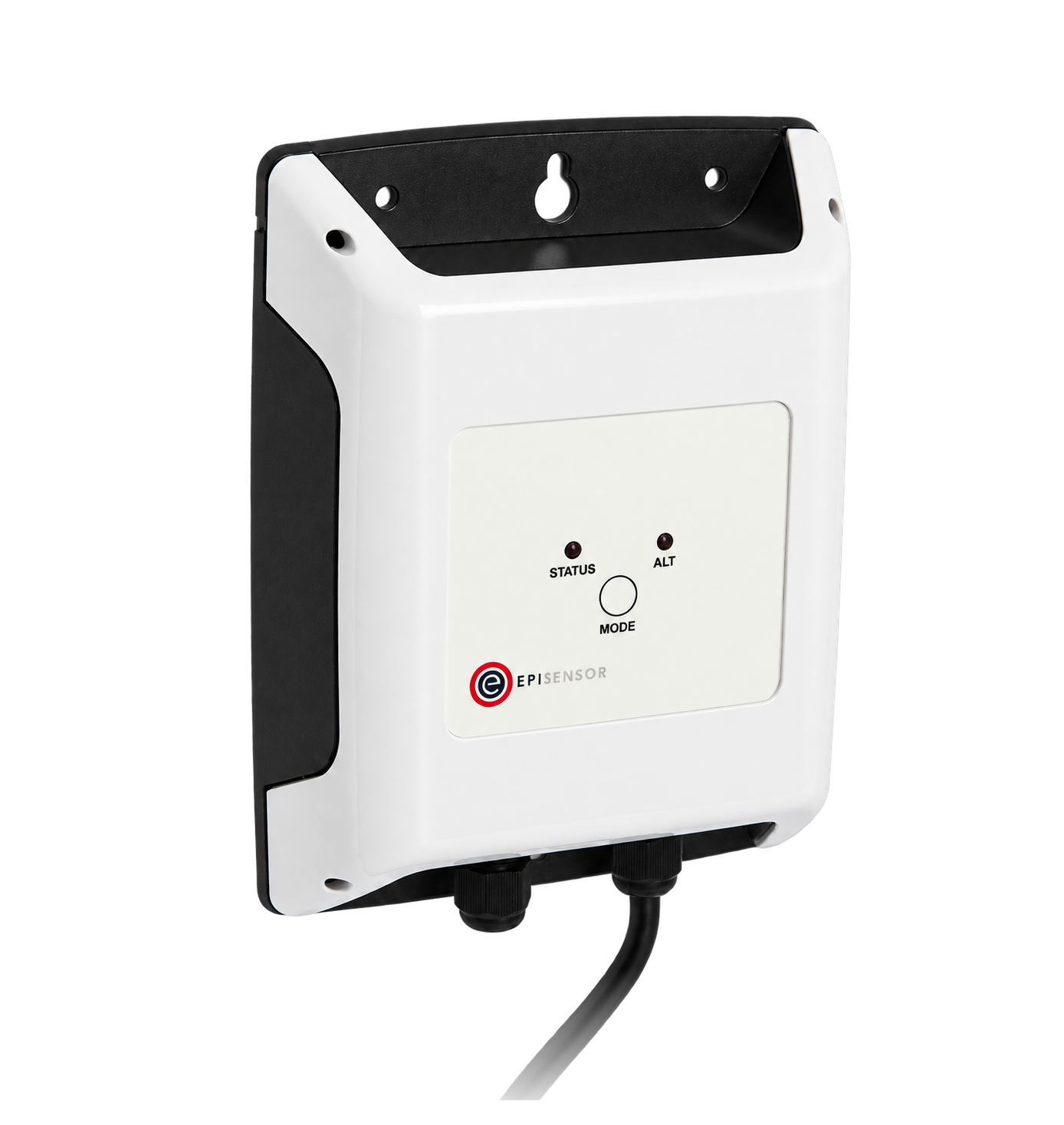
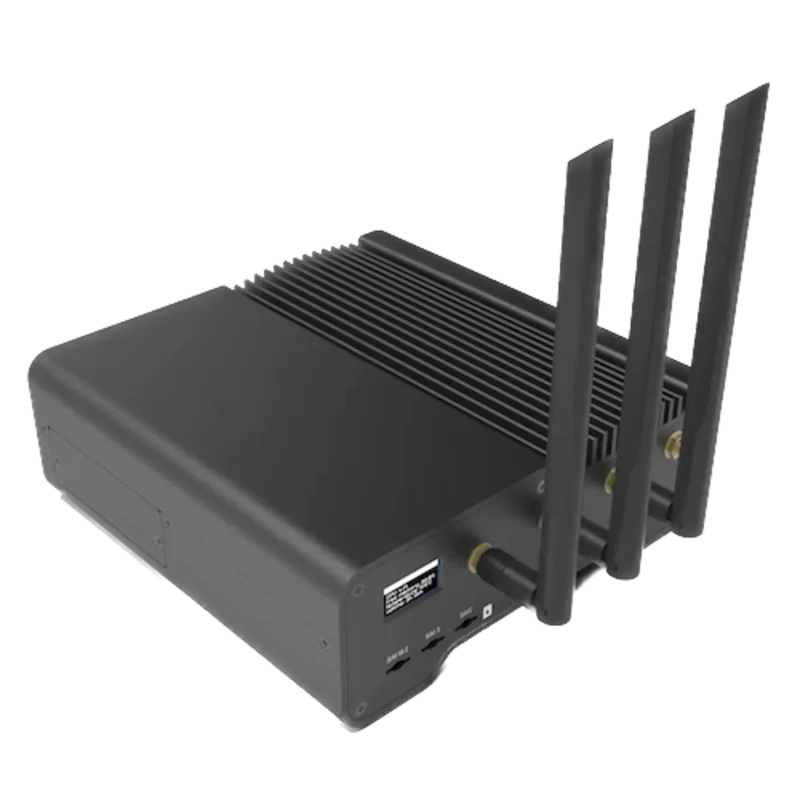
For the PAC1600 RS-485 versions, on terminals TR, A, B and SG
- Modbus
- Edge
- Platforms
Models
| Models | Interface | Route into Edge |
|---|---|---|
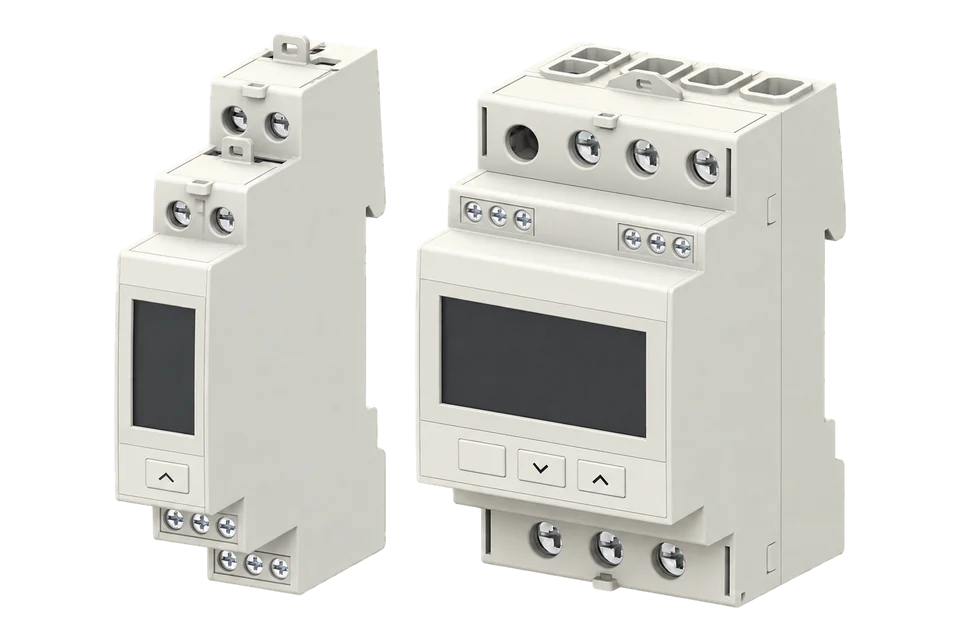
| 7KT1651, 7KT1652 | Single-phase, 63 A direct connection, 2 modules wide; RS-485 Modbus RTU set in P-20 to P-24; 7KT1652 is the MID version | Read the single-phase table, manual section 6.4.1: one voltage, current, power, power factor, frequency and total energy values. |
| 7KT1661, 7KT1662 | Three-phase, x/5 A current transformers, 4 modules wide; RS-485 Modbus RTU set in P07.01 to P07.05, up to 115200 bit/s; 7KT1662 is the MID version | Read the 5 A table, section 6.4.2. Energy counters are four-register UINT64 values in units of 10 Wh. |
| 7KT1665, 7KT1666 | Three-phase, 80 A direct connection, 4 modules wide; RS-485 Modbus RTU set in P8-01 to P8-05; 7KT1666 is the MID version | Read the 80 A table, section 6.4.3. Energy counters are two-register UINT32 values in Wh. |
| 7KT1682 multimeter | PAC1600 multimeter with an insulated RS-485 Modbus RTU port, documented in its own manual 2514284149-01 | Uses its own register table, which adds THD and harmonics. The points in this guide do not apply. |
| 7KT1653, 7KT1654, 7KT1663, 7KT1664, 7KT1667, 7KT1668, S0 versions and 7KT1681 | M-Bus or S0 pulse output, or no communication port | No Modbus interface. The register tables in this guide do not apply. |
Specifications
Choose the register table by the order number on the front label: the single-phase, 5 A and 80 A groups each have their own map. All versions are self-powered from the measuring voltage, count active and reactive energy with resettable partial counters, and keep hour counters; the three-phase versions add an AC input for tariff selection.1
- Modbus versions
- 7KT1651 and 7KT1652, single-phase 63 A. 7KT1661 and 7KT1662, three-phase x/5 A. 7KT1665 and 7KT1666, three-phase 80 A. The even number in each pair is the MID version.1
- Voltage
- Single-phase 230 V AC nominal, 187 to 264 V L-N. Three-phase 230/400 V AC nominal, 187 to 264 V L-N and 323 to 456 V L-L. 50/60 Hz (45 to 66 Hz); MID versions 50 Hz (49 to 51 Hz).1
- Current
- 63 A and 80 A versions connect directly (Imin 0.5 A, starting current 40 mA). 5 A versions use x/5 A current transformers: Imax 6 A, Imin 0.05 A, starting current 10 mA, burden 0.3 W or less per phase; the primary current is set in P01.01.1
- Accuracy and approval
- Active energy: 7KT1651 class 1; 7KT1661 and 7KT1665 class 0.5S (IEC/EN 62053-21/22). 7KT1652, 7KT1662 and 7KT1666 class B to EN 50470-3 with MID approval for import (T1 + T2), certificate DE MTP 17 B 008 MI-003.1
- RS-485
- Modbus RTU or Modbus ASCII on terminals TR, A, B and SG. Address 1 to 255 (default 1); default 9600 bit/s, 8 data bits, no parity, 1 stop bit. 1200 to 38400 bit/s on the 63 A and 80 A versions, up to 115200 bit/s on the 5 A versions; 7-bit formats are for ASCII only.1
- Bus
- Up to 32 nodes per line and 1200 m of cable depending on the baud rate, with a 120 Ω terminating resistor at the beginning and end of the bus.1
- Mounting
- 35 mm DIN rail (EN 60715) or screw fixing with extractable clips. Single-phase 2 modules (36 mm), 148 g; three-phase 4 modules (72 mm), 332 g (5 A) or 360 g (80 A). RS-485 terminals take 0.5 to 4 mm² (single-phase) or 0.2 to 2.5 mm² (three-phase).1
- Environment
- Operating -25 to +55 °C; 7KT1665 -30 to +70 °C and 7KT1666 -25 to +70 °C (MID valid to +55 °C). Indoor use, below 80% relative humidity without condensation, up to 2000 m. IP40 front, IP20 terminals; OVC III, M2 and E2.1
Interface
Documented measurements and integration boundaries for SENTRON PAC1600.
- Siemens prints every address in hexadecimal and decimal and lists function codes 03 and 04 for all measured values. The manual notes that the start offset can differ by one depending on the Modbus master; confirm it with the first read.
- Single-phase 7KT1651 and 7KT1652: voltage at 0002h (UINT32, × 0.01 V), current at 0008h (UINT32, × 0.001 A), active power at 0014h (INT32, × 10 W), reactive power at 001Ah (INT32, × 10 var), power factor at 0026h (INT32, × 0.01) and frequency at 0032h (INT32, × 0.1 Hz).
- Single-phase energy: total active energy at 1A20h and total reactive energy at 1A24h, UINT32 in Wh and varh; partial counters at 1A2Ah and 1A2Eh; 15-minute demand at 0812h and maximum demand at 0A12h (INT32, × 0.1 W).
- Three-phase 5 A and 80 A: L1, L2 and L3 to neutral voltage at 0002h, 0004h and 0006h (UINT32, × 0.01 V); current at 0008h, 000Ah and 000Ch (UINT32, × 0.0001 A); line-to-line voltage at 000Eh, 0010h and 0012h.
- Three-phase per-phase power: active power at 0014h to 0018h and reactive power at 001Ah to 001Eh (INT32, × 0.01 W or var), apparent power at 0020h to 0024h (UINT32, × 0.01 VA) and power factor at 0026h to 002Ah (INT32, × 0.0001).
- Frequency at 0032h is UINT32 × 0.001 Hz on the 5 A versions and × 0.01 Hz on the 80 A versions. Values Siemens labels average voltage, active, reactive and apparent power and power factor follow at 0034h to 0040h; compare them with the display totals before using them as system values.
- 5 A versions only: voltage and current unbalance at 0042h to 0046h (UINT32, × 0.01 %), neutral current at 0048h, and the same value block repeated as maximum (0400h), minimum (0600h), average (0800h) and maximum demand (0A00h) values.
- 5 A energy, four registers UINT64 in units of 10 Wh, varh or VAh: active import at 1B20h, active export at 1B24h, reactive import at 1B28h, reactive export at 1B2Ch, apparent at 1B30h; partial, tariff and per-phase counters follow from 1B34h and 1E20h.
- 80 A energy, two registers UINT32 in Wh or varh: active import at 1A20h, active export at 1A22h, reactive import at 1A24h, reactive export at 1A26h; partial counters from 1A2Ah, per-phase counters from 1A34h (L1), 1A48h (L2) and 1A5Ch (L3), tariff counters from 1B48h.
- Operating hours counters at 1E00h onwards (UINT32, seconds) and limit status at 2140h to 2148h on the 5 A versions. Command registers and the parameter registers (5000h to 5004h) are writes; leave them out of the polling configuration.
Assessment
PAC1600 energy meters with RS-485: 7KT1651 and 7KT1652 (single-phase 63 A), 7KT1661 and 7KT1662 (three-phase x/5 A) and 7KT1665 and 7KT1666 (three-phase 80 A), using the register tables in equipment manual 2514284147-07 (07/2023) as a best-effort starting point. Each group has its own table; compare the first read with the meter display. The 7KT1682 multimeter has a separate map, and the M-Bus and S0 versions have no Modbus port. Read-only monitoring.
- InteroperabilitySupported with conditions
- Siemens documents Modbus RTU on RS-485 and publishes a table for each version group with addresses, function codes, register counts, data types, units and factors. The word order is not printed and the start offset may vary by one, so both are confirmed with a first read against the display.1
- AccuracySupported with conditions
- Class 0.5S, class 1 or MID class B active energy with import and export counters on the three-phase versions and per-phase values. The single-phase map has total energy only and power in 10 W steps, and the 5 A versions depend on a correctly set current transformer ratio.1
- SecurityNot yet assessed
- The local menus have password protection (on the 5 A versions, user 1000 and advanced 2000 by default once enabled) and Siemens recommends activating it and sealing the cover. The Modbus port accepts documented command and parameter writes.1
- ReliabilitySupported with conditions
- Factory calibrated with no recalibration required and parameters stored permanently. The 5 A versions also retain peak values without power and run a wiring test with a readable result register at 1F20h. Treat failed reads as missing data.1
- RuggednessSupported with conditions
- Rated -25 to +55 °C (to +70 °C on the 80 A Modbus versions), IP40 front and IP20 terminals, OVC III, 6 kV impulse withstand, 10 g shock and 0.7 g vibration, for indoor use in an enclosure.1
- ScalabilitySupported with conditions
- Up to 32 nodes per line over up to 1200 m depending on the baud rate, with addresses set from 1 to 255 in the menu and speeds up to 38400 or 115200 bit/s.1
- LifecycleNot yet assessed
- The manual states that firmware cannot be updated. Siemens shows product lifecycle status on its SiePortal product pages, which did not answer scripted requests on 2026-10-23.1
Setup
Read the active energy import counter at 1A20h
Equipment manual 2514284147-07 (07/2023) lists total active energy (single-phase, section 6.4.1) and active energy import (80 A, section 6.4.3) at address 1A20h, decimal 6688: two registers, UINT32, unit Wh, factor 1.0, function codes 03 and 04. The manual does not print the word order, and it notes that the start offset can vary by one with the Modbus master; this read settles both.
- Request
- 01 03 1A 20 00 02 C2 D9: Modbus address 1, FC03, start 0x1A20, two registers, RTU CRC. FC04 is also listed: 01 04 1A 20 00 02 77 19.
- Address convention
- Send 0x1A20 (decimal 6688) as the zero-based PDU address first. A client that numbers holding registers from 40001 shows it as 46689. If the meter answers with an exception or a value that disagrees with the display, send 0x1A1F (6687) instead: 01 03 1A 1F 00 02 F2 D5.
- Synthetic response
- 01 03 04 00 12 D6 44 04 65: four data bytes, 00 12 D6 44.
- Decode
- High word first: 0x0012D644 = 1,234,500; × 1.0 Wh = 1,234.5 kWh. The same bytes taken low word first give 0xD6440012 = 3,594,780,690 Wh, which no display shows.
- Why energy, not voltage
- Voltage at 0002h is a count of 0.01 V, so any voltage below 655.36 V leaves the high word at zero. A read one register late, taken low word first, then still shows the right voltage, so a voltage read cannot separate offset from word order. Once the energy counter passes 65.536 kWh its high word is non-zero, and only the right offset and word order reproduce the display.
- 5 A versions
- On 7KT1661 and 7KT1662 the import counter is at 1B20h (decimal 6944): four registers, UINT64, factor 10.0 Wh. Read four registers and multiply the decoded count by 10 Wh before comparing it with the display.
- Acceptance
- Keep the offset and word order that reproduce the kWh total on the display at the same moment, to its one decimal place. Record them with the order number, then add the other points from the same table.
Acceptance: The response bytes are a synthetic decoder check, not a captured meter reply. A real reply must agree with the display before voltage, current, power and the other counters are enabled.
-
Identify the order number
Read the 7KT number on the front label. 7KT1651 and 7KT1652, 7KT1661 and 7KT1662, and 7KT1665 and 7KT1666 each use a different register table; M-Bus and S0 versions have no Modbus port.
-
Read the serial settings
Find the address, baud rate, data format, stop bits and protocol in P-20 to P-24 (single-phase), P07.01 to P07.05 (5 A) or P8-01 to P8-05 (80 A). The defaults are address 1, 9600 bit/s, 8 data bits, no parity, 1 stop bit and Modbus RTU. Enter the same values in the Edge serial client.
-
Wire the RS-485 line
Connect A, B and SG, give each meter its own address and fit 120 Ω termination at both ends of the line. Siemens's own example wires the PAC1600 A terminal to the B terminal of a PAC4200 RS-485 module, so check polarity against the documentation of the serial interface rather than the letters.
-
Make one energy read
Read the active energy import counter as in the worked read below and compare it with the kWh total on the display. This one read settles both the address offset and the word order.
-
Add the points you need
Add voltage, current, power and the other counters from the same table with the same offset and word order. Keep the command and parameter registers out of the polling configuration.
Common questions
- Which address do I send for a PAC1600 register?
- Siemens prints each address in hexadecimal and decimal, for example 1A20h and 6688, and notes that the start offset can vary by one depending on the Modbus master. Send the printed value as the PDU address first; if the energy read does not match the display, use one less. Keep whichever offset works for every point in the table.1
- Which word comes first in a 32-bit value?
- The manual gives the data type (UINT32, INT32 or UINT64) and the factor, but not the word order. Settle it with an energy counter above 65.536 kWh, as in the worked read. A voltage leaves its high word at zero, so a read one register late and taken low word first can still look right.1
- Why does the 5 A version have different energy registers?
- The single-phase and 80 A tables keep energy as two-register UINT32 values in Wh from 1A20h. The 5 A table keeps them as four-register UINT64 values in units of 10 Wh from 1B20h, with separate import and export, partial, tariff and per-phase counters. Use the table for the installed order number and never mix them.1
- Some register names repeat. Which one is right?
- A few labels in the 07/2023 tables repeat: in the 80 A table 1A56h and 1A58h are both named partial L2 reactive energy export, and 1A66h and 1A68h both partial L3 active energy export; in the 5 A table 1E3Ch and 1E40h are both named partial L1 reactive energy import. The surrounding blocks alternate import then export, so read each pair as import then export and confirm against the display.1
- Does the map include writable registers?
- Yes. In the 5 A table, function code 06 at 2FF0h runs commands that reset maximum, minimum and demand values, partial and total energy, hour counters and parameters, and 4200h sets the active tariff. Both three-phase tables list 5000h to 5004h for reading and writing parameters. On the 80 A versions parameter writes are possible only on 7KT1665, and MID versions do not allow energy resets. A monitoring configuration should only read.1
- Does this map cover the PAC1600 multimeter?
- No. The 7KT1682 multimeter has an RS-485 Modbus RTU port but its own manual and table, which adds voltage and current THD and harmonics up to the 15th and gives frequency in Hz/100. Use that table for a 7KT1682.2
- Can the firmware be updated?
- No. Siemens states that a firmware update is not possible on the PAC1600 energy meters, and that recalibration is not required while the environmental conditions are kept.1
Related devices
Sources
- SENTRON Measuring Devices, Energy Meter 7KT PAC1600, Equipment Manual, edition 07/2023, 2514284147-07 (opens in a new tab) (PDF)
- SENTRON Measuring Devices, Multimeter 7KT PAC1600, Manual, edition 08/2018, 2514284149-01 (opens in a new tab) (PDF)
Further reading
Product names and trademarks belong to their owners. Publication does not imply endorsement or a commercial relationship.