Schneider Electric ComPacT NSX MicroLogic
Circuit breaker trip unit with energy metering
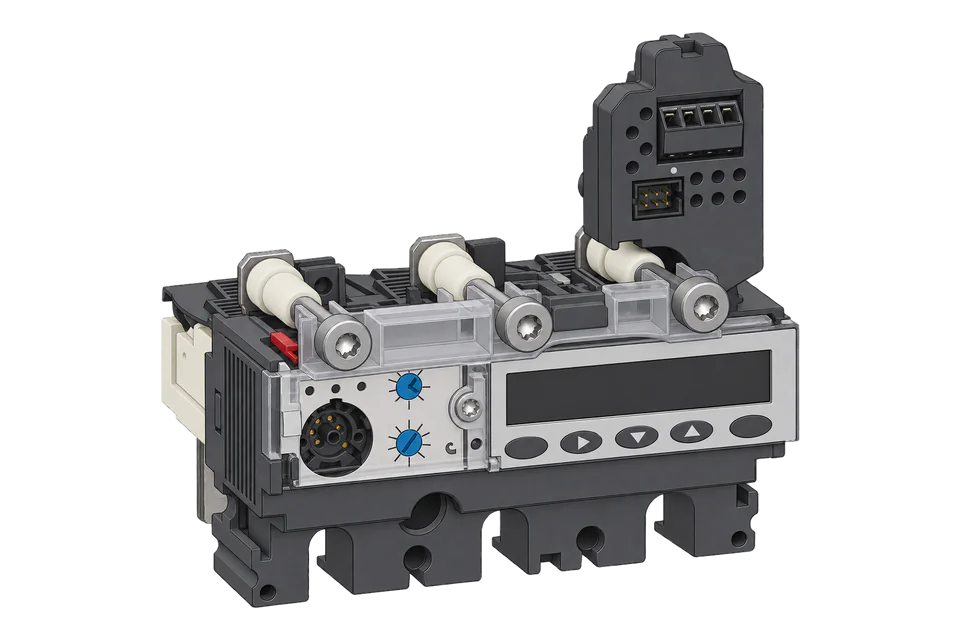
A ComPacT NSX circuit breaker with a MicroLogic 5, 6 or 7 trip unit carries its own metering: the A types measure current and the E types add voltage, power, power factor, frequency and energy. The trip unit has no network port of its own. It joins a ULP cord to an IFM interface (LV434000) for Modbus RTU on RS-485, or to an IFE interface (LV434001) or IFE switchboard server (LV434002) for Modbus TCP. Schneider's Modbus guide publishes a standard dataset from register 32000 that holds breaker status, trip causes and the main measurements in three block reads, as FLOAT32 values in A, V and W and INT64 energy in Wh. The same dataset serves MasterPacT MTZ and other PacT breakers.
Compatibility
Compatible with EpiSensor Edge over Modbus RTU through an IFM or Modbus TCP through an IFE
Schneider documents Modbus RTU on RS-485 through the IFM interface and Modbus TCP through the IFE interface and IFE server for ComPacT NSX breakers with MicroLogic 5, 6 or 7 trip units, and publishes the standard dataset and device registers with hex wire addresses, data types, units and the A or E types each register applies to.
ComPacT NSX 100 to 630 with a MicroLogic 5, 6 or 7 trip unit (firmware V001.008.003 or later for 5 and 6, V002.003.001 or later for 7), connected by NSX cord to an IFM (LV434000), IFE (LV434001) or IFE server (LV434002), using Modbus guide DOCA0384EN-01. Voltage, power, frequency and energy need an E type trip unit. Site check: read the product identification at register 8716, then compare current with the trip unit display. Read-only monitoring: no command interface writes.
Connect it with
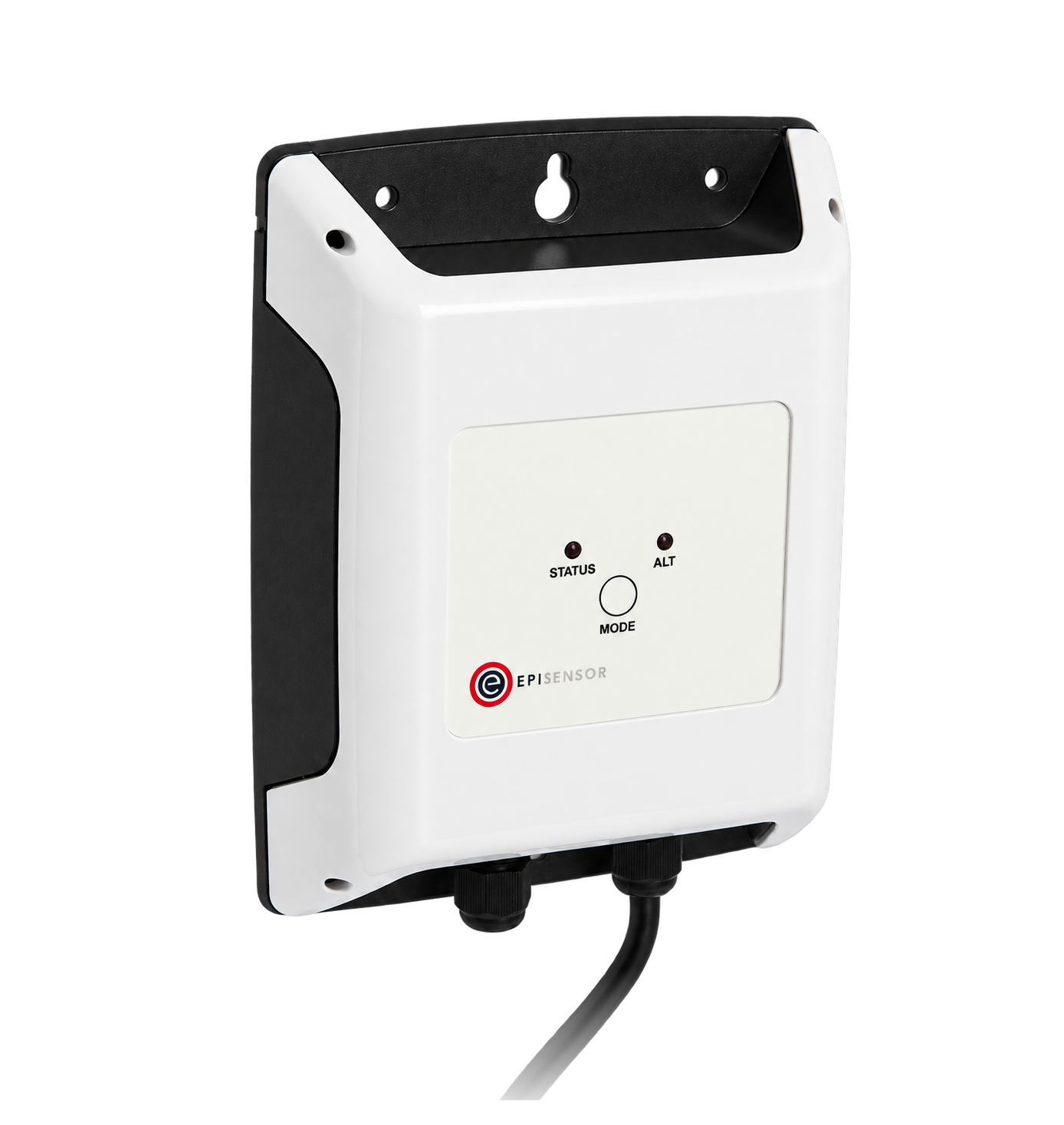
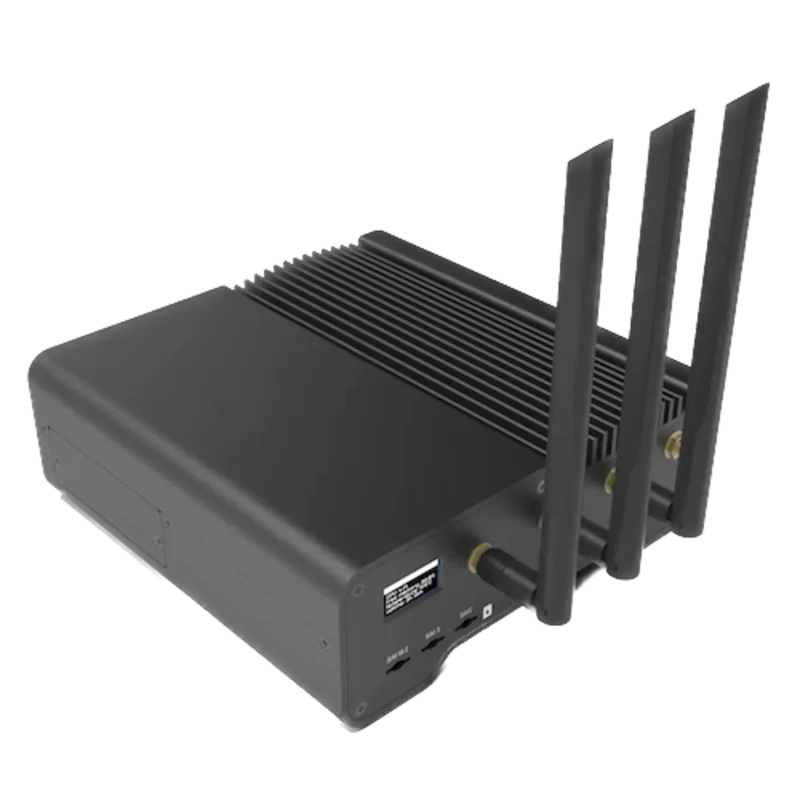
For breakers in a switchboard where an RS-485 bus runs to the Gateway or a ZMB-31
- Wired
- Edge
- Platforms
For breakers whose switchboard has an Ethernet network, or an IFE server already in place
- Wired
- Edge
- Platforms
Models
| Models | Interface | Route into Edge |
|---|---|---|
| MicroLogic 5.2 E, 6.2 E and 7.2 E (ComPacT NSX 100 to 250); 5.3 E, 6.3 E and 7.3 E (NSX 400 and 630), for example LV429095 | Distribution type E: current, voltage, power, power factor, frequency, THD and energy in the standard dataset. Product identification 15144 (distribution, type E); motor type E reads 15145. | Read the standard dataset through an IFM or IFE. Protection type register 8740 reads 52, 62 or 72 on NSX 100 to 250 and 53, 63 or 73 on NSX 400 and 630. |
| MicroLogic 5.2 A, 6.2 A, 5.3 A and 6.3 A | Ammeter type: phase, neutral and ground-fault current, breaker status and trip causes only. Product identification 15143. | Same routes. Voltage, power and energy registers are E only, so read current and status. |
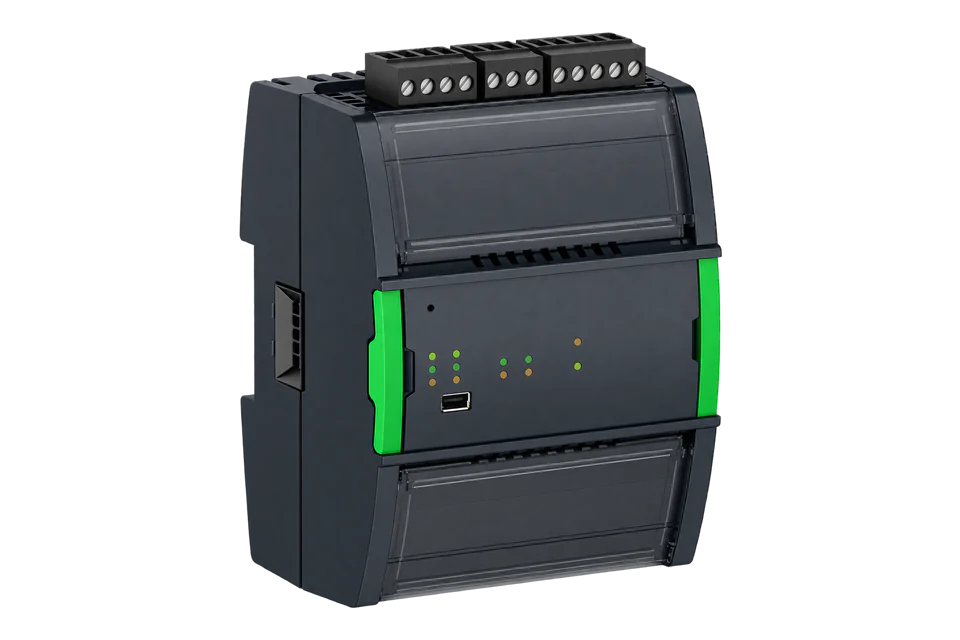
| IFM LV434000, IFE LV434001, IFE server LV434002 (replacing TRV00210, LV434010 and LV434011) | IFM: RS-485 Modbus RTU, address 1 to 99. IFE: two RJ45 Ethernet ports, Modbus TCP, unit ID 255. IFE server: Ethernet plus a server for stacked IFM interfaces. | One interface per breaker. Edge reads the interface, never the trip unit directly. |
| MasterPacT MTZ with MicroLogic X or MicroLogic Active control unit | The same standard dataset from register 32000, through an IFM, IFE or the EIFE embedded interface; its product identification registers differ | Use the dataset registers in this guide and the MTZ chapter of DOCA0384EN for identity. Some dataset registers, such as the averages at 32132, exist on MicroLogic X only. |
| ComPacT NSXm | Not covered by the Modbus guide's MicroLogic 5, 6 and 7 scope | No metering route in this guide. Meter the circuit with a separate meter or PowerTag sensor. |
Specifications
MicroLogic 5, 6 and 7 are electronic trip units for ComPacT NSX 100 to 630: 5 gives LSI protection, 6 adds ground fault and 7 adds earth leakage. The E types measure energy as well as protecting the circuit. Communication goes over the ULP system to one IFM or IFE interface per breaker, which also carries the BSCM status module and IO module of the same breaker.15
- Trip units covered
- MicroLogic 5, 6 and 7, type A (current) or type E (energy), on ComPacT NSX 100 to 630 and PowerPacT H-, J- and L-frame breakers1
- Firmware
- MicroLogic 5 and 6 V001.008.003 or later and MicroLogic 7 V002.003.001 or later for guide DOCA0384EN-01; IFM V003.001.012 or later; IFE V004.007.000 or later; IFE server V005.001.000 or later1
- IFM interface
- LV434000; one RJ45 Modbus-SL port and two RJ45 ULP ports; address 1 to 99 on rotary switches, 99 from the factory; 4800 to 38400 baud, auto-speed sensing from the factory; 24 V DC supply; DIN rail, 18 x 109 x 73 mm14
- IFE interface
- LV434001 for one breaker, LV434002 switchboard server; two RJ45 Ethernet ports; Modbus TCP on port 502 and unit ID 255; 8 or 16 Modbus TCP connections; IPv4 by DHCP from the factory; 24 V DC supply13
- Response time
- Typically under 10 ms for 90% of exchanges and up to about 700 ms; Schneider recommends a 1 s timeout1
- Trip unit example
- LV429095: MicroLogic 5.2 E for ComPact NSX 100 to 250, 100 A, 3 poles, LSI, 690 V AC, -25 to 70 °C operating, EN/IEC 60947-25
- Environment
- IFM: -20 to 70 °C operating, IP30 (connectors IP20), 5 to 85% RH at 55 °C4
Interface
Documented measurements and integration boundaries for ComPacT NSX MicroLogic.
- Every table in Schneider's guide gives the hex address used in the Modbus frame and the decimal register number, with register = address + 1: RMS current on phase 1 is address 0x7D1B, register 32028. Edge sends the hex address.
- INT64 and INT64U values are big-endian, most significant register first; FLOAT32 is IEEE 754 in two registers. Read the measurement registers with FC03 (FC04 and FC100 subcode 4 also read). A block that holds energy must be read whole: a partial read of a multi-register value returns an error.
- Standard dataset, FLOAT32 in A: current on phases 1, 2 and 3 at registers 32028, 32030 and 32032, neutral at 32034 (when the system type at 3314 is 30 or 41) and the most loaded phase at 32036.
- Standard dataset, FLOAT32 in V, E types: phase-to-phase V12, V23 and V31 at 32056, 32058 and 32060; phase-to-neutral V1N, V2N and V3N at 32062, 32064 and 32066 (system type 40 or 41).
- Standard dataset, FLOAT32, E types: active power on phases 1, 2 and 3 at 32072, 32074 and 32076 and total at 32078 in W; total reactive power at 32086 in VAR; total apparent power at 32094 in VA; frequency at 32068 in Hz; total power factor at 32212.
- Standard dataset energy, E types: total active energy at 32096 (INT64, Wh), delivered at 32104 and received at 32108 (INT64U, Wh), reactive energy at 32100 (INT64, VARh), and the not-resettable cumulative active energy delivered at 32124 and received at 32128 (INT64U, Wh).
- Demand, FLOAT32, E types: total active power demand at 32164 in W, phase current demand at 32156 to 32162 in A.
- Status and trip causes: breaker status at 32001 (bit 0 OF open or closed, bit 1 SD tripped, bit 2 SDE tripped on electrical fault) with its bit quality at 32000; tripping causes at 32007 with quality at 32006.
- Identity: MicroLogic product identification at register 8716 (address 0x220B, INT16U): 15143 distribution type A, 15144 distribution type E, 15145 motor type E. Metering type at 8741 reads A or E as text.
- The guide reads the whole dataset in three requests: 124 registers from 32000 (address 0x7CFF), 118 from 32124 and 96 from 32340. Real-time values refresh every 1 s, demand every 1 s and energy every 5 s.
- Out-of-order and not-applicable values: FLOAT32 0xFFC00000, INT64 0x8000000000000000, INT64U 0xFFFFFFFFFFFFFFFF, INT16U 0xFFFF. Bit 15 of a status register set to 1 means the other bits are not significant.
- Power and energy signs follow the power flow sign at register 3316 (0, upstream to downstream, from the factory), and energy accumulates in absolute mode from the factory (register 3324). The power flow sign configuration command can reset the energy registers other than the cumulative ones.
- Writes and commands: remote control commands, including opening and closing a motor-operated breaker and resetting energies, go through the command interface from register 8000 with FC16. Keep the poll to reads.
Assessment
ComPacT NSX 100 to 630 with a MicroLogic 5, 6 or 7 trip unit (firmware V001.008.003 or later for 5 and 6, V002.003.001 or later for 7), connected by NSX cord to an IFM (LV434000), IFE (LV434001) or IFE server (LV434002), using Modbus guide DOCA0384EN-01. Voltage, power, frequency and energy need an E type trip unit. Site check: read the product identification at register 8716, then compare current with the trip unit display. Read-only monitoring: no command interface writes.
- InteroperabilityWell supported
- Schneider documents Modbus RTU through the IFM and Modbus TCP through the IFE, prints hex wire addresses and register numbers for every table, states the byte order and publishes a standard dataset shared across its PacT breakers. The trip unit needs one of these interfaces before any route exists.13
- AccuracySupported with conditions
- E types give current, voltage, power, power factor, frequency and INT64 energy in Wh, including not-resettable cumulative counters. The guides publish no metering accuracy class, A types give current only, and phase-to-neutral values depend on the system type set at register 3314.15
- SecuritySupported with conditions
- Remote control commands need a user profile password and an open locking pad, and the IFE offers per-IP Modbus filtering with a Read-only level and optional Modbus over TLS on port 802. The locking pads come open, the default passwords are 0000 to 3333 and plain Modbus TCP is enabled from the factory.13
- ReliabilitySupported with conditions
- The guide gives response times, refresh rates and quality bits for status registers, and the trip unit stores energy in non-volatile memory every hour. The IFM and IFE need their own 24 V DC supply, so plan for missing data when it is lost.12
- RuggednessSupported with conditions
- The MicroLogic 5.2 E operates from -25 to 70 °C to EN/IEC 60947-2, and the IFM from -20 to 70 °C with IP30 and pollution degree 3, inside a switchboard.45
Setup
Read the MicroLogic product identification, then current, power and energy from the dataset
Schneider's Modbus guide DOCA0384EN-01 gives the MicroLogic 5/6/7 product identification at hex 0x220B (register 8716) as INT16U, RMS current on phase 1 at hex 0x7D1B (register 32028) as FLOAT32 in A, total active power at hex 0x7D4D (register 32078) as FLOAT32 in W, and total cumulative active energy delivered at hex 0x7D7B (register 32124) as INT64U in Wh, with register = address + 1.
- Request
- 63 03 22 0B 00 01 F7 F2: Modbus address 99 (the IFM's factory address), FC03, address 0x220B (register 8716), one register, RTU CRC.
- Address convention
- The guide prints the hex address beside each register and states that the address is the data used in the Modbus frame: 0x220B is register 8716 and 0x7D1B is register 32028. A client that takes one-based register numbers takes 8716 and 32028.
- Synthetic response
- 63 03 02 3B 28 52 A2: two data bytes, 0x3B28 = 15144, a distribution type E trip unit with voltage, power and energy.
- Current read
- 63 03 7D 1B 00 02 A4 22 reads two registers from 0x7D1B. Synthetic response 63 03 04 44 0A C0 00 DD 07 gives FLOAT32 0x440AC000 = 555.0 A, the value Schneider's own readout example decodes.
- Power read
- 63 03 7D 4D 00 02 44 32 reads two registers from 0x7D4D. Synthetic response 63 03 04 47 C3 50 00 61 7D gives FLOAT32 0x47C35000 = 100000.0 W, so 100.0 kW.
- Energy read
- 63 03 7D 7B 00 04 24 3E reads four registers from 0x7D7B. Synthetic response 63 03 08 00 00 00 00 00 17 96 92 3E 67 gives the INT64U 0x0000000000179692 = 1545874 Wh, the decode example the guide works.
- Modbus TCP
- Through an IFE the same PDU 03 22 0B 00 01 follows the MBAP header 00 01 00 00 00 06 FF: transaction 1, protocol 0, six bytes to follow, unit ID 255, and no CRC, sent to TCP port 502.
- Acceptance
- Keep the points when the product identification matches the trip unit's label and current on phase 1 agrees with the trip unit display at the same time.
Acceptance: The response bytes are a synthetic decoder check, not a captured breaker reply. A real reply must name the trip unit type and give a current that agrees with the display before power and energy points are enabled.
-
Identify the trip unit and interface
Read the trip unit name on its front (for example MicroLogic 5.2 E) and the interface reference (IFM LV434000, IFE LV434001 or IFE server LV434002). Voltage, power and energy need an E type. Record the trip unit firmware with EcoStruxure Power Commission.
-
Set the address or IP
On an IFM, set the Modbus address from 1 to 99 on the two rotary switches (99 from the factory) and match the bus speed and parity, 19200 baud and even parity by default. On an IFE, give it a reserved IP address; it answers on unit ID 255.
-
Close the locking pad for monitoring
The IFM and IFE locking pads come open from the factory, which enables remote control commands. Turn the arrow to the closed padlock where the breaker is only monitored; reads still work. On an IFE, enable Modbus TCP/IP filtering and give the Gateway's IP address the Read access level.
-
Read the product identification
Send FC03 for one register at address 0x220B, register 8716. Expect 15144 for a distribution type E trip unit, 15143 for type A or 15145 for motor type E.
-
Read current, power and energy from the dataset
Read current on phase 1 at register 32028 (address 0x7D1B) as FLOAT32 in A and compare it with the trip unit display, then total active power at 32078 (address 0x7D4D) in W and cumulative active energy delivered at 32124 (address 0x7D7B) as INT64U in Wh.
-
Keep the poll read-only
Poll at 1 s or slower with a 1 s timeout, treat 0xFFC00000 and 0xFFFFFFFFFFFFFFFF as missing, and keep the command interface at register 8000 out of the poll.
Common questions
- Can a MicroLogic 5.2 A give energy over Modbus?
- No. Type A trip units measure current only. Voltage, power, power factor, frequency and energy registers are available on type E trip units such as the MicroLogic 5.2 E.12
- Which unit ID does an IFE use?
- 255. The guide states that the IFE takes the Modbus address 255 and that it cannot be changed. An IFM uses the address set on its rotary switches, from 1 to 99.1
- Should Edge read the dataset or the MicroLogic registers?
- The dataset. Schneider recommends the standard dataset from register 32000 because it answers faster than the device registers and holds the main measurements in FLOAT32 and INT64, where the older device registers use scaled 16-bit and 32-bit integers, for example total active power at register 1037 as an INT16 with scale factor 10, so the register holds tenths of a kW.12
- Which energy register should I log?
- Total cumulative active energy delivered at register 32124 (INT64U, Wh), which cannot be reset. The total, delivered and received energies at 32096, 32104 and 32108 are cleared by the reset energies command and can be reset by the power flow sign configuration command.1
- Can a monitoring client open or close the breaker?
- Only through the password-protected command interface, and only while the interface's locking pad is open, which it is from the factory. Close the locking pad on a breaker that is only monitored, change the default passwords, and keep Edge to reads.1
Related devices




Sources
- MasterPacT, ComPacT, PowerPacT Modbus Communication User Guide DOCA0384EN-01, November 2025 (opens in a new tab) (PDF)
- ComPact NSX Modbus Communication User Guide DOCA0091EN-09, July 2022 (opens in a new tab) (PDF)
- Enerlin'X IFE Ethernet Interface for One Circuit Breaker User Guide DOCA0142EN-12, April 2026 (opens in a new tab) (PDF)
- LV434000 product page, IFM Modbus-SL interface module, Enerlin'X (opens in a new tab)
- LV429095 product page, trip unit MicroLogic 5.2 E for ComPact NSX 100/160/250, 100 A, 3 poles (opens in a new tab)
Further reading
- ApplicationTransformer and distribution-board monitoring
- ApplicationModbus meter integration for a BMS or SCADA system
- ToolModbus register address translator
- ToolModbus data decoder
- ToolModbus RTU CRC calculator
- GuideModbus commissioning over RS-485
- GuideModbus TCP or RTU for integration
- GuidePowerTag sensors through Panel Server
- ManufacturerSchneider Electric devices
- ProtocolModbus devices and register maps
- CategoryEnergy meters
Product names and trademarks belong to their owners. Publication does not imply endorsement or a commercial relationship.