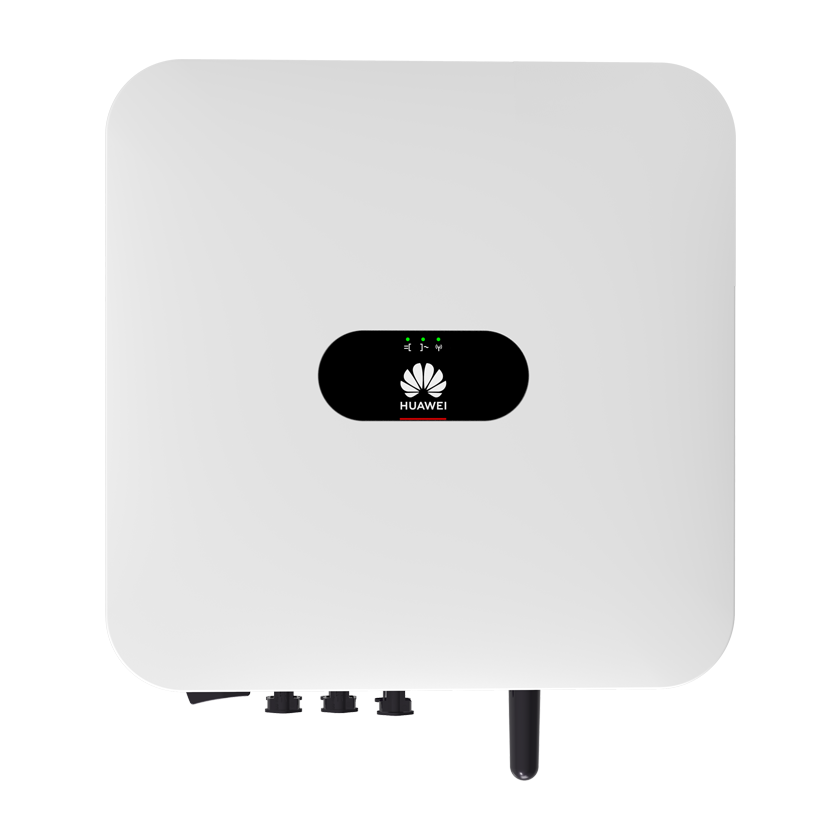
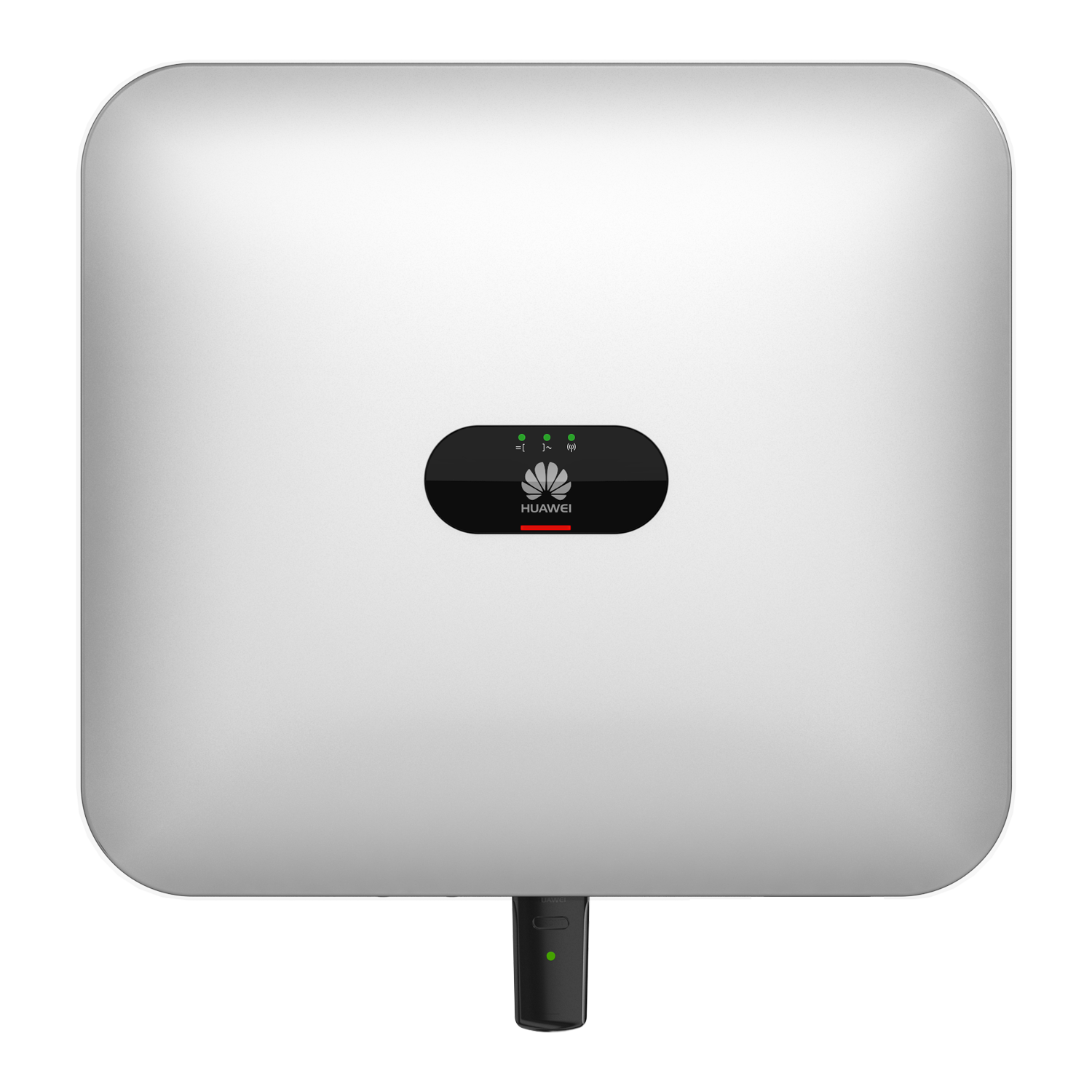
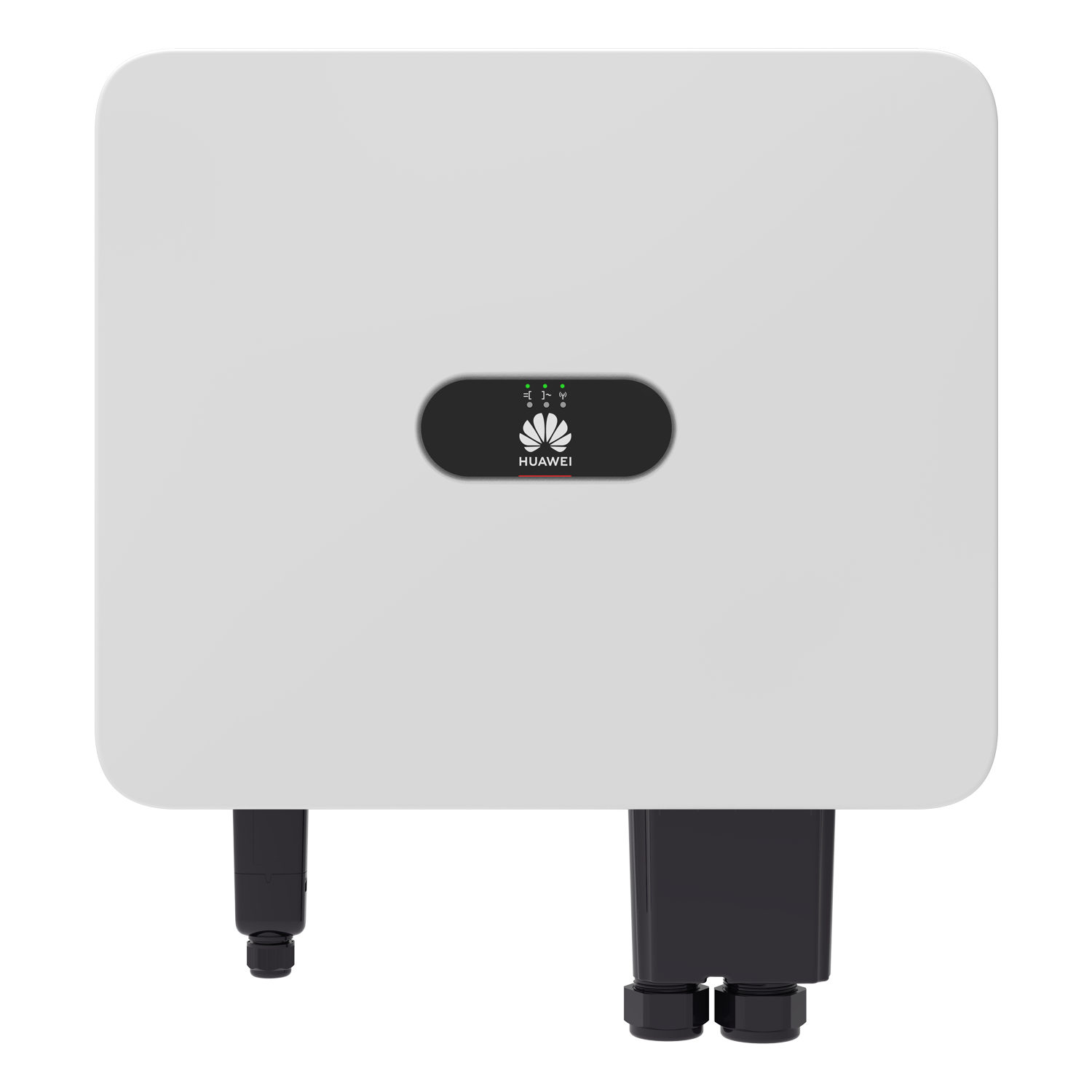
Huawei SUN2000-(2KTL-6KTL)-L1
Residential hybrid PV inverter
Huawei's seven single-phase L1 ratings span 2 to 6 kW. The COM port separates the inverter cascade and Smart Guard pair from the shared meter and battery pair. Huawei’s model-listed interface definition supplies read-only identity, power and frequency registers and specifies Modbus RTU over RS485. Use the published revision as a best-effort starting map, confirm identity and compare live values. This does not imply an open TCP server on an optional Smart Dongle or a tested Edge installation.
- Modbus RTU
Residential hybrid PV inverter
Compatibility
Documented Modbus RTU monitoring
Huawei’s model-listed interface definition supplies read-only identity, power and frequency registers and specifies Modbus RTU over RS485. Use the published revision as a best-effort starting map, confirm identity and compare live values. This does not imply an open TCP server on an optional Smart Dongle or a tested Edge installation.
SUN2000-2/3/4/4.6/5/6KTL-L1. Published baseline SUN2000L V200R001C00; record actual firmware and compare identity/values. Read-only RS485 monitoring; preserve commissioned meter, battery, export-limit and protection control. No optional Dongle TCP endpoint is assumed.
Connect it with
-
Modbus Interface ZMB-3XFrom €399 ex VAT Configure Modbus Interface
-
Gateway ZGW-20From €899 ex VAT Configure Gateway
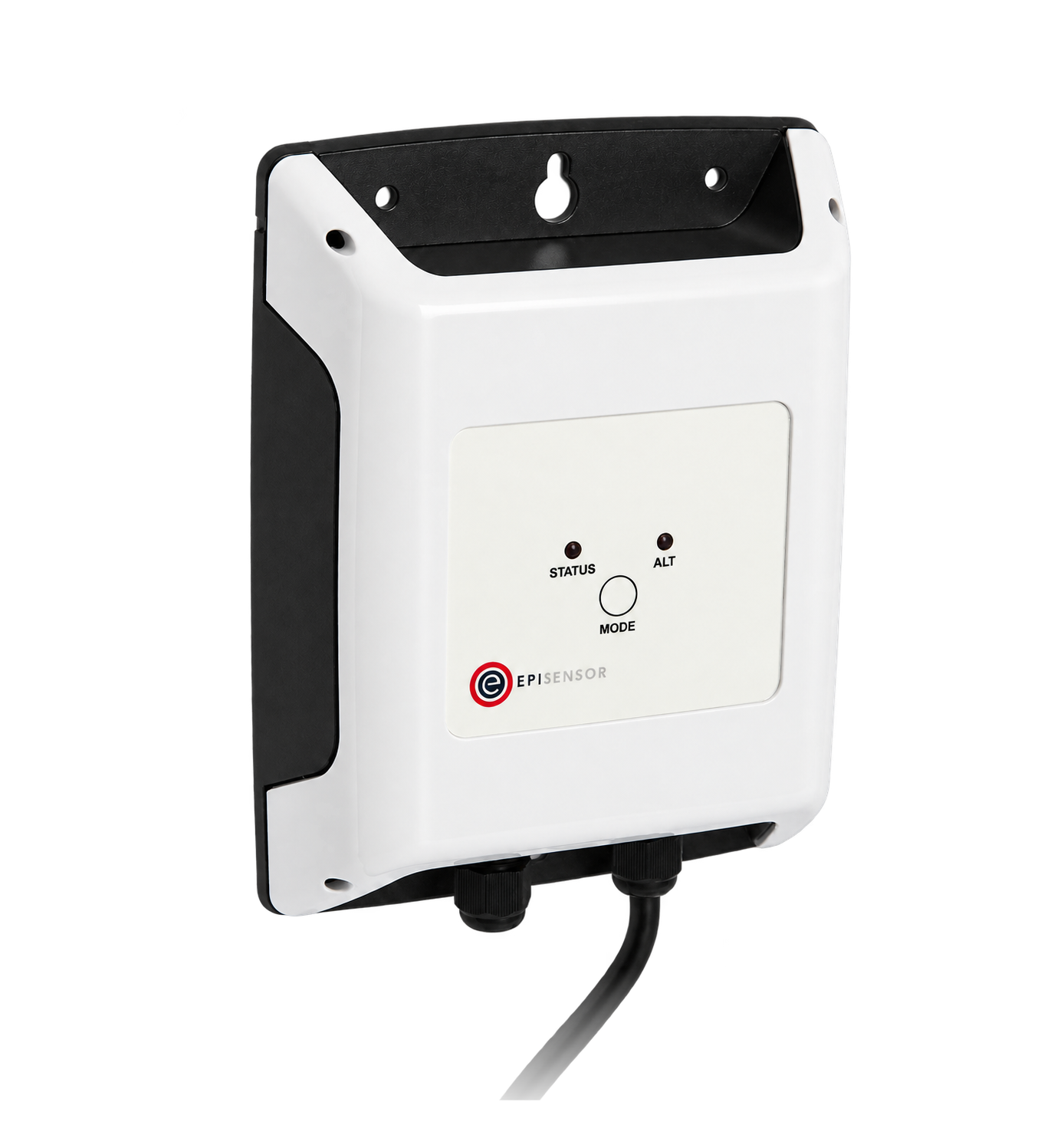
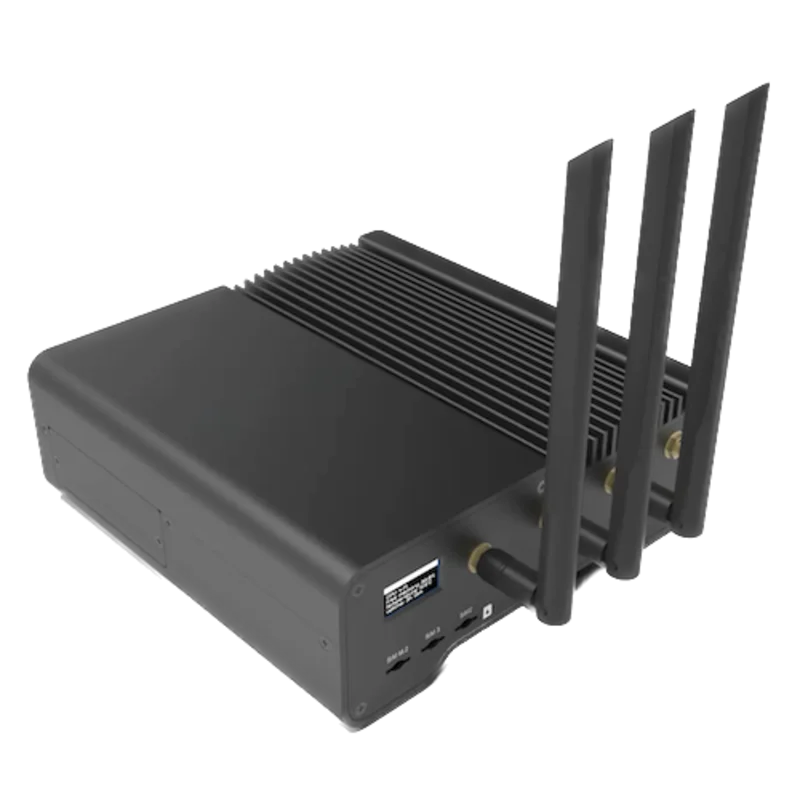
An available inverter communications pair is configured for an external Modbus RTU reader; preserve an existing logger/master and the meter/battery bus
- Wired
- Edge
- Platforms
Models
| Models | Interface | Route into Edge |
|---|---|---|
| SUN2000-2/3/3.68KTL-L1 | 2, 3 or 3.68 kW single-phase AC rating; two MPPTs and the L1 COM terminal roles | Record the exact nameplate and regional firmware before seeking an authorised read-only Smart Dongle or site interface. |
| SUN2000-4/4.6/5/6KTL-L1 | 4, 4.6, 5 or 6 kW single-phase AC rating; battery and meter may share RS485A2/B2 | The 6 kW model's battery discharge limit is not its 6 kW AC PV rating. Check battery, backup and firmware boundaries independently. |
| SUN2000-L1 High Current, L2, L3 and LB0 | Separate hardware revisions or model generations, excluded from this guide | Do not reuse the standard L1 input-current limits, meter approvals or terminal assumptions for another revision. |
Specifications
Huawei's September 2025 datasheet lists seven single-phase L1 ratings, two MPP trackers, a battery port, RS485 and optional WLAN-FE Smart Dongle Ethernet. It names LUNA2000-S0 and S1 battery families, subject to the installed accessory and firmware. The model-listed Huawei interface definition supplies the read-only starting map below.13
- Rated AC output
- 2, 3, 3.68, 4, 4.6, 5 or 6 kW on one phase1
- PV inputs
- Two MPP trackers; one input per tracker1
- Battery discharge
- Up to 2.2, 3.3, 3.68, 4.4, 4.6, 5 or 5 kW respectively1
- Cascade / management pair
- COM pins 1/2: 485B1/485A12
- Meter / battery pair
- COM pins 3/4: 485B2/485A2, shared when both are fitted2
- Optional communications
- SDongleA-05 WLAN-FE or SDongleA-03/SDongleB-06 4G; network uplinks remain separate from the documented RS485 read path2
- Enclosure
- IP65; verify installation and derating1
Interface
Documented measurements and integration boundaries for SUN2000-(2KTL-6KTL)-L1.
- COM pins 1/2 are 485B1/485A1 for inverter cascading or the SmartAssistant/Smart Guard RS485 connection in Issue 28. This is a commissioned Huawei plant link, not evidence of a free third-party telemetry pair.
- COM pins 3/4 are 485B2/485A2 for the battery or power meter. Both may share the pair; identify the installed devices and addresses before changing the bus.
- Huawei's manual lists SDongleA-05 WLAN-FE and SDongleA-03/SDongleB-06 4G options. The power meter and Smart Dongle must be on the same inverter in its networking examples. A Dongle Ethernet uplink does not establish an inverter Modbus TCP server.
- The manual identifies region-specific meter limits: the Spanish version uses Huawei's DDSU666-H meter, while YDS70-C16 and DDSU71/DDSU1079-CT support has SUN2000L firmware thresholds. Check the actual country and firmware before changing a meter.
- The L1 datasheet's 6 kW PV AC rating is distinct from its 5 kW maximum battery discharge power. Site import/export and VPP flexibility also require an independently qualified grid-point meter and control owner.
Assessment
SUN2000-2/3/4/4.6/5/6KTL-L1. Published baseline SUN2000L V200R001C00; record actual firmware and compare identity/values. Read-only RS485 monitoring; preserve commissioned meter, battery, export-limit and protection control. No optional Dongle TCP endpoint is assumed. The 2022 map spells its 3.68 kW entry SUN2000-3.68KTL-L10 (ID 347), so confirm the returned identity rather than assuming that ID for a 3.68KTL-L1 nameplate.
- InteroperabilitySupported with conditions
- Huawei lists this model family and Modbus RTU read registers; available bus role and optional network accessories remain site-specific.23
- AccuracyNot yet assessed
- OEM identity, signed power, frequency, types and gains are documented. Installed measurement accuracy and physical polling behavior have not been measured.23
- SecurityNot yet assessed
- Read-only external account and network restrictions for the installed management equipment are unknown.2
- ReliabilityNot yet assessed
- The public Modbus definition establishes response format; installed polling capacity, stale-data handling and recovery have not been measured.23
- RuggednessSupported with conditions
- IP65 and -25 to +60 °C operation are published; installed siting, sealing and thermal derating still matter.1
- ScalabilityNot yet assessed
- Huawei shows cascaded inverter networking, but approved external polling capacity is unknown.2
Setup
Identify the inverter and read active power
A best-effort read-only start from the model-listed Huawei interface definition. Use the configured inverter address and serial framing on an available, installer-approved RS485 link. Keep the meter/battery bus and existing plant master separate. Addresses below are literal Modbus PDU addresses.
- Read identity
- FC03 model name at 30000, 15 registers: PDU 03 75 30 00 0F. Serial number at 30015, 10 registers: 03 75 3F 00 0A. Model ID at 30070, one U16: 03 75 76 00 01. Compare the returned name and serial with the nameplate; use the model-ID table for this family, not an ID from another SUN2000 generation.
- Signed active power
- FC03 address 32080, quantity 2: PDU 03 7D 50 00 02. Active power is signed I32 with gain 1000, unit kW. Join the most-significant word first and divide by 1000. Synthetic 00 00 13 88 gives 5000 ÷1000 = 5.000 kW; FF FF EC 78 gives -5.000 kW. These are decoder fixtures, not measurements. Do not treat the pair as Float32 or divide twice when displaying W.
- Frequency and comparison
- FC03 address 32085, quantity 1: PDU 03 7D 55 00 01. Frequency is U16, gain 100, in Hz. Synthetic 13 88 gives 5000 ÷100 = 50.00 Hz. Compare fresh active power and frequency with Huawei’s local view. Keep inverter production distinct from the site meter’s signed import/export and storage measurements.
- Addressing and response quality
- Use the configured slave address and standard RTU CRC16; the PDUs above omit that envelope. Keep exceptions, incomplete responses and timeouts unavailable rather than zero. If identity fails, check slave address, serial framing and A/B polarity first. Do not copy a SunSpec unavailable-value sentinel into this Huawei map. Begin with a small read-only point set and preserve the existing bus master.
Acceptance: The published map provides a concrete monitoring start; verify identity and values on the installed equipment. Physical Edge operation remains untested. Battery, export-limit, grid and protection writes stay with the commissioned plant owner.
-
Identify the exact L1 revision
Record the full nameplate, country configuration and SUN2000L firmware. Standard L1, L1 High Current, L2, L3 and LB0 documentation must remain separate.
-
Map the COM port by function
Use the installed revision's wiring instructions to trace pins 1/2 for cascade or SmartAssistant/Smart Guard and pins 3/4 for meter or battery. Preserve any shared meter/battery bus and shutdown wiring.
-
Identify Huawei's site data route
Record the fitted Smart Dongle or management device, its software version and network policy. Do not substitute a SmartLogger protocol claim from another SUN2000 family.
-
Identify the inverter and read active power
FC03 model name at 30000, 15 registers: PDU 03 75 30 00 0F. Serial number at 30015, 10 registers: 03 75 3F 00 0A. Model ID at 30070, one U16: 03 75 76 00 01. Compare the returned name and serial with the nameplate; use the model-ID table for this family, not an ID from another SUN2000 generation.
-
Separate inverter and grid measurements
Document the grid-point meter, CT orientation, import/export signs and freshness separately from inverter output. Keep battery, export limitation and backup controls under the commissioned owner.
Common questions
- Which COM pins serve the L1 power meter?
- Issue 28 assigns 485B2/485A2 on pins 3/4 to the power meter or battery. They may share that pair, so identify the installed bus before changing it.2
- Can the 6 kW model deliver 6 kW from its battery?
- The current datasheet lists 6 kW rated on-grid AC output but 5 kW maximum battery discharge power for the 6KTL-L1. Backup capability also depends on its installed Smart Guard, battery and configuration.12
- Does a Smart Dongle enable VPP dispatch?
- Its presence alone does not establish authorised third-party control points, permissions, export-limit ownership or loss-of-communications behavior. A separate site-specific controls approval is required.2
Related devices
Sources
- SUN2000-2/3/3.68/4/4.6/5/6KTL-L1 technical specification, 01-202509 (opens in a new tab) (PDF)
- SUN2000-(2KTL-6KTL)-L1 User Manual, Issue 28, 30 June 2026 (opens in a new tab)
- Huawei Solar Inverter Modbus Interface Definitions, Issue 04, 18 October 2022 (public mirror) (opens in a new tab)
Further reading
Product names and trademarks belong to their owners. Publication does not imply endorsement or a commercial relationship.