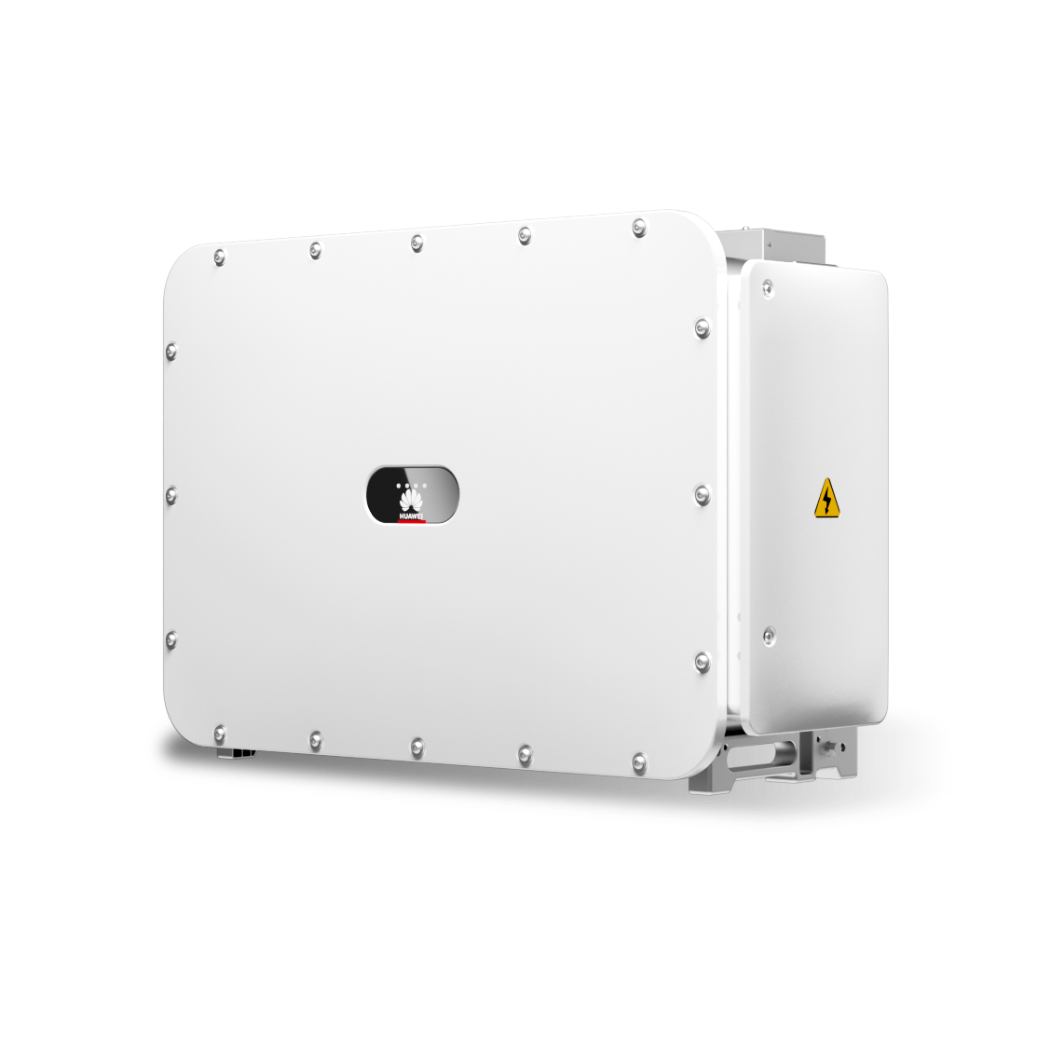
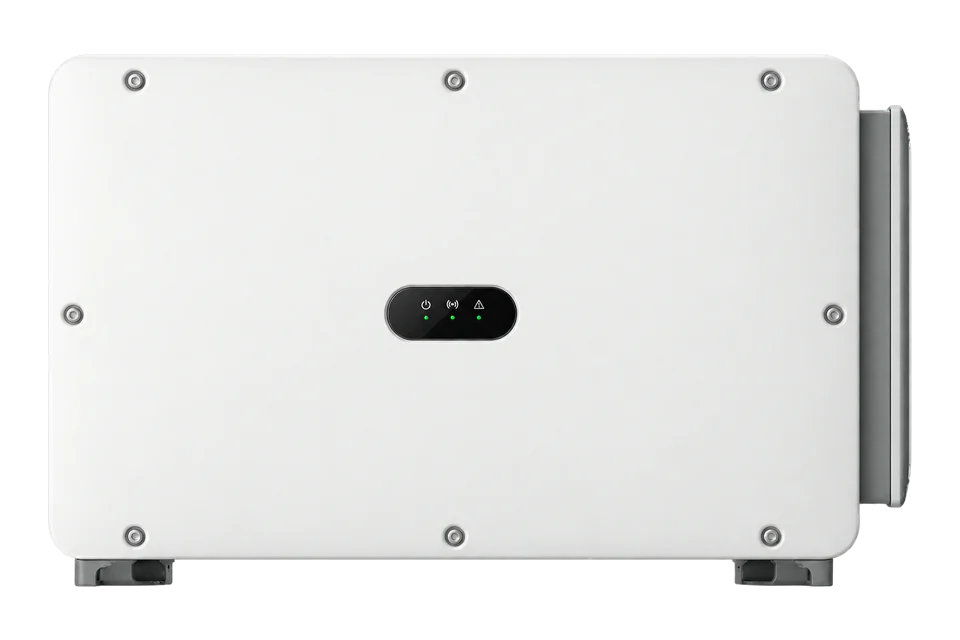
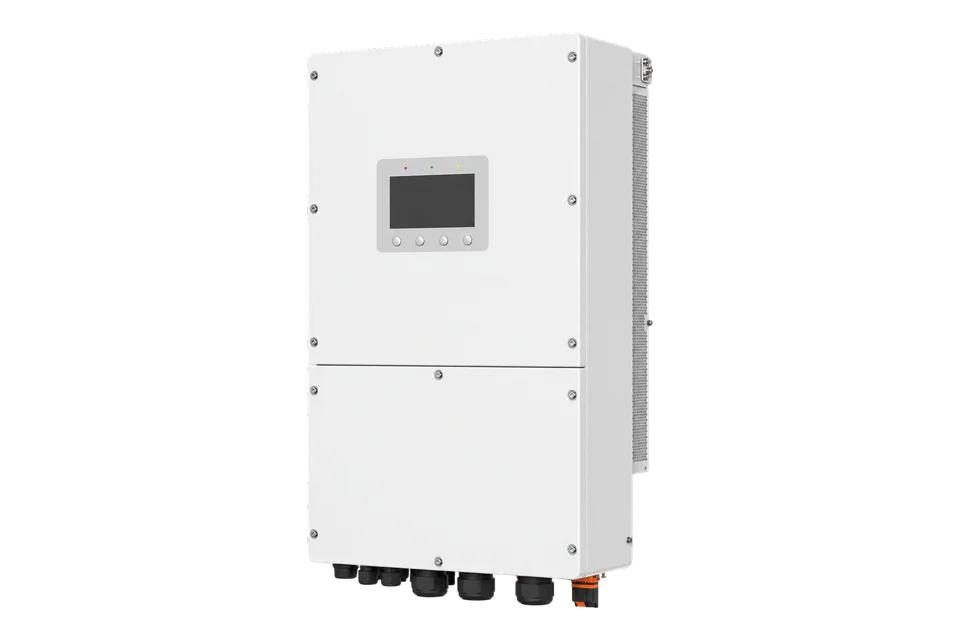
Huawei SUN2000-150K-MG0
Commercial PV inverter
Huawei’s 150 kW MG0 has seven MPPTs and a 380/400/480 V AC rating in its regional datasheets. The September 2026 manual separates RS485-1 for inverter cascading or a SmartLogger from RS485-2 for a device such as the grid meter. AC MBUS depends on hardware part number and plant design. Identify the commissioned logger, dongle, firmware and authorised northbound data contract before planning an external read.
- RS485
Commercial PV inverter
Compatibility
External monitoring requires a matched logger data contract
The exact-model manual documents RS485 and conditional AC MBUS plant networking, but the retained sources do not establish a model- and firmware-matched northbound point map, permitted third-party reader, or direct Edge connection.
Identify SUN2000-150K-MG0 without the China-only -ZH suffix, hardware part number, firmware, SmartLogger or Smart Dongle model and software, grid meter, and country grid profile. Part number 01076909 does not support AC MBUS. Keep grid protection, export limiting and inverter setpoints with the commissioned plant controller; no write or dispatch route is approved.
Models
| Models | Interface | Route into Edge |
|---|---|---|
| SUN2000-150K-MG0 | 150 kW nominal AC; seven MPPTs; RS485-1 logger bus and RS485-2 downstream device port | Confirm the actual part number and commissioned SmartLogger or Dongle before investigating read-only data access. |
| Part number 01076909 | The issue 20 manual expressly excludes AC MBUS for this part number | Use the installed hardware record, not a family datasheet feature row, to decide whether MBUS exists. |
| SUN2000-150K-MG0-ZH | China-region variant in the wider manual | Do not transfer its regional grid, connector or software assumptions to the unsuffixed MG0. |
| SUN2000-100K-MGL0-ZH and 50–80K-MGL0 | Other ratings and regional variants in the wider manual | Do not treat the manual family as a single 150 kW electrical specification. |
Specifications
Huawei’s February 2025 German datasheet and its preliminary English sheet agree on 150 kW nominal AC active power, 165 kVA maximum apparent power, 7 MPPTs with at most 3 string inputs each, 1100 V maximum DC input and 380/400/480 V nominal AC options. The product is IP66. Electrical design must use the actual country code and latest supplier issue.34
- Nominal AC output
- 150 kW at the documented 380/400/480 V nominal AC options; 165 kVA maximum apparent power4
- PV tracking
- Seven MPPTs, up to three inputs each; 48 A maximum current per MPPT4
- DC input limit
- 1100 V maximum; 200–1000 V MPPT range4
- RS485-1
- Pins 1–4, IN/OUT pairs for inverter cascade or SmartLogger5
- RS485-2
- Pins 7–8, downstream RS485 device such as a power meter5
- AC MBUS
- Conditional plant network; unsupported on part number 01076909, with isolation/step-up transformer requirements15
- Enclosure
- IP66; manual gives -25 to +60°C ambient range subject to design and derating5
Interface
Documented measurements and integration boundaries for SUN2000-150K-MG0.
- RS485-1 pins 1–4 provide IN/OUT pairs for inverter cascading or a SmartLogger. RS485-2 pins 7–8 are for a downstream RS485 device such as a power meter. Preserve the commissioned meter path.
- Huawei documents up to 30 inverters per SmartLogger COM port on RS485, or up to 10 on a Dongle. Those plant topology limits do not define third-party polling capacity or readable Edge points.
- AC MBUS is Huawei inverter-to-logger communication over the plant power network, not a utility M-Bus meter interface or a direct Ethernet handoff. The manual excludes part number 01076909 and requires a suitable isolation or step-up transformer in MBUS scenarios.
- The product page qualifies AFCI, PID recovery and MBUS as top-configuration features. Check exact hardware before promising them, even when a regional datasheet prints an unconditional feature row.
- Inverter production is not point-of-common-coupling import or export. Keep the grid meter and plant control owner separate from inverter telemetry.
- No setpoint, export limit, reactive-power, shutdown or VPP dispatch write is approved by this selection guide.
Assessment
Unsuffixed SUN2000-150K-MG0, regional datasheets and issue 20 manual; installed part number, firmware, logger and northbound point contract unverified.
- InteroperabilityLimited
- Huawei defines RS485 and conditional AC MBUS plant-network roles, but the retained sources lack a matched third-party point and permission contract.15
- AccuracyNot yet assessed
- Readable values, units, scaling, quality and timestamps depend on the installed logger’s authorised point map.
- SecurityNot yet assessed
- Third-party access rights and plant-network exposure are not established for this installation.
- ReliabilityNot yet assessed
- Northbound polling limits and stale-value behavior require the matching logger software contract.
- RuggednessSupported with conditions
- The manual specifies IP66 and -25 to +60°C, subject to site and derating conditions.5
- ScalabilitySupported with conditions
- The manual permits up to 30 inverters per SmartLogger COM port on RS485, with cable and baud constraints; external telemetry capacity remains open.5
Setup
-
Identify regional and hardware variant
Record the complete SUN2000-150K-MG0 nameplate, part number, firmware and country grid setting. The -ZH suffix belongs to a separate region, and part number 01076909 has no AC MBUS.
-
Trace the plant network
Identify whether the installed inverter uses RS485 or AC MBUS. Trace RS485-1 to the SmartLogger or Dongle and RS485-2 to any meter; document the actual SmartLogger model, software and COM port.
-
Qualify MBUS before designing around it
For AC MBUS, verify the hardware feature, non-residential plant context, isolation or dedicated step-up transformer and Huawei’s cable guidance. Do not treat MBUS as an Edge IP endpoint.
-
Obtain the northbound read contract
Request the authorised logger or dongle protocol document for its exact software, inverter address mapping, point table, units, scaling, quality values, network policy and read permissions. A generic Modbus label or RS485 pair cannot substitute for this.
-
Compare site values
After access is approved, compare inverter identity and fresh AC power with Huawei’s own management view. For import/export or flexibility reporting, compare the independent grid-point meter and its direction convention separately.
Common questions
- How many MPPTs does SUN2000-150K-MG0 have?
- The regional datasheet specifies seven, with up to three DC inputs per tracker. Check the exact model and current supplier issue before sizing strings.4
- Can RS485-2 be used as a spare telemetry bus?
- Do not assume so. The issue 20 manual assigns it to a downstream device such as a power meter; RS485-1 carries the inverter cascade or SmartLogger link. Inspect the commissioned wiring first.5
- Does every MG0 have AC MBUS?
- No. Huawei states that part number 01076909 does not support it, and the product page limits MBUS to the top configuration. The plant topology also has transformer and environment requirements.15
- Can Edge read it directly using Modbus?
- The retained model documents do not establish a direct Edge endpoint or a firmware-matched third-party register map. First identify the authorised logger or dongle data handoff and prove a bounded read.25
- Does 150 kW inverter production show grid export?
- No. Production is measured at the inverter; site import or export requires the grid-point meter and its direction convention.5
Related devices
Sources
- SUN2000-150K-MG0 product page (opens in a new tab)
- SUN2000-150K-MG0 support page (opens in a new tab)
- SUN2000-150K-MG0 preliminary English datasheet (opens in a new tab) (PDF)
- SUN2000-150K-MG0 German datasheet, February 2025 (opens in a new tab) (PDF)
- SUN2000-(50K, 75K, 80K, 100K, 150K)-MG series user manual, issue 20 (opens in a new tab)
Further reading
Product names and trademarks belong to their owners. Publication does not imply endorsement or a commercial relationship.