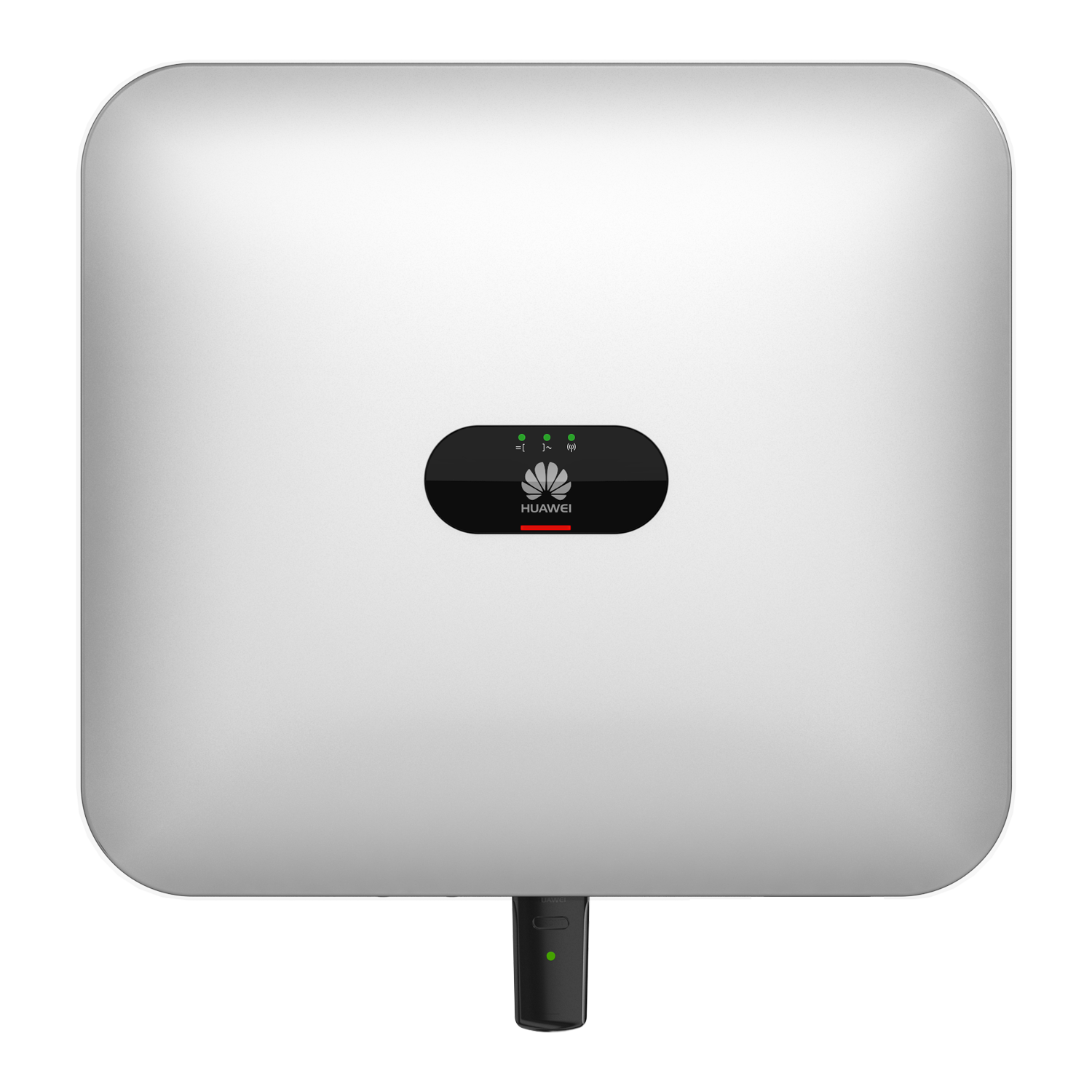
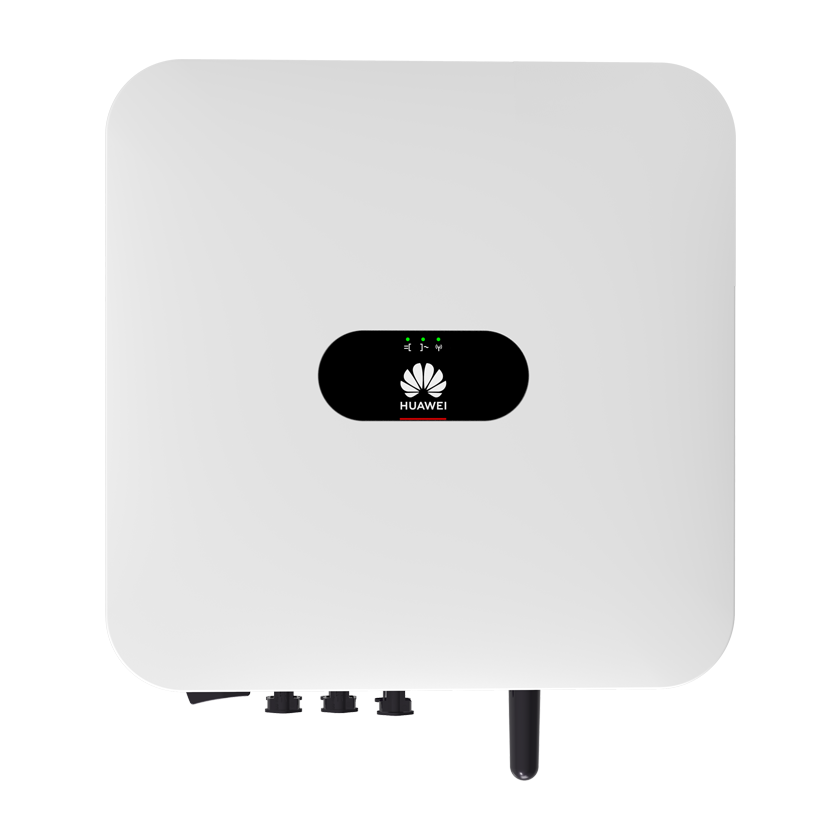
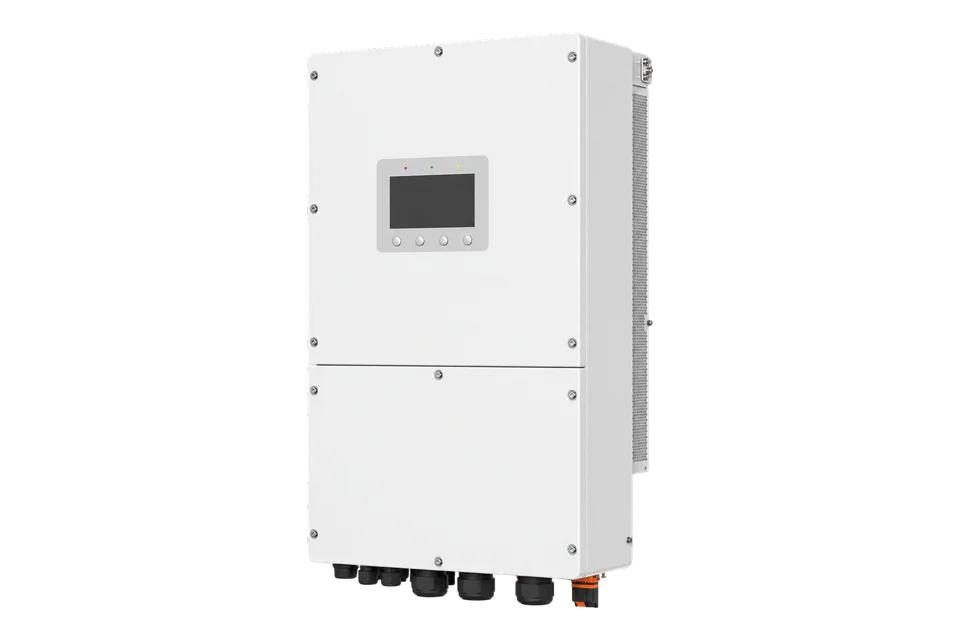
Huawei SUN2000-3/4/5/6/8/10KTL-M1
Residential hybrid PV inverter
Huawei's high-current M1 family spans 3 to 10 kW. The full-family manual separates the SmartLogger/cascade pair from the shared meter/battery pair. The newer linked manual has a narrower China-market scope, so verify the installed version before planning an external read.
- RS485
Residential hybrid PV inverter
Compatibility
Direct Edge integration not yet verified
The exact six-model manual documents RS485 plant and meter/battery terminal roles, and Huawei lists Smart Dongle networking. The retained sources do not supply a firmware-matched third-party inverter register map or prove a direct Modbus TCP service. The newer support-page manual has a different regional model scope, so its 5 to 12 kW features cannot be assumed for this high-current six-model family.
Identify the full M1 nameplate, market, high-current hardware revision and SUN2000MA firmware. Record the SmartLogger or Smart Dongle, meter, battery and backup devices actually fitted. Obtain the matching authorised northbound point and permission document before an Edge read. Leave export limitation, battery control, grid settings and flexibility dispatch with the commissioned owner.
Models
| Models | Interface | Route into Edge |
|---|---|---|
| SUN2000-3KTL-M1 and 4KTL-M1 | 3 or 4 kW AC rating in Huawei's high-current datasheet; older six-model manual defines the COM connector | The linked 2026 manual's Purpose omits these ratings. Match the installed high-current revision and its own manual before using the older pin table. |
| SUN2000-5/6/8/10KTL-M1 | 5, 6, 8 or 10 kW AC rating; two MPPTs and optional Smart Dongle networking | The 2026 manual covers similarly named China-market variants. Verify regional hardware and firmware before transferring any accessory or point assumption. |
| SUN2000-10KTL-BEM1, 12KTL-M1, M0, M5 and MB0 | Different variant, rating or generation, excluded from this guide | Do not reuse their electrical ratings, battery features or communications contract for the six high-current M1 models. |
Specifications
The November 2024 high-current datasheet identifies six three-phase ratings from 3 to 10 kW, two MPPTs, a battery port, RS485 and optional Huawei WLAN-FE or 4G Smart Dongles. It does not publish third-party inverter register addresses, permissions or a direct Ethernet server.1
- High-current models
- SUN2000-3, 4, 5, 6, 8 and 10KTL-M11
- Rated AC power
- 3, 4, 5, 6, 8 or 10 kW respectively1
- PV tracking
- Two MPP trackers1
- Logger/cascade connection
- 2022 manual: COM pins 1/3 or 2/4, RS485A1/B12
- Meter/battery connection
- 2022 manual: COM pins 7/9, shared RS485A2/B22
- Optional communications
- Huawei WLAN-FE or 4G Smart Dongle; third-party read endpoint not established12
- Enclosure
- IP65; site installation and thermal limits still apply1
Interface
Documented measurements and integration boundaries for SUN2000-3/4/5/6/8/10KTL-M1.
- The 2022 full-family manual's COM pin table assigns RS485A1/B1 on pins 1/3 or 2/4 to the inverter cascade or SmartLogger. The two parallel pairs are plant-network connections, not evidence of an unrestricted external client port.
- RS485A2/B2 on pins 7/9 is shared by the power meter and battery in the same manual. Trace both loads and their configured addresses before changing wiring; a meter's protocol does not define the inverter's own telemetry map.
- The older manual says a Smart Dongle network and SmartLogger network are alternative topologies. Its WLAN-FE Dongle is SDongleA-05 and 4G Dongle is SDongleA-03. A Dongle's Ethernet uplink alone does not prove a local inverter Modbus TCP server.
- Huawei's high-current datasheet lists LUNA2000-S0 and S1 battery families and a BackupBox-B1 option. Actual battery, backup and charging functions depend on installed firmware and accessory revision.
- For site import, export or VPP flexibility, establish the grid-point meter, direction convention and control owner separately. Inverter output cannot establish net site power or dispatch permission.
Assessment
SUN2000-3/4/5/6/8/10KTL-M1 high-current family; the 2022 full-family manual and 2026 China-market manual are deliberately kept separate.
- InteroperabilityLimited
- An exact full-family manual documents RS485 logger/cascade and meter/battery wiring, and Huawei lists Dongle options. No third-party point contract is retained.12
- AccuracyNot yet assessed
- A firmware-matched northbound point list, scaling and freshness behavior are not documented here.2
- SecurityNot yet assessed
- Read-only permission and network access for the installed logger or Dongle remain unidentified.2
- ReliabilityNot yet assessed
- Northbound retry, stale-value and polling-capacity behavior need the matching interface specification.2
- RuggednessSupported with conditions
- The high-current datasheet lists IP65 and a -25 to +60 °C envelope, subject to siting, cable sealing and thermal derating.1
- ScalabilityNot yet assessed
- The 2022 manual describes Huawei cascade limits, but external polling capacity is not proven for this hardware and site.2
Setup
-
Identify the regional M1
Record the full nameplate, high-current hardware version, SUN2000MA firmware, installed battery and grid code. The six-model high-current datasheet and 2026 China-market manual have different scope.
-
Map the commissioned COM connections
Check the installed manual before using the 2022 pin table. Trace both RS485A1/B1 cascade or logger pairs and the shared RS485A2/B2 meter/battery pair without disturbing existing control wiring.
-
Identify the external data owner
Determine whether the system uses a SmartLogger or a Smart Dongle, and record its exact hardware, firmware, network and access policy. A Huawei accessory port is not automatically an open third-party endpoint.
-
Request a matching read contract
Obtain the authorised point list for that installed data owner, including inverter identity, register or API path, units, scaling, timestamps, polling limits and least-privilege read access. Compare one live measurement against Huawei's own view.
-
Qualify grid and storage separately
Document the point-of-connection meter, import/export sign and battery controller separately from inverter production. Keep export limitation and backup operation under their commissioned control system.
Related devices
Sources
- SUN2000-3/4/5/6/8/10KTL-M1 High Current Version datasheet, 01-202411 (opens in a new tab) (PDF)
- SUN2000-(3KTL-10KTL)-M1 User Manual, Issue 05, 10 March 2022 (opens in a new tab) (PDF)
- SUN2000-(3KTL-10KTL)-M1 User Manual, Issue 28, 30 March 2026; China-market model scope (opens in a new tab)
Further reading
Product names and trademarks belong to their owners. Publication does not imply endorsement or a commercial relationship.