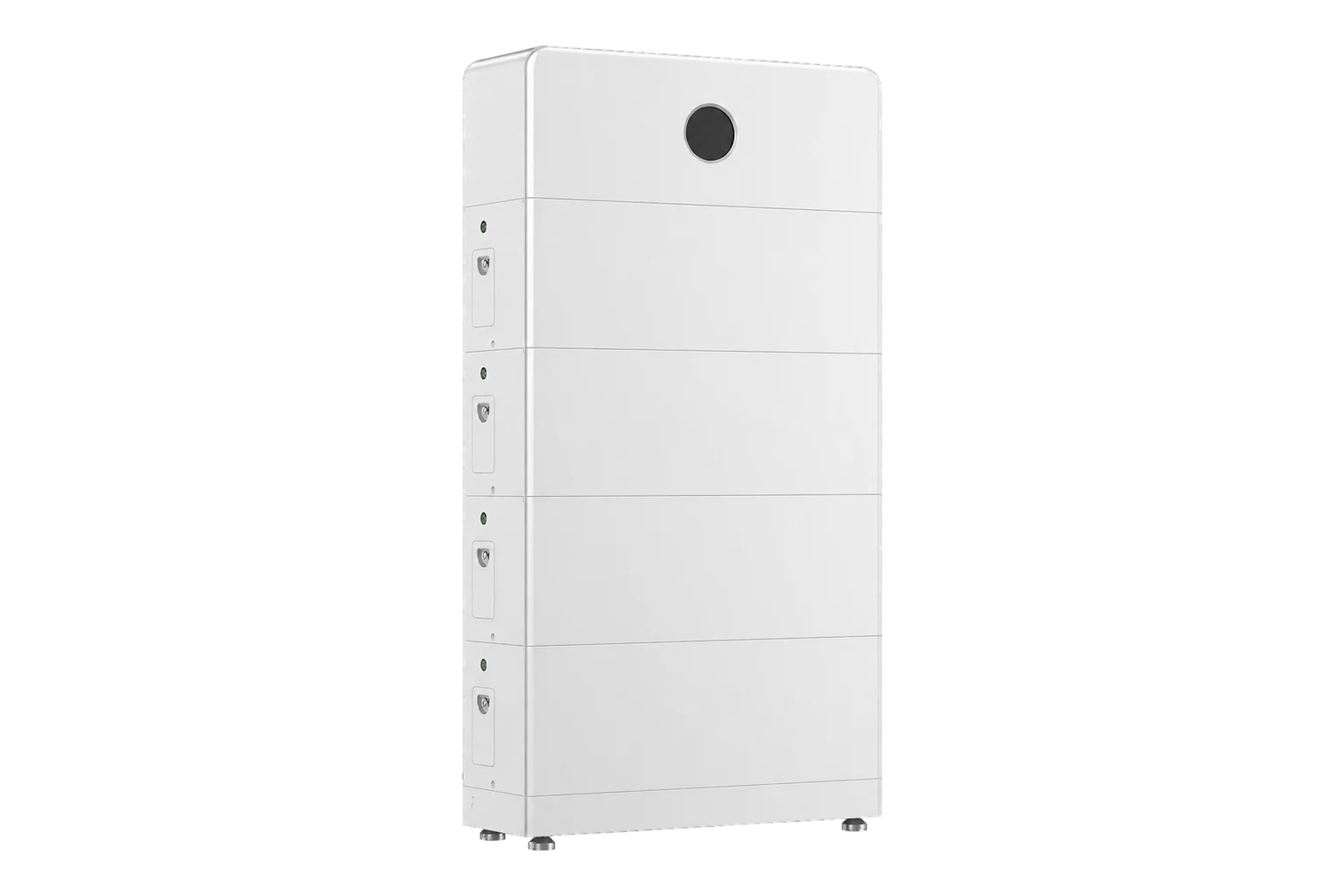
Deye SUN-29.9-50K-SG01HP3-EU
Commercial hybrid PV inverter
Use the separate RS485 connector for best-effort Modbus RTU monitoring. Deye’s public three-phase storage protocol identifies the 20–50 kW high-voltage family and supplies FC03 voltage, frequency and battery SOC reads. Start with identity and one measurement, then compare with the local display.
- Modbus RTU
- RS232
- CAN
Commercial hybrid PV inverter
Compatibility
Public Modbus starting point; Edge import remains site-specific
The exact-family manual has a separate RS485 port. A public copy of Deye’s three-phase storage protocol identifies the 20–50 kW high-voltage family and provides read-only FC03 registers. This supplies a practical monitoring starting point; it is not an Edge-tested import.
SUN-29.9/30/35K-SG01HP3-EU-BM3 and SUN-40/50K-SG01HP3-EU-BM4. Start from manual V2.4.1, 21 January 2026, and the public V105 protocol copy with revision history through January 2025. Record the installed model/firmware and reconcile initial readings with the display.
Models
| Models | Interface | Route into Edge |
|---|---|---|
| SUN-29.9/30/35K-SG01HP3-EU-BM3 | Three MPPTs and two high-voltage battery inputs | Use the separate RS485 port; retain the two battery channels and the existing BMS connections. |
| SUN-40/50K-SG01HP3-EU-BM4 | Four MPPTs and two high-voltage battery inputs | Use both inverter-power words; keep the grid, load, generator and battery measurements distinct. |
Specifications
The BM3 models use three MPPTs and the BM4 models use four. All combine conversion, battery charging, grid and load operation, so source identity must accompany every value.12
Interface
Documented measurements and integration boundaries for SUN-29.9-50K-SG01HP3-EU.
- FC03 598–600: grid phase voltages in 0.1 V; 627–629: inverter output phase voltages in 0.1 V; 638: inverter frequency in 0.01 Hz.
- FC03 588 and 589: battery 1 and battery 2 SOC in 1%. Treat the two battery inputs as separate channels.
- For inverter AC power, use low word 636 and high word 694 together as signed 32-bit W. These are separate addresses, not one adjacent two-register read.
Assessment
SUN-29.9/30/35K-SG01HP3-EU-BM3 and SUN-40/50K-SG01HP3-EU-BM4. Start from manual V2.4.1, 21 January 2026, and the public V105 protocol copy with revision history through January 2025. Record the installed model/firmware and reconcile initial readings with the display.
- InteroperabilitySupported with conditions
- The separate RS485 port and public FC03 protocol provide addressing, serial settings and a 20–50 kW high-voltage family identifier. Verify the first reads on site.13
- AccuracySupported with conditions
- Public register definitions support voltage, frequency, separate battery SOC and extended inverter power. Preserve channel boundaries and avoid ambiguously scaled entries.13
- SecurityNot yet assessed
- The public RTU protocol does not document client authentication, encryption or separate read-only privileges.13
- ReliabilityLimited
- Electrical and environmental limits are published, while communication recovery, stale data and concurrent-client behavior remain unverified.12
- RuggednessSupported with conditions
- The manufacturer publishes enclosure and operating limits; the installation must still meet those limits.12
Setup
-
Use the separate monitoring connector
In manual V2.4.1, Appendix I, the RS485 RJ45 port has B on pins 1/8, A on 2/7 and signal ground on 3/6. Pins 4/5 are unused on this port. Use the labelled RS485 connector; Meter, BMS1/BMS2 and Parallel ports retain their existing roles. This RJ45 is serial, not Ethernet. Keep one polling master on the bus.
-
Read identity before measurements
The public three-phase storage protocol V105 copy includes revision history through January 2025. It specifies 9600 baud, 8 data bits, no parity and 1 stop bit. Match the slave address to the inverter’s Modbus SN setting. Use FC03 holding registers with decimal wire addresses, without a 40000 prefix or subtracting one. Register 0 identifies the family; 0x0601 is high-voltage three-phase 20–50 kW. Register 1 is the address and 2 the protocol version. Record these with the nameplate and displayed firmware, then check the first measurement against the display.
-
Read grid voltage, frequency and battery SOC
FC03 register 598 (hex 0x0256), quantity 1, is phase A grid voltage in 0.1 V. PDU 03 02 56 00 01 and synthetic data 08 FC give 230 V. Register 638 (0x027E), quantity 1, is inverter frequency in 0.01 Hz: PDU 03 02 7E 00 01; data 13 88 give 50 Hz. Battery 1 SOC is 588 (0x024C), quantity 1, in 1%: PDU 03 02 4C 00 01; data 00 4B give 75%. Battery 2 SOC is 589. Read each 16-bit word high byte first. These examples omit slave address and CRC.
-
Expand power with both words
Inverter total active power uses low word 636 and high word 694, in W. Read them with separate FC03 requests: PDU 03 02 7C 00 01 and 03 02 B6 00 01. Combine high × 65536 + low, then subtract 4294967296 if bit 31 is set. Synthetic low 30 39 and high 00 00 give +12345 W; low CF C7 and high FF FF give -12345 W. Use both words for this 50 kW family; the older low-word-only reading cannot represent its full range. Compare the installed sign with the local display. Separate requests can straddle a changing sample, so repeat implausible jumps.
-
Retain measurement boundaries and freshness
Grid power depends on the configured internal/external measurement source; inverter AC, PV, battery and site-meter values are different quantities. The public copy has ambiguous battery-power unit labels and no usable scale for PV-total register 718, so start with the explicitly scaled reads above. A timeout or Modbus exception is unavailable data, not zero. Keep timestamps and mark stale values; begin with a modest polling interval such as one second and adjust to the installed bus. Writes and generator, battery or export-control settings stay with the commissioned controller.
Common questions
Related devices
Sources
- SUN-29.9/30/35/40/50K-SG01HP3-EU user manual (opens in a new tab) (PDF)
- SUN-29.9/30/35/40/50K-SG01HP3-EU datasheet (opens in a new tab) (PDF)
- Three-phase storage Modbus RTU V105, public copy with January 2025 revision history (opens in a new tab) (PDF)
Further reading
Product names and trademarks belong to their owners. Publication does not imply endorsement or a commercial relationship.