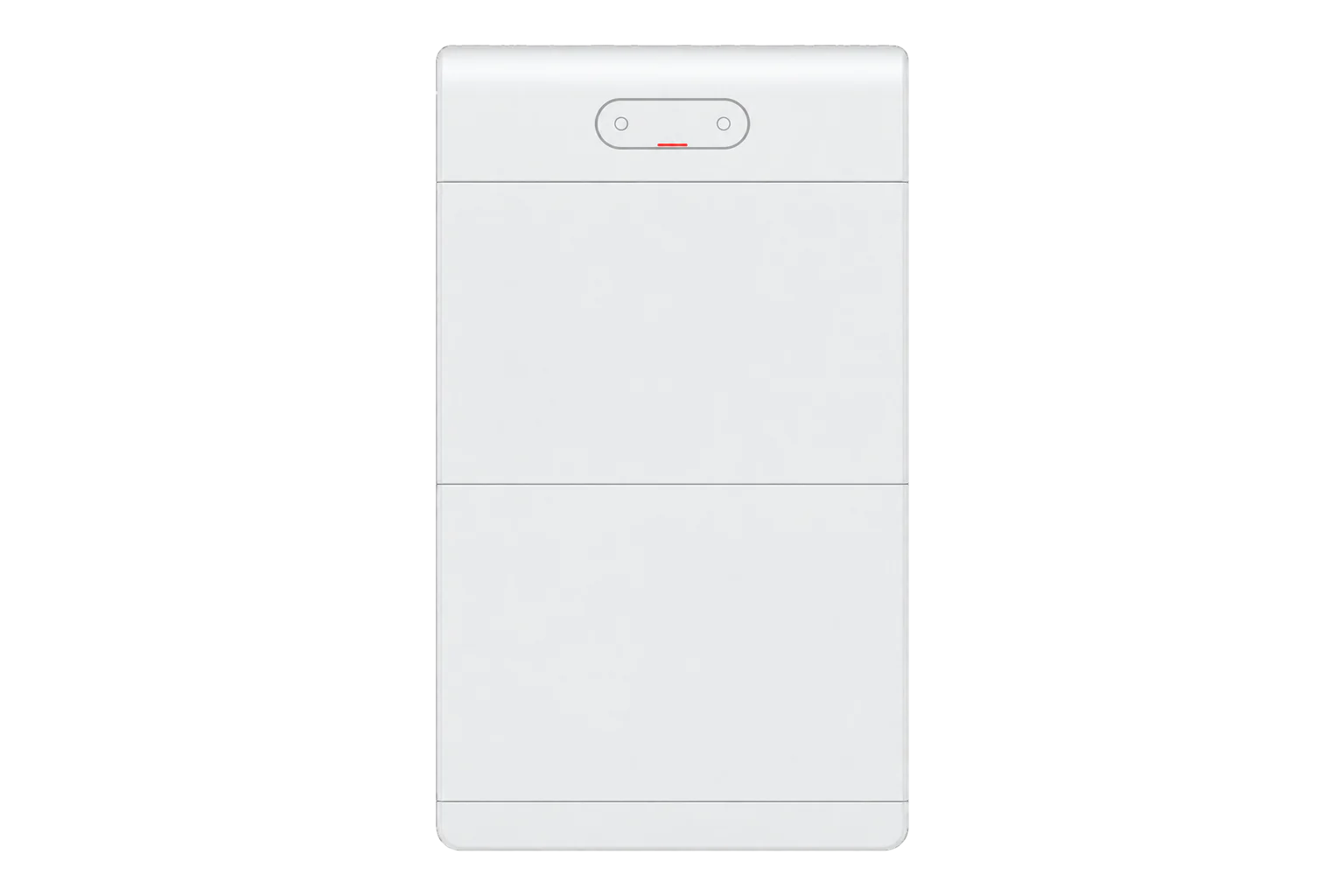
Huawei FusionSolar LUNA2000-14-S1
Residential battery storage system
LUNA2000-14-S1 combines one LUNA2000-10KW-C1 power module with two LUNA2000-7-E1 battery modules. The cited datasheet gives 13.8 kWh usable and 7 kW maximum charge/discharge power for this two-module build. Its RS-485 link is assigned to a supported Huawei inverter, while the Ethernet port’s SmartAssistant/router role does not establish an open battery server for Edge.
- RS485
- CAN
Residential battery storage system
Compatibility
Direct Edge battery access unverified
Huawei’s issue 06 manual wires the battery RS-485 to the inverter and describes ETHERNET1 as a SmartAssistant/router extension. It does not publish an exact external LUNA2000-14-S1 read map, client permission or direct Edge endpoint.
LUNA2000-14-S1 with one 10KW-C1 controller and two 7-E1 modules. Datasheet 01-202411 and LUNA2000-S1 manual issue 06, 30 September 2025. Verify inverter-specific firmware and country approval; newer 5-E1 arrangements and NHS1 variants are separate.
Models
| Models | Interface | Route into Edge |
|---|---|---|
| LUNA2000-14-S1 | 10KW-C1 controller plus two 7-E1 modules; 13.8 kWh usable | Use the approved inverter as system controller; external battery polling remains unverified. |
| LUNA2000-7-S1 / 21-S1 | One / three 7-E1 modules, respectively | Do not copy this guide’s capacity, power or physical height. |
| LUNA2000-5/10/15-S1 and NHS1 | Different module quantity, product scope or regional family | Read the actual controller and module labels before applying compatibility notes. |
Specifications
- Exact build
- One LUNA2000-10KW-C1 power module plus two LUNA2000-7-E1 battery modules2
- Usable energy
- 13.8 kWh at the datasheet’s beginning-of-life test conditions; not a promise for every operating state2
- Charge/discharge power
- 7 kW maximum for two 7-E1 modules; the 10.5 kW figure belongs to the three-module 21-S1 build2
- Voltage
- 350–560 V single-phase system or 600–980 V three-phase system, depending on approved inverter2
- Installation
- Floor stand standard, wall mount optional; 590 × 255 × 870 mm and 148 kg for the two-module stack2
- Environment
- IP66, -20 to +55 °C with derating conditions; outdoor installation recommended2
- Inverter interface
- RS-485 and enable signal to the inverter; separate links may connect parallel ESSs3
Interface
Documented measurements and integration boundaries for LUNA2000-14-S1.
- Huawei’s FusionSolar app and supported inverter report ESS status, including state of charge; that is an inverter-mediated system view.
- The battery RS-485 pair in the manual is used for ESS-to-inverter communication, not evidence of a spare third-party Modbus server.
- Treat SOC as the battery’s state estimate and power as its instantaneous operating value. Compare changes over the same interval with the AC site meter, which also includes household loads and inverter losses. A grid-energy total and battery stored energy describe different measurement boundaries.
Assessment
Exact 10KW-C1 plus two 7-E1 modules, within Huawei’s approved inverter and firmware combinations; no direct Edge battery integration.
- InteroperabilityLimited
- ESS-to-inverter RS-485 is documented but a direct third-party battery client, map and permission are not.3
- AccuracyNot yet assessed
- No exact externally readable ESS measurement map or accuracy statement for a direct third-party client is supplied.
- SecurityNot yet assessed
- The retained battery documents do not define authentication, encryption or access policy for a direct third-party ESS read endpoint.
- ReliabilitySupported with conditions
- Manufacturer installation, indicator, fault and inverter-firmware guidance supports maintenance when the approved topology is followed.3
- RuggednessSupported with conditions
- IP66 and the ambient/altitude limits are stated, with derating and indoor-installation conditions.2
Setup
-
Record the 10KW-C1 controller and both 7-E1 module labels.
The 14-S1 marketing name is a system configuration, not a single module code.
-
Choose a supported Huawei inverter and confirm installed firmware against the issue 06 manual’s exact inverter table and local grid approvals.
The compatible list includes MAP0, M1 and MB0 families with distinct firmware floors and parallel limits.
-
Follow Huawei’s ESS-to-inverter DC, RS-485 and enable wiring.
Do not attach an extra serial master to the inverter-owned battery bus.
-
If changing between MB0 and M1 inverter generations, review the manual’s baud-rate note before powering down or reusing the battery; incompatible retained settings can interrupt communication.
-
Use issue 06, sections 6.3.3 and 6.4.3.
With Smart Dongle networking, connect to the inverter in FusionSolar and open Monitor, then the ESS icon. With SmartAssistant networking, open Monitor, select the inverter, then Connected device and the ESS icon. Record running status, SOC, power and charge/discharge state during a known charging or discharging interval. Compare the direction with the site meter and the active battery working mode; retain any alarm alongside the reading.
Common questions
- Is 14-S1 a 14 kWh usable battery?
- The two-module 7-E1 configuration is listed at 13.8 kWh usable under the datasheet’s initial test conditions.2
- Can Edge connect directly to the battery RS-485 terminals?
- The manual assigns that pair to the Huawei inverter. It does not document a direct third-party read service or a spare bus master.3
Related devices
More from Huawei FusionSolar
Similar battery systems and controls
Sources
- LUNA2000-7/14/21-S1 Swiss specifications page (opens in a new tab)
- LUNA2000-7/14/21-S1 datasheet version 01-202411 (opens in a new tab) (PDF)
- LUNA2000-S1 user manual issue 06, 30 September 2025 (opens in a new tab) (PDF)
Further reading
Product names and trademarks belong to their owners. Publication does not imply endorsement or a commercial relationship.