SMA EV Charger Business EVCB-LB-3AC-ECC-10
AC EV charger
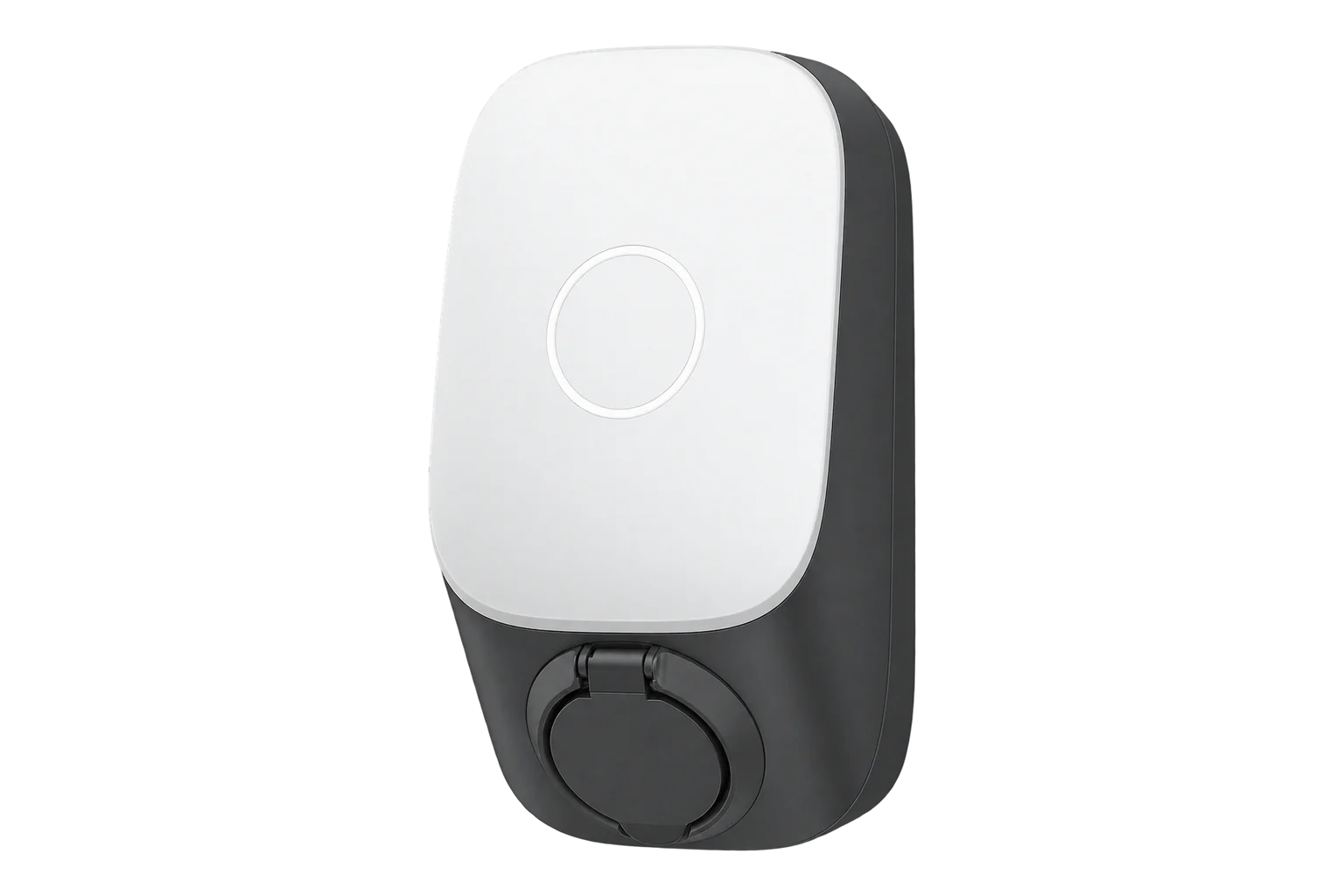
A commercial AC charging station with two Type 2 sockets, each rated up to 22 kW. This ECC variant provides metering compliant with German calibration law. Compare its two charging points, available site power and OCPP backend setup before choosing it for a workplace or shared car park.
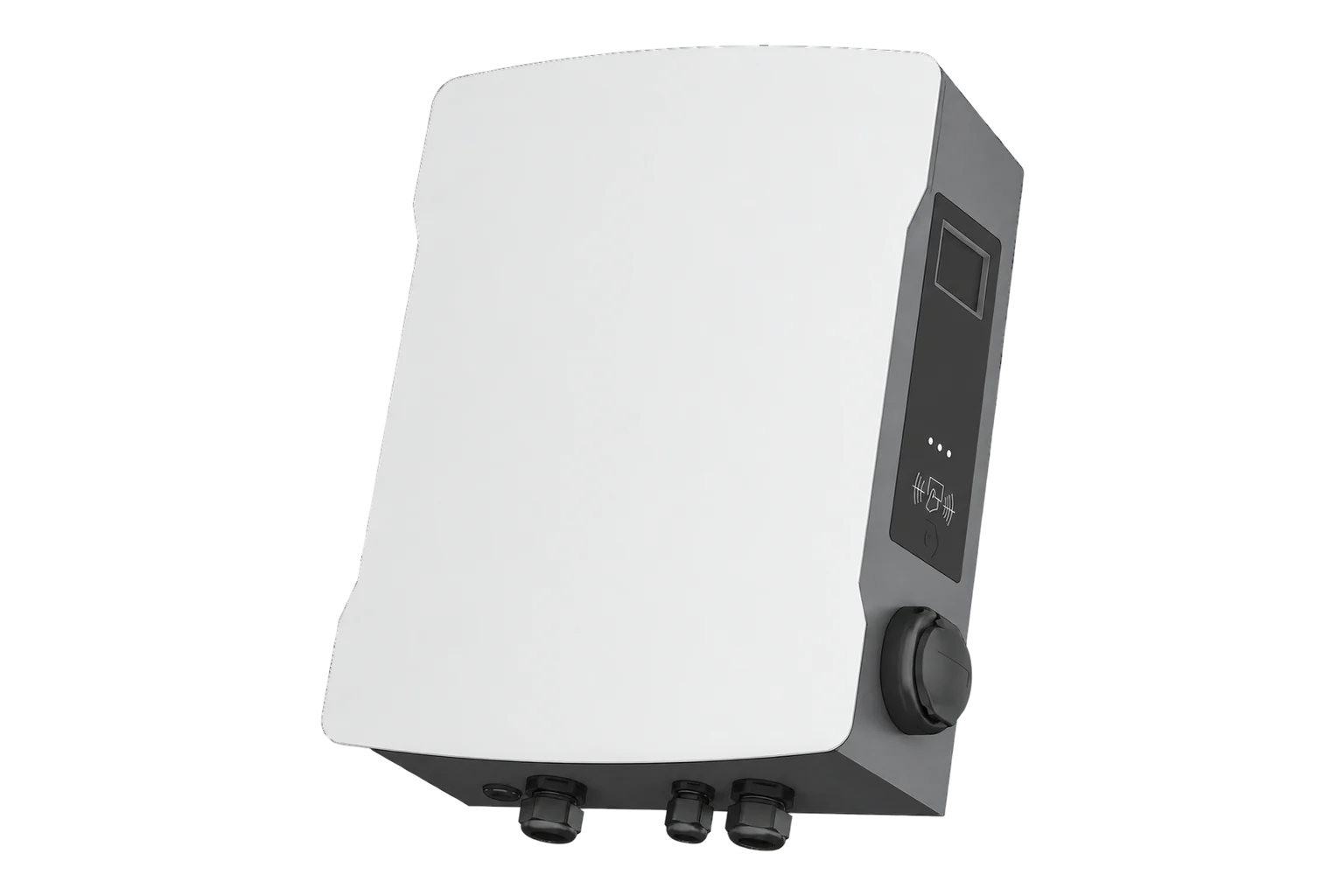
- OCPP 1.6J
AC EV charger
Compatibility
Charger interfaces documented; Edge integration not established
The charger connects to a charging-management backend using OCPP 1.6 JSON. Connecting that backend to Edge needs a separate supported data interface; no direct Edge charger connector is supplied here.
Exact EVCB-LB-3AC-ECC-10 socket variant, material 204842-00.01. The model without LB has cables and the non-ECC model has a different metering approval. The operating manual covers all four variants, so use its ECC instructions. No charger register map, prepared import or physical integration validation is available in this guide.
Models
| Models | Interface | Route into Edge |
|---|---|---|
| EVCB-LB-3AC-ECC-10 |
| Connect to the chosen OCPP backend; agree a separate data handoff for site monitoring. |
| EVCB-3AC-ECC-10 |
| A different physical connector arrangement, not the socket model pictured here. |
| EVCB-LB-3AC-10 | Socket variant without ECC designation | Do not transfer the ECC billing and metering approval to this ordering code. |
Specifications
Two outlets rated at 22 kW do not establish that a site can supply 44 kW continuously. The connection, upstream protection, configured load management and each vehicle’s AC onboard charger determine simultaneous charging power.1
- Charging points
- Two Type 2 sockets; up to 22 kW and 32 A per point.1
- Supply
- 230/400 V, 50 Hz; TN, TN-S and TT systems.1
- Backend connection
- Ethernet RJ45 and 4G; OCPP 1.6 JSON.1
- Metering
- ECC variant has integrated energy meters compliant with German calibration regulations. Billing also depends on the installed system and operating process.1
- Enclosure
- 409 × 490 × 176 mm, 13.5 kg for the socket version; IP54 and IK08.1
- Environment
- Operating range −25 to +40 °C; wall mounting or optional charging stand.1
- ISO 15118
- PLC support is marked in preparation in this datasheet. Do not interpret that as enabled Plug & Charge or bidirectional charging.1
Interface
Documented measurements and integration boundaries for EV Charger Business EVCB-LB-3AC-ECC-10.
- Keep charging-point identity and connector identity with every session and energy total. Two outlets are not one vehicle measurement.
- Compare the backend’s session energy with the corresponding local meter for the same start and stop times.
- Record status, timestamps and unavailable intervals alongside energy; an offline backend value is not proof that charging stopped.
- For local dynamic load management, check each phase current and the configured building limit while both outlets charge. Compare the external meter with its local display. This meter-to-charger Modbus TCP path is separate from any charger register server or backend-to-Edge data interface.
Assessment
Exact EVCB-LB-3AC-ECC-10 socket variant, material 204842-00.01. The model without LB has cables and the non-ECC model has a different metering approval. The operating manual covers all four variants, so use its ECC instructions. No charger register map, prepared import or physical integration validation is available in this guide.
- InteroperabilitySupported with conditions
- The manual documents OCPP-J 1.6 backend identity and endpoint configuration; backend-to-Edge access remains separate.2
- AccuracySupported with conditions
- The ECC socket variant includes calibration-law-compliant energy meters; distinguish both points and the complete billing arrangement.12
- SecuritySupported with conditions
- The manual documents HTTPS configuration and separate user roles. Confirm the backend transport and credentials for the installed firmware.2
- ReliabilityNot yet assessed
- The cited charger documents do not establish this property for the proposed external monitoring integration.1
- RuggednessSupported with conditions
- IP54, IK08 and the −25 to +40 °C operating range are specified for the installation conditions.1
- ScalabilityNot yet assessed
- The cited charger documents do not establish this property for the proposed external monitoring integration.1
- LifecycleNot yet assessed
- The cited charger documents do not establish this property for the proposed external monitoring integration.1
Setup
-
Identify the exact unit
Read the EVCB-LB-3AC-ECC-10 order code and installed firmware. Keep the two meter identities and charging-point identities in the installation record.
-
Establish the electrical limit
Use operating manual EVC-Business-BE-en-13, sections 9.5.6 and 9.7. Have the installer check both points, upstream protection and phase rotation. Under Load management, select the DLM Master with internal DLM slave and set the mains current limit, safety margin and fallback load separately for L1/L2/L3. Enable external metering when other building loads share the supply; select the installed meter from the supported list, such as Janitza UMG 512/96 PRO or Siemens 7KM2200 via Modbus TCP on port 502. The manual specifies that fallback value 9999 switches off all charging points on failure. Check the configured fallback and both outlets during commissioning; 22 kW is the maximum per point, not a site allocation.
-
Configure the network
Use the documented installer access and a managed Ethernet network, or the documented cellular setup with an activated SIM. Restrict configuration access to authorised users.
-
Register with the backend
In Backend, select Ethernet for the Ethernet path and confirm OCPP ChargeBoxIdentity. SMA says the ECC identity is already set. Select OCPP-J 1.6 and enter the URL supplied for this site by the backend operator. The manual’s sample provider URL is not a universal endpoint.
-
Verify acceptance and both outlets
Save and restart as instructed. Check the dashboard’s backend status, then confirm both charging points are recognised by the backend. Run a known session on each and compare identity, timestamps and energy with the local meter.
-
Connect monitoring deliberately
Use a documented export or API from the selected backend for wider energy monitoring. Agree units, connector mapping and missing-data handling. No direct Edge import is supplied for this charger.
Common questions
- Can both vehicles always charge at 22 kW?
- No. Each point supports up to 22 kW, but site capacity, load-management settings and each vehicle’s onboard charger can reduce the actual power.1
- Is this the cable model?
- No. EVCB-LB-3AC-ECC-10 has two Type 2 sockets. EVCB-3AC-ECC-10, without LB, has two 6 m cables.1
- Does OCPP mean Edge can add it as a Modbus meter?
- No. OCPP connects the charger to a charging-management backend. A separate data integration is needed, and a site-meter Modbus connection does not prove that the charger exposes a Modbus register server.2
- Does the meter alone make every billing installation compliant?
- No. The ECC hardware is intended for German calibration-law use. The installation, seals, data verification and billing process must also meet the applicable requirements.2
Related devices
Sources
- EV Charger Business datasheet: ECC cable and socket variants (opens in a new tab) (PDF)
- EV Charger Business operating manual EVC-Business-BE-en-13 (opens in a new tab) (PDF)
Further reading
Product names and trademarks belong to their owners. Publication does not imply endorsement or a commercial relationship.