SolarEdge EVN22B
AC EV charger
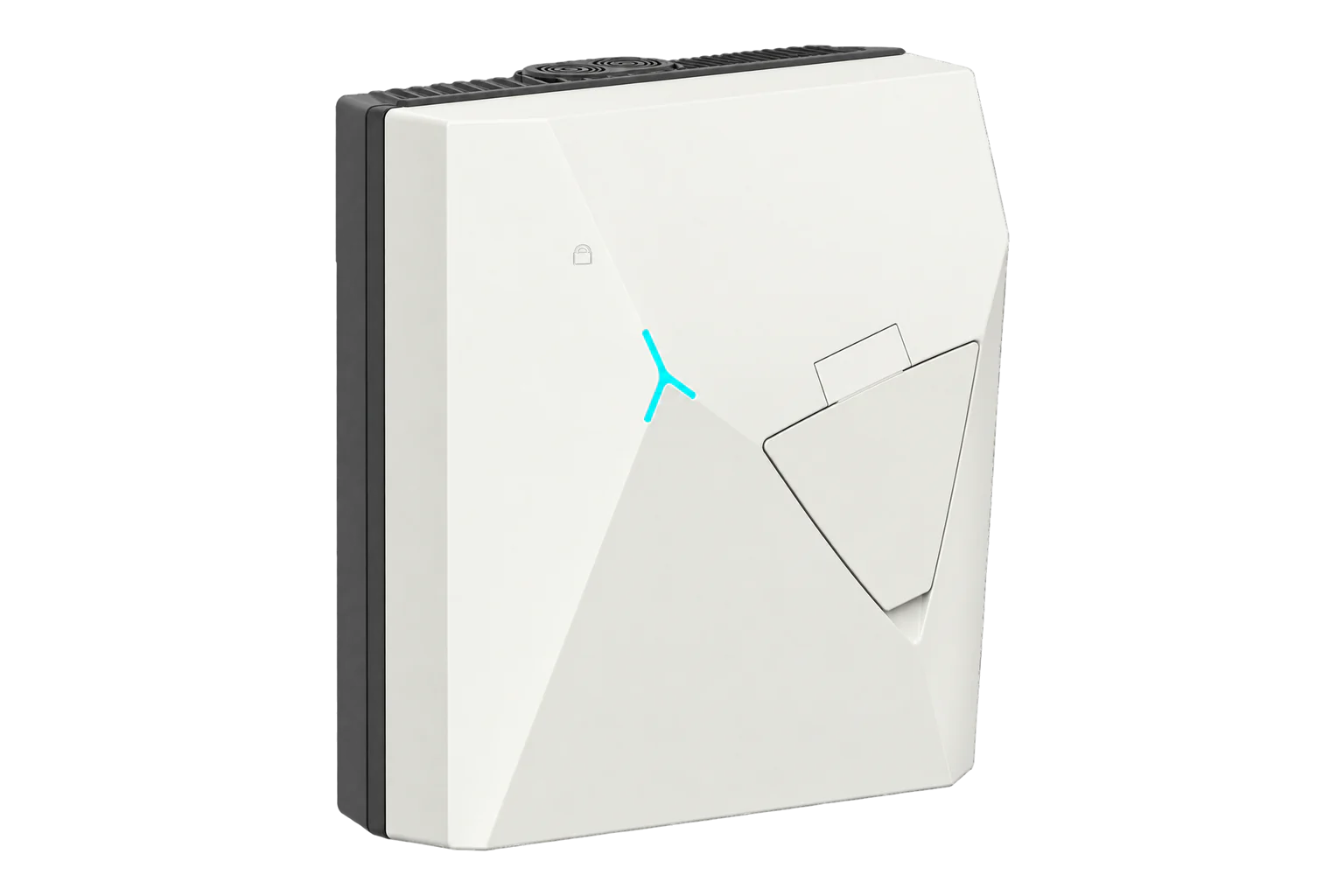
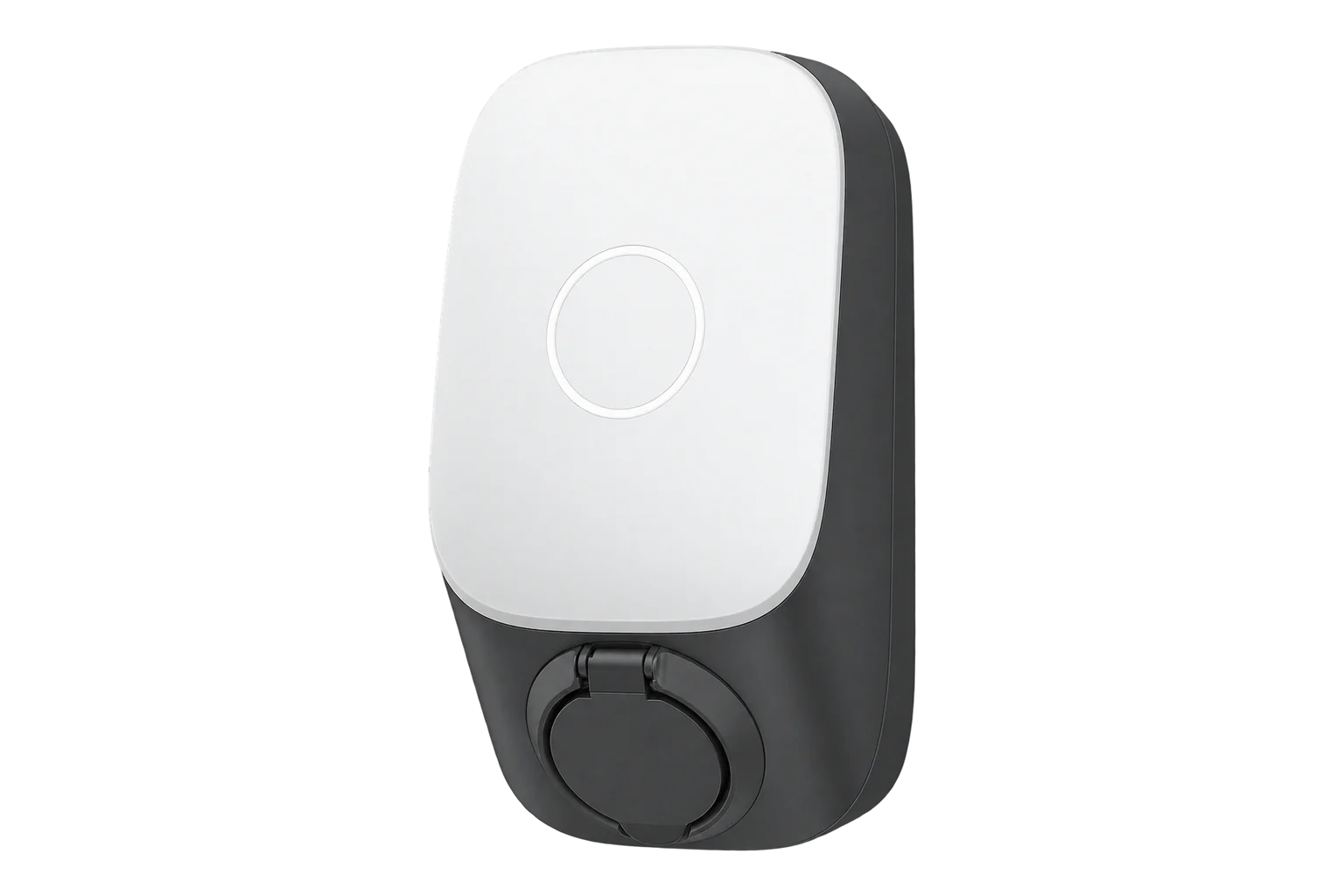
EVN22B is the standard SolarEdge ONE EV Charger for European 1- or 3-phase Mode 3 AC charging, rated up to 22 kW at 6–32 A per phase. The June 2026 datasheet lists a Type 2 socket, Wi-Fi, Ethernet, RFID, OCPP 1.6J and a built-in energy meter. The base meter is not the Pro model’s MID-certified meter. The charger can join SolarEdge energy management or an OCPP-compliant charging backend, but the retained sources do not establish direct EpiSensor Edge OCPP integration.
- OCPP 1.6J
- Ethernet
- Wi-Fi
AC EV charger
Compatibility
OCPP backend supported; direct Edge integration unverified
SolarEdge’s exact EVN22B datasheet lists OCPP 1.6J, and the installation guide directs commercial setup to SolarEdge ONE or a third-party CSMS. That is a charger-to-backend path. The retained documents do not show an Edge client, an Edge import or a safe direct monitoring route.
European standard EVN22B Type 2 socket model under datasheet DS-000262-IM dated 18 June 2026 and installation guide MAN-01-01248-3.1 dated September 2026. The datasheet’s SE-EVN22SE0-01 is called a legacy part number in the newer guide; verify the currently orderable national SKU. Pro EVN22P, UK SE-EVN74SU0-01 and cable-locked/tethered installations need their own order and regional check.
Models
| Models | Interface | Route into Edge |
|---|---|---|
| EVN22B, standard ONE EV Charger | European Type 2 socket; Wi-Fi and Ethernet; RFID; built-in non-MID meter | Use SolarEdge or a qualified OCPP 1.6J CSMS for charging operations. Direct Edge monitoring is unverified. |
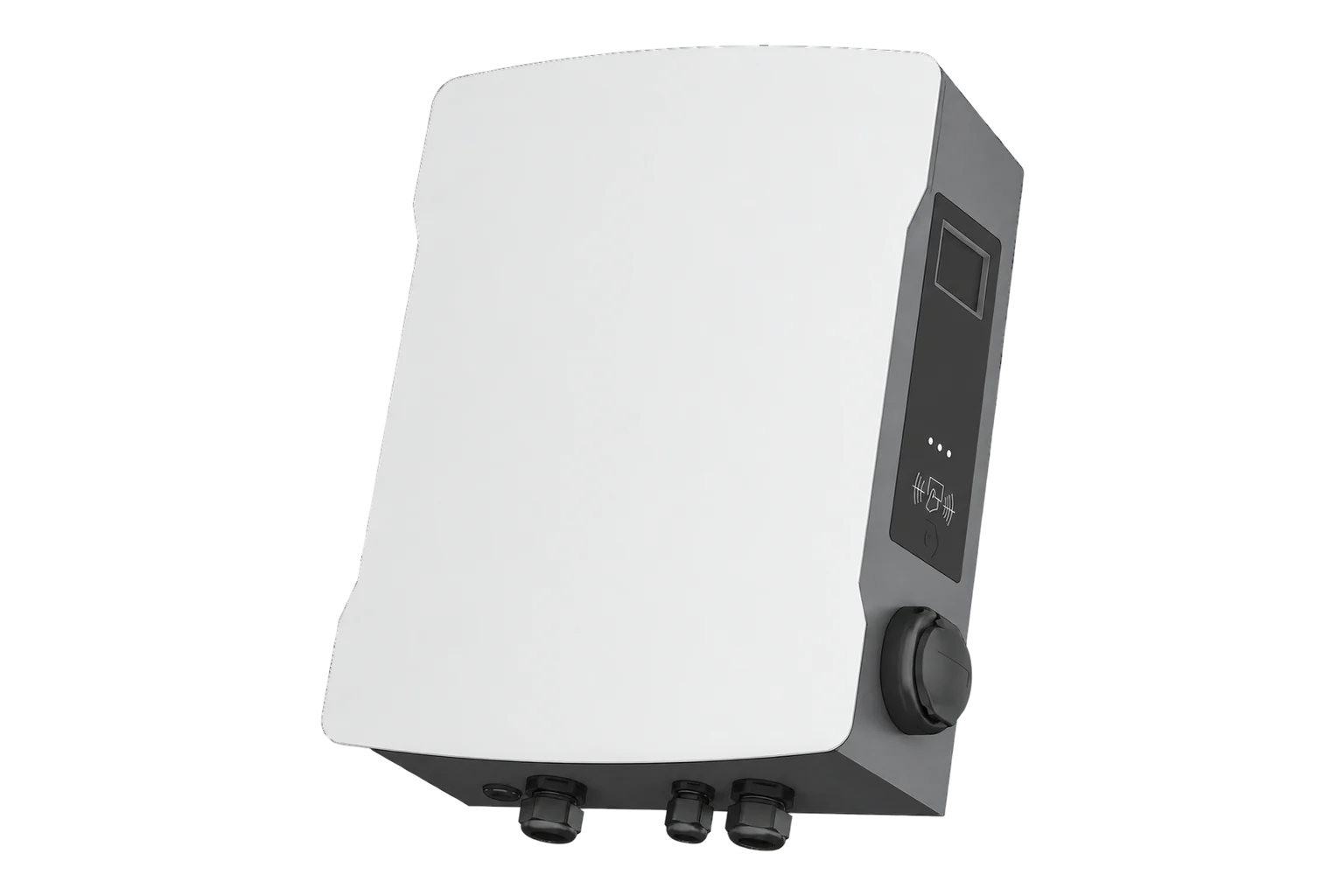
| EVN22P, ONE EV Charger Pro | Separate Pro model with MID Class B meter, OLED meter display and eSIM where available | Do not attribute Pro billing or cellular capability to EVN22B. |
| UK SE-EVN74SU0-01 and tethered/cable-locked arrangements | Region or physical-configuration differences identified in the current manual | Confirm the national order and supplied cable/socket form before using this European socket scope. |
Specifications
The cited European datasheet separates standard EVN22B from Pro EVN22P in one table. The newer installation guide treats the datasheet’s standard socket part number as legacy, so engineering selection uses the model and national order confirmation rather than assuming that old code remains orderable.23
- AC charging
- Mode 3 under IEC 61851-1; 1- or 3-phase supply, up to 22 kW and 6–32 A per phase2
- Vehicle connector
- Type 2 socket, up to 32 A / 400 V AC under EN 62196-1 for the listed standard part2
- Local connectivity
- 2.4 GHz Wi-Fi, RJ45 Ethernet and BLE 4.2; no built-in eSIM in EVN22B2
- Charging backend
- OCPP 1.6J; commercial setup uses SolarEdge ONE for EV or a qualified third-party CSMS23
- Meter
- Built-in energy meter for charging visibility; EVN22B has no MID Class B certification or OLED meter display23
- Protection
- 6 mA DC residual-current detecting device under IEC 62955; upstream circuit and RCD selection follow the installation guide and local rules23
- Environment
- IP54, indoor/outdoor use, -30 to +50 °C; 235 × 230 × 107 mm and 2.3 kg2
Interface
Documented measurements and integration boundaries for EVN22B.
- The charger’s built-in meter supports charging history and energy visibility in the SolarEdge system; it is not the Pro model’s MID-certified billing meter.
- Charge power, delivered energy, connector state and authorization are backend/charger concepts, not a promise that Edge can directly poll the EVN22B.
- OCPP 1.6J identifies a charger-to-central-system link. Backend compatibility, data fields and security profile depend on the configured CSMS.
Assessment
EVN22B under June 2026 European datasheet and September 2026 installation guide; no direct Edge OCPP integration, MID billing or enabled Plug & Charge claim.
- InteroperabilitySupported with conditions
- OCPP 1.6J and a third-party CSMS configuration route are documented; backend onboarding and Edge integration are separate.23
- AccuracyLimited
- The base meter supports charging energy visibility, but its accuracy class and MID billing approval are not stated for EVN22B.23
- SecuritySupported with conditions
- The current manual describes device certificates, encrypted communications and secure firmware updates; the operator must still qualify the selected OCPP backend and site network.3
- ReliabilitySupported with conditions
- The manual provides charging LEDs, fault handling, local configuration and troubleshooting; charging/network recovery must be checked at commissioning.3
- RuggednessSupported with conditions
- IP54 indoor/outdoor rating, operating range and enclosure dimensions are published; siting and circuit protection follow the installation guide.23
Setup
-
Confirm EVN22B and the actual national part number on the supplied label.
The June 2026 datasheet calls SE-EVN22SE0-01 a socket part, while the September 2026 manual lists it as legacy. Do not swap in Pro or UK codes by appearance.
-
Size the dedicated AC circuit for 1- or 3-phase service, the EV/vehicle limit and the installer-set 6–32 A current range.
The manual recommends a Type A 40 A, 30 mA RCD; the integrated 6 mA DC detector does not remove the need to follow local electrical requirements.
-
Add the charger in SolarEdge Go.
In SolarEdge Go, open Manage, select the site, then Add Device, ONE EV Charger and Connect to charger. Scan the Quick Installation Guide QR code, or enter its charger serial number and PIN. Choose Ethernet or 2.4 GHz Wi-Fi; SolarEdge recommends Ethernet for a stable link. Keep the quick guide and PIN available for later local configuration.
-
Choose the backend before commissioning.
For residential inverter pairing, power on both devices, put them on the same local network and check the inverter firmware against manual MAN-01-01248-3.1. For C&I, standalone or third-party CSMS operation, the operator must create the charger in the chosen backend before configuration and provide a stable internet connection. The OCPP 1.6J session belongs to that backend; the charger does not become a direct Edge device.
-
Set the network and current limit locally.
Standing near the charger, open the site dashboard in SolarEdge Go, then Inventory, EV Charger and Local Configuration; scan the QR code. Select Network, Grid type and Current Limit as needed for the installed circuit. Those settings save automatically; select Restart and confirm Restart to finish. Test the chosen authorization method, charging start/stop, network recovery and backend energy/state timestamps. Compare the charging session with the actual current limit and vehicle demand.
-
Compare charging-history energy with the intended accounting boundary.
Use a separate compliant meter or EVN22P where regulated MID billing is required; EVN22B’s built-in meter is not presented as MID certified.
-
Treat ISO 15118 as hardware readiness until SolarEdge, the vehicle and the selected backend confirm Plug & Charge service for the installed firmware and region.
Related devices
Sources
- SolarEdge ONE EV Charger product page (opens in a new tab)
- ONE EV Charger EU, Australia and New Zealand datasheet DS-000262-IM, 18 June 2026 (opens in a new tab) (PDF)
- Install and Configure the SolarEdge ONE EV Charger, V3.1, September 2026 (opens in a new tab) (PDF)
Further reading
Product names and trademarks belong to their owners. Publication does not imply endorsement or a commercial relationship.