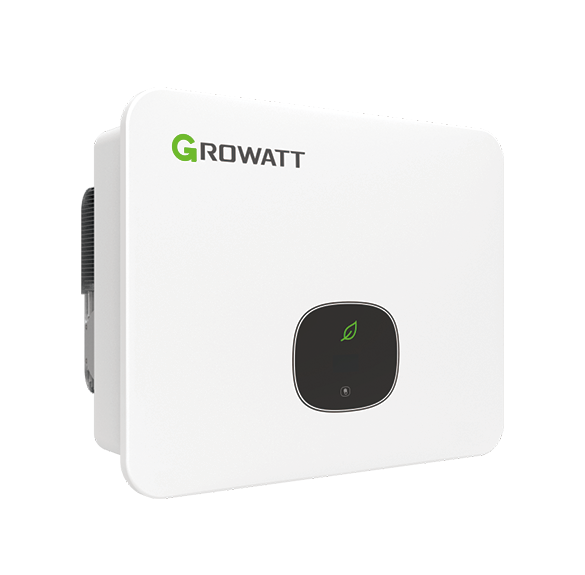
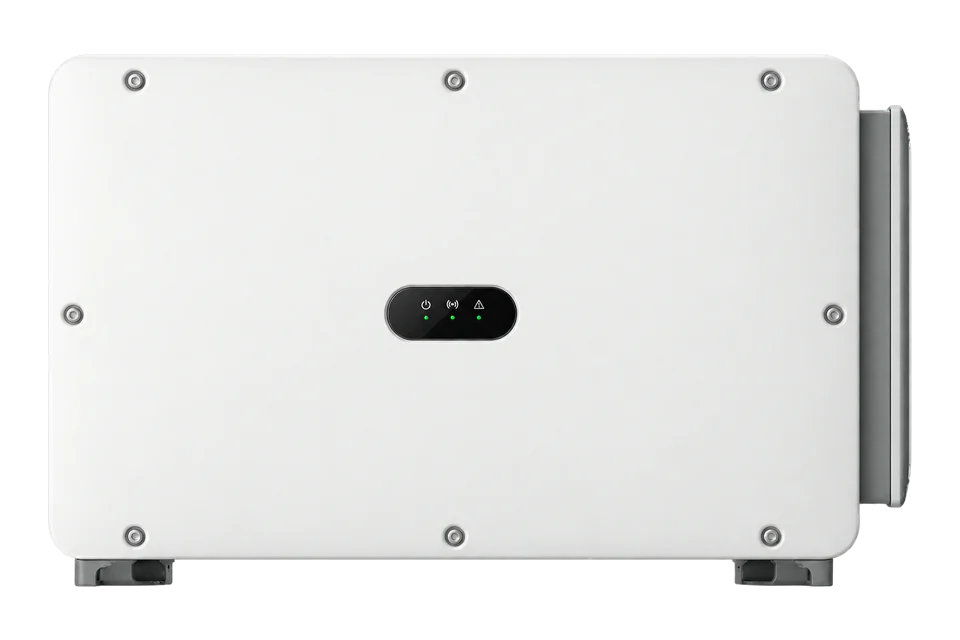
Growatt MAX 185-253KTL3-X HV
Utility-scale PV inverter
Growatt’s July 2025 datasheet distinguishes four 800 V utility-scale inverters with 9, 9, 12 or 15 MPPTs. The family manual documents RS485 wiring and a ShineMaster monitoring chain; PLC is optional. A serial port alone does not establish a third-party register map or direct Edge path. Identify the exact nameplate, firmware and site logger before planning read-only monitoring.
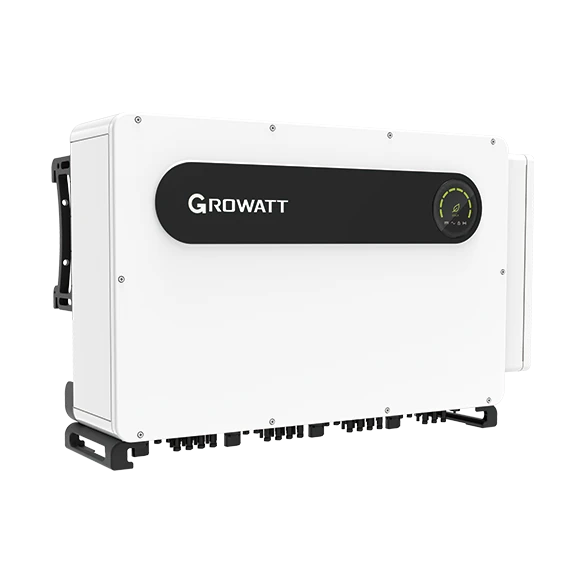
- RS485
- PLC
Utility-scale PV inverter
Compatibility
External telemetry needs a model-matched protocol map
Growatt documents standard RS485 hardware, monitoring topology and optional PLC, but the retained family manual does not specify a firmware-matched third-party point map or an approved independent reader role. Direct Edge reading is therefore unverified.
MAX 185KTL3-X HV, 216KTL3-X HV, 250KTL3-X HV or 253KTL3-X HV on an 800 V class site, per the July 2025 datasheet. The installation manual covers a wider 175-253 kW family; do not import its 175 kW variant into this datasheet scope. Record exact firmware, COM terminal type, logger and country grid configuration.
Models
| Models | Interface | Route into Edge |
|---|---|---|
| MAX 185KTL3-X HV | 185 kW AC nameplate; nine MPPTs; 800 V nominal AC | Match the 185 kW column and installed firmware; no direct reader or point map is established. |
| MAX 216KTL3-X HV | 216 kW AC nameplate; nine MPPTs; 800 V nominal AC | Do not infer the 250 or 253 kW MPPT layout. |
| MAX 250KTL3-X HV | 250 kW AC nameplate; twelve MPPTs; 800 V nominal AC | Check the 250 kW current and temperature-derating columns. |
| MAX 253KTL3-X HV | 253 kW AC nameplate; fifteen MPPTs; 800 V nominal AC | Check the 253 kW string layout and 109 kg mass. |
| 175 kW and other MAX families | The family manual spans 175-253 kW, but the July 2025 datasheet names only the four variants above | Do not carry these electrical or monitoring assumptions into another MAX suffix. |
Specifications
Growatt’s July 2025 MAX 185-253KTL3-X HV datasheet identifies four 800 V nominal AC ratings: 185, 216, 250 and 253 kW. Their MPPT counts are 9, 9, 12 and 15 respectively, with two PV strings per tracker. The DC maximum is 1500 V, so string and protection design require the exact column and site conditions.2
- Exact models
- 185, 216, 250 and 253KTL3-X HV in the July 2025 datasheet2
- Nominal AC voltage
- 800 V three-phase; published range 640-920 V depends on country grid standard2
- Nominal AC output
- 185 / 216 / 250 / 253 kW by exact model2
- PV trackers
- 9 / 9 / 12 / 15 MPPTs by exact model; two strings per MPPT2
- DC input
- 1500 V maximum; 30 A maximum input and 50 A maximum short-circuit current per MPPT2
- Enclosure
- IP66; -30 to +60°C operating range with installation and derating conditions2
- Mass
- 95 kg at 185/216 kW, 99 kg at 250 kW, 109 kg at 253 kW2
Interface
Documented measurements and integration boundaries for MAX 185-253KTL3-X HV.
- The manual maps standard RS485-1 IN/OUT and a separate RS485-2 pair in a 16-pin communications terminal. It gives a 32-device, 500 m, 38,400-baud monitoring example; confirm the actual terminal form and site design.
- Growatt’s ShineMaster and USB Shine modules are monitoring accessories. Their presence does not establish that an inverter or logger offers a local third-party Modbus TCP or RTU server.
- Intelligent string monitoring on the datasheet is an inverter feature. The exposed external fields, scaling and unavailable-value handling need the current model/firmware map.
- An 800 V nominal AC inverter belongs to the site’s engineered collector and transformer design. It is not a direct 400 V building feeder substitute.
- The older wider-family manual groups 230-253 kW models as fifteen-MPPT units, while the July 2025 four-model datasheet specifies twelve MPPTs for 250KTL3-X HV and fifteen for 253KTL3-X HV. Resolve a 250 kW installation against its nameplate and supplied drawing rather than transferring the manual’s generic grouping.
- Inverter generation does not measure point-of-common-coupling import or export. Preserve the separate grid meter and existing grid-control owner.
- The manual also names demand-response contacts. No export, active/reactive-power or protection write is approved here.
Assessment
July 2025 four-model MAX 185-253KTL3-X HV datasheet and wider family manual; no firmware-matched independent telemetry map or field verification.
- InteroperabilityLimited
- The manual provides standard RS485 communication wiring and a 32-inverter monitoring topology, but no model- and firmware-matched third-party protocol map.3
- AccuracyNot yet assessed
- The externally readable production, status, alarm and string values cannot be specified without the matching point map.
- SecurityNot yet assessed
- The retained documents do not establish authentication or access-control behavior for an independent third-party reader.
- ReliabilityNot yet assessed
- No installed polling capacity, stale-value behavior or communications recovery evidence is available.
- RuggednessSupported with conditions
- The July 2025 datasheet specifies IP66 and -30 to +60°C operation, subject to the installation and derating rules.2
- ScalabilitySupported with conditions
- The manual describes an RS485 monitoring chain of up to 32 inverters over 500 m; the actual site cable, termination and logger capacity must be checked.3
Setup
-
Verify the installed power class
Record the complete MAX nameplate, 800 V collector design, country grid setting and firmware. The 250 and 253 kW variants differ in MPPT count and mass; do not use a family maximum as a single-model specification.
-
Map the existing communications chain
The manual shows RS485-1 IN/OUT and RS485-2 pairs, plus optional Shine modules and ShineMaster. Identify which port and logger the site uses before adding a reader or assuming that PLC data is available on an Ethernet network.
-
Obtain the matching protocol contract
Request the current exact-model, exact-firmware external read map from Growatt or the site integrator. Establish the serial protocol and role, address convention, function codes, width, signedness, scaling and unavailable-value rules. RS485 wiring alone is not proof of Modbus RTU.
-
Keep grid control separate
Document any plant controller, export limiter, point-of-common-coupling meter and grid operator settings. A monitoring path should leave demand-response contacts and active/reactive-power control with their commissioned owner.
-
Validate measured values
After the map and access are approved, compare inverter identity, fresh AC power and selected string values with Growatt’s local display or existing manager. Qualify a separate revenue or grid meter for import/export reporting.
Common questions
- How many MPPTs does MAX 253KTL3-X HV have?
- The July 2025 datasheet gives fifteen for the 253 kW model. It gives twelve for 250 kW and nine each for 185 and 216 kW. Use the exact nameplate column.2
- Does the RS485 terminal mean Edge can read Modbus registers?
- No. The family manual describes RS485 wiring, addresses and a monitoring chain, but it does not provide a firmware-matched third-party register map or prove an independent Modbus reader role.3
- Can the optional PLC link be treated as Ethernet?
- No. Growatt lists PLC as an optional communication method. Confirm the installed accessory, logger and data handoff before designing an IP integration.12
- Does inverter power equal grid export?
- No. This inverter measures its own production. The point-of-common-coupling meter and plant controller establish site import/export and control boundaries.3
Related devices


Sources
- MAX 185-253KTL3-X HV product family (opens in a new tab)
- MAX 185-253KTL3-X HV datasheet, July 2025 (opens in a new tab) (PDF)
- MAX 175-253KTL3-X HV user manual, 2023 revision (opens in a new tab) (PDF)
Further reading
Product names and trademarks belong to their owners. Publication does not imply endorsement or a commercial relationship.