GoodWe SMT 50–60 kW
Commercial PV inverter
GoodWe’s EMEA SMT datasheet names GW50KS-MT, GW60KS-MT and their -EU variants. The 50 kW models have five MPPTs, the 60 kW models six. The -EU suffix changes documented grid-code coverage and communications options, while the manual shows RS485 connections to a logger or smart meter. Modbus RTU with SunSpec compliance is listed, but a matching firmware point map and site access still need confirmation before external monitoring.
- Modbus RTU
- RS485
Commercial PV inverter
Compatibility
Confirm the exact SMT variant and read-only point map
The EMEA datasheet and V2.2 manual document RS485 and Modbus RTU (SunSpec compliant) for the named models. They do not provide a model- and firmware-matched register table, installed address, permission boundary or proven Edge read path.
Confirm GW50KS-MT, GW60KS-MT, GW50KS-MT-EU or GW60KS-MT-EU on the nameplate, current inverter software, grid code, terminal type, communications module, SEC1000 or EzLogger and grid meter. Use a current GoodWe point map and installer-approved read access; no active/reactive-power, export-limit, shutdown or grid-protection write is approved.
Models
| Models | Interface | Route into Edge |
|---|---|---|
| GW50KS-MT | 50 kW nominal AC; five MPPTs; 55 kg; EMEA base grid-code group | Check the exact grid code and optional 4G/WiFi hardware. The EMEA sheet says this base group is not applicable for the UK grid code. |
| GW60KS-MT | 60 kW nominal AC; six MPPTs; 55 kg; EMEA base grid-code group | Match the six-tracker layout and base-model certification, not the -EU assumptions. |
| GW50KS-MT-EU | 50 kW nominal AC; five MPPTs; 56 kg; -EU grid-code group | The EMEA sheet names N 4110, G99 and G100 among -EU group codes; the exact site approval still governs. |
| GW60KS-MT-EU | 60 kW nominal AC; six MPPTs; 56 kg; -EU grid-code group | The -EU group documents RS485 and WiFi, without the base group’s optional 4G in the EMEA sheet. |
| SMT G2, SMT-US and 25–36 kW SMT | Separate generations, markets or electrical sizes | Do not transfer this 50–60 kW EMEA image, terminals, certification or point assumptions to these products. |
Specifications
GoodWe’s EMEA September 2025 datasheet covers four exact 50–60 kW SMT names: two base GW50KS/GW60KS-MT models and two -EU versions. Each 50 kW unit has five MPPTs, each 60 kW unit six; all list two strings per tracker, 1100 V maximum DC input and nominal 230/400 V three-phase output.2
- Nominal AC rating
- 50 kW or 60 kW; 230/400 V, three phase, subject to country grid code2
- PV trackers
- Five at 50 kW; six at 60 kW; two strings per MPPT2
- DC limits
- 1100 V maximum input; 200–950 V MPPT range; 30 A maximum per MPPT2
- EMEA grid-code groups
- Base group excludes UK; -EU group lists G99/G100 and VDE-AR-N 4110 among its codes2
- Communications
- RS485 and Modbus RTU (SunSpec compliant); base group lists optional 4G, -EU group lists WiFi23
- RS485 connection
- European/Indian 5-pin variant: A1/B1 data pairs and separate signal ground; inspect actual terminal3
- Enclosure and mass
- IP65; 55 kg base models or 56 kg -EU models2
- LCD and options
- LCD optional; AFCI and PID recovery optional in the EMEA table2
Interface
Documented measurements and integration boundaries for SMT 50–60 kW.
- The EMEA V1.1 sheet separates base and -EU grid-code lists: the base group expressly excludes UK grid code, while the -EU group names G99, G100 and VDE-AR-N 4110. An inverter rating or datasheet code is not a site connection approval.
- The V2.2 manual shows a 5-pin RS485 connector for Europe and India, with A1/B1 pairs for inverters, a smart meter or logger and pin 5 as signal ground, not protective earth. Other connector versions exist in the wider manual; verify the installed terminal before wiring.
- GoodWe shows SEC1000 or EzLogger Pro/EzLogger3000C with a separate smart meter for parallel or export-control arrangements. Inverter AC generation does not itself measure point-of-common-coupling import or export.
- The EMEA technical table lists Modbus RTU as SunSpec compliant. It does not disclose the installed software’s models, register offsets, scaling, unavailable-value rules or simultaneous logger access. Do not import a generic SunSpec map without identification and readback.
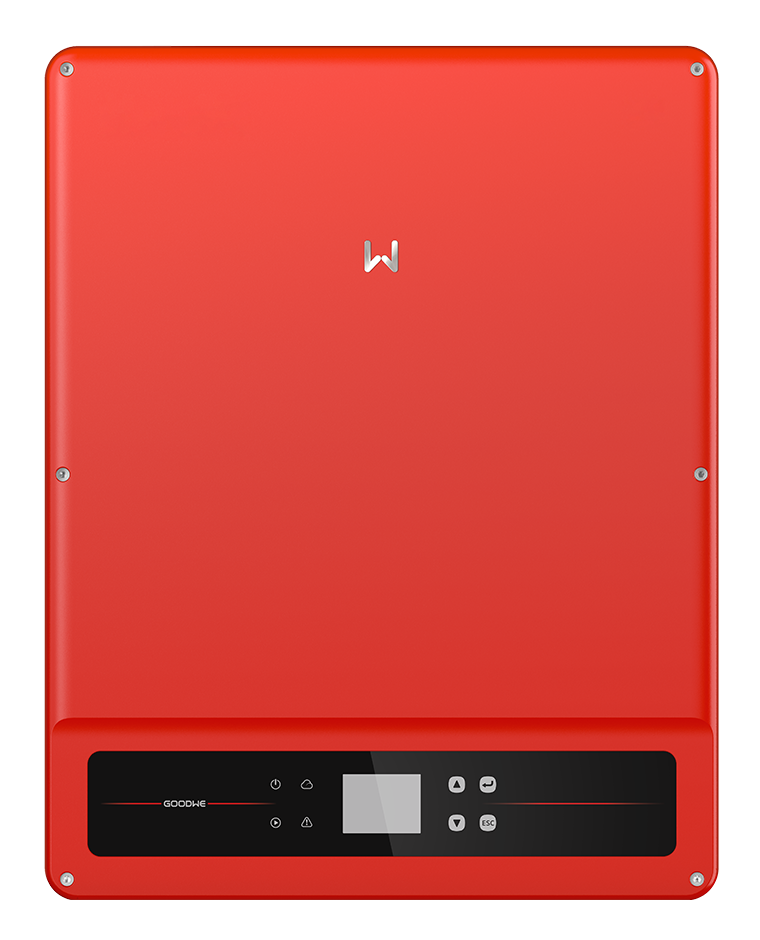
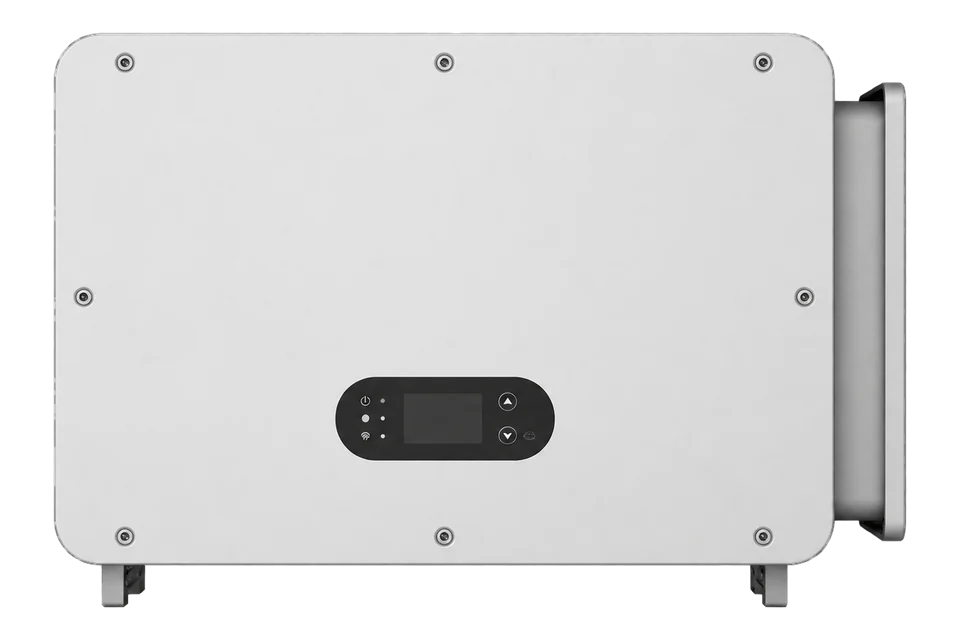
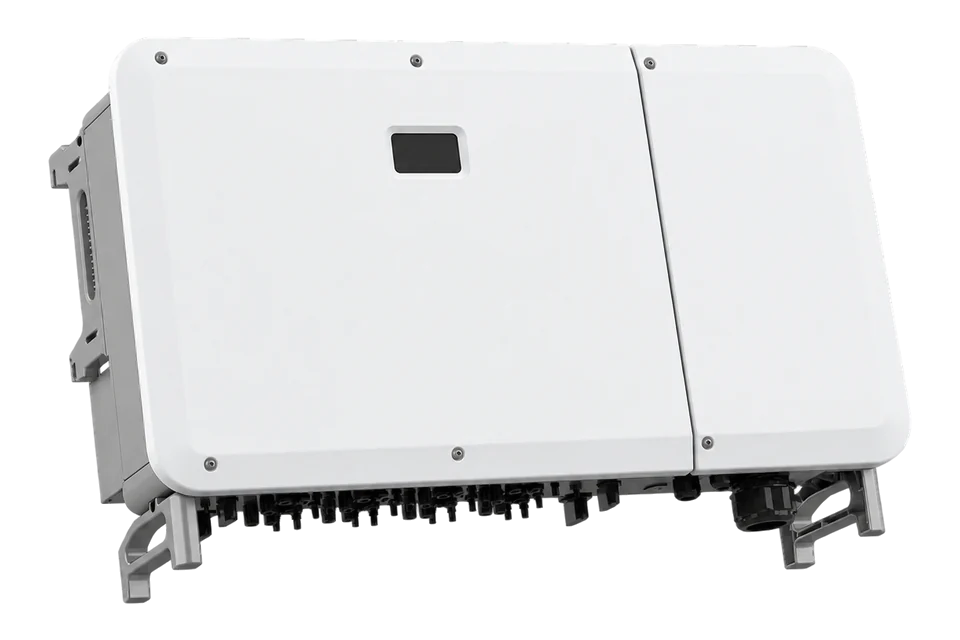
- The official product photo shows an LCD face, while the EMEA sheet says LCD is optional for the 50–60 kW units. Use it to identify the housing, not as proof of the ordered display or communication accessory.
- Remote shutdown is a documented European electrical function, not a permission to send inverter or grid-control commands from Edge.
Assessment
EMEA GW50KS-MT/GW60KS-MT and -EU counterparts; installed software, SunSpec point map, meter and read access unverified.
- InteroperabilitySupported with conditions
- The EMEA datasheet and family manual identify RS485 and SunSpec-compliant Modbus RTU, but a firmware-matched point map and bus access are still required.23
- AccuracyNot yet assessed
- Externally readable measurements, scaling and stale-value semantics need the exact firmware point contract.
- SecurityNot yet assessed
- The retained sources do not establish an authorised third-party read permission or site network policy.
- ReliabilityNot yet assessed
- Independent polling capacity and recovery behavior remain installation specific.
- RuggednessSupported with conditions
- The EMEA sheet lists IP65 and -30 to +60°C operation, subject to installation and derating.2
- ScalabilityLimited
- GoodWe documents logger and parallel meter topology but no verified third-party polling scale for these installed inverters.3
Setup
-
Read the complete SMT nameplate
Record 50 or 60 kW and whether -EU is printed, then note current software and country grid code. The EMEA base and -EU groups carry different approvals and communications options.
-
Trace the communications terminal
Identify the actual RS485 connector and logger or smart meter. For the manual’s 5-pin Europe/India version, keep signal ground distinct from protective earth; check bus addressing and termination with the installer.
-
Preserve the site meter and control owner
Map SEC1000 or EzLogger arrangements, point-of-common-coupling meter and export limitation before adding a reader. Record who owns shutdown and active/reactive-power settings.
-
Obtain the firmware-matched read map
Request GoodWe’s authorised map for the exact SMT variant, inverter software and selected logger. Confirm supported SunSpec models, function and address conventions, scaling, quality flags and read permissions.
-
Prove an identified measurement
With installer approval, compare live inverter identity, timestamp and AC power to GoodWe’s local display or management view. Check grid import/export against the separate meter.
Common questions
- Does the SMT 50 kW model have six MPPTs?
- No. The EMEA sheet gives five MPPTs to both 50 kW versions and six to both 60 kW versions. All four specify two strings per tracker.2
- Can a base GW50KS-MT be used for a UK G99 site?
- The EMEA sheet expressly says the base grid-code group is not applicable for UK grid code. Its -EU group names G99 and G100; the installer must still verify the exact certificate and connection approval.2
- Does SunSpec compliance establish a ready Edge import?
- No. The sheet names Modbus RTU with SunSpec compliance, but the retained documents do not identify the installed firmware’s point table, address convention, read permissions or Edge wiring. Confirm those before importing values.23
Related devices
Sources
- SMT Series 50–60 kW product page (opens in a new tab)
- SMT Series EMEA datasheet, V1.1, September 2025 (opens in a new tab) (PDF)
- SMT 12–60 kW user manual, V2.2, May 2025 (opens in a new tab)
Further reading
Product names and trademarks belong to their owners. Publication does not imply endorsement or a commercial relationship.