Milesight AM307
Indoor air quality sensor
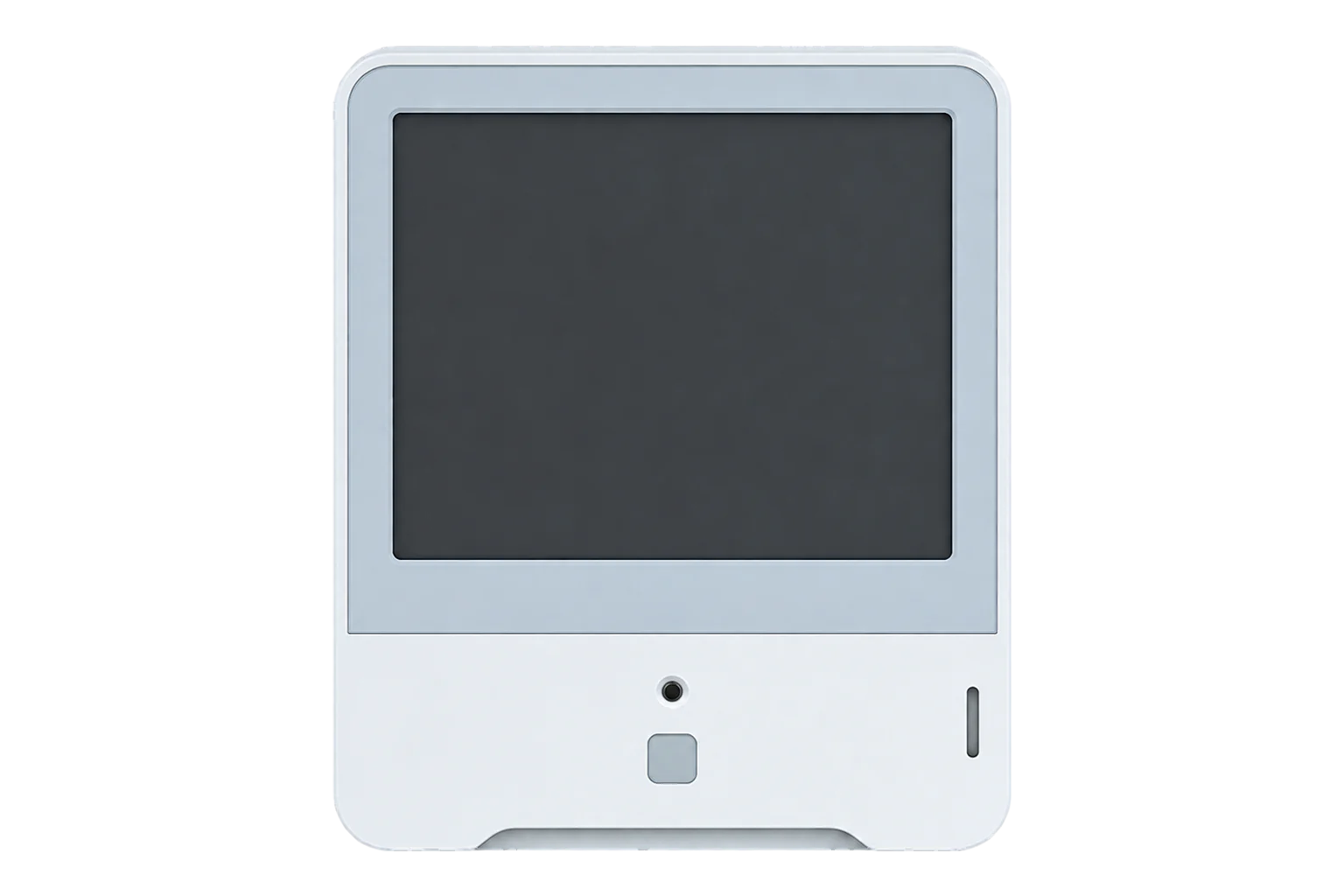
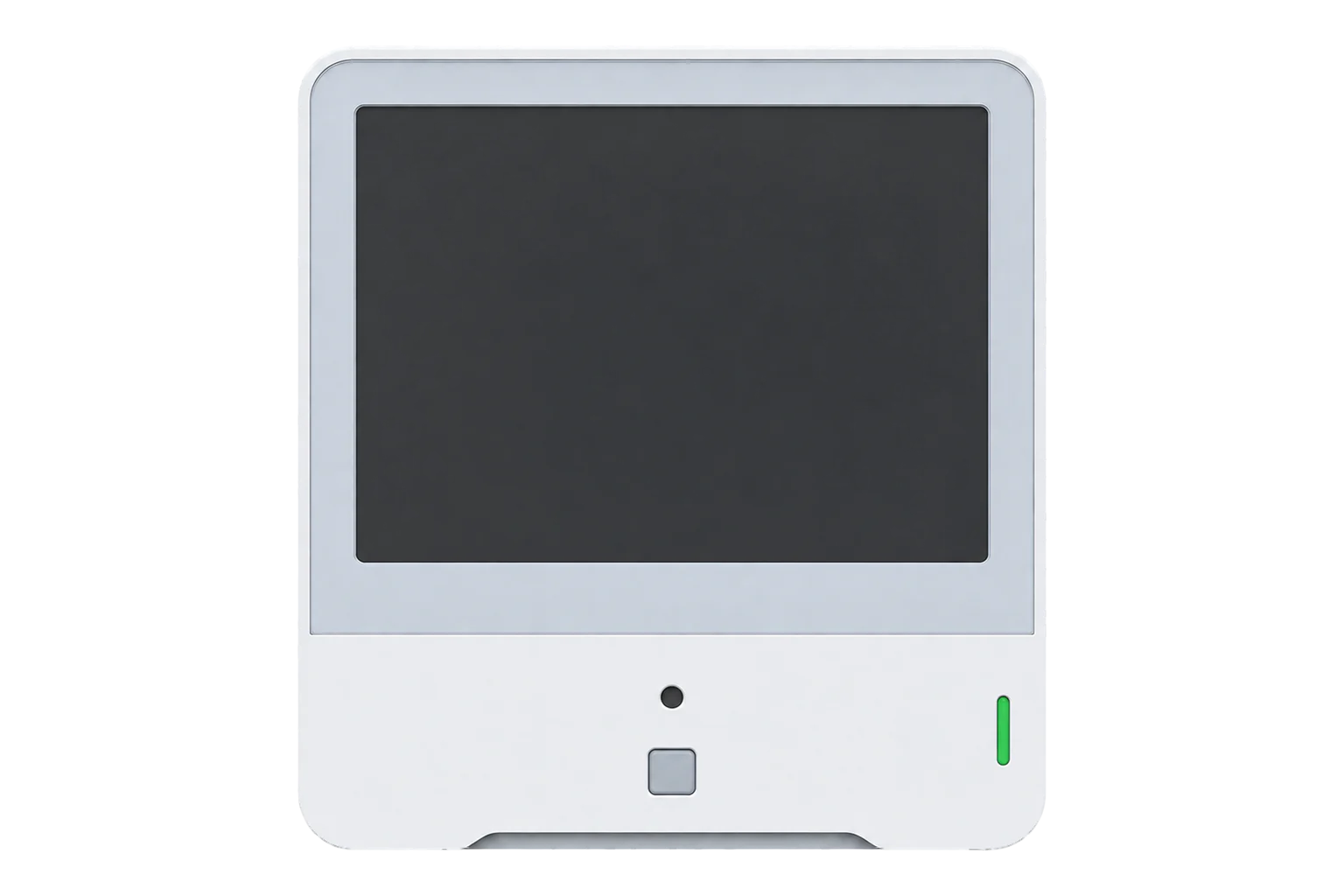
A wall-mounted LoRaWAN room sensor with an E-ink screen that measures CO₂, temperature, humidity, TVOC, barometric pressure, light and occupancy. It runs on four lithium cells for around 3 years, or from a 5 V USB-C supply.
- LoRaWAN
Indoor air quality sensor
Compatibility
Compatible with EpiSensor Edge over LoRaWAN.
Register it on your LoRaWAN network server with its DevEUI and keys. Edge, on the Gateway, reads its decoded uplinks from that server.
Edge reads 11 values from it, listed under Interface.
Connect it with
-
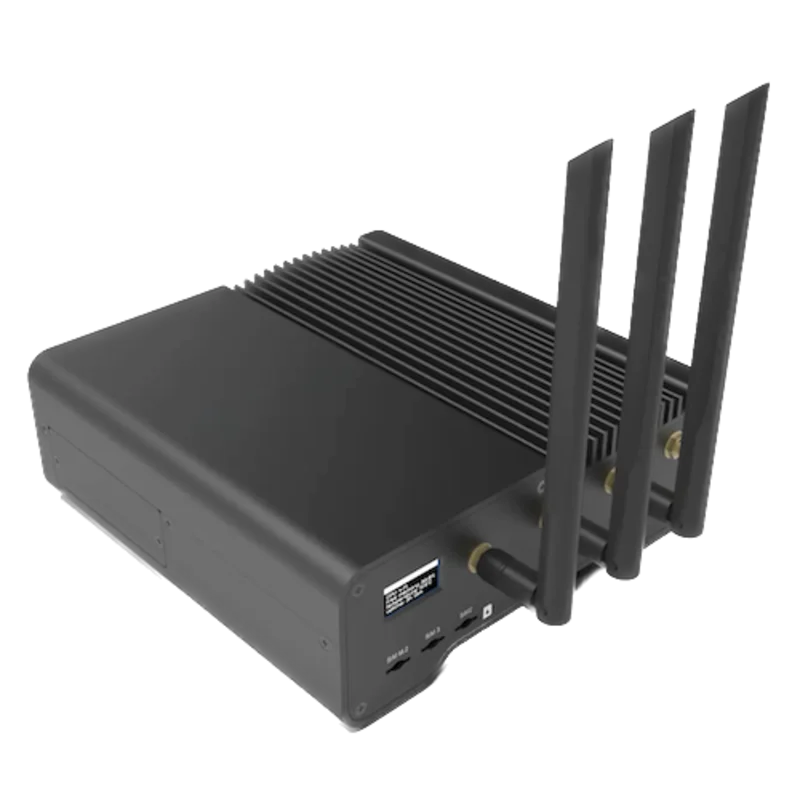
Gateway ZGW-20From €899 ex VAT Configure Gateway
Specifications
The AM307 is the seven-measurement model of Milesight's AM300 series. It reports temperature, relative humidity, CO₂, TVOC, barometric pressure, a light level and PIR occupancy in one uplink. A 4.2-inch E-ink screen shows the readings and a comfort face in the room, and a traffic-light LED and buzzer warn when a value passes the thresholds you set. The AM307L is the same sensor without the screen.12
- Power
- Battery. Four replaceable 2700 mAh ER14505 Li-SOCl₂ cells, around 3 years at a 10-minute interval and 25 °C (4 years for the AM307L; laboratory figures), or 5 V 1 A through USB-C. External power takes priority and does not charge the cells.1
- CO₂
- NDIR, 400 to 5,000 ppm, ±(30 ppm + 3 % of reading) at 0 to 50 °C and 0 to 85 % RH, 1 ppm resolution1
- Temperature
- -20 to 60 °C, ±0.2 °C, 0.1 °C resolution1
- Humidity
- 0 to 100 % RH, ±2 % RH, 0.5 % RH resolution1
- TVOC
- Metal-oxide sensor, IAQ rating 1.00 to 5.00, ±1, 0.01 resolution1
- Barometric pressure
- 260 to 1,260 hPa, ±0.5 hPa, 0.1 hPa resolution1
- Light
- Photodiode, 0 to 60,000 lux, reported as levels 0 to 51
- Occupancy
- PIR, 80° horizontal, 55° vertical, up to 5 m, vacant or occupied1
- Display
- 4.2-inch black and white E-ink (none on the AM307L)1
- LoRaWAN
- Class A, OTAA or ABP, versions 1.0.2 and 1.0.32
- Frequency plans
- CN470, RU864, IN865, EU868, US915, AU915, KR920, AS923-1 to AS923-41
- Transmit power
- 16 dBm (868 MHz), 22 dBm (915 MHz), 19 dBm (470 MHz)1
- Local storage
- 18,000 records, with retransmission1
- Operating conditions
- -20 to 60 °C (screen 0 to 40 °C), 10 to 90 % RH non-condensing, IP301
- Dimensions
- 100.8 × 114 × 22 mm1
- Approvals
- CE, FCC, ISED, RoHS1
Where it is used
Offices, meeting rooms and classrooms, where CO₂ is the measure of whether ventilation keeps up with occupancy.
Indoor environmental monitoringDemand-controlled ventilation studies, where occupancy and CO₂ in the same uplink show when a space is used and whether the air handling follows.
HVAC energy monitoring for commercial buildingsRetail floors, clinics and waiting rooms, where the screen lets occupants see the air quality too.
Interface
- Device class
- Class A2
- Regional plans
- EU868, US915, AU915, AS923, KR920, IN865, RU864, CN470
- Activation
- OTAA or ABP
- LoRaWAN version
- 1.0.2 or 1.0.3
- Default uplink interval
- 10 minutes (1 to 1,080 minutes)
Ports
| FPort | Direction | Carries |
|---|---|---|
| 85 | Uplink | All seven readings, battery level, buzzer state, threshold alarms, stored history and the information packet sent on joining |
| 85 | Downlink | Reporting interval, TVOC mode, LED and buzzer, screen, thresholds, CO₂ calibration, time, storage and retransmission |
Decoded fields
Readings and settings, with units and ranges where Milesight publishes them. readable, writable only.2
| Reading | Unit | Range or values | Access |
|---|---|---|---|
| Measurements 7 | |||
| CO₂Channel 07, type 7D: unsigned 16-bit | ppm | 400 to 5,000 ppm | Read only |
| TemperatureChannel 03, type 67: signed 16-bit, divided by 10 | °C | -20 to 60 °C | Read only |
| Relative humidityChannel 04, type 68: unsigned 8-bit, divided by 2 | % RH | 0 to 100 % RH | Read only |
| TVOCChannel 08, type 7D: unsigned 16-bit, divided by 100. In concentration mode, channel 08, type E6 in µg/m³ | IAQ | 1 to 5 IAQ | Read only |
| Barometric pressureChannel 09, type 73: unsigned 16-bit, divided by 10 | hPa | 260 to 1,260 hPa | Read only |
| Light levelChannel 06, type CB: 0 is up to 5 lux, 1 is 6 to 50, 2 is 51 to 100, 3 is 101 to 500, 4 is 501 to 2,000, 5 is over 2,000 lux | - | 0 to 5 | Read only |
| OccupancyChannel 05, type 00: 00 vacant, 01 occupied | - | vacantoccupied |
Read only |
| Settings 2 | |||
| Reporting intervalDownlink channel FF, type 03: unsigned 16-bit | s | 60 to 64,800 s | Write only |
| TVOC modeDownlink channel FF, type EB: 00 IAQ level, 01 concentration in µg/m³ | - | levelconcentration |
Write only |
| Diagnostics 2 | |||
| BuzzerChannel 0E, type 01: sent with an alarm | - | offbeeping |
Read only |
| Battery levelChannel 01, type 75. An alarm uplink is sent at 1 % | % | 0 to 100 % | Read only |
Each uplink is a run of channel, type and value fields, with multi-byte values in little-endian order. A periodic AM307 report carries temperature (03 67), humidity (04 68), PIR (05 00), light level (06 CB), CO₂ (07 7D), TVOC (08 7D, or 08 E6 in concentration mode) and pressure (09 73).23
CO₂ readings depend on calibration. Either calibrate manually outdoors to 400 ppm before installing, or enable automatic background calibration, which takes the lowest level over 7 days as 400 ppm and suits rooms that are well or partly ventilated.2
A temperature past its threshold, or a CO₂ or TVOC value past its Bad threshold, is sent at once as an alarm uplink. The air quality alarm also carries the buzzer state.2
Setup
-
Register it on the network server
Add the AM307 as a Class A device using OTAA, with the device EUI from its label, the join EUI 24E124C0002A0001 and its application key.2
-
Power it on
Remove the rear cover and take out the battery insulation sheet, or fit the USB-C cable through the side opening. Hold the power button for more than 3 seconds until the LED lights.2
-
Calibrate CO₂ and match the frequency plan
Read the sensor over NFC with the Milesight ToolBox app. Leave it outdoors for more than 10 minutes and run manual CO₂ calibration to 400 ppm, or enable automatic background calibration. Set the frequency plan to match the network; for US915 or AU915 with Milesight gateway defaults, enable channels 8 to 15.2
-
Mount it where people are
Fix the bracket with the 3M tape or screws at least 1.5 m above the floor, away from windows, doors, vents and heat sources, then secure the sensor to the bracket with the theft-deterring screw.2
-
Check the decode
Confirm the network server decodes all seven readings from the next uplink on port 85, and that CO₂ sits near outdoor level in an empty, ventilated room, before you connect it to Edge.
Common questions
- What is the difference between the AM307, AM308 and AM319?
- The AM307 measures temperature, humidity, CO₂, TVOC, pressure, light and occupancy. The AM308 adds PM2.5 and PM10. The AM319 adds formaldehyde or ozone on top of those, uses a photoacoustic CO₂ sensor to 2,000 ppm and runs from USB-C power only as a Class C device.1
- Does it need calibrating?
- Yes, for CO₂. Milesight says to use either manual calibration outdoors to 400 ppm or automatic background calibration over 7 days. A numerical offset can also be added to a reading.2
- How long do the batteries last?
- Around 3 years at a 10-minute reporting interval and 25 °C on four ER14505 cells, or around 4 years for the AM307L without a screen. These are laboratory figures. Alkaline cells are not supported.12
Related devices
Sources
- AM300(L) series datasheet (opens in a new tab) (PDF)
- AM300(L) series user guide (opens in a new tab) (PDF)
- AM307 payload decoder (opens in a new tab)
- AM300 series product page (opens in a new tab)
- Milesight AM307 device type definition (opens in a new tab)
Further reading
Product names and trademarks belong to their owners. Publication does not imply endorsement or a commercial relationship.