Netvox R718N3
Three-phase current meter
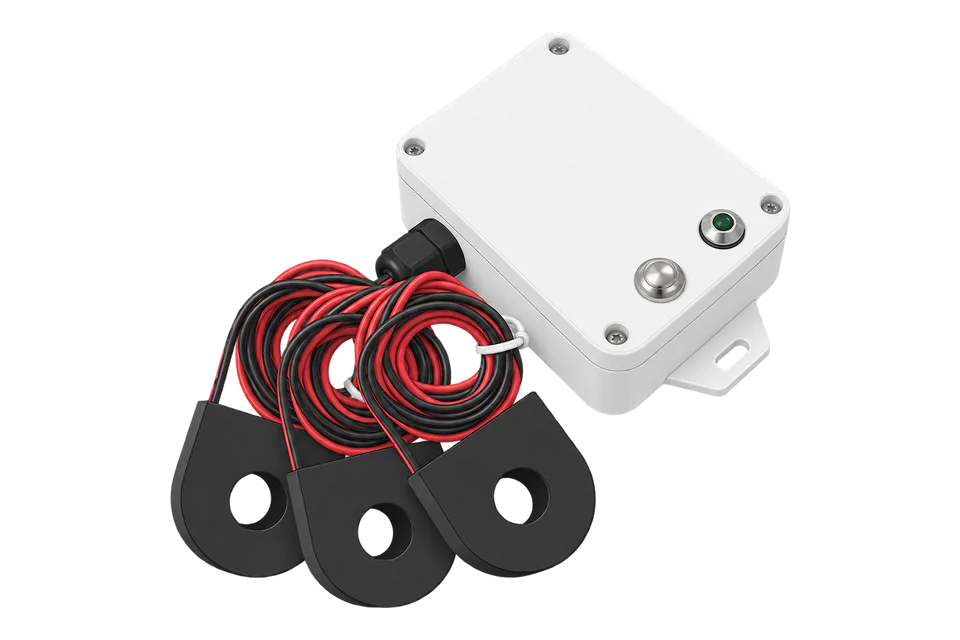
A battery-powered LoRaWAN current meter with three solid-core current transformers, reading AC current on each phase from 100 mA to 50 A with 1 mA resolution.
- LoRaWAN
Three-phase current meter
Compatibility
Compatible with EpiSensor Edge over LoRaWAN.
Register it on your LoRaWAN network server with its DevEUI and keys. Edge, on the Gateway, reads its decoded uplinks from that server.
Edge reads 9 values from it, listed under Interface.
Connect it with
-
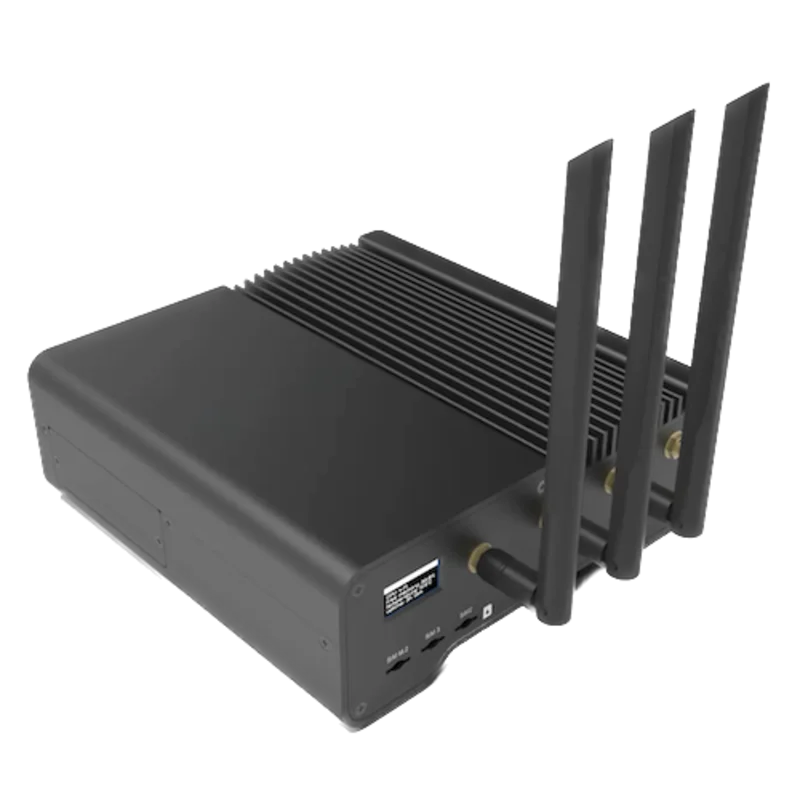
Gateway ZGW-20From €899 ex VAT Configure Gateway
Specifications
It measures current only. There is no voltage input, so it does not report power, power factor or energy; a kWh figure from it rests on an assumed voltage and power factor. What it does give is a battery-powered view of load profiles, phase balance and run hours on distribution boards and plant, reported to Edge over the radio with no data cabling.12
- Power
- Battery. Two 3.6 V ER14505 AA lithium cells (2400 mAh each) in parallel. 3.82 years reporting every 60 minutes at SF10, 20 dBm and 25 °C.1
- Current range
- 100 mA to 50 A per phase1
- Accuracy
- < ±1 % from 300 mA to 50 A1
- Resolution
- 1 mA1
- Current transformers
- 3 solid-core, 60 A rated primary, 20 mA secondary, 3000:1, 50 to 60 Hz, < 600 V1
- Transformer size
- 37.5 × 39 × 14 mm, about 900 mm leads1
- Frequency plans
- EU868, US915, AU915, KR920, AS923-1, AS923-2, AS923-3, IN865, CN470; one per unit, set in the factory1
- Transmit power
- 16 dBm (EU868, AS923), 20 dBm (US915, AU915, IN865), 14 dBm (KR920)1
- Receiver sensitivity
- -136 dBm at SF121
- Ingress protection
- IP53 main unit, IP30 transformers1
- Main unit
- 112 × 88.19 × 32 mm, about 141 g; screw or magnet mounting1
- Operating conditions
- -20 to 55 °C, < 90 % RH non-condensing1
Where it is used
Distribution boards and sub-mains, where three phase currents show load, balance and peaks.
Transformer and distribution board monitoringPlant such as air handling units, pumps and chillers, where current shows when a machine runs and how hard.
HVAC energy monitoring for commercial buildings
Interface
- Device class
- Class A2
- Regional plans
- EU868, US915, AU915, KR920, AS923-1, AS923-2, AS923-3, IN865, CN470
Ports
| FPort | Direction | Carries |
|---|---|---|
| 6 | Uplink | Reports: 00 version, 01 three currents and the first multiplier, 02 the other two multipliers, 03 currents with all three multipliers, 04 current alarms |
| 7 | Downlink | Reporting settings: 01 sets minimum and maximum report times and the current change that triggers a report, 02 reads them back |
| 7 | Uplink | Replies to the port 7 commands: 81 success or failure, 82 the current settings |
Decoded fields
Readings and settings, with units and ranges where Netvox publishes them. readable, readable and writable.2
| Reading | Unit | Range or values | Access |
|---|---|---|---|
| Measurements 4 | |||
| Current, phase 1Report 01 or 03, bytes 5 and 6; multiply by Multiplier1 | mA | 100 to 50,000 mA | Read only |
| Current, phase 2Report 01 or 03, bytes 7 and 8; multiply by Multiplier2 | mA | 100 to 50,000 mA | Read only |
| Current, phase 3Report 01 or 03, bytes 9 and 10; multiply by Multiplier3 | mA | 100 to 50,000 mA | Read only |
| Current multipliersOne per phase: report 01 byte 11 and report 02 bytes 5 and 6, or packed in report 03 byte 11 (1, 5, 10 or 100) | - | - | Read only |
| Settings 3 | |||
| Minimum report timePort 7 command 01, bytes 3 and 4 | s | 1 to 65,535 s | Read and write |
| Maximum report timePort 7 command 01, bytes 5 and 6 | s | 1 to 65,535 s | Read and write |
| Current change to reportPort 7 command 01, bytes 7 and 8: a change this large sends a report at the minimum report time | mA | 1 to 65,535 mA | Read and write |
| Diagnostics 2 | |||
| Battery voltageByte 4, lower seven bits in 0.1 V steps; bit 7 flags low battery | V | - | Read only |
| Current alarmsReport 04, byte 5: a low and a high current alarm bit for each phase | - | - | Read only |
Every report is 11 bytes: version 01, device type 4A for the R718N3, report type, then eight data bytes. Battery voltage is the lower seven bits of byte 4 in tenths of a volt; bit 7 set means low battery. Currents are unsigned 16-bit big-endian values in mA.2
A 16-bit value tops out at 65,535 mA, so each current comes with a multiplier. In report types 01 and 02 the multipliers are sent as numbers; in report type 03 they are packed two bits each into the last byte and stand for 1, 5, 10 or 100. Multiply the current by its multiplier before using it.2
Setup
-
Fit the batteries
Fit two 3.6 V ER14505 AA lithium cells; they run in parallel.1
-
Register it on the network server
Add the R718N3 to the site’s LoRaWAN network server as a Class A device on the frequency plan printed for that unit, and load a decoder for ports 6 and 7.2
-
Fit the transformers
With the circuit isolated, pass one phase conductor through each transformer, never a whole cable, and fix the main unit to the panel with its magnet or screws. Keep it out of closed metal enclosures, which block the radio.
-
Set the reporting
Send command 01 on port 7 with the minimum and maximum report times and the current change that should trigger a report; the device answers 81 00 on success.2
-
Check one value
Compare each decoded phase current, after its multiplier, with a clamp meter reading on the same conductor before you enable exports from Edge.
Common questions
- Does the R718N3 measure power or energy?
- No. It measures AC current through its transformers and has no voltage input, so it reports current only. Power and energy would need an assumed voltage and power factor.12
- Why does a current read low on a large load?
- The current field is 16 bits, so it stops at 65,535 mA. Above that the device sends a multiplier with each current, and the reported value has to be multiplied by it. A decoder that ignores the multiplier reads large currents far too low.2
- Which LoRaWAN ports does it use?
- Readings and alarms arrive on port 6. Reporting settings are sent on port 7, and the device replies on port 7.2
- How long do the batteries last?
- Netvox quotes 3.82 years on two ER14505 cells reporting once an hour at SF10 and 20 dBm, at 25 °C. Faster reporting or a higher spreading factor shortens it.1
Related devices
Sources
- R718N3 wireless 3-phase current meter datasheet (archived copy) (opens in a new tab) (PDF)
- R718N3 payload codec (opens in a new tab)
- R718N3 device definition (opens in a new tab)
- Netvox R718N3 device type definition (opens in a new tab)
Further reading
Product names and trademarks belong to their owners. Publication does not imply endorsement or a commercial relationship.