Pressac CT Clamp
Self-powered current sensor
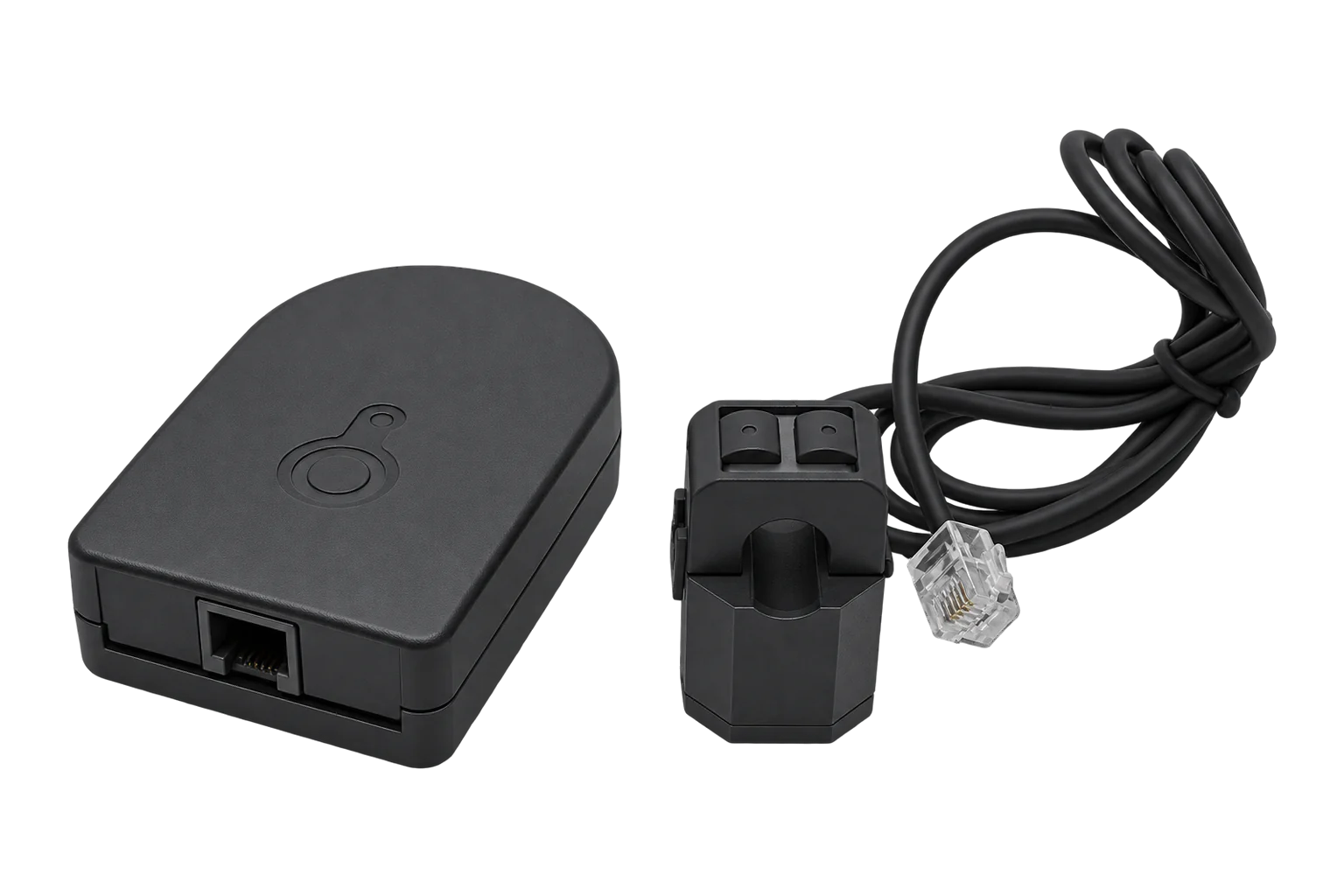
A battery-free LoRaWAN current sensor with one or three clip-on CT clamps. It powers itself from the current it measures and reports average AC current every 30 seconds once the load is above 1.5 A.
Also sold asThree Channel CT Clamp for LoRaWANSingle Channel CT Clamp for LoRaWAN
- LoRaWAN
Self-powered current sensor
Compatibility
Compatible with EpiSensor Edge over LoRaWAN.
Register it on your LoRaWAN network server with its DevEUI and keys. Edge, on the Gateway, reads its decoded uplinks from that server.
Edge reads 4 values from it, listed under Interface.
Connect it with
-
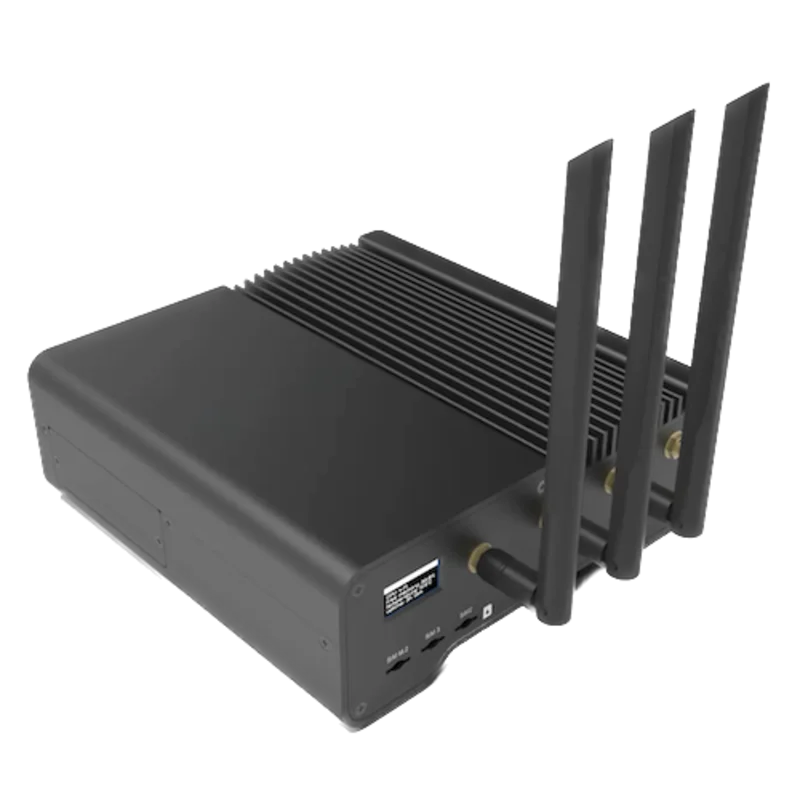
Gateway ZGW-20From €899 ex VAT Configure Gateway
Specifications
Pressac’s CT Clamp for LoRaWAN clips around a conductor and measures its AC current at 50 or 60 Hz. The three-channel version takes three clamps, one per conductor, into one transmitter; the single-channel version takes one. Clamps come in 60 A, 200 A and, on the three-channel version, 600 A sizes, for conductors up to 10, 24 and 36 mm across.12
- Power
- Self-powered from the measured supply. Energy harvested from the measured conductor; no battery and no supply wiring. It needs at least 1.25 A in the conductor to run, and 1.5 A for 30-second reporting.1
- Measurement ranges
- 0 to 60 A (±0.1 A and 2 %), 0 to 200 A (±0.2 A and 2 %), 0 to 600 A (±0.5 A and 2 %, three-channel only)1
- Channels
- 1 or 3, one clamp per channel1
- AC frequency
- 50 Hz or 60 Hz1
- Sampling frequency
- 22.6 kHz1
- Reporting
- Average of 5 readings every 30 s from 1.5 A; average of 75 readings every 15 min from 1.25 A1
- Conductor diameter
- 10 mm or less (60 A), 24 mm or less (200 A), 36 mm or less (600 A)1
- LoRaWAN
- Version 1.0.4, Class A, OTAA1
- Frequency plans
- EU868, US915; +14 dBm transmit power, -146 dBm sensitivity1
- Transmitter
- Nylon 66, IP4X, about 80 × 55 × 20 mm, indoor1
- Operating conditions
- -5 to 40 °C, 0 to 85 % RH1
- Part numbers
- CTLW_1CH_XXA_XXXX (single channel), CTLW_3CH_XXA_XXXX (three channel)1
- Compliance
- CE, RoHS, WEEE, FCC1
Where it is used
Circuit and machine monitoring in commercial and industrial buildings, where clamps go on without switching anything off.
Transformer and distribution board monitoringSub-metering by zone or tenant across many sites, where battery-free sensors avoid a battery round.
Multi-site energy monitoringPlant that runs most of the time, such as air handling units and refrigeration, where 30-second current shows each start and stop.
HVAC energy monitoring for commercial buildings
Interface
- Device class
- Class A3
- Regional plans
- EU868, US915
- Activation
- OTAA
- LoRaWAN version
- 1.0.4
- Default uplink interval
- 30 seconds from 1.5 A; 15 minutes from 1.25 A
Ports
| FPort | Direction | Carries |
|---|---|---|
| 60 | Uplink | Current readings: three channel currents and a period counter, 7 bytes. Port 60 is the one in Pressac’s decoder example; the decoder reads any port. |
Decoded fields
Readings and settings, with units and ranges where Pressac publishes them.3
| Reading | Unit | Range or values | Access |
|---|---|---|---|
| Measurements 3 | |||
| Current, channel 1Bytes 3 and 4, signed 16-bit little-endian, divided by 100 | A | - | Read only |
| Current, channel 2Bytes 5 and 6, signed 16-bit little-endian, divided by 100; three-channel version | A | - | Read only |
| Current, channel 3Bytes 1 and 2, signed 16-bit little-endian, divided by 100; three-channel version | A | - | Read only |
| Diagnostics 1 | |||
| Averaged periodsByte 7: how many 30-second periods the currents average | - | 0 to 255 | Read only |
The currents are signed 16-bit little-endian values in hundredths of an amp, and Pressac’s decoder reports their absolute value. The channel order in the bytes is not 1, 2, 3: bytes 1 and 2 hold channel 3, bytes 3 and 4 channel 1, and bytes 5 and 6 channel 2. Byte 7 is the number of 30-second periods averaged into the values.3
The counter goes above 1 when the device averages over longer periods, in low-power mode or when earlier uplinks were not sent, so a value of 30 means the currents are the average of the last 15 minutes.3
Setup
-
Register it on the network server
Add the transmitter to the site’s LoRaWAN network server for OTAA on EU868 or US915, and load Pressac’s CT clamp decoder.3
-
Clip the clamps on
Clip each clamp around a single conductor, not around a whole cable, within its size: 10 mm for the 60 A clamp, 24 mm for 200 A and 36 mm for 600 A. The supply stays on.1
-
Mount the transmitter outside the panel
Fix the transmitter outside the metal panel, where the radio can reach a gateway, with the clamp leads running inside.1
-
Wait for load
The transmitter starts once a clamped conductor carries 1.25 A. At 1.5 A and above, expect an uplink about every 30 seconds.1
-
Check the channel order
Compare each decoded channel with a clamp meter on the same conductor. Mapping the bytes by the decoder, not by position, avoids swapping channels 1 and 3.
Common questions
- Why is the sensor not sending anything?
- It powers itself from the measured current, so it needs at least 1.25 A in a clamped conductor to run and 1.5 A for 30-second reporting. A circuit that is off, or lightly loaded, gives it no power.1
Related devices
Sources
- Three Channel CT Clamp for LoRaWAN datasheet (opens in a new tab) (PDF)
- Single Channel CT Clamp for LoRaWAN datasheet (opens in a new tab) (PDF)
- CTLW_xCH_xxxA sensor decoder (opens in a new tab)
- CT Clamps for LoRaWAN (opens in a new tab)
- Pressac CT Clamp device type definition (opens in a new tab)
Further reading
Product names and trademarks belong to their owners. Publication does not imply endorsement or a commercial relationship.