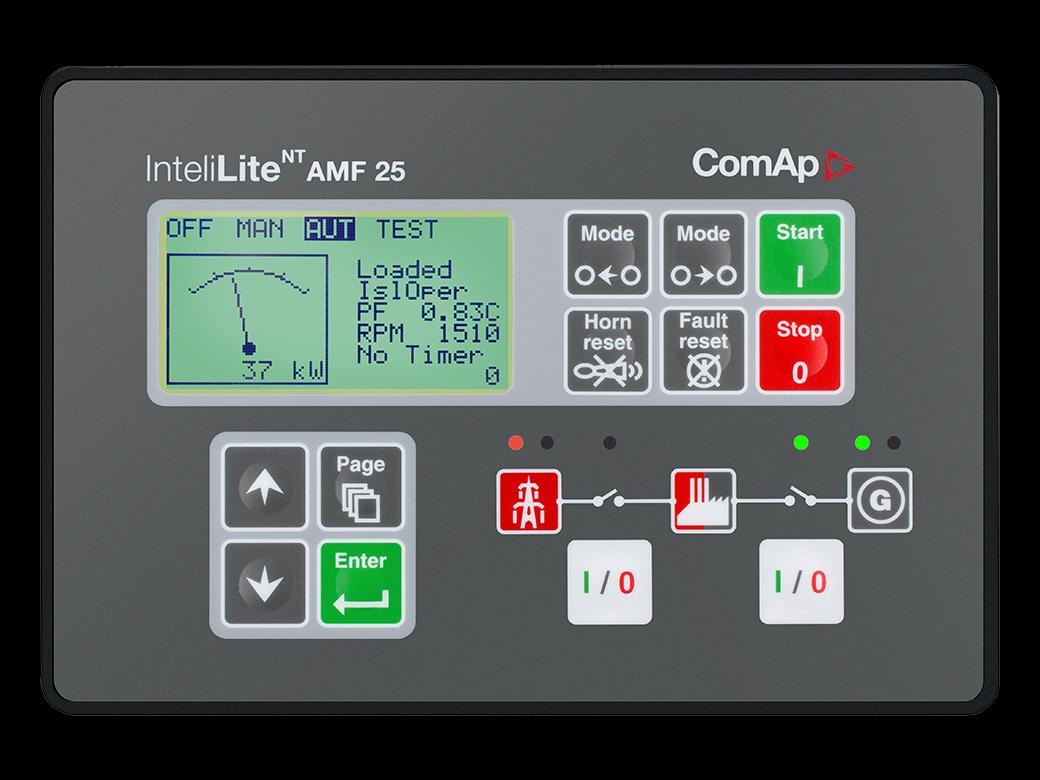
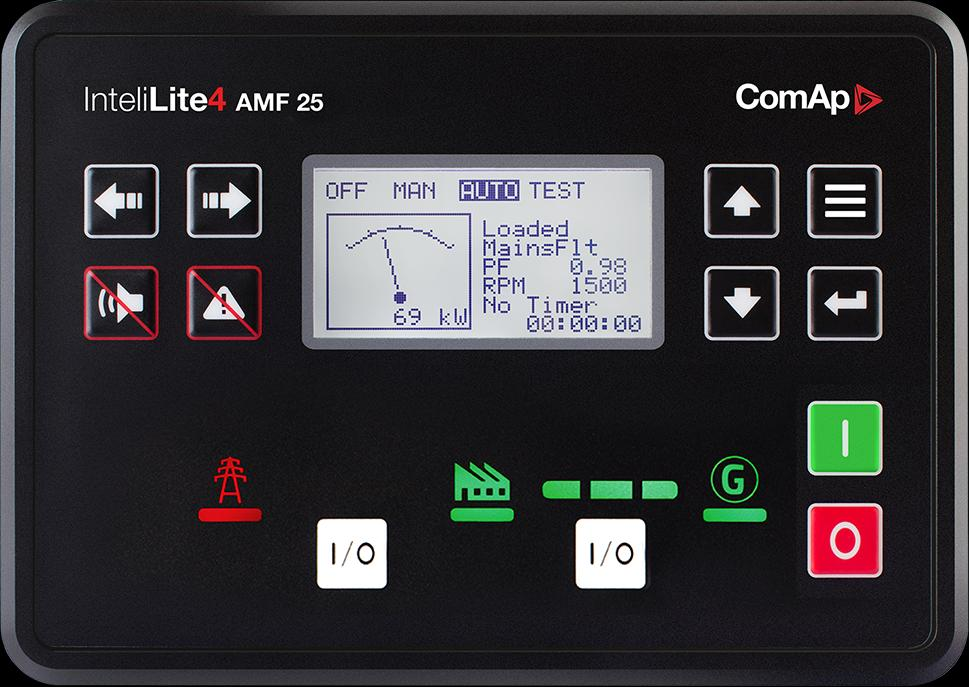
ComAp InteliLite NT AMF 25
Single-generator AMF controller
InteliLite NT AMF 25 is a legacy single-generator standby and prime-power controller. Edge monitors it through an EpiSensor ZEM-65 on the generator output, which measures what the set delivers without a data connection to the controller. The IL-NT RS232-485 card and the IB-Lite module remain ComAp’s own configuration and web-monitoring routes.
Compatibility
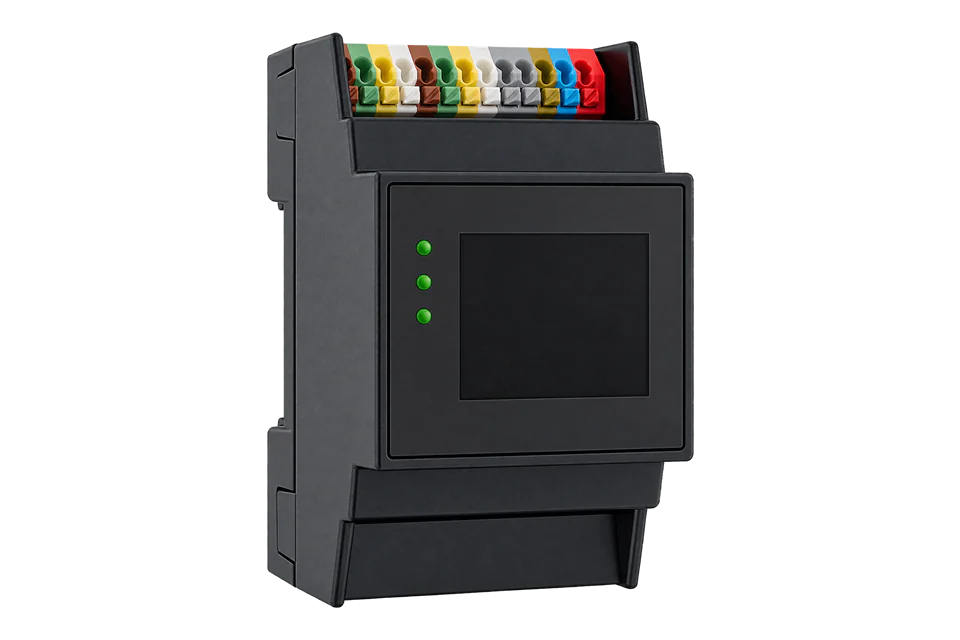
Compatible with EpiSensor Edge through a ZEM-65 on the generator output
Edge measures the generator through an EpiSensor ZEM-65 on the generator feeder: voltage, current, power, energy and frequency, independently of the controller. The cited ComAp pages describe the optional IL-NT RS232-485 module and IB-Lite for LiteEdit configuration and web monitoring, and publish no register map for a third-party client.
ComAp marks this model discontinued and names InteliLite 4 AMF 9 as its successor; the NT AMF 25 is not the same controller as InteliLite 4 AMF 25. Site check: take the ZEM’s 85 to 480 V AC auxiliary supply from a circuit that stays live while the set is stopped, so a stopped generator reads zero instead of going silent.
Connect it with
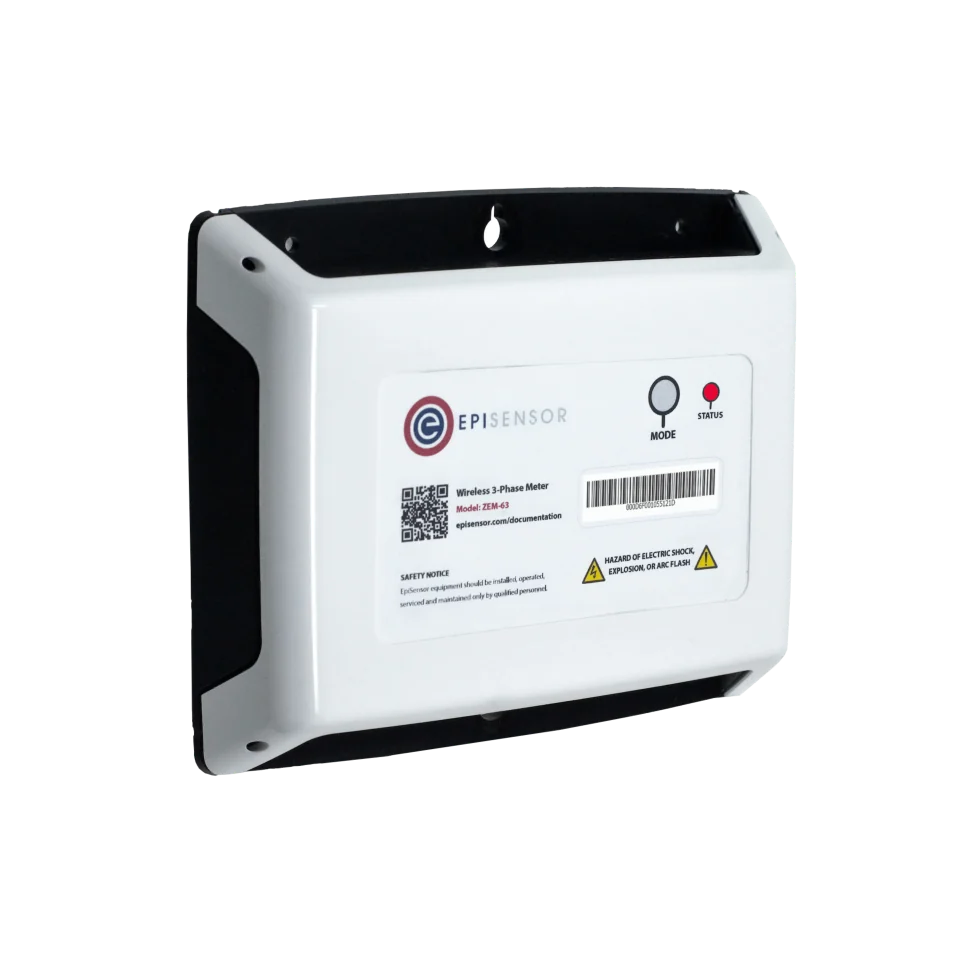
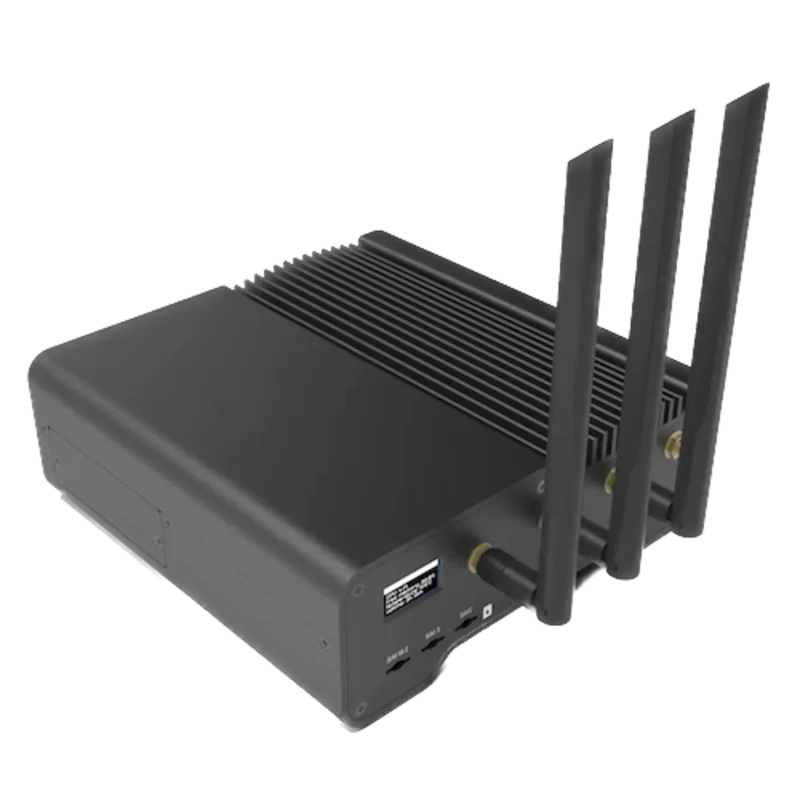
For continuous monitoring of what the generator delivers, measured independently of the controller
- Wired
- Edge
- Platforms
Models
| Models | Interface | Route into Edge |
|---|---|---|
| InteliLite NT AMF 25 | Optional IL-NT RS232-485 dual-port module; optional IB-Lite web monitoring; LiteEdit configuration | Edge reads the generator output through a ZEM-65 on the generator feeder. Save the existing configuration in LiteEdit and compare the ZEM readings with the controller display while the set runs on load. |
Specifications
ComAp marks this model discontinued and names InteliLite 4 AMF 9 as its successor. Replacement selection still depends on panel I/O and the application. The NT AMF 25 is not the same controller as InteliLite 4 AMF 25.12
Interface
Documented measurements and integration boundaries for InteliLite NT AMF 25.
- Three-phase generator and mains measurements, including energy, on the controller
- Run hours, event history and ECU diagnostic information in the documented controller software
- GCB and MCB state indications and configured analogue sensor values
Assessment
Generator output through a ZEM-65 on the generator feeder; controller configuration in LiteEdit
- InteroperabilityLimited
- ComAp documents the IL-NT RS232-485 and IB-Lite modules for LiteEdit and web monitoring, not a third-party register map. Edge measures the generator through a ZEM-65 on its output instead.2
- AccuracySupported with conditions
- The documentation identifies electrical and operating measurements for this plant role. CT configuration and measurement location determine how those values are used.12
- SecurityNot yet assessed
- The cited documentation does not describe access control on the controller’s configuration port. The ZEM route makes no data connection to the controller.
- ReliabilityNot yet assessed
- The controller application distinguishes operating conditions and alarms. Retain communication availability alongside the plant readings.
- RuggednessNot yet assessed
- Installation and enclosure requirements depend on the panel and the exact hardware variant.
- ScalabilityNot yet assessed
- Assign one device identity per controller and keep generator, mains and busbar measurements separate.
Setup
-
Edge reads the generator output through a ZEM-65 on the generator feeder.
Save the existing configuration in LiteEdit and compare the ZEM readings with the controller display while the set runs on load.
-
Record CT ratios and the physical measurement location.
Compare the first electrical values with the controller display before using them in totals or trends.
-
A stopped generator reads zero current on the ZEM.
Keep the ZEM’s communication status beside its readings so a lost radio link does not look like healthy standby.
Related devices
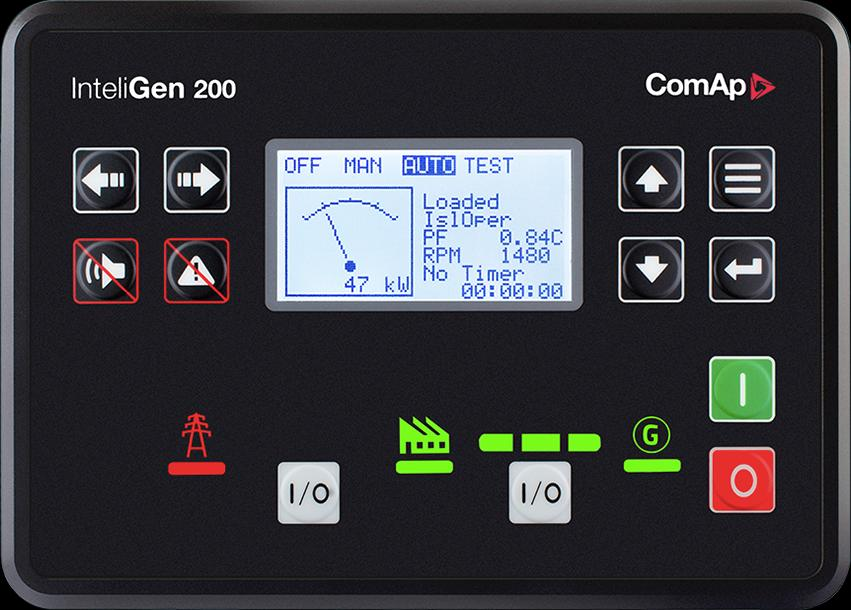
Similar devices
Sources
- InteliLite NT AMF 25 product (opens in a new tab)
- InteliLite NT AMF 25 communications (opens in a new tab)
Further reading
Product names and trademarks belong to their owners. Publication does not imply endorsement or a commercial relationship.