SATEC EM720
Power quality and revenue meter
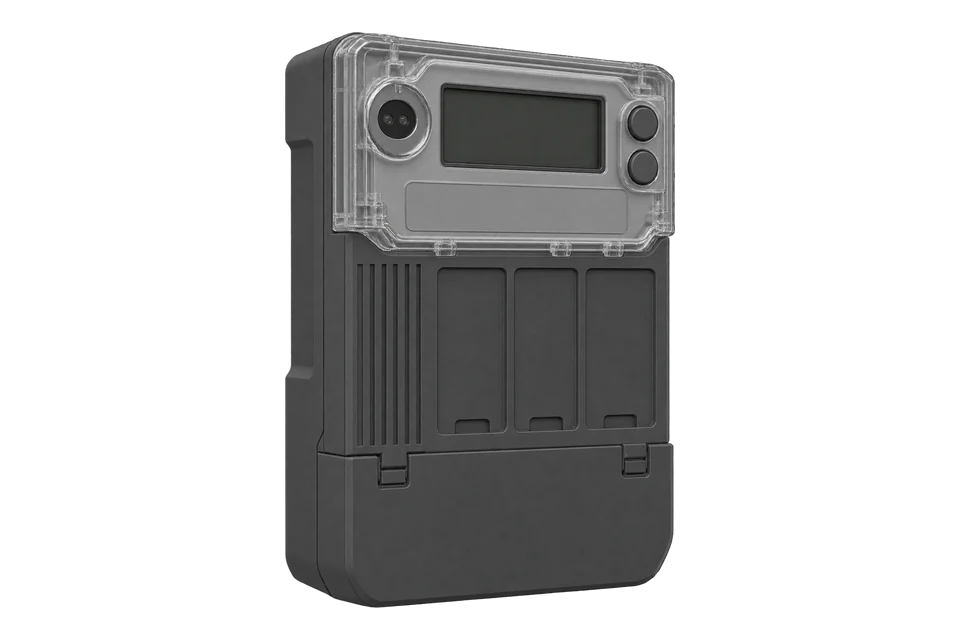
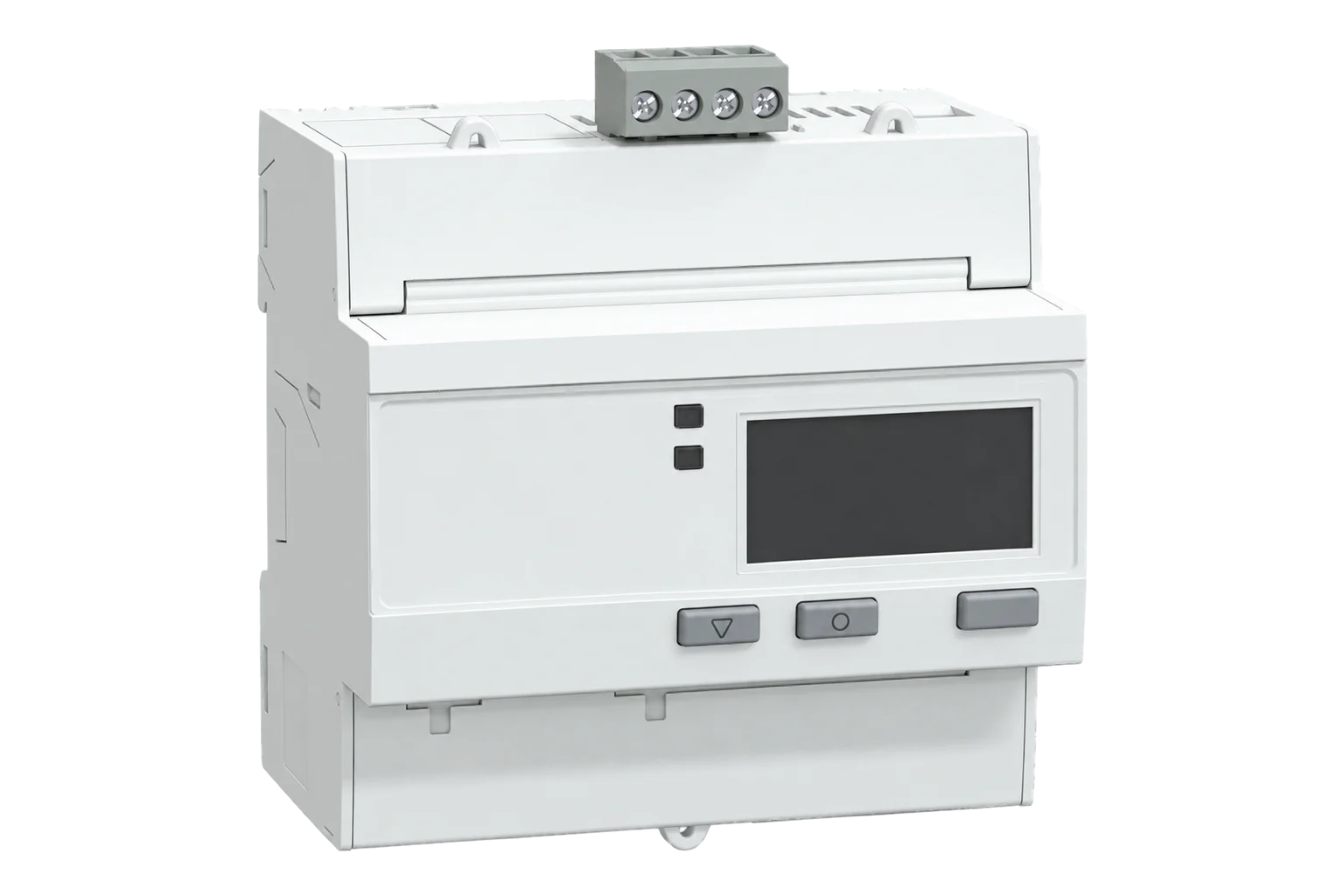
The EM720 is SATEC's expertmeter revenue meter for utility connection points and large industrial and commercial supplies: a class 0.2S energy meter, a class A power quality analyser and a fault and waveform recorder in a sealable case for DIN 43857 mounting. The EM720T adds a transient recorder and the EM720U applies IEEE 1159 instead of EN 50160. The base meter has an optical port only; Edge reads it through a plug-in module, the ETH/USB module for Modbus TCP on port 502 or a module with the RS-232/485 COM3 port for Modbus RTU. SATEC numbers its registers in decimal and sends 32-bit integers low word first, with units that follow the PT ratio.
Compatibility
Compatible with EpiSensor Edge over Modbus TCP or Modbus RTU with a communication module
The EM720 is compatible with EpiSensor Edge over Modbus TCP on port 502 through its ETH/USB module, and over Modbus RTU on the RS-485 COM3 port of the ETH/USB or IRIG-B module, read through a ZMB-31 Modbus Interface or a Gateway serial port. SATEC publishes the register map with decimal addresses, data types, low-word-first word order, units and worked conversions.
EM720, EM720T and EM720U with firmware V26.xx, using the EM720 Modbus reference guide BG0457 Rev. A11 with installation manual BG0450 Rev. A6 and operation manual BG0451 Rev. A4. Needs an ETH/USB module, or an IRIG-B module for RS-485; the optical port is outside this guide. Site check: read the PT ratio, the energy decimal places at 46258 and the energy readings option at 46266, then compare the first reads with the display. IEC 61850, IEC 62056-21, DNP3 and the power quality, fault and waveform log files are outside this guide. Read-only monitoring: no writes to setup, password, relay or reset registers.
Connect it with
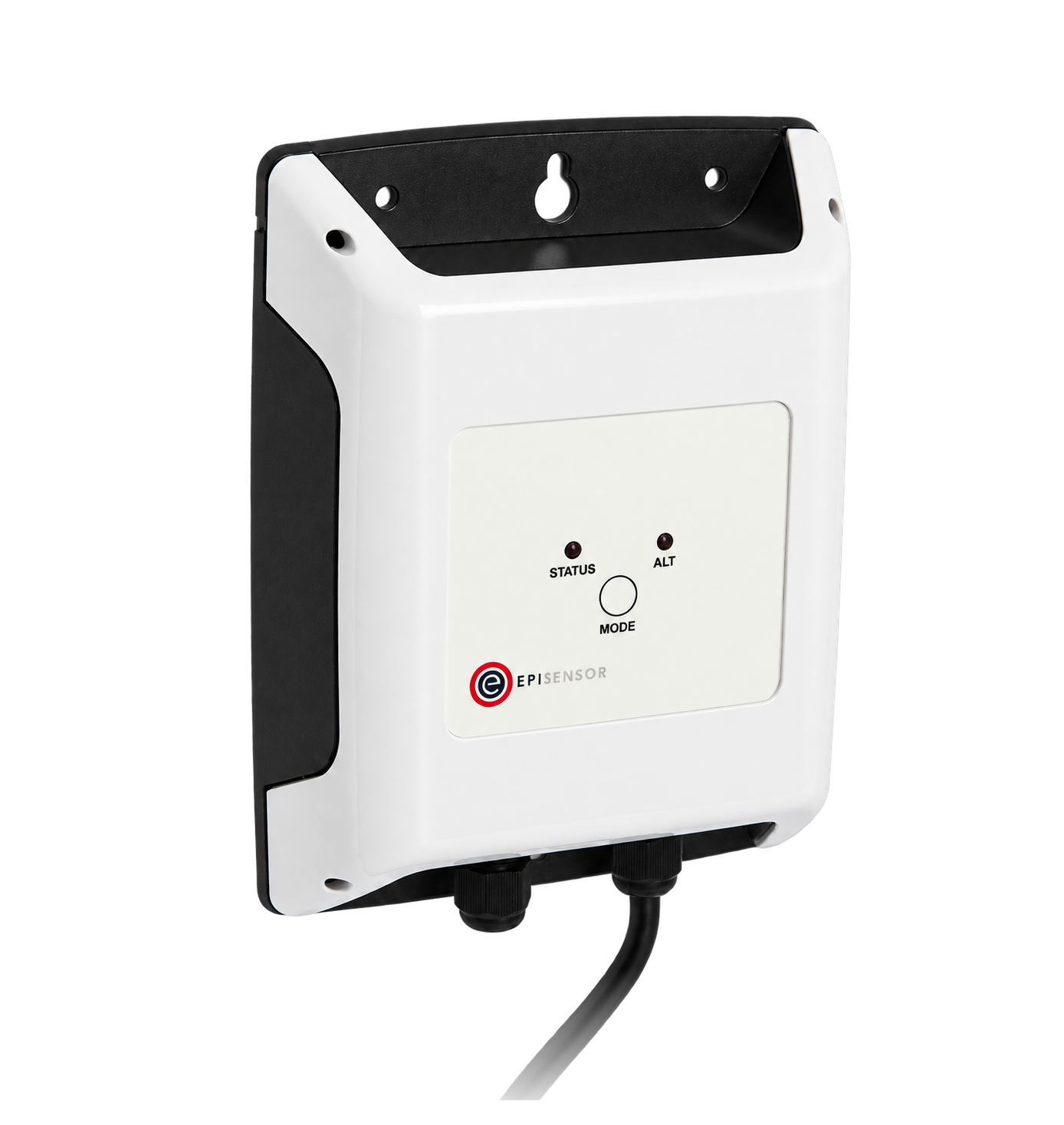
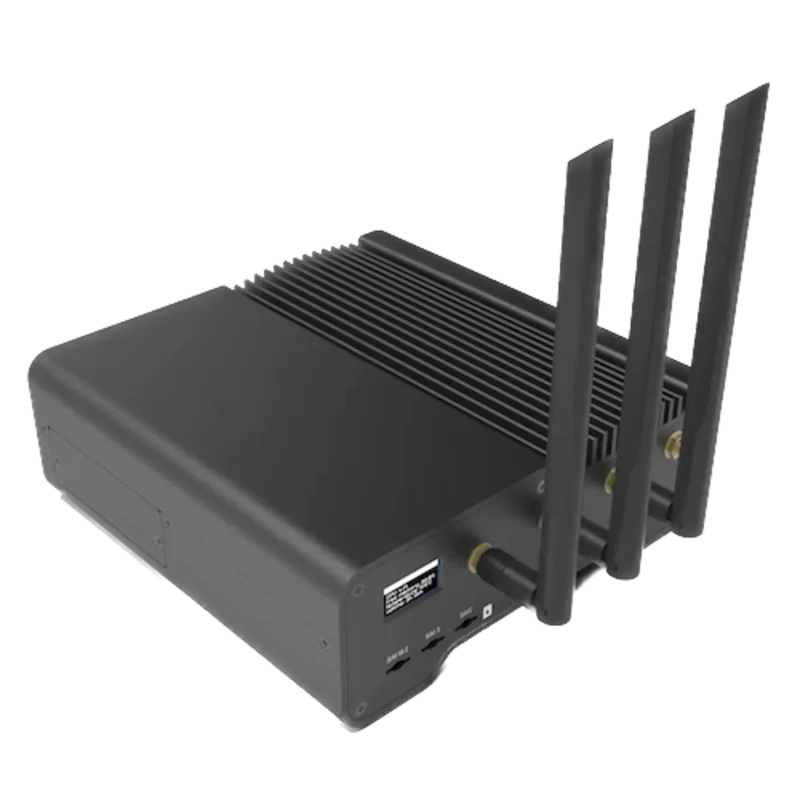
When the meter has the ETH/USB module in slot 1 or 2, the usual route for a substation or metering cubicle
- Modbus
- Edge
- Platforms
When the meter has an IRIG-B or ETH/USB module and a wireless link avoids running a data cable
- Modbus
- Wireless
- Edge
- Platforms
When the Gateway sits in the same metering cubicle
- Modbus
- Edge
- Platforms
Models
| Models | Interface | Route into Edge |
|---|---|---|
| EM720 | Class 0.2S energy meter with an EN 50160 power quality analyser, fault and event recording; model ID 72000 | Read the 1-second values and energy registers through a communication module. |
| EM720T | Adds transient recording capabilities to the EM720 feature set | Same read path. Transient waveforms are log files, outside this guide. |
| EM720U | IEEE 1159 power quality instead of EN 50160 | Same read path; the real-time registers are the same. |
| Modules: ETH/USB, IRIG-B, GSM/GPRS, auxiliary DC supply | ETH/USB: 10/100BaseT, mini-USB and an RS-232/485 COM3 port, slots 1 and 2 only. IRIG-B: time-code input and an RS-232/485 COM3 port, any slot. GSM/GPRS: cellular COM2 with Modbus TCP, slot 3 only. | ETH/USB gives the Modbus TCP route; either ETH/USB or IRIG-B gives COM3 for Modbus RTU. The cellular modem and the optical COM1 port are not used for a local Edge read. |
Specifications
The EM720 combines a class 0.2S four-quadrant energy and demand meter with time-of-use tariffs and transformer and line loss calculation, an EN 50160 or IEEE 1159 power quality recorder, a fault recorder for currents up to 50 A, waveform and data recorders, and a programmable controller with 32 setpoints. Three slots take hot-swap communication and auxiliary supply modules.24
- Models
- EM720 basic model with EN 50160 power quality; EM720T with the transient recorder; EM720U with IEEE 1159 power quality.2
- Inputs
- Three AC voltage inputs up to 480 V AC line-to-line direct, which also power the meter: low range 57.7 to 120 V AC L-N or high range 230 to 277 V AC L-N. Four isolated current inputs, 5 A nominal, up to 50 A fault overload current.2
- Accuracy
- Active energy class 0.2S to IEC 62053-22 and reactive energy class 0.5S to IEC 62053-23; voltage 0.05 % and current 0.06 % of reading. Power quality to IEC 61000-4-30 class A, harmonics to IEC 61000-4-7 and flicker to IEC 61000-4-15.24
- Ethernet (ETH/USB module)
- 10/100BaseT on RJ45, 3 kV AC isolation. Modbus TCP on port 502 and DNP3/TCP on port 20000, five simultaneous connections, plus IEC 61850 and a Telnet service port. Factory IP 192.168.0.203, mask 255.255.255.0, gateway 192.168.0.1.23
- COM3 (IRIG-B or ETH/USB module)
- Isolated RS-232/RS-485 port, 4 kV AC, up to 115.2 kbit/s, Modbus RTU, Modbus ASCII or DNP3. Factory settings: Modbus RTU, address 1, 19,200 bit/s, 8 data bits, no parity, 5 ms response delay.23
- Optical port
- Front IR port COM1 to IEC 62056-21, up to 19.2 kbit/s, factory set to the IEC 62056-21 protocol.23
- Power supply
- Three-phase supply from the measured voltage inputs, in the low or high range, with a rechargeable lithium backup; optional low DC auxiliary supply module.2
- Construction
- DIN 43857 mounting; reinforced plastic case with a sealing cover, UL94-V0; 303 × 177 × 144 mm; 3.95 kg.2
- Environment
- Full accuracy -25 to +60 °C; operating -40 to +70 °C; storage -45 to +85 °C; 0 to 95 % humidity, non-condensing.2
Interface
Documented measurements and integration boundaries for EM720.
- Addresses are decimal and go on the wire as printed: register 13952 is sent as 36 80. A client that wants Modicon numbers adds 40001, or 400001 above 9999, so 13952 becomes 413953. FC03 and FC04 return the same registers.
- 32-bit values are two registers, low-order word first, with the low word at an even address. The EM720 has no floating-point option: 32-bit values are UINT32 or INT32, with fractional values pre-multiplied by 10, 100 or 1000.
- Units follow the PT ratio. With a PT ratio of 1: volts in 0.1 V and power in 1 W, var or VA. With a PT ratio above 1: volts in 1 V and power in 1 kW, kvar or kVA. Phase currents in 0.01 A.
- 1-second phase voltages V1, V2 and V3 at 13952, 13954 and 13956: UINT32. They are line-to-neutral in 4LN3, 4LL3, 3LN3 and 3LL3 wiring and line-to-line otherwise. V12, V23 and V31 at 14012, 14014 and 14016.
- Currents I1, I2 and I3 at 13958, 13960 and 13962: UINT32 in 0.01 A. I4 at 14464 and neutral current at 14466, also 0.01 A. Frequency at 14468 (UINT32, 0.01 Hz). Internal temperature at 14482 (INT32, 0.1 °C).
- Per-phase kW at 13964, 13966 and 13968 and kvar at 13970, 13972 and 13974: INT32. kVA at 13976 to 13980: UINT32. Power factor L1 to L3 at 13982, 13984 and 13986: INT32, × 0.001.
- Totals: kW at 14336 and kvar at 14338 (INT32), kVA at 14340 (UINT32), power factor at 14342 (INT32, × 0.001), kW import at 14348 and kW export at 14350 (UINT32), average current at 14360.
- Energy: kWh import at 14720, kWh export at 14722, kWh net at 14724 (INT32), kvarh import at 14728, kvarh export at 14730, kVAh total at 14736, kVAh import at 14742 and kVAh export at 14744. UINT32, 0 to 999,999,999, in 0.1 kWh by default.
- With firmware 26.XX.28 and later, register 46258 sets 1 to 4 energy decimal places (0.1 to 0.0001 kWh) and register 46266 selects primary (0) or secondary (1) energy readings. Read both before scaling the energy points.
- Per-phase kWh import L1 to L3 at 14848, 14850 and 14852 and kWh export L1 to L3 at 14866, 14868 and 14870. kvarh Q1 to Q4 at 14756, 14758, 14760 and 14762.
- Voltage THD V1 to V3 at 13988, 13990 and 13992 and current THD I1 to I3 at 13994, 13996 and 13998: UINT32, 0.1 %, 3-second values.
- Identity: serial number at 46080 (UINT32), model ID at 46082 (72000), model name at 46084 to 46091 ("EM720") and firmware version at 46100 (2600 to 2699). Wiring mode at 46208, PT ratio at 46209 (× 0.1) and CT primary current at 46213.
- Setup, the authorisation register (44378), relay outputs, reset and clear registers and the assignable map (0 to 239) accept writes. Keep them out of a monitoring poll.
Assessment
EM720, EM720T and EM720U with firmware V26.xx, using the EM720 Modbus reference guide BG0457 Rev. A11 with installation manual BG0450 Rev. A6 and operation manual BG0451 Rev. A4. Needs an ETH/USB module, or an IRIG-B module for RS-485; the optical port is outside this guide. Site check: read the PT ratio, the energy decimal places at 46258 and the energy readings option at 46266, then compare the first reads with the display. IEC 61850, IEC 62056-21, DNP3 and the power quality, fault and waveform log files are outside this guide. Read-only monitoring: no writes to setup, password, relay or reset registers.
- InteroperabilitySupported with conditions
- SATEC documents Modbus TCP on port 502 and Modbus RTU or ASCII on COM3, the function codes and exception responses, decimal addresses with the Modicon offsets, data types, low-word-first word order and the unit table. Both Modbus routes need a plug-in module; the base meter has only an optical port.12
- AccuracyWell supported
- Class 0.2S active energy, IEC 61000-4-30 class A power quality, four current inputs, four-quadrant, per-phase and net energy. Units follow one documented PT-ratio rule, and the energy unit and primary or secondary option are readable registers.14
- SecuritySupported with conditions
- Three password levels protect setups, counters and logs, writes to setup and reset registers need the 8-digit password, and three failed logins in 5 minutes are written to the event log. Passwords ship preset to 9 and Modbus carries no encryption, so change them and keep the meter on a trusted metering network.13
- ReliabilitySupported with conditions
- The installation manual lists IEC 61000-4-2 to 4-12 immunity with levels, including 4 kV fast transients and surge on the measuring circuits. The meter powers itself from the measured voltages with a rechargeable lithium backup, logs to non-volatile memory rated for 20 years of data retention, and its clock backup is rated for 5 years. The guide documents exception codes. Treat failed reads as missing data.12
- RuggednessSupported with conditions
- Rated -40 to +70 °C operating with full accuracy from -25 to +60 °C, 0 to 95 % humidity, in a sealable UL94-V0 case for DIN 43857 mounting. The retained documents give no ingress rating.2
- ScalabilitySupported with conditions
- Modbus addresses 1 to 247 on COM3, any unit identifier over TCP, five simultaneous TCP connections and 120 user-assignable registers. One meter per connection point limits the count per site.13
- LifecycleSupported with conditions
- Firmware is stored in flash and can be upgraded through an RS-232/485, USB or Ethernet port, with the version and checksum readable from 46100. The reference guide carries a revision history from 2009 to August 2023. The warranty is 24 months from dispatch, capped at 36 months from production. No support period or end-of-sale date is stated.12
Setup
Read V1 voltage and kWh import on an 11 kV supply
EM720 Modbus reference guide BG0457 Rev. A11, section 3.4, lists the 1-second V1/V12 voltage at registers 13952 and 13953 and kWh import at 14720 and 14721 as UINT32, chapter 4 sets U1 to 1 V when the PT ratio is above 1 and U5 to 0.1 kWh by default, and section 2.6.2 sends 32-bit values low word first. This example is an 11 kV supply in 4LN3 wiring with 11,000/110 V PTs (PT ratio 100). Use the map as the starting point and compare the results with the display.
- Request
- 01 03 36 80 00 02 CA 6B: Modbus address 1, FC03, register 13952 (0x3680), two registers, RTU CRC. Over Modbus TCP the same function, address and length go to port 502 with any unit identifier. To check the energy unit, 01 03 B4 B2 00 01 03 DD reads the energy decimal places at register 46258.
- Address convention
- The guide's register numbers are the zero-based PDU addresses in decimal: send 13952, which is 0x3680. A client that numbers holding registers from one shows it as 413953. Do not send 13953 or 413953 as the address.
- Synthetic response
- 01 03 04 18 CF 00 00 CC AC: four data bytes, low word 18 CF first, then high word 00 00.
- Decode
- UINT32 with the low word first: 0 × 65536 + 0x18CF = 6351. With a PT ratio above 1, U1 is 1 V in primary units, so V1 is 6351 V line-to-neutral, 11 kV line-to-line. A client that takes the high word first reads 0x18CF0000 = 416,219,136.
- Energy read
- 01 03 39 80 00 02 C9 7F reads kWh import at 14720. The synthetic reply 01 03 04 61 4E 00 BC 84 69 carries low word 61 4E, then high word 00 BC: 0x00BC × 65536 + 0x614E = 12,345,678. At the default one decimal place that is 1,234,567.8 kWh.
- Acceptance
- Keep the points when V1 and kWh import agree with the display at the same time. If the voltage does not, check the PT ratio at 46209 and the wiring mode at 46208; if the energy is out by a power of ten or by the PT and CT ratios, check 46258 and 46266.
Acceptance: The response bytes are a synthetic decoder check, not a captured meter reply. Real replies must agree with the display before current, power and the other energy points are enabled.
-
Identify the meter and modules
Read the model from the nameplate: EM720, EM720T or EM720U. Check which modules sit in the three slots: ETH/USB for Ethernet, ETH/USB or IRIG-B for the COM3 serial port. Record the wiring mode, PT ratio and CT primary current from the basic setup.
-
Read the port settings
With the ETH/USB module, the Net menu shows the IP address, factory set to 192.168.0.203. COM3 is factory set to Modbus RTU, address 1, 19,200 bit/s and 8 data bits with no parity. Enter the same values in the Edge client and leave the meter's settings as they are.
-
Connect
Connect the ETH/USB module's RJ45 port to the metering network, or wire COM3 for RS-485 with the 485/232 terminal left open and terminate both ends of the bus. Agree access with the meter's owner: a utility revenue meter is often sealed.
-
Make the first reads
Read V1 at 13952 for two registers and decode it low word first, as in the worked read below. Read registers 46258 and 46266 for the energy decimal places and the primary or secondary option, then kWh import at 14720. Compare both with the display.
-
Add the points you need
Add currents, powers and the other energy counters, scaled by the PT ratio rule and the energy settings. Keep writes out of the polling configuration.
Common questions
- Does the EM720 need a module before Edge can read it?
- Yes. The base meter has only the front optical port, which SATEC sets to IEC 62056-21. Modbus TCP needs the ETH/USB module, and Modbus RTU over RS-485 needs the COM3 port on the ETH/USB or IRIG-B module.23
- Why does voltage read 6351 on one meter and 2300 on another?
- The unit follows the PT ratio. With no PTs (ratio 1) the EM720 sends 0.1 V, so 2300 is 230.0 V; with PTs it sends whole primary volts, so 6351 is 6351 V. Power follows the same rule, watts without PTs and kilowatts with them. Read the PT ratio at register 46209 and set the scale in Edge to match.1
- How do I scale the EM720 energy registers?
- By default the energy registers from 14720 count in 0.1 kWh. With firmware 26.XX.28 and later, register 46258 sets 1 to 4 decimal places and register 46266 chooses primary or secondary energy readings. Read both once and compare kWh import with the display.1
- Does the EM720 send floating-point values?
- No. The guide lists three formats: 16-bit scaled integers, 32-bit integers and 32-bit modulo-10000 energy counters. 32-bit values are signed or unsigned integers sent low word first.1
- Can Modbus writes change the meter's settings?
- Yes, with the password. The EM720 ships with all passwords preset to 9; a write to the setup or reset registers must follow the 8-digit password at the authorisation register 44378, or the meter answers with exception code 01. A revenue meter's settings belong to its owner, so a monitoring configuration should read with FC03 only.13
Related devices

Sources
- Power Quality and Revenue Meter EM720/EM720T Modbus communications protocol reference guide, BG0457 Rev. A11 (August 2023) (opens in a new tab) (PDF)
- EM720 Power Quality and Revenue Meter installation manual, BG0450 Rev. A6 (opens in a new tab) (PDF)
- EM720/EM720T Power Quality and Revenue Meter operation manual, BG0451 Rev. A4 (opens in a new tab) (PDF)
- EM720 high performance revenue meter, transient and fault recorder, power quality analyser brochure (opens in a new tab) (PDF)
Further reading
- ToolModbus register address translator
- ToolModbus data decoder
- GuideOperational, revenue and settlement metering
- GuideModbus TCP vs Modbus RTU
- GuideSATEC PM135: a SATEC panel meter with the same register layout
- ToolRS-485 termination and bias
- ManufacturerSATEC devices
- ProtocolModbus devices and register maps
- CategoryEnergy meters
Product names and trademarks belong to their owners. Publication does not imply endorsement or a commercial relationship.