Hager ECR380D
Three-phase energy meter
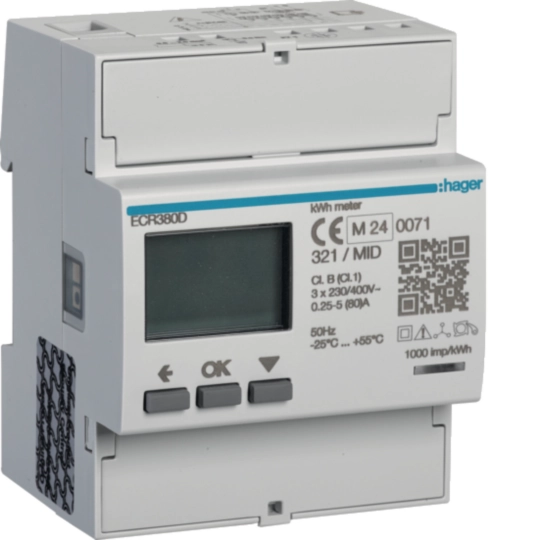
The ECR380D is a four-module, 3P+N kWh meter connected directly up to 80 A, with MID class B active energy and a screw-terminal RS-485 Modbus RTU port. Hager's Modbus table revision 1.14 lists it as a 3P_80 meter and gives every address in hexadecimal and decimal, with function 03 reads, integer data types and scaling such as V/100 and kW/100. Start with the single-register L1-N voltage read below, compare it with the display, then add current, power and energy.
Compatibility
Compatible with EpiSensor Edge over Modbus RTU
The ECR380D is compatible with EpiSensor Edge over its RS-485 Modbus RTU port, read through a ZMB-31 Modbus Interface or a Gateway serial port. Hager documents function 03 reads and publishes the ECR380D identity, instantaneous-measurement and energy registers with addresses, lengths, data types and scaling.
ECR380D (3P_80, magnitude summation), using Hager's Modbus Tables Summary revision 1.14 (October 2022) and user instructions 6LE005392B. Site check: compare the first voltage read with the display before adding points. Read-only monitoring: no tariff, partial-reset or serial-setting writes. Only the meter's own total active-energy register serves MID billing.
Connect it with
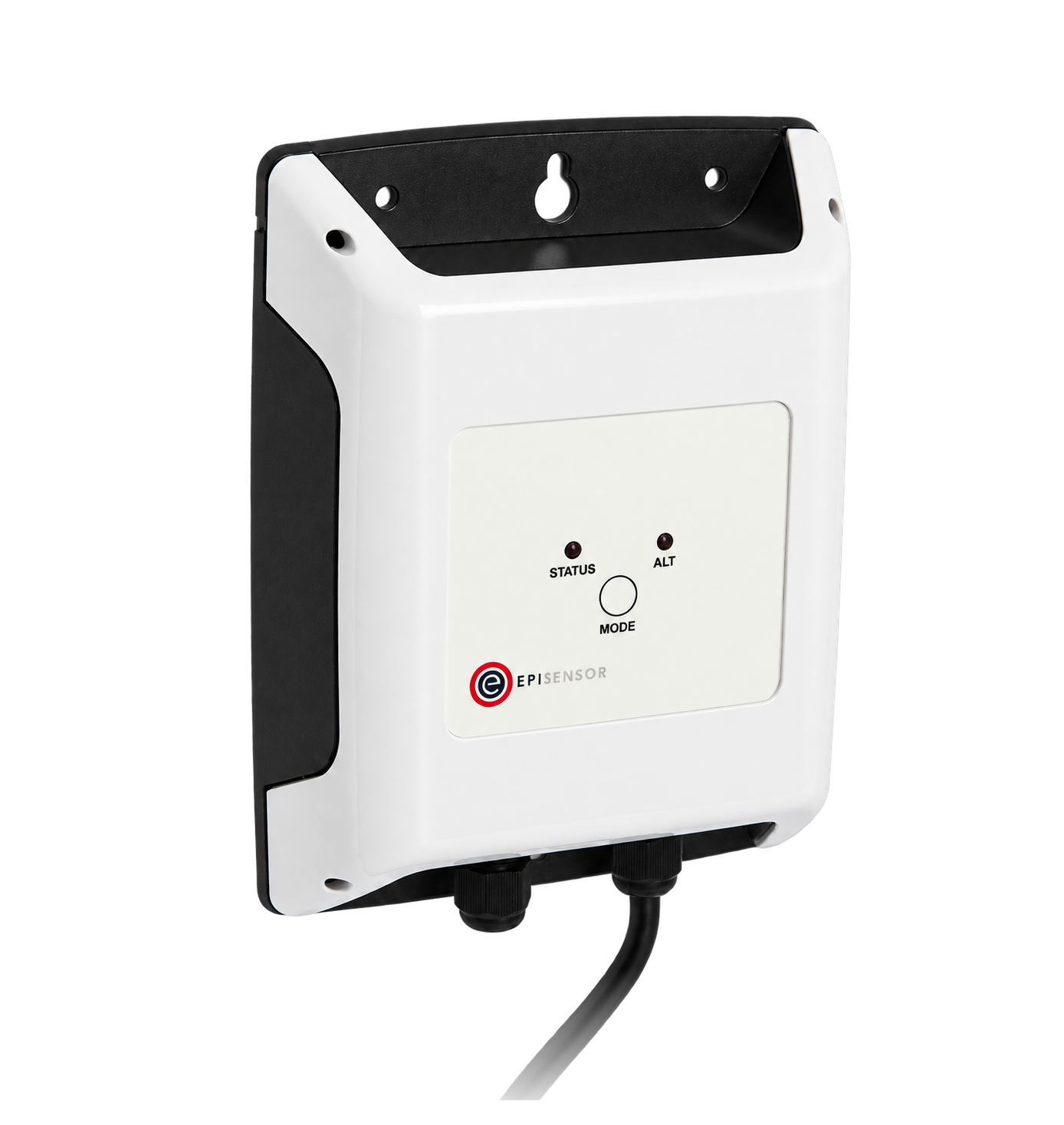
For a meter in a distribution board where a wireless link avoids running a data cable back to the Gateway
- Modbus
- Wireless
- Edge
- Platforms
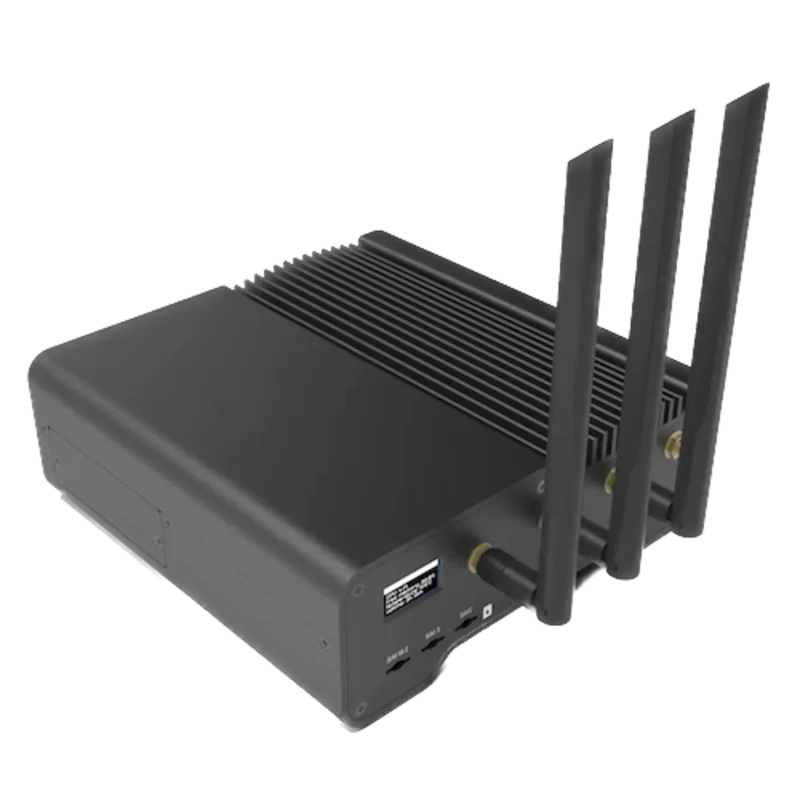
When the Gateway sits near the meter, or several meters share one wired RS-485 line
- Modbus
- Edge
- Platforms
Models
| Models | Interface | Route into Edge |
|---|---|---|
| ECR380D | 3P+N, direct connection to 80 A, MID; Modbus RTU on three screw terminals; product code register reads "ECR380D" | Read the 3P_80 column of the Modbus table with function 03 through a ZMB-31 or the Gateway serial port. |
| ECR381D and ECR382D | Same 3P_80 table. ECR381D is the Swiss market model without reactive energies on the display; ECR382D sums three-phase energy by vector (VDE-AR-N 4400) instead of by magnitude | Same read path, but confirm the product code register, because import and export totals differ when phases flow in opposite directions. |
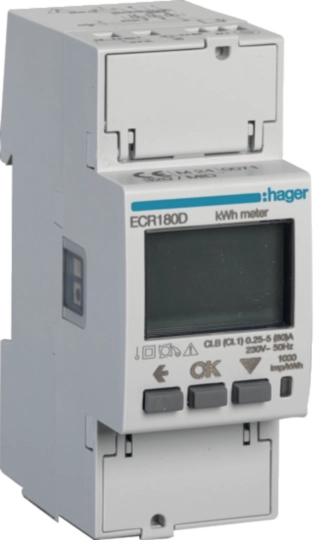
| ECA380D | Agardio version with the Modbus connection on RJ45 instead of screw terminals | The register table is the same; the wiring in this guide is not. |
| ECR300C | CT-connected 3P_CT meter for /1 A or /5 A transformers | Use the ECR300C guide: its ranges and secondary-side tables differ. |
Specifications
The ECR380D is a four-quadrant meter for three-phase four-wire networks, connected directly up to 80 A. It switches two tariffs from a 230 V input or up to eight over Modbus, and keeps energies and configuration in non-volatile flash.1
- Measurement system
- 3 × 230/400 V, three phases and four wires; direct connection1
- Current
- Reference 5 A, minimum 0.25 A, maximum 80 A, starting current 0.015 A1
- Voltage and frequency
- 92 to 276 V phase-neutral, 160 to 480 V phase-phase; 45 to 65 Hz, reference 50 Hz1
- Accuracy
- Active energy class B (EN 50470-3) and class 1 (IEC 62053-21); reactive energy class 2 (IEC 62053-23)1
- RS-485
- Modbus RTU on three wires (-, +, 0); internal 120 Ω terminating resistor; address 1 to 247; 1200 to 57,600 bit/s; parity none, even or odd; 1 or 2 stop bits1
- Tariffs and outputs
- T1 and T2 from a 230 V AC input, T1 to T8 over Modbus; front LED at 1000 imp/kWh1
- Mounting
- Four DIN modules on a 35 mm rail, 60 mm deep, 424 g1
- Environment
- -25 to +55 °C operating, -25 to +70 °C storage; IP51 front when installed, IP20 terminals; indoor, M1 and E2; up to 2,000 m1
Interface
Documented measurements and integration boundaries for ECR380D.
- Addresses are printed in hexadecimal and decimal; the decimal value is the zero-based PDU address (0xB000 is 45056). Read every point with function 03.
- Identity: vendor name at 0x1000 (4096) and product code at 0x1010 (4112), 16 registers each, ASCII with the first character in the high byte; software version at 0x1020 (4128) and serial number at 0x1064 (4196).
- Phase-to-neutral voltage L1, L2 and L3 at 0xB000, 0xB001 and 0xB002 (45056 to 45058); phase-to-phase at 0xB003 to 0xB005 (45059 to 45061). One register each, U16, V/100.
- Frequency at 0xB006 (45062): one register, U16, Hz/100.
- Current L1, L2, L3 and neutral at 0xB009, 0xB00B, 0xB00D and 0xB00F (45065 to 45071): two registers each, U32, mA.
- Total active power at 0xB011 (45073), S32, kW/100; total reactive power at 0xB013 (45075), S32, kvar/100; total apparent power at 0xB015 (45077), U32, kVA/100. Per-phase active power at 0xB019, 0xB01B and 0xB01D.
- Total power factor at 0xB017 (45079, IEC sign) and 0xB018 (45080, IEEE sign): S16, divide by 1000; +1000 when no power flows.
- Imported active energy Ea+ at 0xB060 (45152) and exported Ea- at 0xB064 (45156): U32, kWh. Reactive Er+ at 0xB062 and Er- at 0xB066, kvarh. Resettable partials P_Ea+ and P_Ea- at 0xB068 and 0xB06A.
- Ea+ and Ea- in Wh at 0xB06C and 0xB06E (45164, 45166) need firmware 1.2 or later; older firmware answers with an exception. They restart at zero after a U32 overflow.
- The table does not state the word order of two-register values. Read Ea+ once and keep the order that matches the display total.
- Values a model does not provide read as 0xFFFF, 0xFFFFFFFF, 0x7FFF or 0x7FFFFFFF. Otherwise, as Hager puts it, if the meter answers, the value is good.
- Writable registers: Set Tariff at 0xB0B4, partial-energy reset at 0xC020 and serial settings at 0xC040 and 0xC041. Keep them out of a monitoring client.
Assessment
ECR380D over Modbus RTU, using Hager's Modbus Tables Summary revision 1.14 and user instructions 6LE005392B, with display checks and no writes.
- InteroperabilitySupported with conditions
- The exact model, function 03, hexadecimal and decimal addresses, lengths, data types and scaling are published. The word order of two-register values is not stated and is set by comparison with the display.12
- AccuracySupported with conditions
- MID class B active energy, per-phase voltage, current and power, and separate import, export and reactive energies. The magnitude-summation rule shapes import and export totals on sites with mixed power flow.12
- SecurityLimited
- Modbus RTU has no authentication or encryption, and the table documents writes for tariff, partial-energy reset and serial settings. Keep the client read-only and the line physically protected.2
- ReliabilitySupported with conditions
- Unavailable values have fixed codes, energies and configuration are stored in non-volatile flash, and the display reports meter faults (ERROR N02, N03). Treat failed reads and unavailable codes as missing data.12
- RuggednessSupported with conditions
- Rated -25 to +55 °C, IP51 front and IP20 terminals, M1 and E2, indoor only, inside an IP51 enclosure.1
- ScalabilitySupported with conditions
- Addresses 1 to 247 on a terminated multi-drop line, subject to one Modbus master, unique addresses and a bounded poll plan.1
- LifecycleSupported with conditions
- Hager keeps a revisioned Modbus table with a change history that names the firmware revisions adding registers. Record the installed firmware with the point configuration.2
Setup
Read L1-N voltage from 0xB000
Hager's Modbus Tables Summary revision 1.14 lists V(L1-N) at hexadecimal 0xB000, decimal 45056, as one U16 register in V/100 for 3P_80 meters. Use it as the starting point and compare the result with the display.
- Request
- 01 03 B0 00 00 01 A2 CA: address 1, function 03, start 0xB000, one register, RTU CRC.
- Address convention
- Send 0xB000 as printed: it is the zero-based PDU address, decimal 45056. A client that numbers registers from one shows it as 45057; do not add 40001.
- Synthetic response
- 01 03 02 59 DC 83 8D: two data bytes, 59 DC.
- Decode
- 0x59DC is 23004 as an unsigned 16-bit integer; divide by 100 for 230.04 V.
- Acceptance
- Keep the point when it agrees with L1-N voltage on the display. If the meter answers with an exception, check the address and the meter's firmware before adding more points.
Acceptance: The response bytes are a synthetic decoder check, not a captured meter reply. A real reply must agree with the display before current, power and energy points are enabled.
-
Identify the meter
Read ECR380D from the front and note the software version and checksum the display shows at power-up. Over Modbus, the product code at 0x1010 should read ECR380D; ECR381D and ECR382D share the table but count energy differently.
-
Read the serial settings without changing them
Open the configuration menu on the display and note the Modbus address, baud rate, parity and stop bits. Enter the same values in the Edge serial client or the ZMB-31.
-
Wire the RS-485 line
Connect -, + and the 0 V reference, ideally with Hager's HTG485H cable, give each meter its own address and terminate both physical ends of the line with 120 Ω.
-
Make one voltage read
Send function 03 to 0xB000 (45056) for one register and divide by 100, as in the worked read below. Compare the result with L1-N voltage on the display.
-
Add current, power and energy
Add the U32 and S32 points, check the word order against the display energy total, and keep import, export and partial energies as separate series. Leave tariff, reset and serial writes out of the configuration.
Common questions
- Can Edge read the Hager ECR380D over Modbus?
- Yes. Wire the RS-485 port to a ZMB-31 Modbus Interface or a Gateway serial port, match the serial settings and read the 3P_80 registers with function 03.12
- Is 45056 a 4xxxx register number?
- No. 45056 is the decimal form of the hexadecimal PDU address 0xB000. Send it as it stands; a client that expects 40001-style references needs its own conversion, not 40001 added to 45056.2
- Does reading the meter through Edge make the data MID billing data?
- No. Hager limits MID certification to active energy and states that only the meter's total active-energy register can be used for billing. Edge copies and interval series are monitoring data.1
- Why do import and export both rise when one phase exports?
- The ECR380D sums three-phase energy by magnitude, as WELMEC recommends, so each phase adds to import or export on its own. The ECR382D nets the phases first. Read the product code to know which you have.2
- Can the monitoring client reset partial energy or change the tariff?
- It could, because 0xC020 and 0xB0B4 accept function 06 writes, which is why this guide keeps every write out of the Edge configuration.2
Related devices
Sources
- ECR380D user instructions 6LE005392B (German and English) (opens in a new tab) (PDF)
- Modbus Tables Summary revision 1.14 (opens in a new tab) (PDF)
Further reading
Product names and trademarks belong to their owners. Publication does not imply endorsement or a commercial relationship.