Lutron Vive Starter and Standard
Lighting controller
An Ethernet port on an HJS-0 or HJS-1 hub does not establish that BACnet is enabled. Ask for the installed licence and hub order code before pricing collection. An existing Starter system may need one upgrade for BACnet and a different upgrade for additional wireless devices.

Compatibility
Compatible with Edge over BACnet/IP
Vive routes its virtual area devices to the building BACnet/IP network. Edge reads the points exposed for the commissioned area.
Confirm HJS-UPDATE is active and identify the virtual device for the selected area.
Connect it with
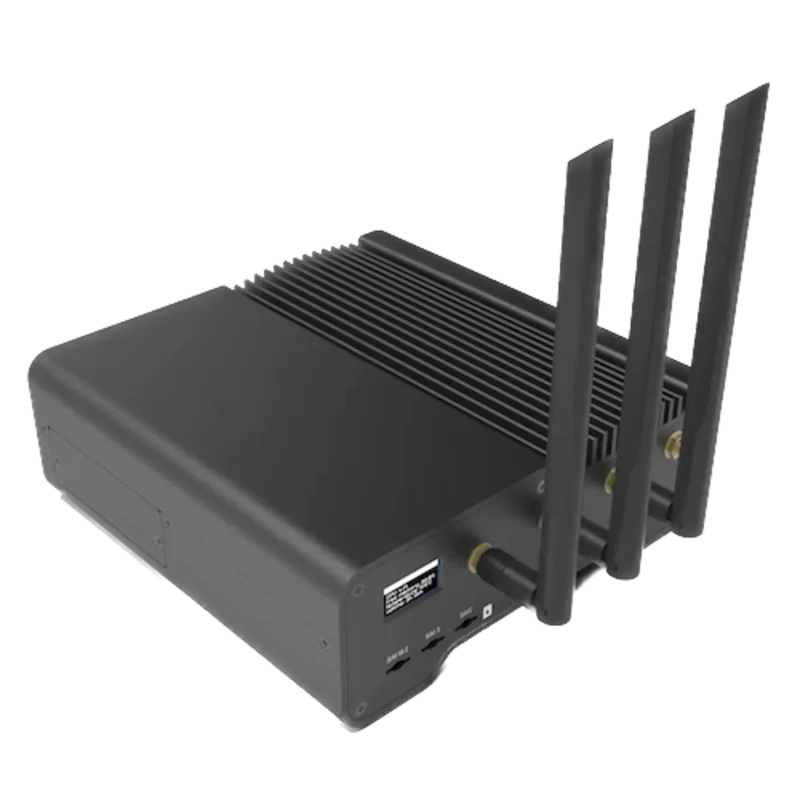
For a commissioned area on a BACnet-enabled hub
- BACnet
- Edge
- Platforms
Models
| Models | Interface | Route into Edge |
|---|---|---|
| HJS-0-FM | Flush-mount Starter hub, limited to 75 devices as supplied. | HJS-UPDATE adds BACnet. HJS-DEVICES separately expands Starter capacity to 700 devices. |
| HJS-1-FM and HJS-1-SM | Standard hub with flush- or surface-mount adapter. | Include HJS-UPDATE when BACnet access is required and the licence is absent. |
| HJS regional model codes | Lutron specifies 433.05 to 434.79 MHz for the J frequency band. | For a UK or US retrofit, copy the complete regional code from the installed hub before requesting a licence or replacement. |
Interface
Documented measurements and integration boundaries for Vive Starter and Standard.
- Multi-state Value 8 describes occupancy for the area. The documented values are 1 for unoccupied, 2 for occupied and 4 for unknown.
- An area is occupied when any associated sensor reports occupied. An unknown state can occur before all sensors have reported; retain it as a separate state in the trend.
Assessment
Vive Starter and Standard hubs with the HJS-UPDATE BACnet licence enabled.
- InteroperabilityWell supported
- Lutron documents BACnet/IP area devices and their object definitions.2
- AccuracySupported with conditions
- Area power can be calculated or measured. Occupancy reports a combined area state.2
- SecurityNot yet assessed
- Confirm access to the lighting network with the building operator.1
- ReliabilityNot yet assessed
- The occupancy point has a distinct unknown state.2
- RuggednessNot yet assessed
- Select a mounting adapter for the installation surface.1
- ScalabilitySupported with conditions
- Count wireless devices separately from the areas exposed over BACnet.1
- LifecycleSupported with conditions
- The ordering guide distinguishes BACnet eligibility, capacity and mounting options.1
Setup
-
Record the installed model, software and area Device instance.
Use the version 1.07 PICS as the reference for this check.
-
Read Present_Value on MSV 8 for one occupied area and compare it with that area’s status in Vive.
An unknown reading must stay distinct from an empty room.
-
Repeat on a second area and record its own Device instance before applying the point selection to other floors.
-
For an occupancy report, count time in state 4 separately.
For example, a 60-minute observation with 10 minutes unknown and 20 minutes occupied gives 20 occupied minutes across 50 minutes of known status. Include both coverage and occupancy in the report.
Related devices
Sources
- Vive hub specification 369902, ordering codes and licences (opens in a new tab) (PDF)
- Vive BACnet object definitions for version 1.07 (opens in a new tab) (PDF)
Further reading
Product names and trademarks belong to their owners. Publication does not imply endorsement or a commercial relationship.