Lovato DMG800 and DMG900
Power and energy meter
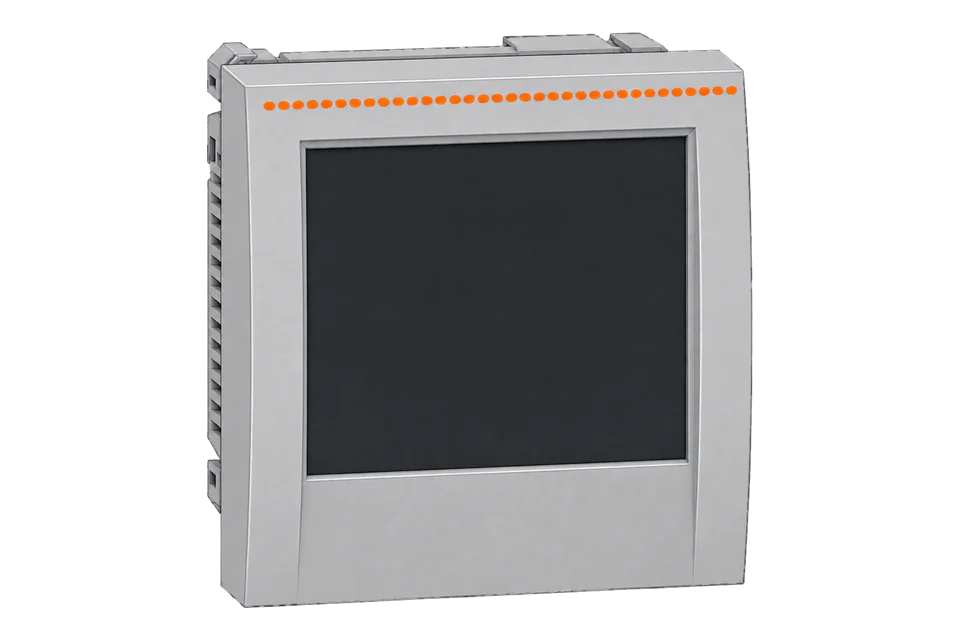
The DMG800 is Lovato's expandable 96 x 96 mm multimeter and the DMG900 its power analyser, with a touch screen, a measured neutral and harmonics to the 63rd order. Neither has a communication port of its own: both take up to two EXP communication modules, an EXP1012 for isolated RS-485 or an EXP1013 for Ethernet, and answer Modbus RTU, ASCII or TCP on them. The DMG900T is the DIN-rail transducer version with a built-in RS-485 port. All three share columns in Lovato's DMG protocol document I317IGB02_22, where every address is sent one less than printed, 32-bit values arrive high word first and the two-register energy counters from 1A20H are the ones Edge reads.
Compatibility
Compatible with EpiSensor Edge over Modbus RTU or Modbus TCP
The DMG800, DMG900 and DMG900T are compatible with EpiSensor Edge over Modbus RTU on an EXP1012 RS-485 module (or the DMG900T's built-in RS-485 port), read through a ZMB-31 Modbus Interface or a Gateway serial port, and over Modbus TCP on an EXP1013 Ethernet module. Lovato publishes the register table with addresses, formats, units and model columns for read functions 03 and 04.
DMG800, DMG900 and DMG900T, read with the DMG800 and DMG900 columns of protocol document I317IGB02_22 and manuals I272IGBFE02_17 and I273IGB02_17. A DMG800 or DMG900 needs an EXP1012 or EXP1013 module before it can be read; EXP1011 (RS-232), EXP1010 (USB) and EXP1014 (Profibus DP) are outside this guide. Site check: read frequency at table address 0032H and compare it with the display. Read-only monitoring: no writes to setup or command registers.
Connect it with
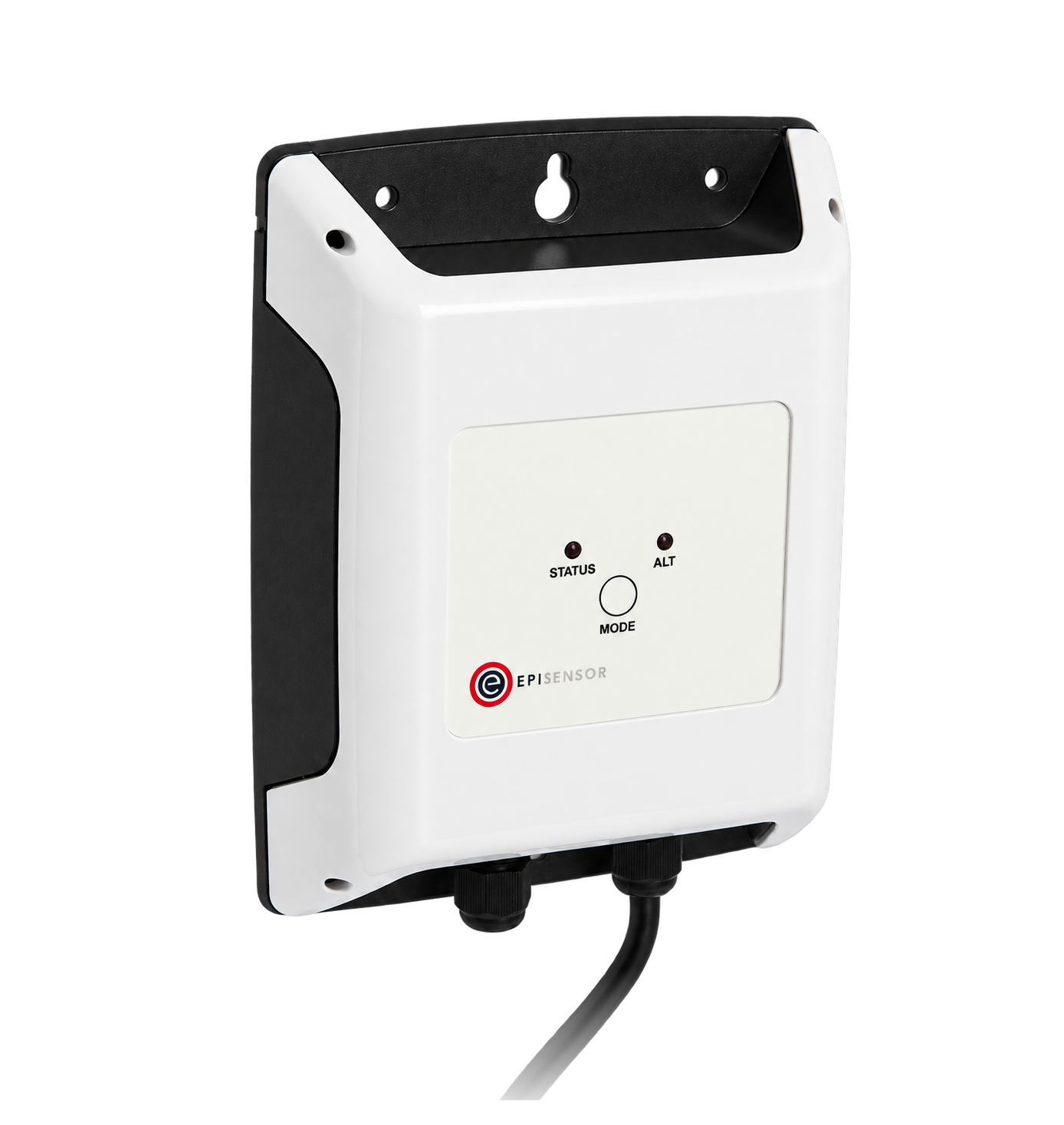
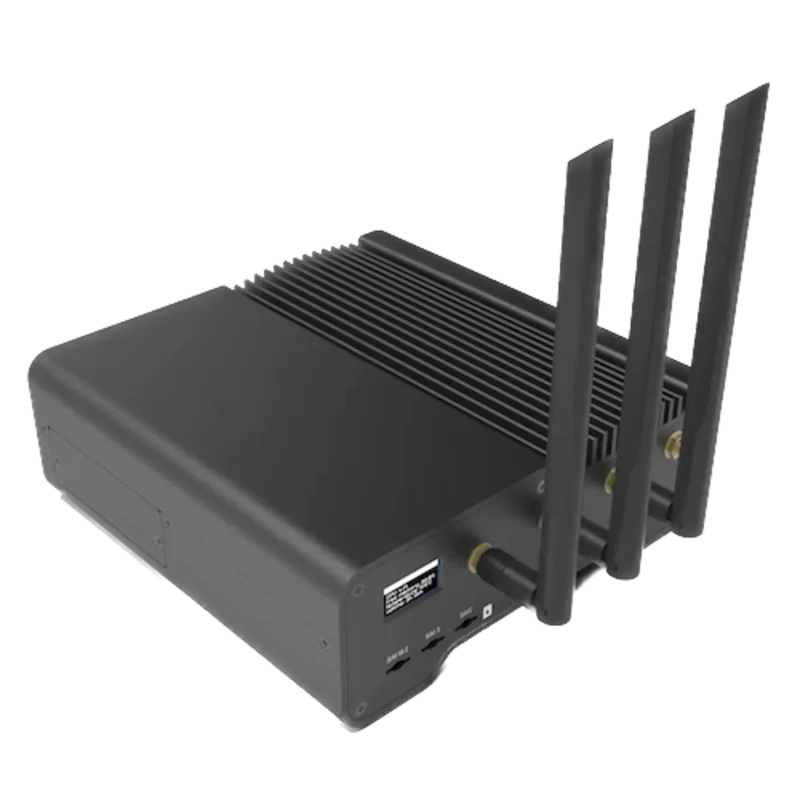
For a panel-door meter where a wireless link avoids running a data cable back to the Gateway
- Modbus
- Wireless
- Edge
- Platforms
When the Gateway sits near the meter, or several DMG meters share one wired RS-485 bus
- Modbus
- Edge
- Platforms
When the meter carries an EXP1013 Ethernet module
- Modbus
- Edge
- Platforms
Models
| Models | Interface | Route into Edge |
|---|---|---|
| DMG800 | 96 x 96 mm flush-mount multimeter with graphic LCD and four keys; no built-in communication port; up to four EXP modules, of which at most two are communication modules | Fit an EXP1012 for Modbus RTU or an EXP1013 for Modbus TCP and read the DMG800 column. Harmonics to the 31st order. |
| DMG900 | 96 x 96 mm power analyser with touch screen, a fourth voltage channel (neutral to earth) and a fourth current input for the neutral; no built-in communication port; same EXP expansion bus | Fit an EXP1012 or EXP1013 and read the DMG900 column, which adds neutral-earth voltage, measured neutral current, cos phi per phase and harmonics to the 63rd order. |
| DMG900T | DIN-rail transducer version of the DMG900 with no display; RS-232, RS-485 or remote display port chosen with two DIP switches, one at a time | Select RS-485 (SW1 ON, SW2 OFF) and read the DMG900 column over Modbus RTU, or fit an EXP1013 for Modbus TCP. |
| DMG800 D048 and DMG900 D048 versions | Same meters with a 12 to 48 VDC auxiliary supply | Same Modbus route and register columns as the standard versions. |
| DMG110, DMG210, DMG300, DMG600 series and DMG700 | Own columns in the same protocol document | Use their own column and manual; do not reuse DMG800 or DMG900 model-specific rows. |
Specifications
The DMG800 and DMG900 suit a switchboard door where a local display and more than 300 (DMG800) or 500 (DMG900) readings are wanted. Both are three-phase meters for single-, two- and three-phase systems with or without neutral, read through external CTs, and both are expanded at the rear with EXP modules for communication, I/O, analog signals and data memory.23
- Order codes
- DMG800 (EAN 8013975180549) and DMG900 (EAN 8013975180563); DMG900T transducer; D048 versions for a 12 to 48 VDC supply.367
- Communication
- No built-in port on the DMG800 or DMG900. Up to two communication modules (COM1 and COM2): EXP1012 isolated RS-485 or EXP1013 isolated 10/100 Mbit/s Ethernet with TCP/IP. The DMG900T has a built-in RS-485 port.2345
- Modbus settings (M07)
- Node address 01 to 255 (default 01); 1200 to 115200 bit/s (default 9600); 8 bits with no, odd or even parity, or 7 bits for ASCII; one or two stop bits; Modbus RTU (default), ASCII or TCP; IP port 0 to 9999 (default 1001).23
- Voltage inputs
- 690 V L-L (400 V L-N) maximum rated; measuring range 20 to 830 V L-L and 10 to 480 V L-N. The DMG900 adds a neutral-to-earth channel, 1 to 480 V.23
- Current inputs
- External CTs with 1 A or 5 A secondary. On the 5 A scale the DMG800 measures 0.010 to 6 A and the DMG900 0.010 to 10 A. The DMG900 has a fourth CT input for the neutral.23
- Accuracy
- Voltage ±0.2% and current ±0.2% ±0.5 digit within the stated ranges; active energy class 0.5S (IEC/EN 62053-22), reactive energy class 2 (IEC/EN 62053-23).23
- Auxiliary supply
- 100 to 440 VAC or 110 to 250 VDC, 3.9 VA or 3.4 W maximum; D048 versions 12 to 48 VDC.23
Interface
Documented measurements and integration boundaries for DMG800 and DMG900.
- Addresses are the table addresses printed by Lovato in hex. Send each one minus one, as Lovato's own example does (L2 active power at 0016H is requested as 00 15), with function 03 or 04 and at most 80 registers per request.
- Two-register values are 32-bit with the high word first: Lovato's example reply 00 01 FB 00 for L2 active power is 129792, or 1297.92 W at W/100.
- Phase voltages L1, L2 and L3 at 0002H, 0004H and 0006H and line voltages L1-L2, L2-L3 and L3-L1 at 000EH, 0010H and 0012H: unsigned 32-bit, V/100.
- Phase currents at 0008H, 000AH and 000CH and neutral current at 0048H: unsigned 32-bit, A/10000. On the DMG900 the measured neutral current from the fourth CT is at 006CH and the neutral-earth voltage at 006AH (V/100).
- Phase active power at 0014H, 0016H and 0018H and total (equivalent) active power at 003AH: signed 32-bit, W/100. Phase reactive power from 001AH and total at 003CH in var/100 (signed); phase apparent power from 0020H and total at 003EH in VA/100 (unsigned).
- Power scale: when the CT and VT ratios allow more than 5 MW per phase, every power reading switches to 1/10 W. Address 2F70H returns 0000h while the normal 1/100 W scale is in use; it is listed from software revision 09 on the DMG800 and 06 on the DMG900.
- Phase power factor at 0026H, 0028H and 002AH and total power factor at 0040H: signed 32-bit, divide by 10000. The DMG900 also gives cos phi per phase at 002CH, 002EH and 0030H.
- Frequency at 0032H: unsigned 32-bit, Hz/1000. Voltage and current unbalance at 0042H to 0046H and THD of voltage at 0054H to 0058H and current at 005AH to 005EH, in %/100.
- Energy Edge reads: total imported active energy at 1A20H, exported at 1A22H, imported reactive at 1A24H, exported reactive at 1A26H and apparent at 1A28H, with partial counters from 1A2AH to 1A32H. Two registers each, unsigned 32-bit, kWh/100 (kvarh/100 or kVAh/100). Lovato states that they roll over to 0 after 19 999 999.99 kWh.
- The four-register energy counters at 1B20H to 1B44H and the tariff counters from 1B48H (four tariffs on the DMG800, eight on the DMG900) are unsigned 64-bit values, which Edge's Modbus client does not read. Use the 1A20H counters.
- Maximum, minimum, average and maximum demand copies of the instantaneous readings start at 0400H, 0600H, 0800H and 0A00H. Total hour meter at 1E00H and partial hour meter at 1E02H: unsigned 32-bit, seconds.
- Commands at 2FF0H and 2F01H (function 06) reset energy, peaks and alarms or reboot the meter, and setup parameters sit above 1000H. Keep every write out of a monitoring poll.
Assessment
DMG800, DMG900 and DMG900T, read with the DMG800 and DMG900 columns of protocol document I317IGB02_22 and manuals I272IGBFE02_17 and I273IGB02_17. A DMG800 or DMG900 needs an EXP1012 or EXP1013 module before it can be read; EXP1011 (RS-232), EXP1010 (USB) and EXP1014 (Profibus DP) are outside this guide. Site check: read frequency at table address 0032H and compare it with the display. Read-only monitoring: no writes to setup or command registers.
- InteroperabilitySupported with conditions
- Lovato documents Modbus RTU, ASCII and TCP, read functions 03 and 04, addresses, formats, units and a column per model. The meters need an EXP communication module, and some rows carry software revision markers, so each point needs a display check.1245
- AccuracyWell supported
- Voltage and current ±0.2% and class 0.5S active energy are stated, with 32-bit energy counters Edge can read. System accuracy still depends on the CTs and their ratio setting.123
- SecurityNot yet assessed
- The manuals describe user and advanced passwords for the setup and command menus (off from the factory) and a sealable DIP switch that locks settings. The protocol document defines write functions 06 and 16 for setup and command registers.12
- ReliabilitySupported with conditions
- The manuals give supply ranges, at least 50 ms immunity to supply micro-breaks on the AC/DC versions, and peak and maximum demand values kept through a loss of auxiliary power. The protocol defines exception codes for bad addresses and oversized requests; treat failed reads as missing data.123
- RuggednessSupported with conditions
- IP65 at the front, IP20 at the terminals, -20 to +60 °C operation and shock and vibration figures are documented for panel mounting; the DMG900T is IP20 on a DIN rail.23
Setup
First read: frequency, then the 32-bit energy counter
This uses the DMG800 and DMG900 columns of Lovato protocol document I317IGB02_22 (07/02/2022). Frequency is listed at table address 0032H as an unsigned 32-bit value in Hz/1000, and total imported active energy at 1A20H as an unsigned 32-bit value in kWh/100.
- Function
- FC04, read input registers (the table also allows FC03)
- Address
- Table 0032H (50 decimal). Send 0x0031 (49, zero-based). A client with one-based register numbers enters 50.
- Request
- 01 04 00 31 00 02 20 04: node 1, FC04, address 0x0031, two registers, RTU CRC. Over Modbus TCP send the same function, address and length to port 1001 unless P07.n.08 was changed.
- Synthetic response
- 01 04 04 00 00 C3 50 AB 48: four data bytes, high word 00 00 first, then C3 50. A synthetic decoder check, not a captured meter reply.
- Decode
- Unsigned 32-bit, high word first: 0x0000C350 = 50000; 50000 ÷ 1000 = 50.000 Hz.
- Energy read
- 01 04 1A 1F 00 02 47 15 reads table 1A20H (send 0x1A1F). A reply of 01 04 04 00 BC 61 4E 93 C4 decodes to 0x00BC614E = 12345678, so 123456.78 kWh at kWh/100.
- Acceptance
- Both values agree with the frequency and energy pages on the display. 5.000 Hz or 500.00 Hz means the wrong address offset or model row.
Acceptance: Keep the points when they agree with the display. If they do not, check the address offset, the node address, the COM channel the module occupies and the word order. Record the protocol document revision and the meter's software revision with the configuration.
-
Identify the meter and its modules
Open the expansion modules page on the display and note which EXP modules are fitted and which COM channel each one is. A DMG800 or DMG900 with no EXP1012 or EXP1013 cannot be read by Edge. If your tool supports function 17 (Report slave ID), type B4h is a DMG800 and BEh a DMG900; record the software revision byte that follows.
-
Check CT, VT and wiring settings
Compare menu M01 with the installation: CT primary and secondary (1 or 5 A), VT use and ratio, and the wiring type in P01.07. Run the wiring test (command C.16) on a loaded circuit to catch phase sequence and CT polarity errors before readings are collected.
-
Set the communication channel
In menu M07, open the COMn section for the module you will use. For RS-485 leave the protocol on Modbus RTU and copy the node address, speed, data format and stop bits into Edge or the ZMB-31. For Ethernet choose Modbus TCP, set the IP address, subnet mask and gateway, keep the server role and note the IP port (1001 from the factory).
-
Wire the RS-485 line
Connect A, B and SG on the EXP1012 (or the DMG900T RS485 terminals) as a single daisy chain of shielded twisted pair, and follow Lovato's RS-485 connection diagram for the TR terminal. Plan any line longer than 1200 m, or with more than 31 meters, with repeaters as that diagram shows.
-
Start with the frequency read
Read frequency with the example below and compare it with the display. Then add voltages, currents, power and the 1A20H energy counters, checking each new point against the matching display page.
Common questions
- Does a DMG800 have a Modbus port?
- Not on its own. The DMG800 and DMG900 talk Modbus only through EXP communication modules plugged into the rear: an EXP1012 for isolated RS-485 or an EXP1013 for Ethernet, with at most two communication modules per meter. The DMG900T transducer is the exception, with a built-in RS-485 port chosen by DIP switches.123
- Why send 0x0031 when the table says 0032H?
- Lovato's protocol document says the address in the query must be one less than the address in the table, and its own example reads L2 active power, listed at 0016H, with address bytes 00 15. A client that asks for one-based register numbers takes the table value; one that sends the raw address takes the table value minus one.1
- Which energy registers should Edge read?
- Use the two-register counters from 1A20H: unsigned 32-bit values in kWh/100 that roll over after 19 999 999.99 kWh. The four-register counters from 1B20H are 64-bit, which Edge's Modbus client does not read.1
Related devices

Sources
- DMG series Modbus communication protocol I317IGB02_22 (07/02/2022), tables 2 and 3 (opens in a new tab) (PDF)
- Digital multimeter DMG800 instructions manual I272IGBFE02_17 (English section) (opens in a new tab) (PDF)
- Digital power analyzer DMG900 and power transducer DMG900T instructions manual I273IGB02_17 (English section) (opens in a new tab) (PDF)
- Expansion module with opto-isolated RS485 interface EXP1012, EXP1012T instructions I295IGBFE09_18 (opens in a new tab) (PDF)
- Expansion module with opto-isolated Ethernet interface EXP1013, EXP1013T instructions I296IGBFE09_20 (opens in a new tab) (PDF)
- DMG800 product page: order code, EAN, technical specifications and catalogue status (opens in a new tab)
- DMG900 product page: order code, EAN, technical specifications and catalogue status (opens in a new tab)
Further reading
Product names and trademarks belong to their owners. Publication does not imply endorsement or a commercial relationship.