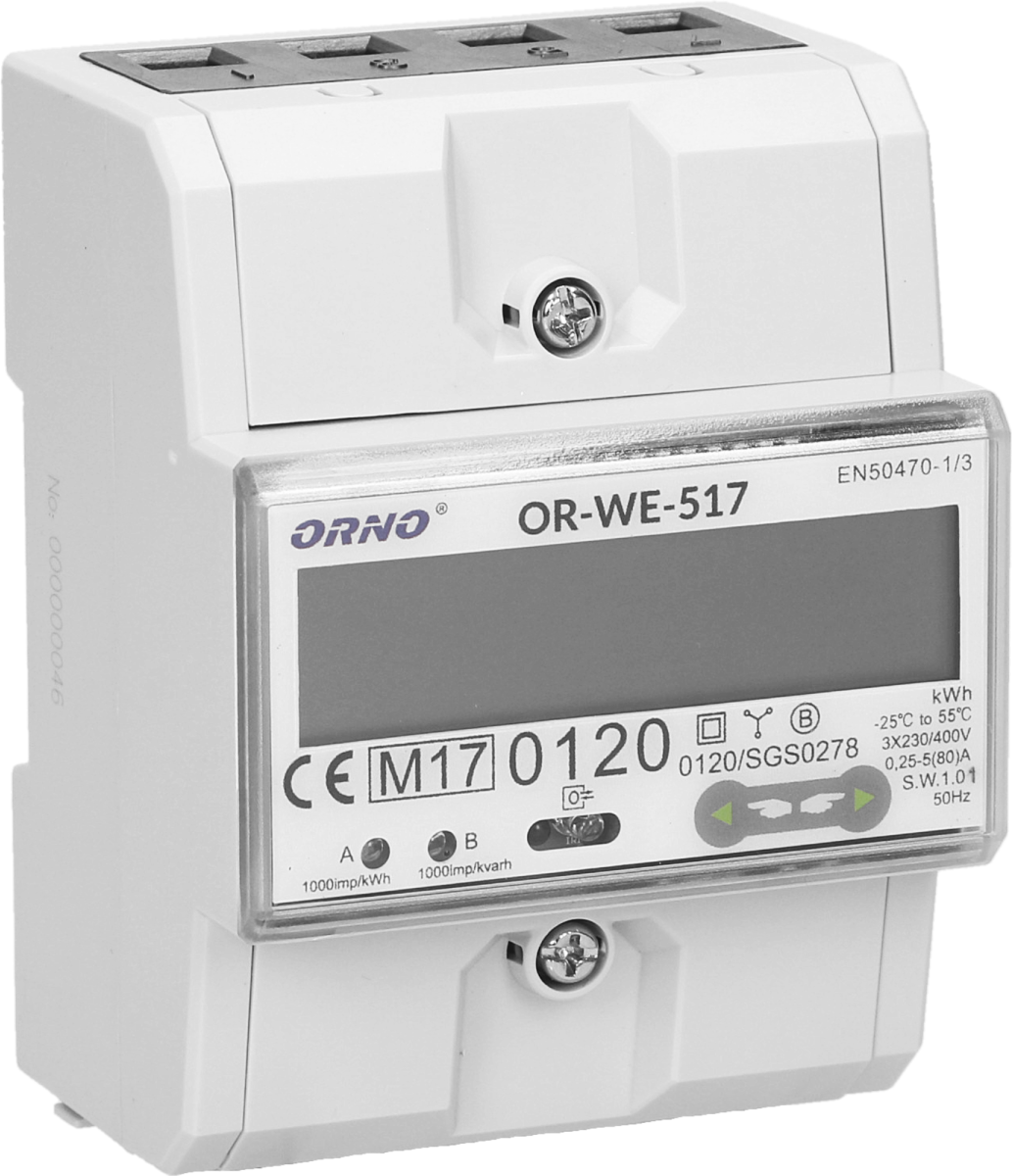
ORNO OR-WE-517
Power and energy meter
The OR-WE-517 is ORNO's multi-tariff, three-phase, four-wire kWh meter for direct connection up to 80 A, with an RS-485 Modbus RTU port on terminals 21 (A) and 20 (B) and an infrared port. ORNO's register list gives every address in hexadecimal for function 03 and every measurement as a four-byte float in V, A, kW, kvar, kVA or kWh, with import, export and four tariffs counted separately.
Compatibility
Compatible with EpiSensor Edge over Modbus RTU
ORNO documents RS-485 Modbus RTU for the OR-WE-517 and publishes a register list with function codes, hexadecimal addresses, lengths, Float32 data and units. The meter is compatible with EpiSensor Edge over Modbus RTU, through a ZMB-31 Modbus Interface or the Gateway's serial port.
ORNO OR-WE-517 (EAN 5902560322422), using ORNO's OR-WE-517 register list and the 07/2023 user manual as the starting point. The list does not name a word order, so compare the first read with the meter display. The OR-WE-516 and other OR-WE meters are outside this guide. Read-only monitoring: no ID, baud rate, tariff, clock or combined-code writes.
Connect it with
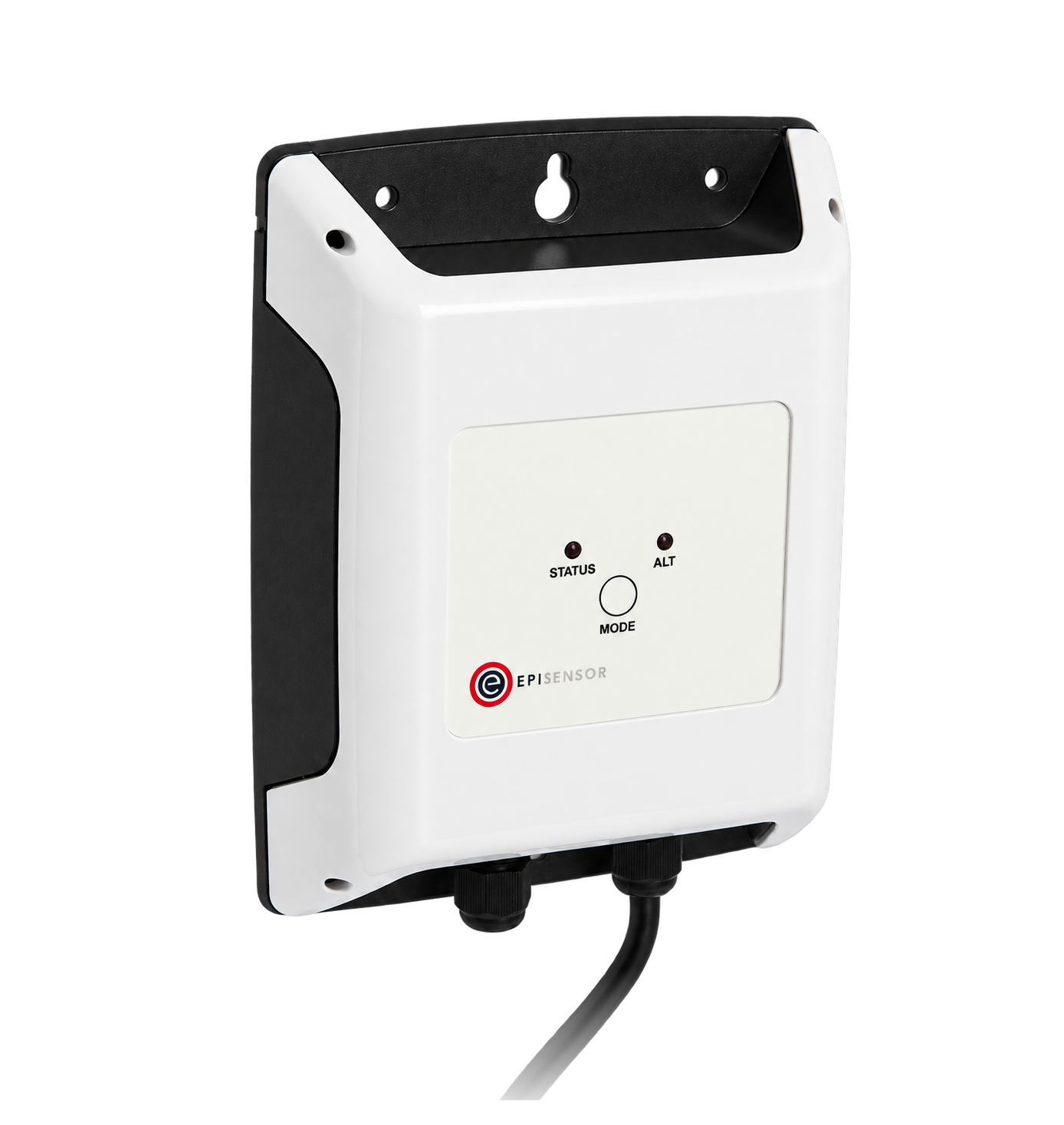
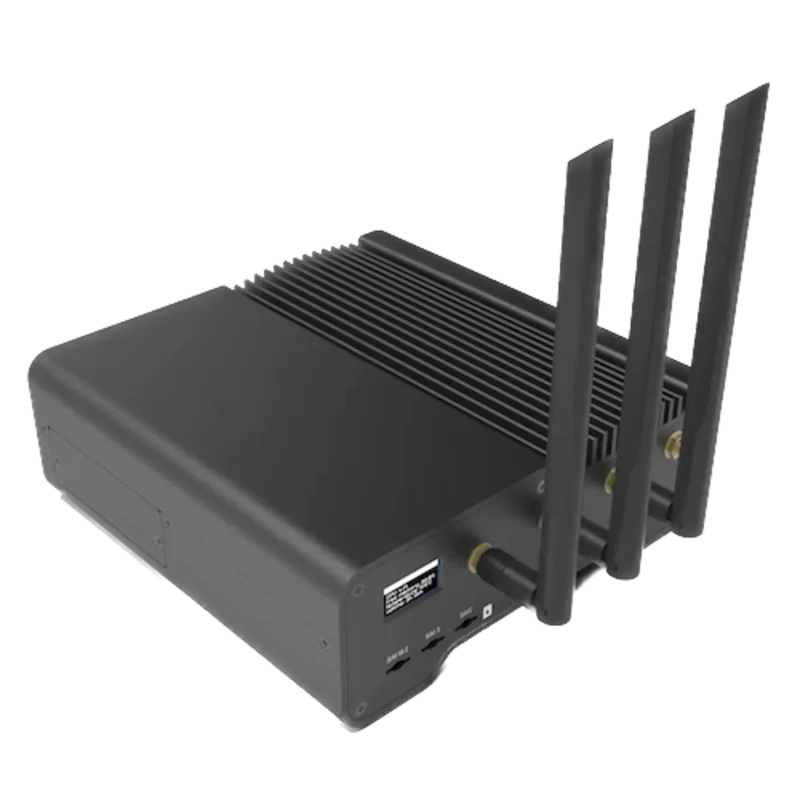
When the meter is in a board away from the Gateway
- Modbus
- Wireless
- Edge
- Platforms
When an RS-485 serial interface is available at the Gateway
- Modbus
- Edge
- Platforms
Models
| Models | Interface | Route into Edge |
|---|---|---|
| OR-WE-517 (EAN 5902560322422) | Direct connection, Ib 5 A, Imax 80 A; RS-485 Modbus RTU on terminals 21 (A) and 20 (B); S0 output on 24 (+) and 23 (-); infrared port | Read the OR-WE-517 register list with FC03 on the serial path. |
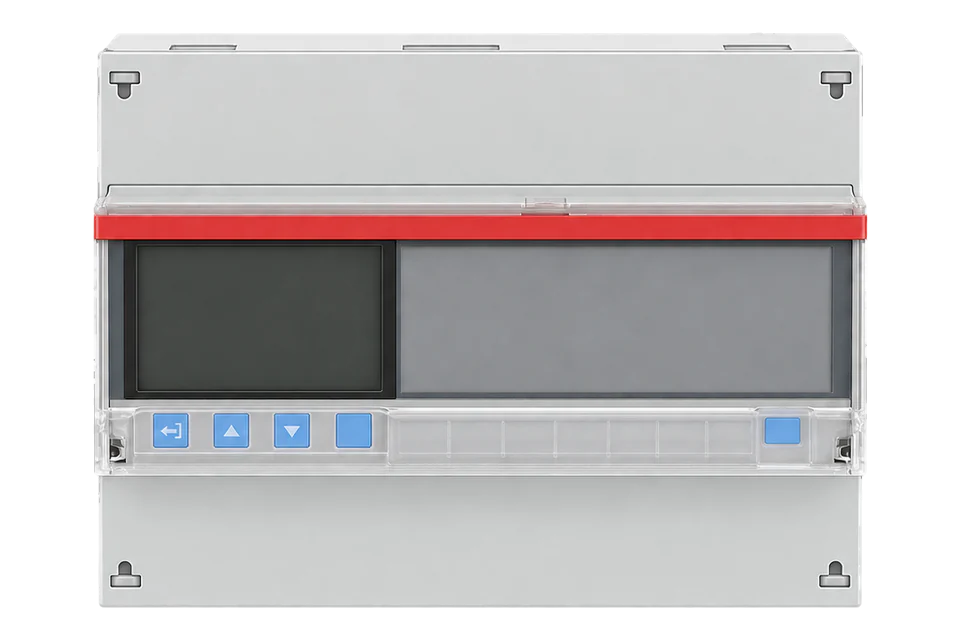
| OR-WE-516 | The same housing, RS-485 Modbus RTU and certificate, without the four tariffs | Outside this guide. The manual lists no tariff values for the OR-WE-516, so do not reuse the OR-WE-517 tariff addresses. |
| OR-WE-513 and OR-WE-520 | No RS-485 Modbus port in the manual | The register list in this guide does not apply. |
Specifications
A three-phase, four-wire meter for direct connection with four independent tariffs set over the RS-485 port, an internal clock, four-quadrant active and reactive energy, an S0 pulse output and an infrared optical port. Counters are held in EEPROM.123
- Model
- ORNO OR-WE-517, EAN 5902560322422.3
- Current
- Starting current 0.02 A, Imin 0.25 A, Ib 5 A, Imax 80 A.2
- Accuracy and approval
- Class B to EN 50470-1/3. MID EU type-examination certificate 0120/SGS0278 (module B), issued by SGS United Kingdom on 16 May 2017 and valid until 14 March 2027, naming software V1.01.24
- RS-485
- Modbus RTU on terminals 21 (A) and 20 (B). Default meter ID 1, 9600 bit/s, 8 data bits, even parity, 1 stop bit; 1200, 2400 and 4800 bit/s are optional.12
- Other interfaces
- S0 open-collector output on 24 (+) and 23 (-), 12 to 27 V DC, up to 27 mA, 90 ms pulses, 1000 imp/kWh by default (1, 10, 100 or 1000 settable). Infrared port at 4800 bit/s, 7 data bits.2
- Own consumption
- Up to 8 VA and 0.4 W.2
- Mounting
- 35 mm DIN rail (TH-35); 76 × 100 × 65 mm in the manual's dimension drawing. Terminals take up to 35 mm².2
Interface
Documented measurements and integration boundaries for OR-WE-517.
- Addresses are hexadecimal PDU addresses for FC03, and ORNO gives lengths in bytes: a length of 4 is two registers. The Register No. column is a row count, not an address.
- L1, L2 and L3 voltage at 0x000E, 0x0010 and 0x0012: Float32, V.
- Grid frequency at 0x0014: Float32, Hz.
- L1, L2 and L3 current at 0x0016, 0x0018 and 0x001A: Float32, A.
- Total active power at 0x001C, then L1 to L3 at 0x001E, 0x0020 and 0x0022: Float32, kW.
- Total reactive power at 0x0024 (kvar), total apparent power at 0x002C (kVA) and total power factor at 0x0034, each followed by its L1 to L3 values.
- Total active energy at 0x0100, forward active energy at 0x0108 and reverse active energy at 0x0110: Float32, kWh, each followed by its L1 to L3 counters.
- Total, forward and reverse reactive energy at 0x0118, 0x0120 and 0x0128: Float32, kvarh.
- Tariff energy: T1 total, forward and reverse active energy at 0x0130, 0x0132 and 0x0134; T2 from 0x013C, T3 from 0x0148 and T4 from 0x0154 in the same order, each followed by three reactive counters.
- Identity and settings: serial number at 0x0000 (two registers), meter ID at 0x0002, baud rate at 0x0003, software version at 0x0004 and combined code at 0x000B.
Assessment
ORNO OR-WE-517 (EAN 5902560322422), using ORNO's OR-WE-517 register list and the 07/2023 user manual as the starting point. The list does not name a word order, so compare the first read with the meter display. The OR-WE-516 and other OR-WE meters are outside this guide. Read-only monitoring: no ID, baud rate, tariff, clock or combined-code writes.
- InteroperabilitySupported with conditions
- ORNO documents Modbus RTU on RS-485 with serial defaults, function codes, hexadecimal frame addresses, lengths, Float32 data, units and exception codes. The list does not state the word order of the floats.12
- AccuracySupported with conditions
- Class B metering with per-phase voltage, current, active, reactive and apparent power, power factor and frequency, and separate forward and reverse active and reactive energy for the total, each phase and four tariffs. Energy is Float32, and the meaning of the combined code behind total active energy is not documented.124
- SecurityNot yet assessed
- The register list accepts FC06 and FC16 writes to the meter ID, baud rate, tariffs and clock, and the documents describe no access control on the Modbus port.1
- ReliabilityLimited
- Counters are held in EEPROM and the type-examination certificate records 6 kV impulse and 4 kV AC voltage ratings, but ORNO publishes no supply tolerance, immunity levels or Modbus recovery behaviour. Treat failed reads as missing data.24
- RuggednessSupported with conditions
- Rated -25 to +55 °C, humidity up to 75%, IP51 and protection class II for indoor use, mechanical class M1 (low shock and vibration) and electromagnetic class E2.24
Setup
Read L1 voltage from hexadecimal address 0x000E
ORNO's OR-WE-517 register list gives L1 Voltage at register address 000E with function code 03, length 4 bytes, data mode float and unit V. Use that list as the starting point and compare the result with the display.
- Request
- 01 03 00 0E 00 02 A5 C8: meter ID 1, FC03, address 0x000E, two registers (four bytes), RTU CRC.
- Address convention
- The list prints each frame as meter ID, function code and register address, so 0x000E goes on the wire as printed: zero-based PDU address 14. A client that numbers registers from one shows it as 15, or 40015 in five-digit holding-register notation. Do not use the Register No. column (11 for this row).
- Synthetic response
- 01 03 04 43 66 00 00 0F A8: four data bytes, 43 66 00 00.
- Decode
- Read high word first, high byte first: 0x43660000 as an IEEE-754 Float32 is 230.0 V. No scaling factor applies. The list does not name a word order, so if the value is implausible, swap the two registers and read again.
- Acceptance
- Keep the point, and the word order it proved, when it agrees with Voltage L1 on the meter display at the same time. If it does not, check the ID, baud rate, parity and word order before adding more points.
Acceptance: The response bytes are a synthetic decoder check, not a captured meter reply. A real reply must agree with the display before current, power and energy points are enabled.
-
Identify the meter
Read OR-WE-517 on the front label and note the software version shown on the display (the certificate names V1.01). An OR-WE-516 looks the same but has no tariffs and is outside this guide.
-
Read the serial settings from the display
Step through the display to the Id and bd screens for the Modbus ID and baud rate. The defaults are ID 1 and 9600 bit/s with 8 data bits, even parity and 1 stop bit. Enter the same values in the Edge serial client.
-
Wire the RS-485 pair
Connect A to terminal 21 and B to terminal 20 with a twisted pair, and give each meter on the bus its own ID.
-
Make one voltage read
Send FC03 to address 0x000E for two registers and decode the four bytes as Float32 high word first, as in the worked read below. Compare the result with Voltage L1 on the display.
-
Add the points you need
Add current, power and energy registers from the same list. Log forward and reverse active energy separately where the site can export, and keep FC06 and FC16 writes out of the polling configuration.
Common questions
- Is 000E a decimal register number?
- No. ORNO prints the addresses in hexadecimal, as entries such as 001A and 010E show. Send 0x000E, decimal 14, as the PDU address. A tool that asks for one-based register numbers needs 15.1
- Which energy register measures consumption?
- Forward active energy at 0x0108 and reverse active energy at 0x0110 are separate counters, so read those two when the site can export. Total active energy at 0x0100 sits beside a combined code at 0x000B that ORNO's list does not explain, so compare 0x0100 with the display before relying on it.1
- How do I read the four tariffs?
- Each tariff has its own block of six Float32 counters: T1 from 0x0130, T2 from 0x013C, T3 from 0x0148 and T4 from 0x0154, in the order total, forward and reverse active energy, then total, forward and reverse reactive energy. The tariff time intervals are set over RS-485 and are read at 0x0300 to 0x0360.13
- Does the list include writable registers?
- Yes. ORNO documents FC06 writes for the meter ID, baud rate, CT rate, combined code, holiday and weekend tariff and display cycle time, and FC16 writes for the S0 rate, clock, tariff intervals and time zone. A monitoring configuration should read with FC03 only.1
- Does a 32-bit float energy counter lose resolution?
- Yes, gradually. A Float32 holds about seven significant digits: above about 131,000 kWh the counter moves in steps of about 0.016 kWh, and above about 1,050,000 kWh in steps of 0.125 kWh. Store each value as received and calculate consumption over intervals rather than from tiny differences.1
Related devices


Sources
- OR-WE-517 Modbus register list (OR-WE-517_rejestry) (opens in a new tab) (PDF)
- Three-phase meters OR-WE-513, OR-WE-516, OR-WE-517, OR-WE-520 user manual (PL, EN, DE), 07/2023 (opens in a new tab) (PDF)
- OR-WE-517 product datasheet (EN), updated 2026-08-28 (opens in a new tab) (PDF)
- EU type-examination certificate 0120/SGS0278, issue 1 (OR-WE-513, OR-WE-516, OR-WE-517) (opens in a new tab) (PDF)
Further reading
Product names and trademarks belong to their owners. Publication does not imply endorsement or a commercial relationship.