DENT Instruments PowerScout HD
Multichannel energy meter
The PowerScout HD series from DENT Instruments covers four networked meters: the PowerScout 3 HD (PS3HD) with 3 current channels, and the PS12HD, PS24HD and PS48HD with 12, 24 and 48 channels. Channels are grouped in elements of three, named A, B, C and so on, and each element can be set up as a three-phase, split-phase or single-phase service. Every meter has RS-485 with Modbus RTU or BACnet MS/TP, Ethernet with Modbus TCP or BACnet/IP, and USB for setup. DENT's register list puts every measurement in a SunSpec-style block of IEEE 754 floats from register 1141, so no scaling is needed. Each element answers at its own Modbus address: Element A at the meter's address and the next elements at the addresses above it.
Compatibility
Compatible with EpiSensor Edge over Modbus RTU or Modbus TCP
The PowerScout HD meters are compatible with EpiSensor Edge over Modbus RTU on RS-485, read through a ZMB-31 Modbus Interface or a Gateway serial port, and over Modbus TCP on the Ethernet port at port 502. DENT publishes the full register list with wire addresses, absolute addresses, data types, units and element scope, and the Operator's Guide documents element addressing and the supported commands.
PS3HD, PS12HD, PS24HD and PS48HD meters in Modbus mode, using DENT's master register list and the Operator's Guide of 30 July 2023. Site check: read register 1139 and expect the model number 213, then compare Voltage L1 to N at register 1151 with ViewPoint HD or the display. Read-only monitoring: no writes to the user command, configuration or PIN registers.
Connect it with
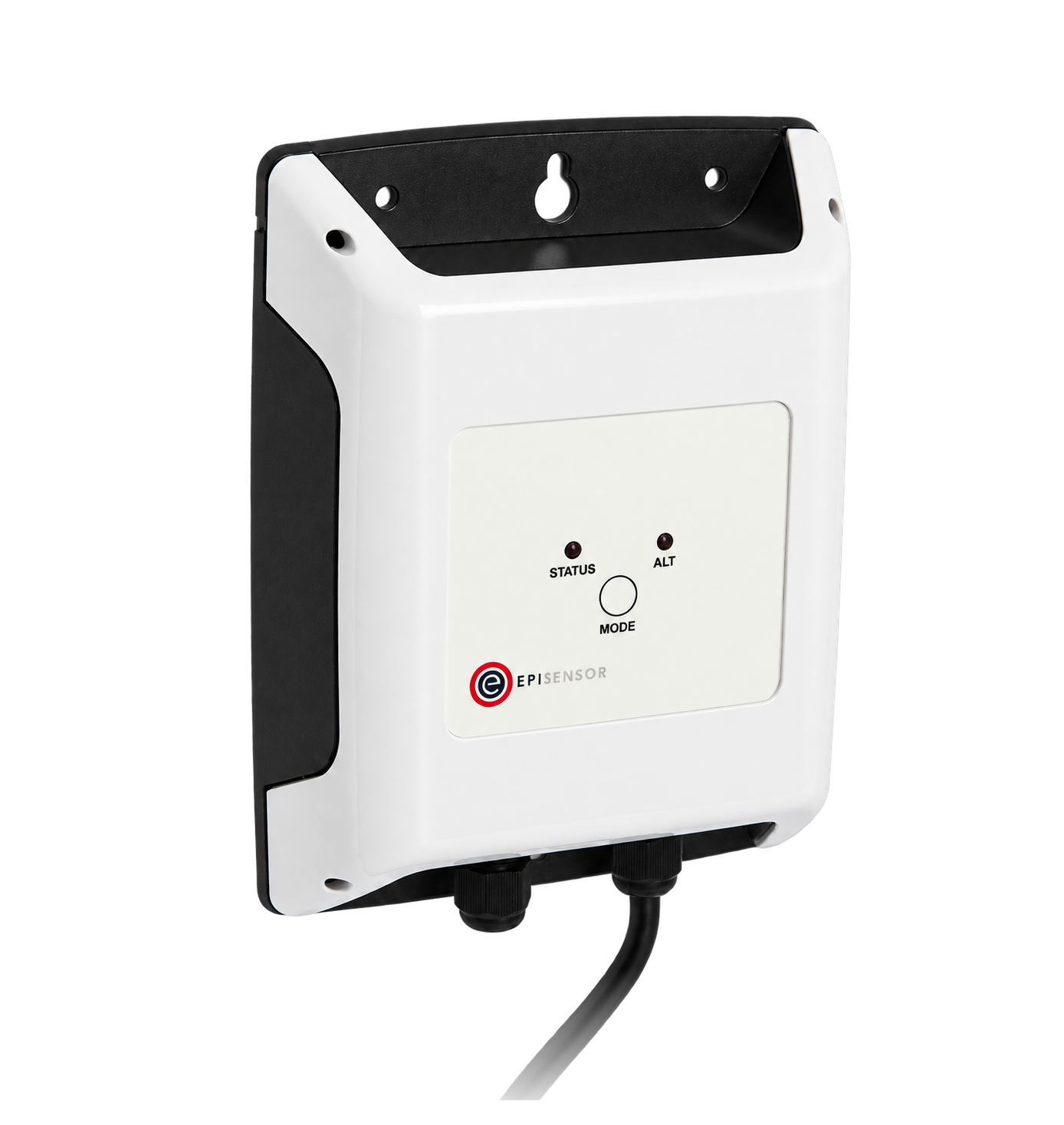
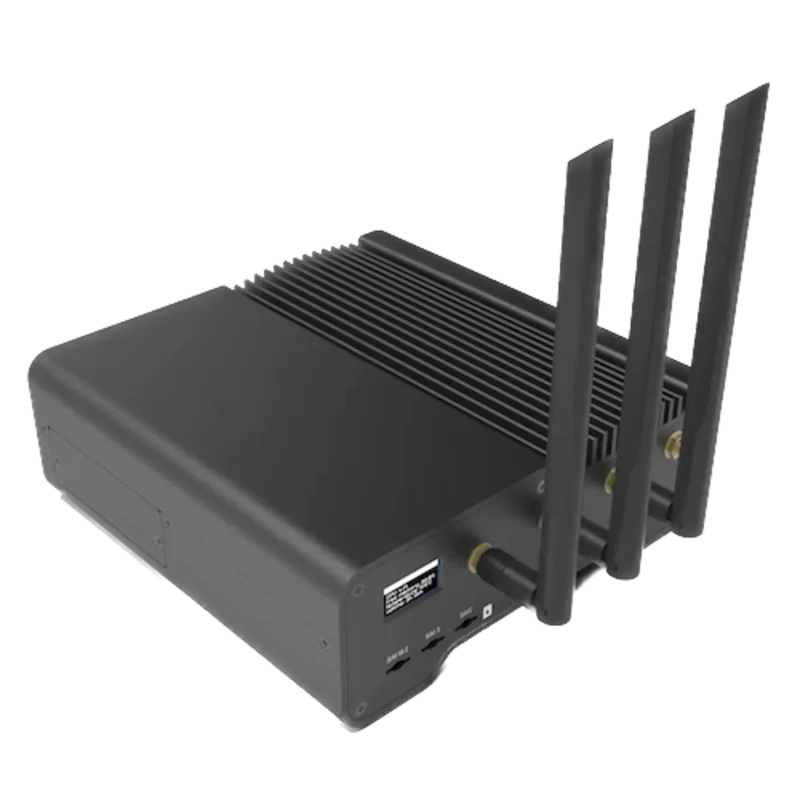
For a meter in a panelboard where a wireless link avoids running a data cable back to the Gateway
- Modbus
- Wireless
- Edge
- Platforms
When the Gateway sits near the meters, or several PowerScouts share one wired RS-485 network
- Modbus
- Edge
- Platforms
When the meter is on the site Ethernet network
- Modbus
- Edge
- Platforms
Models
| Models | Interface | Route into Edge |
|---|---|---|
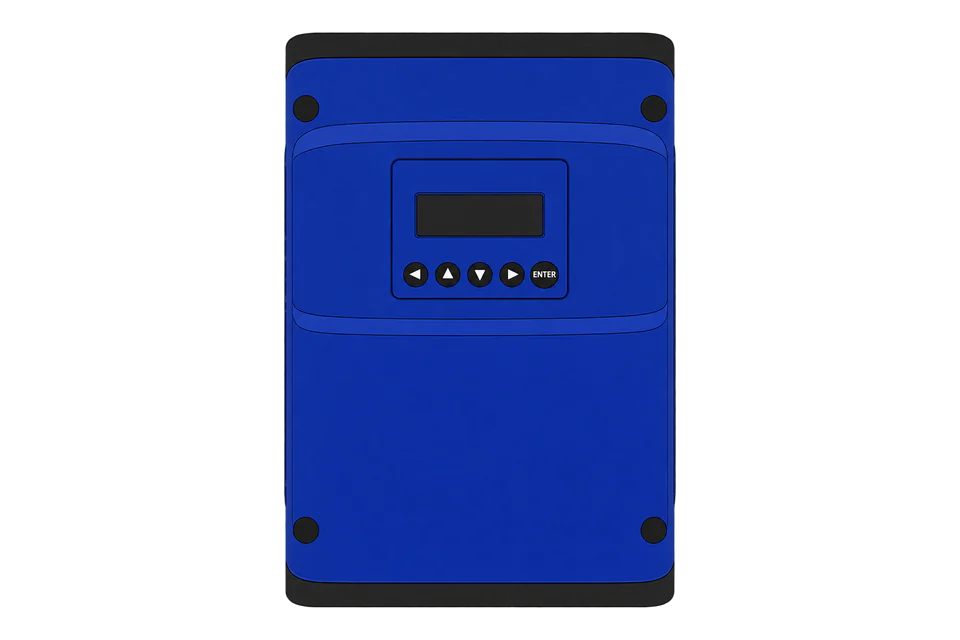
| PS3HD-C-D-N and PS3HD-R-D-N | 3 current channels (one element) on DIN rail or in a wall-mount enclosure; RS-485, Ethernet and USB; 2-line display | Read Element A at the meter's Modbus address over RS-485, or over Modbus TCP at unit identifier 1. |
| PS12HD | 12 current channels in four elements (A to D); one voltage input; 4 pulse inputs; optional 4-line display | Same route; the elements answer at the meter's address and the three addresses above it. |
| PS24HD | 24 current channels in eight elements (A to H); two voltage reference inputs; 2 pulse inputs; optional 4-line display | Same route; the elements answer at the meter's address and the seven addresses above it. |
| PS48HD | 48 current channels in sixteen elements (A to P); two voltage reference inputs; 2 pulse inputs; optional 4-line display; classic or Virtual Element channel layout | Same route; the elements answer at the meter's address and the fifteen addresses above it. |
Specifications
PowerScout HD meters monitor voltage, current, power, energy, demand, THD and power factor on single-phase, split-phase and three-phase services, per channel and per element. They are powered from the L1 to L2 voltage leads, record 15-minute interval energy for 63 days, and are configured with ViewPoint HD over USB or Ethernet or with the built-in web app. The PS3HD mounts on DIN rail or in a wall-mount enclosure; the PS12HD, PS24HD and PS48HD come in an enclosure or on a mounting plate.1
- Models
- PS3HD (3 channels), PS12HD (12), PS24HD (24) and PS48HD (48). UL Listed: PS3HD-C-D-N, PS3HD-R-D-N, PS12HD-C-y-z, PS24HD-C-D-N and PS48HD-C-y-z; UL Recognized: PS12HD-B-y-z, PS12HD-P-y-z, PS24HD-P-y-z, PS48HD-B-y-z and PS48HD-P-y-z.1
- Voltage inputs
- 90 to 346 V AC L-N, 600 V L-L, CAT III; 50/60 Hz with a 45 to 70 Hz measurable range; two voltage reference inputs on the PS24HD and PS48HD.1
- Current inputs
- 333 mV CTs at 0.525 V AC maximum, or RōCoil CTs up to 4000 A; 150% of the CT rating to maintain accuracy.1
- Accuracy
- 0.2%, ANSI C12.20-2015 Class 0.2.1
- Update rate
- Waveform sampling 1.8 kHz with continuous sampling; parameters updated every 1 s; 15-minute energy interval data stored for 63 days.1
- Communication
- RS-485 with Modbus RTU or BACnet MS/TP; Ethernet with Modbus TCP (port 502) or BACnet/IP; USB. Modbus at 9600 (default), 19200, 38400, 57600, 76800 or 115200 baud, 8 data bits, parity none, even or odd, 1 or 2 stop bits; 1200 m at 100 kbit/s or less; 1/8 unit load; no termination provided.12
- Inputs and outputs
- User-configurable alarm with relay output. Pulse inputs: none on the PS3HD, 4 on the PS12HD and 2 on the PS24HD and PS48HD, at up to 10 Hz.1
- Power supply
- From L1 to L2, 90 to 600 V AC RMS CAT III, 50/60 Hz, 500 mA AC maximum; 0.5 A fuse with 200 kA interrupt capacity.1
- Housing
- ABS plastic, 94-V0. PS24HD and PS48HD 33.7 × 25.1 × 8.0 cm (enclosure) or 26.2 × 24.1 × 8.0 cm (plate); PS12HD 24.8 × 25.1 × 8.0 cm (enclosure); PS3HD 19.1 × 8.2 × 3.8 cm (DIN rail) or 25.7 × 14.0 × 5.4 cm (wall mount). IP30 high-voltage cover on all models except PS12HD-P-D-N.1
- Environment
- Operating -20 to +60 °C (-4 to 140 °F), humidity 5 to 95% non-condensing.1
- Approvals
- UL 61010-1 3rd edition and UL 61010-2-30; CSA C22.2 No. 61010-1; CE to EN 61010-1 (LVD), EN 61326-1 (EMC) and EN 50581 (RoHS 2); FCC part 15 Class A.1
Interface
Documented measurements and integration boundaries for PowerScout HD.
- DENT's register list gives each point a Modbus register, such as 1151, and an absolute address, such as 41152, which is the register plus 40001. The register is the value sent in the frame: the guide's own write examples send register 1079 as 04 37. Read with FC03; the meter also supports FC06, FC16 and FC17 Report Slave ID.
- Element addressing: the meter's Modbus address (1 to 240, default 1) is Element A, and Elements B, C, D and on answer at the next addresses. Element-scope registers return that element's values; system-scope registers return the same value at every address. Over Modbus TCP the base unit identifier is fixed at 1.
- Floats are IEEE 754 single precision in two registers, with the most significant word (MSW) at the lower register: Voltage L1 to N MSW at 1151 and LSW at 1152. No scaling is needed.
- Register 1139 holds the SunSpec model number 213 (three-phase wye float meter) and 1140 its length, 124, so reading 1139 and 1140 checks the address convention.
- Per-element currents and voltages: Current Avg Element 1141 and CH1 to CH3 at 1143, 1145 and 1147 in amps; Voltage L-N average 1149 and L1, L2 and L3 to N at 1151, 1153 and 1155; Voltage L-L average 1157 and L1-L2, L2-L3 and L3-L1 at 1159, 1161 and 1163 in volts; Line Frequency 1165 in Hz.
- Power: Watt Sum Element 1167 and CH1 to CH3 at 1169, 1171 and 1173 in kW, signed; VA Sum 1175 to 1181 in kVA; VAR Sum 1183 to 1189 in kVAr; Apparent PF average 1191 and CH1 to CH3 at 1193 to 1197.
- Energy, in kWh: Exported Energy Sum Element 1199 and CH1 to CH3 at 1201 to 1205 (source power); Imported Energy Sum Element 1207 and CH1 to CH3 at 1209 to 1213 (load power). Apparent energy in kVAh follows at 1215 to 1229 and reactive energy by quadrant in kVArh at 1231 to 1261.
- Further metrology: displacement, apparent and distortion power factor at 2300 to 2323, THD at 2324 to 2331, kW peak and present demand at 2332 and 2334, kVA demand at 2336 and 2338, and Active Energy Net Sum Element (imported minus exported) at 2344 in kWh.
- Configuration: service type per element at 2207 (1 three-phase wye, 2 three-phase delta, then the single- and split-phase types, 5 off), voltage input 2217, CT range, voltage reference, multiplier, type and phase shift per channel at 2218 to 2244, volts multipliers 2203 and 2205, PF sign convention 2248 and Modbus TCP port 2249 (502).
- User commands at 2100 to 2105 reset the processor, clear accumulated measurements for the meter or an element, clear peak demand and restore user defaults when 1234 is written over Modbus. The LCD and web app PINs at 2272 and 2273 are stored encoded. Keep all command, configuration and PIN registers out of a monitoring poll.
Assessment
PS3HD, PS12HD, PS24HD and PS48HD meters in Modbus mode, using DENT's master register list and the Operator's Guide of 30 July 2023. Site check: read register 1139 and expect the model number 213, then compare Voltage L1 to N at register 1151 with ViewPoint HD or the display. Read-only monitoring: no writes to the user command, configuration or PIN registers.
- InteroperabilityWell supported
- DENT documents Modbus RTU and Modbus TCP on port 502, publishes the full register list with wire and absolute addresses, data types, units and scope, and keeps every measurement as an unscaled float. Each element of a multi-element meter is a separate Modbus address, which the address plan has to allow for.12
- AccuracyWell supported
- ANSI C12.20-2015 Class 0.2 with per-channel import and export energy, demand, THD and power factor, and up to 48 channels in one meter. Accuracy also depends on the CTs and the service type set for each element.12
- SecurityLimited
- Two PINs protect the LCD and web app, but DENT states that Modbus does not support any level of security, so any master can read and write the registers. ViewPoint HD also writes configuration without credentials. Keep the bus and network private and the client read-only.1
- ReliabilitySupported with conditions
- The meter stores 63 days of 15-minute interval energy, and register 2295 can restart the processor after a set number of minutes without communication. CE marking covers EN 61326-1, but the retained documents give no immunity test levels.12
- RuggednessSupported with conditions
- Rated -20 to +60 °C and 5 to 95% RH non-condensing, CAT III for 600 V, in 94-V0 ABS enclosures with an IP30 high-voltage cover on most models. The PS3HD-R-D-N must be installed inside a UL approved electrical enclosure.1
- ScalabilityWell supported
- One meter covers up to 48 channels in 16 elements, RS-485 runs to 1200 m at 1/8 unit load with addresses 1 to 240, and Ethernet is standard. A PS48HD uses 16 Modbus addresses on a serial bus.1
Setup
Read the model block at register 1139, then Voltage L1 to N at 1151 for Elements A and B
DENT's master register list gives the SunSpec 213 model ID at register 1139 (absolute address 41140) with the value 213 and the model length at 1140 with the value 124, Voltage L1 to N as a float32 at 1151 to 1152 (absolute 41152 to 41153) in volts, and Imported Energy Sum Element as a float32 at 1207 to 1208 in kWh. The Operator's Guide places Element A at the meter's Modbus address and each further element at the next address.
- Request
- 01 03 04 73 00 02 34 E0: Modbus address 1 (Element A), FC03, address 0x0473 for register 1139, two registers, RTU CRC.
- Address convention
- The register column is the address on the wire and the absolute address is the register plus 40001: register 1139 is 0x0473 and absolute 41140, register 1151 is 0x047F and absolute 41152. A client that numbers holding registers from one takes 1140 or 41140 for register 1139.
- Expected response
- 01 03 04 00 D5 00 7C EA 2A: 0x00D5 = 213, the SunSpec model number, and 0x007C = 124, its length, as the register list gives them.
- Voltage read
- 01 03 04 7F 00 02 F4 E3 reads two registers from 0x047F at Element A. Synthetic response 01 03 04 43 8A 8C CD 6B 08: MSW 0x438A first, then 0x8CCD, so the float is 0x438A8CCD = 277.1 V.
- Element B
- 02 03 04 7F 00 02 F4 D0 sends the same register to Modbus address 2, which is Element B on a meter at address 1.
- Energy read
- 01 03 04 B7 00 02 75 1D reads Imported Energy Sum Element at 0x04B7. Synthetic response 01 03 04 47 3C 52 80 12 4B gives the float 0x473C5280 = 48210.5 kWh.
- Acceptance
- Keep the points when register 1139 returns 213 and the voltage of each element agrees with ViewPoint HD or the display. A read one register late returns 124 in the first word of the model block and straddles two floats in the voltage block.
Acceptance: The model-block reply is computed from the values DENT's register list gives, and the voltage and energy replies are a synthetic decoder check, not a captured meter reply. A real reply must return 213 at register 1139 and a voltage that agrees with ViewPoint HD before current, power and energy points are enabled.
-
Identify the model and its elements
Read the part number: PS3HD has one element, PS12HD four, PS24HD eight and PS48HD sixteen. Note the service type set for each element in ViewPoint HD, because a three-phase element reports three channels and a single-phase setting reports each channel on its own.
-
Set the Modbus address and serial settings
Set the meter's Modbus address, which is Element A's address, so that the addresses above it are free for the other elements. The defaults are address 1 and 9600 baud. Enter the same settings in the Edge serial client or the ZMB-31.
-
Wire the RS-485 bus or Ethernet
Daisy-chain the RS-485 pair and terminate the two ends of the bus, since the meter provides no termination. For Ethernet, connect the meter to the site network, where it takes an address from DHCP, and use Modbus TCP port 502.
-
Prove the address convention
Send FC03 for two registers at 1139 (0x0473). The reply should be 213 and 124, the model number and length DENT's register list gives for that block.
-
Compare one value per element
Read Voltage L1 to N at register 1151 as a float, MSW first, at Element A's address and compare it with ViewPoint HD or the display. Repeat at the next address for Element B before adding the remaining elements.
-
Add power and energy
Add Watt Sum Element at 1167 and Imported and Exported Energy Sum Element at 1207 and 1199 for each element, plus per-channel values where circuits are metered singly. Never write to the user command, configuration or PIN registers.
Common questions
- How do I read the other elements of a PowerScout 24 HD?
- Change the Modbus address, not the register. Element A answers at the meter's address and Elements B to H at the seven addresses above it, each with the same register layout: Voltage L1 to N is register 1151 at every element. Registers marked system scope return the same value at every address.12
- Do the PowerScout HD registers need scaling?
- No. The metering registers are IEEE 754 single-precision floats in two registers, MSW first, already in amps, volts, kW, kVA, kVAr and kWh. This differs from the PowerScout 3037, whose 16-bit registers are scaled by a data scalar.12
- Which address does the PowerScout HD register list use?
- The register column is the address sent on the wire, and the absolute address column is that register plus 40001. DENT's write examples in the Operator's Guide send register 1079 as 04 37, which is 1079 in hexadecimal.12
- What Modbus TCP settings does the PowerScout HD use?
- Port 502, which cannot be changed, and a base unit identifier of 1 for Element A. The meter ships in DHCP mode. Ethernet and RS-485 can also run BACnet/IP and BACnet MS/TP instead of Modbus.1
- Does the PowerScout HD separate imported and exported energy?
- Yes. Exported energy (source power) is at registers 1199 to 1205 and imported energy (load power) at 1207 to 1213, per element and per channel, in kWh. Net energy, imported minus exported, is at 2344 to 2350.2
- Does a PIN protect the PowerScout HD over Modbus?
- No. DENT states that the LCD and web app PINs do not apply to protocols such as Modbus, so any master on the network can read and write the registers. Keep the network private and the Edge client read-only.1
Related devices
More from DENT Instruments
Sources
- Operator's Guide, PowerScout HD Networked Power Meters (PS3HD, PS12HD, PS24HD, PS48HD) and ViewPoint HD Software (30 July 2023), with Modbus settings on pages 69 and 70, RTU programming on pages 82 to 92 and specifications in Appendix F (opens in a new tab) (PDF)
- PowerScout HD master register point list (Excel workbook PSHD_MASTER_REGISTER_LIST_current), one sheet per element A to P with Modbus register, absolute address, data type, units and scope (opens in a new tab)
Further reading
Product names and trademarks belong to their owners. Publication does not imply endorsement or a commercial relationship.