Automation in Edge
Nobody should have to sit and watch an energy dashboard. EpiSensor Edge can monitor a sensor, check a condition and take action, with rules running locally on the Gateway.
Read the transcript
At two in the morning, a food plant should be quiet. The trick is noticing when it isn't, without anyone sitting up watching a screen. In Edge, that's the job of an automation. It watches a sensor, checks it against a condition, and when the condition holds, it acts. It runs on the Gateway, right beside the meters, so it keeps working even when the site's internet doesn't.
Here's the rule for those quiet nights. It's a data rule, and it watches Rest of plant: everything the mains draws that the compressor doesn't. If it's above thirty kilowatts, between ten at night and six in the morning, for fifteen minutes straight, raise a warning, and email the site manager. Give it a name the next person will understand, and it's live. When it fires, the alert lands in Edge with the value, the rule and the device behind it, ready for someone to acknowledge.
Rules can just as easily react to a device dropping offline, to data that arrives only intermittently, while the device stays online, or to the clock, and do more than warn: send a text, post to Slack or Google Chat, or switch something on site. That's waste caught the night it starts, not weeks later on the bill. Nobody has to sit and watch a screen: the Gateway does the watching, around the clock, and tells the right person when it matters.
Automation, in Edge: rules that run on site, around the clock.
Related videos
-
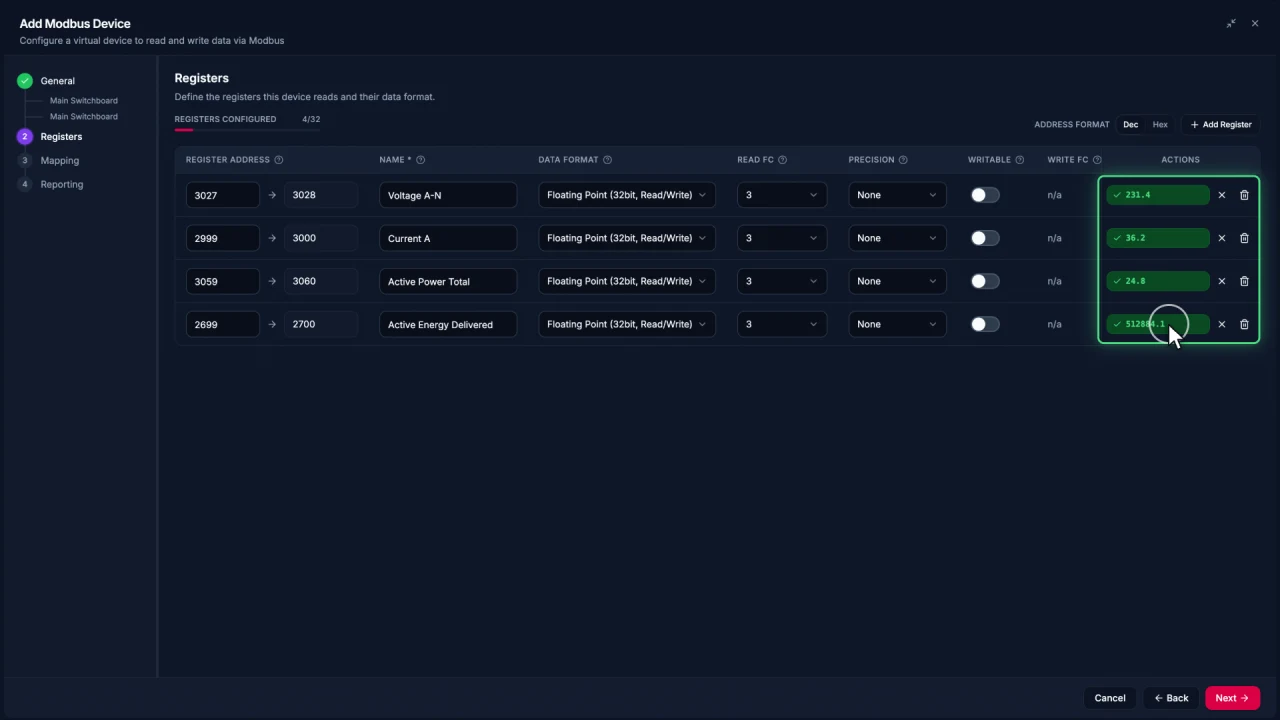
Connecting Modbus meters in Edge
Bring existing meters into your energy management system with EpiSensor Edge. This walkthrough shows how to add a Modbus TCP connection, configure and test registers, and reuse a device template for the next meter.
Watch video · 2:30 -
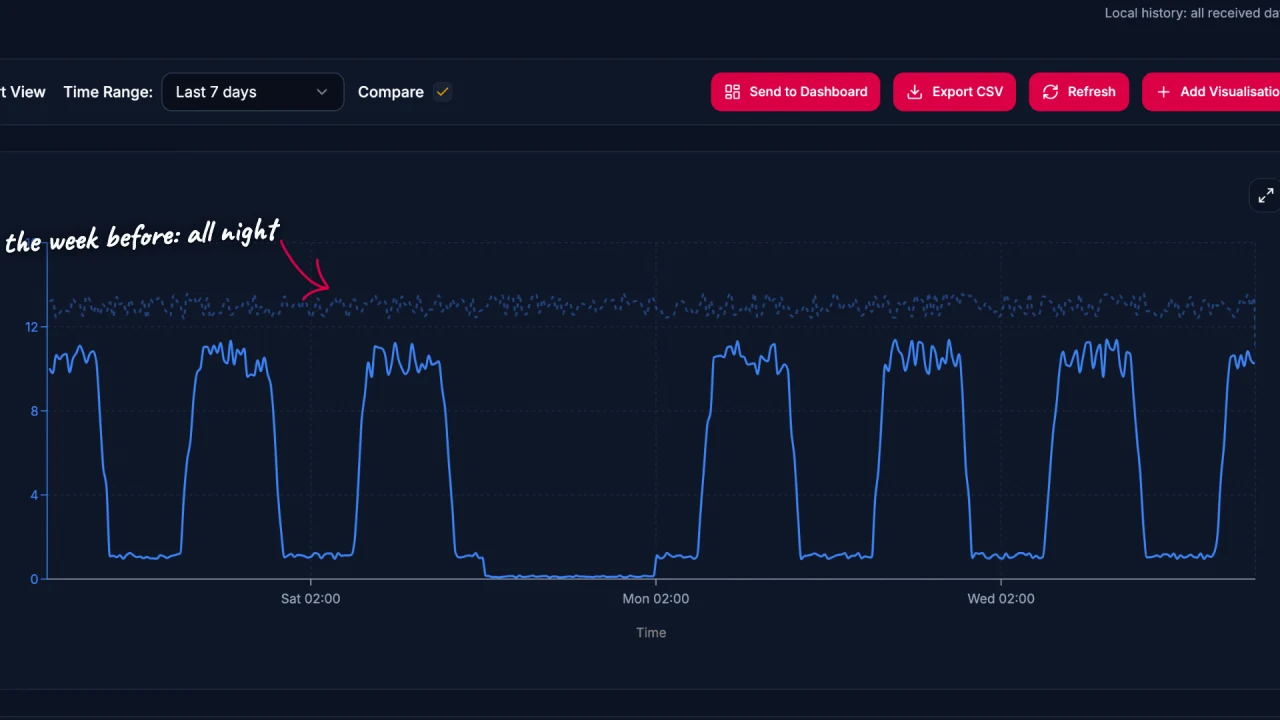
Energy data analysis in Edge
Find the story behind your energy readings with EpiSensor Edge. This walkthrough uses a compressor running outside its expected hours to demonstrate charts, period comparisons, zoom and heatmaps.
Watch video · 2:17 -
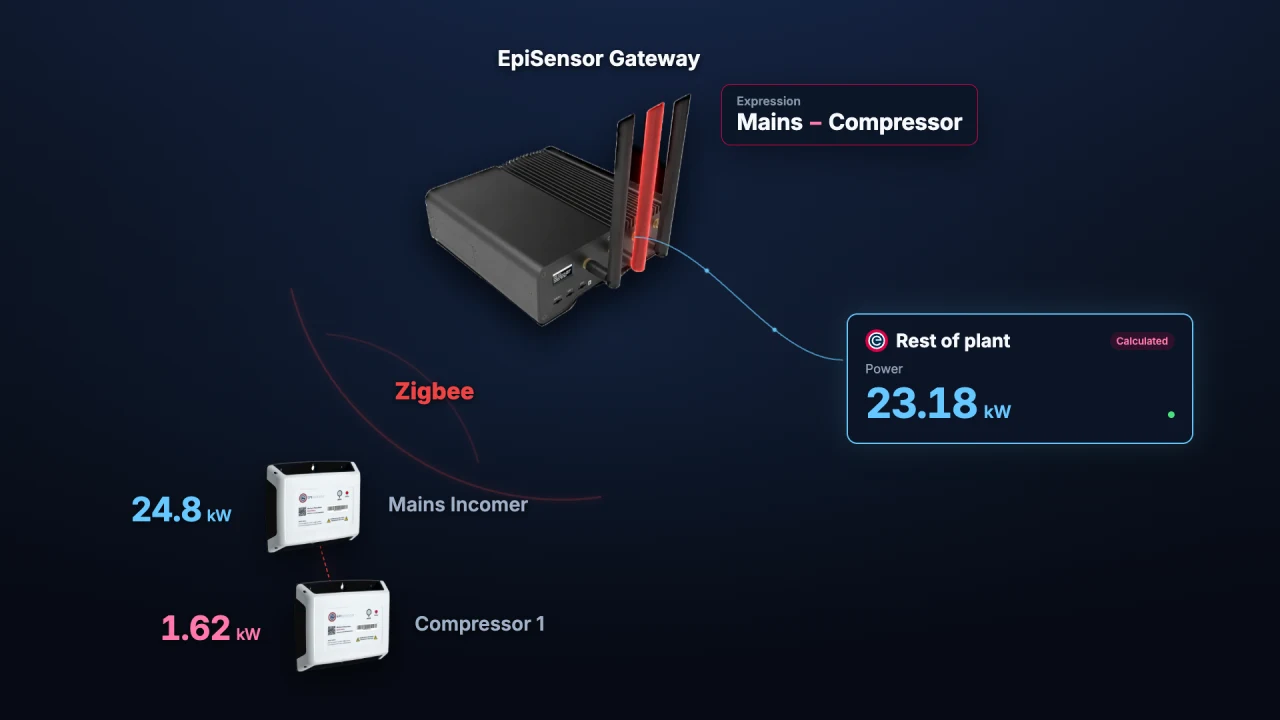
Calculated Devices in Edge
Create new measurements from the sensors you already have. In EpiSensor Edge, a Calculated Device runs an operation on the Gateway and publishes the result as a sensor you can chart, monitor and use in automation.
Watch video · 1:56 -
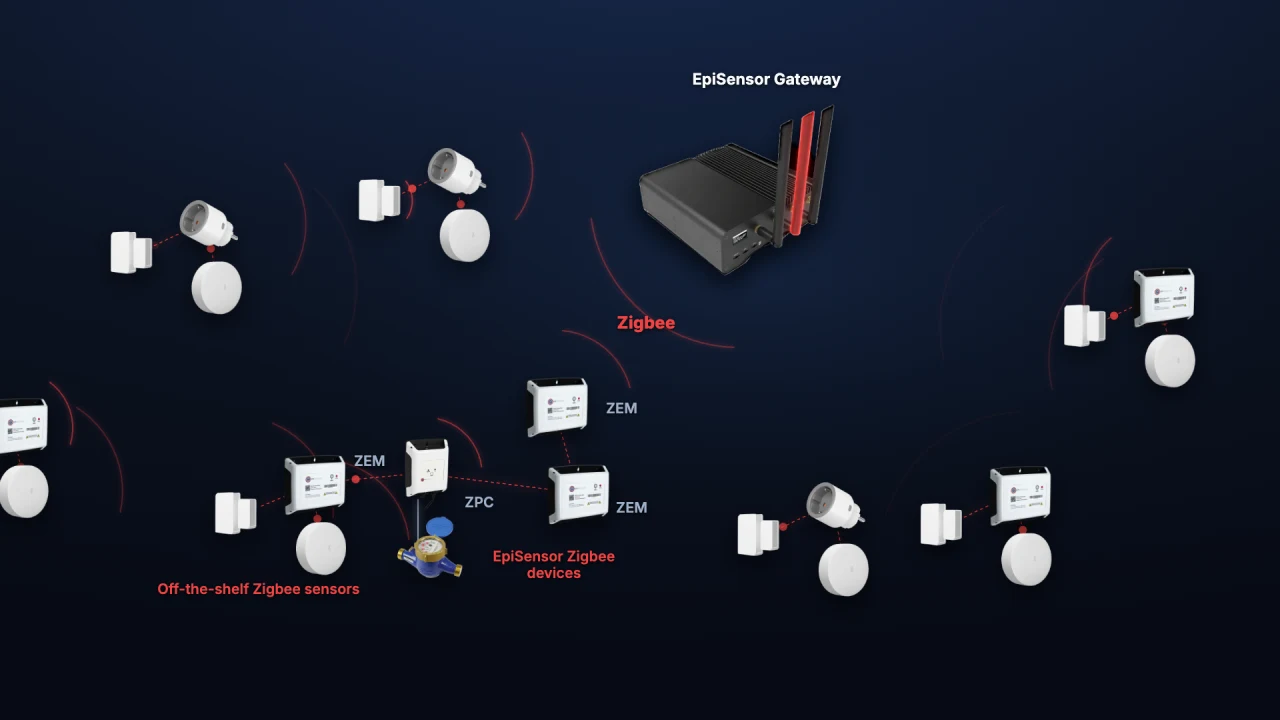
Adding Zigbee devices in Edge
Bring industrial metering and everyday sensor readings together on one wireless network. This walkthrough adds an EpiSensor ZEM electricity monitor, a door contact and a temperature sensor to EpiSensor Edge.
Watch video · 1:59