A 100 kW system in metric units
100 kW for 16.7 m³/min of air is 5.988 kW/(m³/min). Each cubic metre takes about 0.1 kWh, so at €0.20 per kWh the air costs about €0.02 per cubic metre.
Specific power 5.988 kW/(m³/min) Open in the calculator
Work out a compressed air system’s specific power, the electrical kW it takes per unit of air delivered, in metric and imperial units.
Specific power
7.639kW/(m³/min)
Check the values to see a result.
Compare compressors only at the same discharge pressure and flow reference conditions.
Specific power = electrical input kW ÷ delivered flow
55 kW for 7.2 m³/min of air is 7.639 kW per m³/min.
Tip: Measure power and flow over the same interval, including dryers if you compare whole systems.
Specific power is the electrical power a compressed air system draws for each unit of air it delivers: kW per m³/min in metric units, or kW per 100 cfm in imperial. It is the one number that lets two compressors, or the same compressor before and after a change, be compared fairly. A system drawing 100 kW to deliver 16.7 m³/min runs at 5.988 kW/(m³/min), or 16.96 kW/100 cfm.
Specific power = Pelectrical (kW) ÷ Q (m³/min)
P is the electrical input measured at the supply, including the drive and fan motors; Q is the air delivered, from a flow meter on the compressor outlet or the header. A flow in m³/h is divided by 60 first.
Specific power = Pelectrical (kW) ÷ Q (cfm) × 100
The form used on the Compressed Air and Gas Institute (CAGI) data sheets, which state each compressor’s specific package input power at its rated pressure. One m³/min is 35.31 cfm, so kW per 100 cfm is 2.832 times kW per m³/min.
kWh per m³ = specific power (kW/(m³/min)) ÷ 60
The same ratio as energy per cubic metre of air, which with a tariff gives the cost of the air. At 6 kW/(m³/min), each cubic metre takes 0.1 kWh.
Compare figures only at the same discharge pressure and the same flow reference conditions. The US Department of Energy’s sourcebook gives a rule of thumb for systems around 100 psig: every 2 psi of extra discharge pressure adds about 1% to energy use at full flow. Flow quoted as free air delivery, normal cubic metres or actual cubic metres gives different numbers for the same air; the calculator converts units but not reference conditions.
100 kW for 16.7 m³/min of air is 5.988 kW/(m³/min). Each cubic metre takes about 0.1 kWh, so at €0.20 per kWh the air costs about €0.02 per cubic metre.
Specific power 5.988 kW/(m³/min) Open in the calculator
A compressor measured at 37 kW while delivering 200 cfm runs at 18.5 kW/100 cfm. If its CAGI data sheet gives a lower figure at the same pressure, the difference is worth finding: a blocked intake filter, a worn air end or a pressure set higher than the rating.
Specific power 18.5 kW/100 cfm Open in the calculator
A 55 kW compressor delivers 540 m³/h, but 20% of it leaks away before it reaches production. The air that is used is 432 m³/h, 7.2 m³/min, so the specific power of useful air is 7.639 kW/(m³/min) instead of 6.1.
Specific power 7.639 kW/(m³/min) Open in the calculator
Each specific power in kW per m³/min converted to kW per 100 cfm, kWh per 1,000 m³ and air delivered per kW.
| kW/(m³/min) | kW/100 cfm | kWh per 1,000 m³ | cfm per kW |
|---|---|---|---|
| 4 | 11.33 | 66.67 | 8.829 |
| 4.5 | 12.74 | 75 | 7.848 |
| 5 | 14.16 | 83.33 | 7.063 |
| 5.5 | 15.57 | 91.67 | 6.421 |
| 6 | 16.99 | 100 | 5.886 |
| 6.5 | 18.41 | 108.3 | 5.433 |
| 7 | 19.82 | 116.7 | 5.045 |
| 8 | 22.65 | 133.3 | 4.414 |
| 9 | 25.49 | 150 | 3.924 |
| 10 | 28.32 | 166.7 | 3.531 |
It depends on the compressor type, its size and the discharge pressure, so compare against the CAGI data sheet for the same model at the same pressure rather than a single figure. A whole system reads higher than the compressor alone once dryers, part-load running and leaks are included.
A fixed-speed compressor that unloads when demand falls still draws a large share of its full-load power while delivering no air. Averaged over a shift, its specific power rises as demand falls. Variable-speed compressors follow demand more closely.
The US Department of Energy’s sourcebook finds that a poorly maintained plant typically leaks about 20% of its compressors’ output. A leak survey and repair is often the cheapest saving in a compressed air system.
Electrical power on the compressor supply and a flow meter on the outlet, logged over the same intervals. See compressed air energy monitoring for a system that does it.
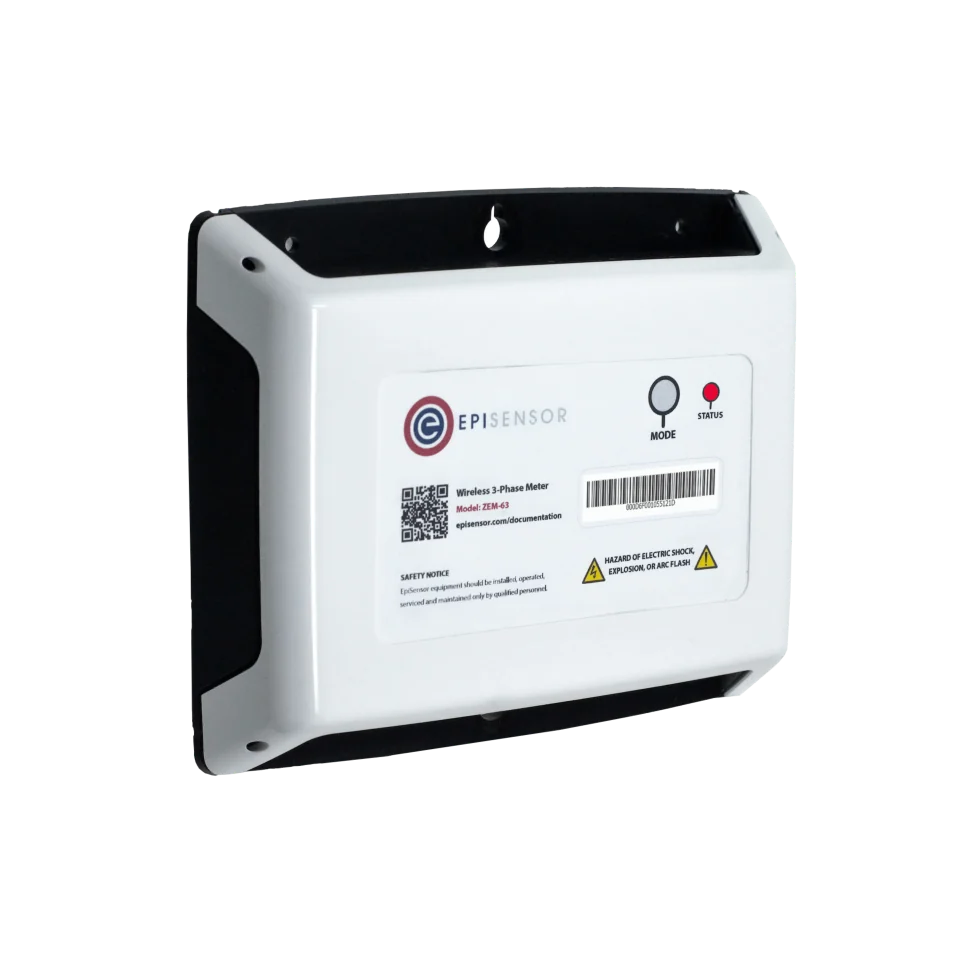
A ZEM measures the compressor’s electrical input, and a ZIO reads the 4-20 mA output of the air flow meter, so both halves of the ratio arrive on the same interval.