Electricity cost calculator

Estimate an electricity bill from energy used, billing demand and fixed charges, and the all-in cost per kWh.

Energy cost and demand Updated Free, no sign-up

Example values
Currency
Currency
Energy and demand
kWh
EUR/kWh

As the bill states it

kW
EUR/kW
Other charges
EUR
EUR

On the subtotal

%

Bill total

€47,745.00

Energy charge
€45,000.00
Demand charge
€2,700.00
Fixed and other charges
€45.00
All-in cost per kWh
€0.1910/kWh

A single-rate bill. Time-of-use periods, ratchets, minimum charges and power-factor penalties are not modelled.

How it’s calculated
  1. Energy charge = E × energy rate=250,000 × 0.18=45,000.00
  2. Demand charge = demand × demand rate=600 × 4.5=2,700.00
  3. Total = energy + demand + other=45,000.00 + 2,700.00 + 45.00=47,745.00 EUR

250,000 kWh at €0.18/kWh and 600 kW of billing demand at €4.50/kW comes to €47,745.00, an all-in €0.1910 per kWh.

Tip: The all-in rate divides the whole bill by the energy used. It is the number to compare between sites and suppliers.

How to calculate an electricity bill

A business electricity bill is energy plus demand plus fixed charges, with tax on top. Energy is the kWh used times the unit rate. Demand is the billing peak in kW, or the contracted capacity in kVA, times a monthly rate. Divide the total by the kWh used to get the all-in cost per kWh. Use that figure to compare sites, months and suppliers.

Energy charge

energy charge = kWh × rate per kWh

On most commercial bills this is the largest part. The calculator takes one rate. For day, night or peak rates, see the weighted rate below.

Demand charge

demand charge = billing kW × rate per kW

The rate is usually per kW per month. On most tariffs the billing kW is the highest 15- or 30-minute average in the month. The interval demand calculator turns interval kWh into that kW. Irish and UK network tariffs also charge per kVA of agreed capacity: Maximum Import Capacity (MIC) in Ireland, agreed supply capacity in Great Britain. The site pays it whether or not it uses the capacity. Enter the kVA and the rate per kVA for the billing period. If the tariff states a daily rate, multiply it by the days in the bill.

Total

total = (energy + demand + fixed + other) × (1 + tax %)

Fixed charges are the standing charges for metering and supply. The tax percentage applies to everything above it, which is how VAT works. Enter a levy charged per kWh or per kVA as an amount under other charges, not as a percentage.

All-in rate

all-in rate = total ÷ kWh

The whole bill spread over every kWh. The gap between this and the unit rate is what demand, fixed charges and tax add to each kWh.

For a day and night tariff, enter the weighted unit rate. A site that uses 150,000 kWh by day at €0.21 and 100,000 kWh at night at €0.13 pays €31,500 + €13,000 = €44,500 for 250,000 kWh. That is a weighted rate of €0.178 per kWh. Moving 20,000 kWh from day to night saves 20,000 × €0.08 = €1,600 a month without any change in total consumption.

Electricity cost examples

A commercial site with a demand charge

250,000 kWh at €0.18 is €45,000. A 600 kW peak at €4.50 per kW per month adds €2,700, and the standing charge adds €45. The bill is €47,745.00 before tax, or €0.1910 per kWh. Demand is 5.7% of this bill.

Bill total €47,745.00 Open in the calculator
The same site with a higher peak

One half-hour at 900 kW sets a new billing peak. The energy is almost unchanged, but the demand charge rises by 300 × €4.50 = €1,350. The bill becomes €49,095.00. Over a 30-day month this site spends €1,500 a day on energy, so that one half-hour cost 90% of a day's energy. Two large loads started together, such as a chiller restart after a power cut, can do this.

Bill total €49,095.00 Open in the calculator

A small business on a single rate

12,000 kWh at €0.25 is €3,000, plus a €30 standing charge. With a 10% tax on the whole amount the bill is €3,333.00, an all-in rate of €0.2778 per kWh. There is no demand charge, so only the kWh and the tax move this bill.

Bill total €3,333.00 Open in the calculator

Energy cost by consumption and unit rate

The energy charge for one month at four unit rates in euro. Demand, fixed charges and tax are extra.

Energy (kWh)€0.15/kWh€0.20/kWh€0.25/kWh€0.30/kWh
1,000€150€200€250€300
2,500€375€500€625€750
5,000€750€1,000€1,250€1,500
10,000€1,500€2,000€2,500€3,000
25,000€3,750€5,000€6,250€7,500
50,000€7,500€10,000€12,500€15,000
100,000€15,000€20,000€25,000€30,000
250,000€37,500€50,000€62,500€75,000
500,000€75,000€100,000€125,000€150,000
1,000,000€150,000€200,000€250,000€300,000

Download this table (CSV)

Questions about electricity cost

How do I work out the cost of electricity?

Multiply the kWh used by the unit rate, add any demand and fixed charges, and add tax. For a single appliance, multiply its power in kW by the hours it runs to get kWh first: a 2 kW heater for 5 hours uses 10 kWh.

What is a demand charge?

A monthly charge on the highest average power in any one interval of the billing period, usually 15 or 30 minutes. A tariff that charges on kVA also charges for poor power factor: 600 kW at a power factor of 0.8 is 750 kVA.

How do I enter a levy charged per kWh or per kVA?

Work out the amount and enter it under other charges. Irish electricity tax on business use is €1 per MWh, so 250,000 kWh adds €250. The UK Climate Change Levy main rate is £0.00801 per kWh from 1 April 2026, so 250,000 kWh adds £2,002.50. The Irish PSO levy for medium and large business customers is €0.24 per kVA of MIC per month from 1 October 2026, so a 1,000 kVA MIC adds €240. Then enter VAT as the tax percentage, because VAT applies to the levies as well.

Why does this not match my bill exactly?

The usual cause is billing demand. Some tariffs, mostly in North America, have a ratchet: the billing demand is the higher of this month's peak and a share of the highest peak in the last 11 months. With an 80% ratchet, the 900 kW peak above sets a floor of 720 kW. A later month that peaks at 600 kW is still billed for 720 kW, which is €540 more than the calculator shows. Other causes are minimum charges, reactive power charges and an MIC exceedance charge. Enter the billing demand from the bill, not the metered peak.

Limits of this result

  • This does not model time-of-use blocks, demand ratchets, minimum bills, coincident peaks, power-factor penalties, credits or currency conversion.
  • The tax/levy percentage is applied to the complete entered subtotal; enter zero and add the billed amount under other charges when that is not correct.
  • A utility invoice or current tariff remains the authority for billing.

Measure it continuously

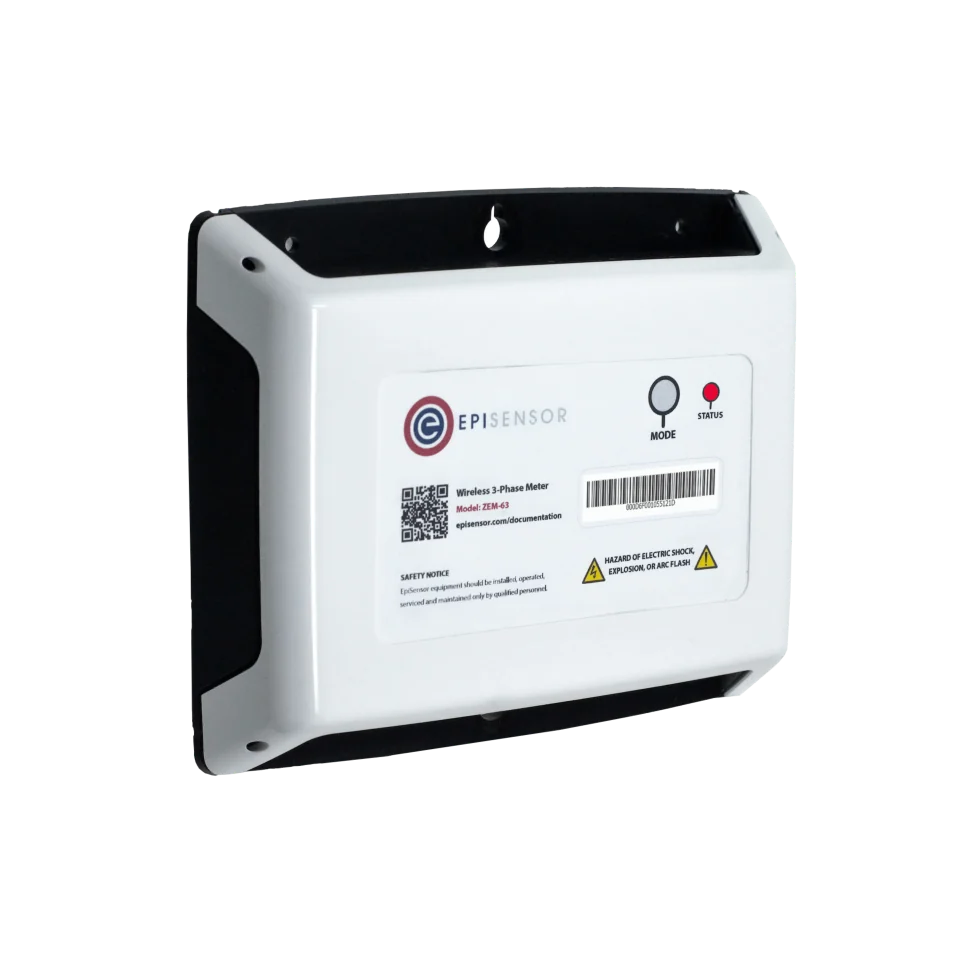
A ZEM on the incoming supply and main circuits shows which loads make up the bill and when the peak that sets the demand charge happens.

Related guides

Sources

  1. Understanding Your Electricity Bills (opens in a new tab) (PDF) US Department of Energy, 2021
  2. Evaluating Your Utility Rate Options (opens in a new tab) US Department of Energy, updated 2020-04-24