
Phoenix Contact
Electrical connections, industrial automation and networked energy measurement

ORNO supplies DIN-rail energy meters, modular apparatus, motion sensors and home electrical products to wholesalers, installers and DIY retailers. Its meter range covers single- and three-phase MID meters, RS-485 Modbus models and Tuya Wi-Fi energy monitors.
ORNO began in 1991 as a small printing business founded by Wiesław Owczarek in Silesia. According to its company history, the business turned to importing in 2000, became ORNO-POLSKA in 2007 and has traded as ORNO GROUP since 2022. It remains a family company, now run by Rafał Owczarek, and works from a purpose-built headquarters and high-bay warehouse on ul. Rolników in Gliwice.
Energy meters are one line in a broad catalogue. ORNO sells doorphones, alarms, motion sensors, power supplies, extension leads and installation accessories alongside modular DIN-rail apparatus, and it divides the brand into ORNO for home and ORNO for professionals. The meters sit in the professional range, under modular apparatus.
What makes ORNO relevant to monitoring projects is the combination of low-cost MID-approved meters with an RS-485 Modbus port and unusually complete public documentation for that price point. Its energy meter range runs from simple consumption indicators to bidirectional, multi-tariff three-phase meters for PV installations, and several of its RS-485 models are supported by independent open-source and smart-home software, including evcc and ESPHome.
The current energy meter category holds 17 products in four groups: meters without MID approval, MID-approved meters, Tuya Smart Wi-Fi energy meters and accessories.
Nine meters carry MID approval. On the single-phase side, the OR-WE-521 is a basic 40 A meter, the OR-WE-524 measures in both directions, and the 100 A OR-WE-525 and OR-WE-526 add RS-485 for PV and multi-tariff use. The three-phase OR-WE-529 and OR-WE-530 are 100 A, class 1 meters that count consumed and returned energy, with RS-485 Modbus, an S0 pulse output and an infrared port; the OR-WE-530 adds internal tariff control. The earlier 80 A OR-WE-517 is a four-tariff three-phase meter with its own published register list.
Meters without MID approval include the OR-WE-504 with RS-485 and the 120 A three-phase OR-WE-507. The Tuya line includes the OR-WE-535, a one-module three-phase monitor supplied with three 120 A current transformers, and Wi-Fi current transformers with measurement control. The OR-WE-518 is a USB infrared converter for reading meters through their optical port.
All of these are hardware sales with no subscription. ORNO sells through wholesalers, electrical distributors and DIY chains rather than directly to end users; Danish wholesaler Lemvigh-Müller stocks the OR-WE-517, for example.
ORNO's meters are direct-connected: the load current passes through the meter, up to 80 A or 100 A per phase depending on the model, with no current transformers. The OR-WE-529 and OR-WE-530 pages cite IEC 62053-21:2020 and IEC 62053-23:2020 for active and reactive energy, give a starting current of 0.004 A and an operating range from -40 to +70 °C, and list a 1000 imp/kWh S0 output and an EN 62056-21 infrared port beside RS-485.
The wired port is RS-485 with Modbus RTU. The OR-WE-517 register list gives each quantity as a four-byte float at a hexadecimal address read with function 03, with import, export and four tariffs held separately; lengths are given in bytes, so a length of 4 is two registers. The three-phase user manual documents the serial settings and confirms that the OR-WE-513 and OR-WE-520 have no Modbus port. For the single-phase OR-WE-514, an ESPHome configuration reads at 9600 baud with even parity and stores the Modbus ID and baud rate in registers 0x0110 and 0x0111.
TapHome notes that when the OR-WE-517 is reached through an RS-485 to Ethernet converter, the converter has to pass RTU frames over TCP; standard Modbus TCP framing does not work. None of the meters has an Ethernet port of its own.
The Tuya models connect over 2.4 GHz IEEE 802.11 b/g/n to the Tuya Smart app, which keeps consumption history, calculates cost and raises threshold alerts. Their data path runs through Tuya's cloud rather than a documented local protocol.
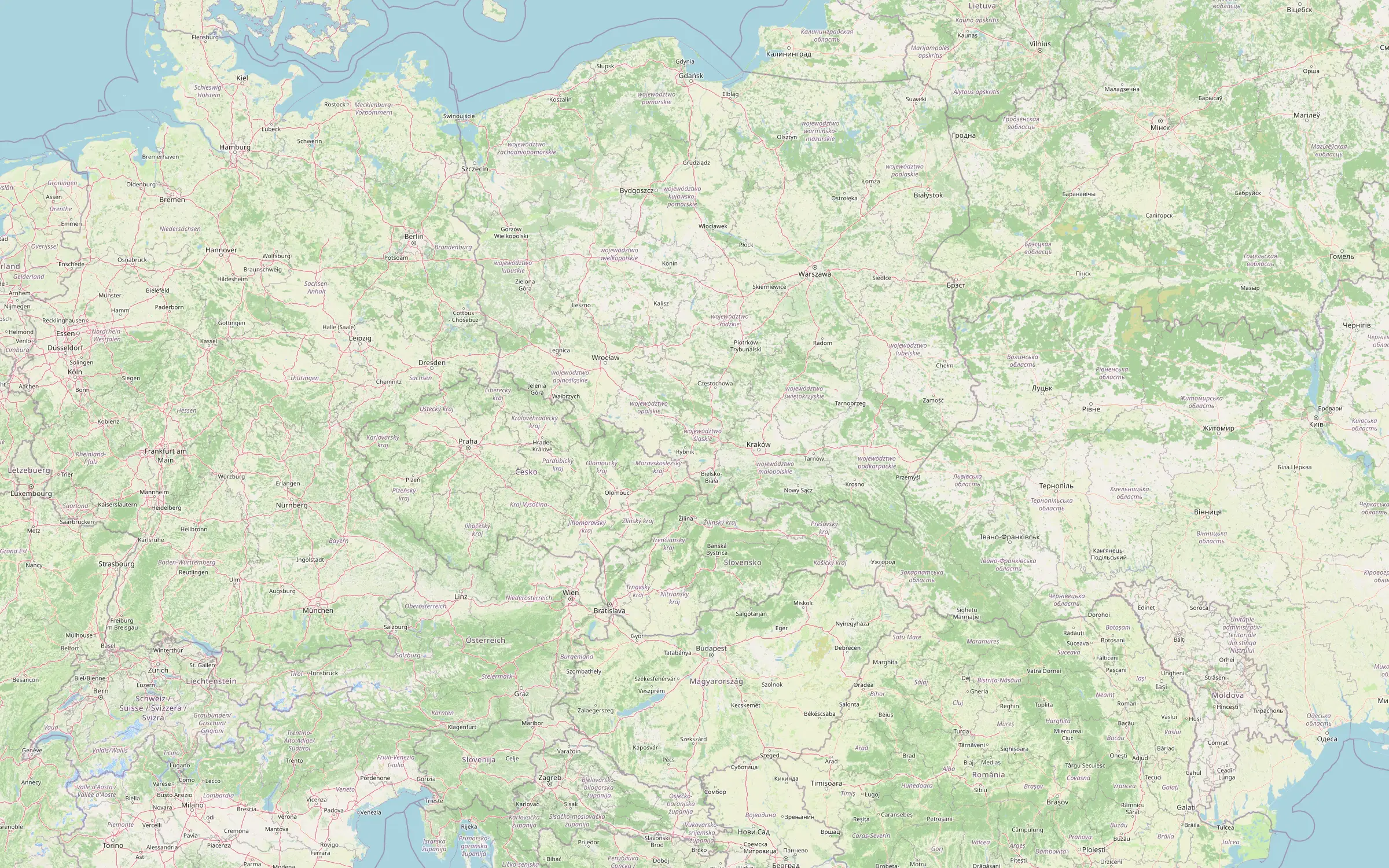
ORNO's home market is Poland, where it sells through electrical wholesalers and DIY retail; its contact page names separate wholesale and DIY sales directors. An export department followed in 2014, with early customers in Germany, France, Ukraine, the Czech Republic and Romania, and the 2026 catalogue is published in Polish, English and Czech. ORNO meters appear in the stock of distributors well beyond Poland, from Lemvigh-Müller in Denmark to Swiss and German online retailers.
The meters serve three kinds of buyer. Electricians fit the MID-approved models to sub-bill apartments, tenants and outbuildings, where a type-approved meter matters for recharging energy. PV and EV charging installers use the bidirectional and RS-485 models as export-limiting or charger meters: evcc has templates for the OR-WE-514 and OR-WE-515 and a shared ORNO template for the three-phase OR-WE-516 and OR-WE-517, configurable as grid, PV or charger meters. Smart-home integrators read the same meters from controllers such as TapHome or from ESPHome, while homeowners choose the Tuya Wi-Fi monitors for app-based consumption tracking.
ORNO does not publish named commercial or utility customers for its meters, and its meters are positioned for small and medium installations rather than utility revenue metering or large industrial sites.
Wiesław Owczarek founded Zakład Poligraficzny ORNO, a printing business, in 1991. In 2000 it became a civil partnership of Wiesław and Rafał Owczarek, renamed ORNO Export-Import, and started importing. The company history then traces a steady build-out: a move to Łaziska Górne and the ORNO-POLSKA name in 2007, a 1,600 m² site in Mikołów in 2010, a B2B platform for trade partners in 2012, a quality department in 2013 and an export department in 2014.
In 2018 the company moved to its own headquarters at ul. Rolników 437 in Gliwice, with a 3,000 m² high-bay warehouse and 1,200 m² of offices. A product management department and separate brands (Vibell, Norgen, Adviti and Virone) followed in 2019, a further warehouse in Gliwice in 2020, and a second construction stage in 2021 that brought the site to 6,000 m² of warehouse and 1,700 m² of offices. In 2022 the company changed its name from ORNO POLSKA to ORNO GROUP, and in 2023 it split the ORNO brand into home and professional lines.
The trading company is ORNO GROUP Sp. z o.o., KRS 0000608405, whose legal entity record shows it was created in March 2016 as Orno-Polska Sp. z o.o. and renamed on 14 February 2022. Its contact page names ORNO-LOGISTIC Sp. z o.o. as the manufacturer and ORNO GROUP Sp. z o.o. as the distributor, both at the Gliwice address. Rafał Owczarek is chief executive, with Wiesław Owczarek as vice chief executive and Marta Gabor as operations director. ORNO does not publish revenue or headcount.
A family-owned Polish distributor whose energy meters are inexpensive, direct-connected DIN-rail units with MID approval and RS-485 Modbus RTU on selected models. Documentation is a strength for the price: register lists, manuals and MID certificates are published per product, and independent projects (evcc, TapHome, ESPHome) read the meters. The limits are clear too: no current-transformer MID meters, nothing above 100 A with MID, no Ethernet or Modbus TCP, no power quality, no security information, Tuya cloud dependence for the Wi-Fi line, and no published revenue, headcount or named customers. Meters are one line among many in a general electrical catalogue.
Independent sources Proven: evcc ships templates for the OR-WE-514/515 and the OR-WE-516/517 as grid, PV or charger meters, TapHome documents the OR-WE-517 over Modbus RTU, and an ESPHome configuration reads the OR-WE-514.
ORNO publishes a register list with Float32 values at hexadecimal FC03 addresses. Missing: the wired port is RS-485 only, TapHome warns that standard Modbus TCP framing through a converter fails, the register list does not name a word order, and the Wi-Fi monitors depend on the Tuya cloud.
Independent sources A Gliwice headquarters with 6,000 m² of warehouse and 1,700 m² of offices (2021) and more than 1,900 stocked products (2020), exporting since 2014 and stocked by distributors such as Lemvigh-Müller in Denmark.
Independent sources Trading since 1991 under the same family, with a steady sequence of larger premises from 2007 to 2021 and an active legal entity (KRS 0000608405) with a current LEI.
Company sources Single- and three-phase direct meters up to 100 A, bidirectional and multi-tariff registers, S0 and infrared ports, and Tuya Wi-Fi monitors with current transformers.
Company sources No security documentation, vulnerability disclosure or certification is published.
Modbus RTU over RS-485 has no authentication, and the Tuya models send data through a third-party cloud with no ORNO-specific security statement.
Sources: 6
Company sources MID type examinations by SGS notified body 0120 are published for the OR-WE-513/516/517 (0120/SGS0278) and OR-WE-514 (0120/SGS0277), and the newer meters cite IEC 62053-21 and 62053-23.
Company sources Each meter has a product sheet, a manual and, for RS-485 models, a register list, with MID certificates linked from product pages.
Electrical connections, industrial automation and networked energy measurement

Clamp-on water monitoring and automatic leak protection

MID energy meters, current transformers and metering software from Essex

Grid inertia, system strength and waveform measurement

Power meters and analyzers for buildings and utility substations

Electrical metering, power quality and energy management
This profile does not imply a commercial relationship with ORNO and may contain inaccuracies.