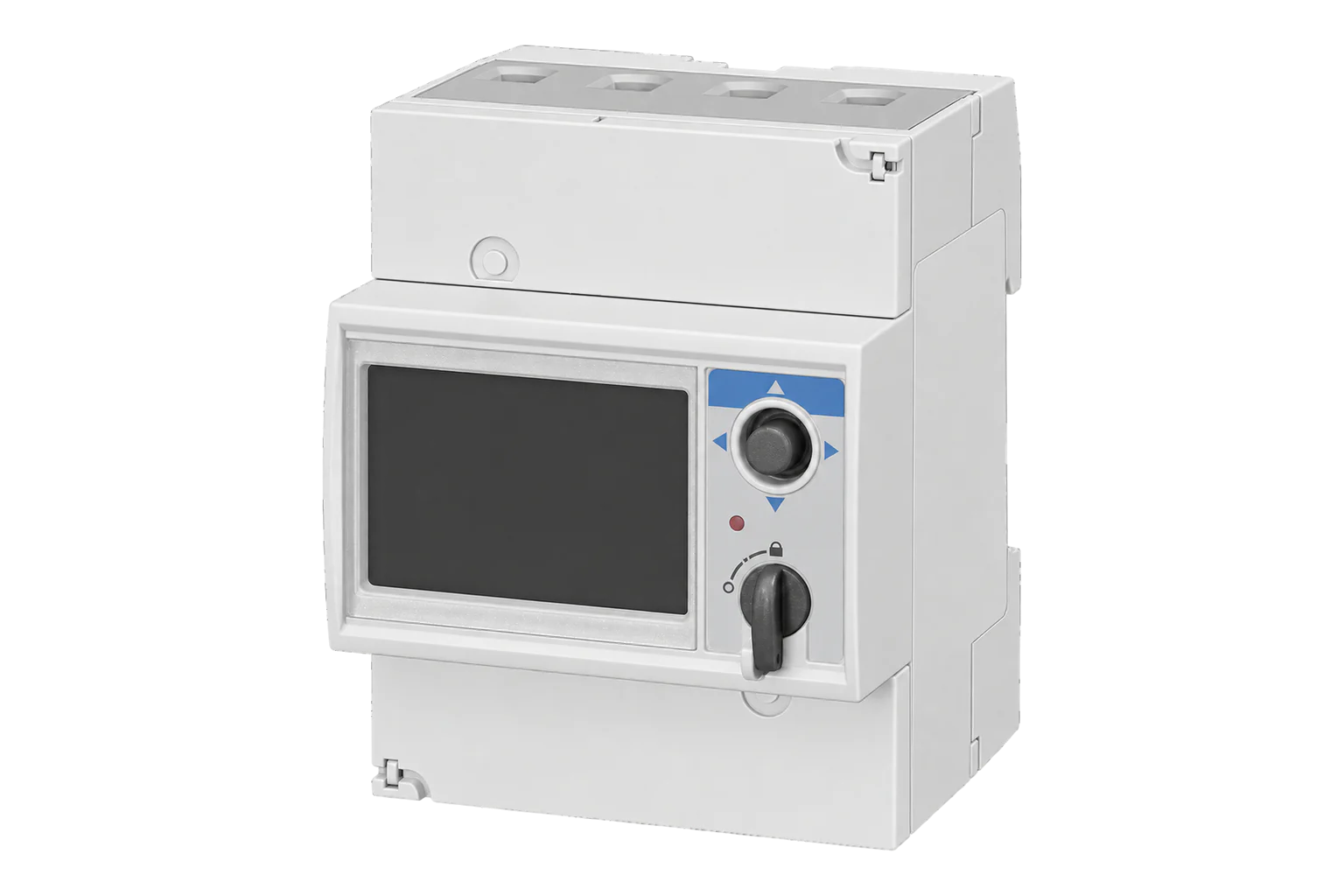
Algodue Elettronica UEM80-4D R
Three-phase energy meter
The UEM80-4D R is the RS-485 Modbus version of Algodue's UEM80 three-phase energy meter: direct connection up to 80 A on a three-phase four-wire supply, self-powered from the voltage circuit, with MID class B packages for billing. Algodue's Modbus protocol manual gives every value a hexadecimal register address that goes on the wire as printed, an integer unit such as mV, mA, mW or 0.1 Wh, and a floating-point copy from 1000h. Two details decide whether the numbers make sense: which integer register set the meter uses, and how it represents negative values.

Compatibility
Compatible with EpiSensor Edge over Modbus RTU
Algodue documents Modbus RTU and ASCII on the UEM80-4D R's built-in RS-485 port and publishes a register table with addresses, lengths, units and signs for read functions 03 and 04. This is documented compatibility, without a physical Edge test.
Algodue UEM80-4D R only (order codes 1104.0001.0001 to 1104.0004.0001), read with Algodue's MODBUS protocol manual v011 (August 2021) and the UEC80/UEM80 manual Ed2104. Check the register set and the signed-value mode before adding power and energy points. The UEM80-D M (M-Bus) and UEM80-4D E (Ethernet) are not covered. Read-only monitoring: no writes to the address, speed, register-set or counter registers.
Connect it with
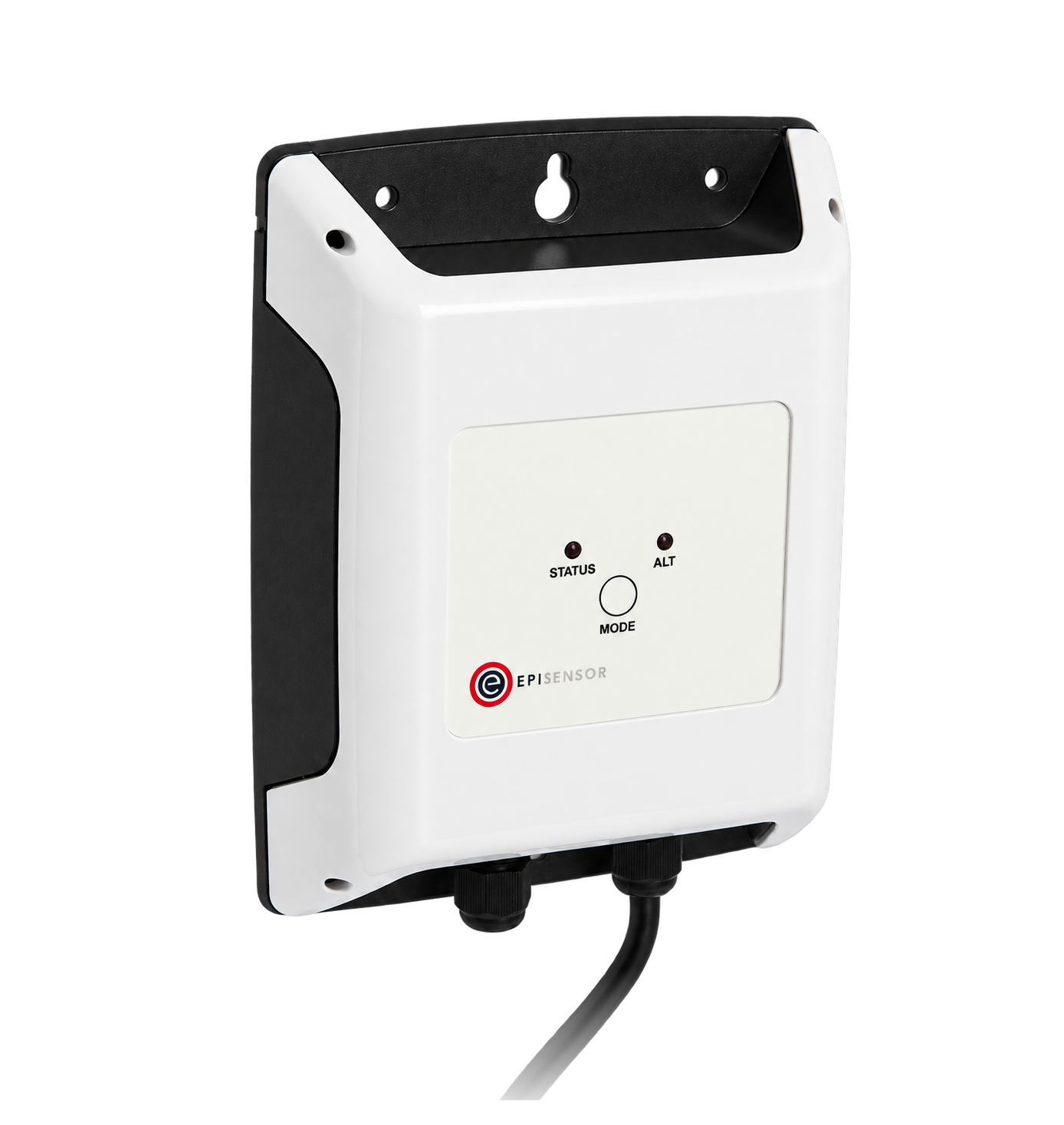
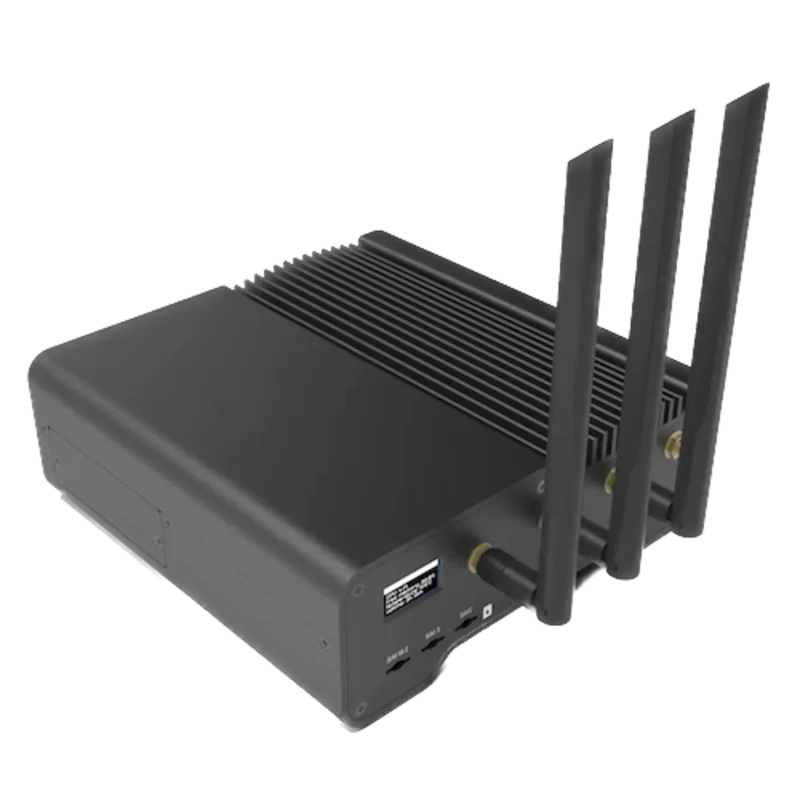
For a UEM80-4D R with its RS-485 port on the COM, − and + terminals
- Modbus
- Edge
- Platforms
Models
| Models | Interface | Route into Edge |
|---|---|---|
| UEM80-4D R: 1104.0001.0001 (MID), 1104.0002.0001 (MID S, sold as UEM80-4DS R), 1104.0003.0001 (no MID), 1104.0004.0001 (no MID, RESET) | Direct connection up to 80 A, three phases and four wires; isolated RS-485 on COM, − and +, Modbus RTU or ASCII; one S0 output and a tariff input | Read the register table of protocol manual v011 with FC03 or FC04 on the serial path. |
| UEM80-4D E (1104.0009.0001 to 1104.0012.0001) | Same meter with an Ethernet port: Modbus TCP, web server and data recording; no tariff input | A different interface. The same protocol manual has a column for integrated Ethernet meters, but this guide covers only the RS-485 version. |
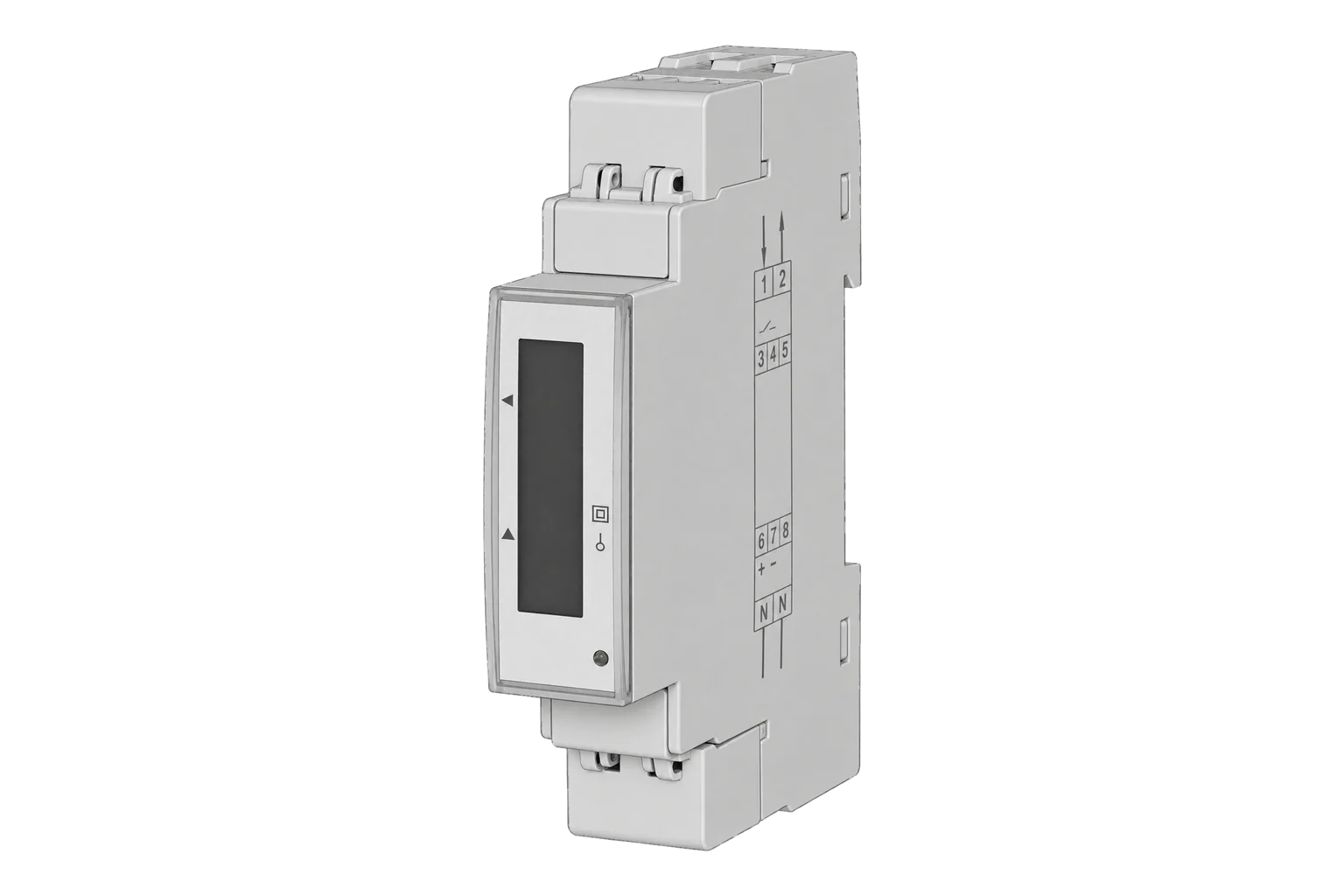
| UEM80-D M (1104.0005.0001 to 1104.0008.0001) | M-Bus port with its own M-Bus protocol manual | Not a Modbus meter. Do not apply these registers to it. |
| UEC80-D | Pulse model with an optical port for an external Algodue communication module | No built-in Modbus port; out of scope for this guide. |
Specifications
The UEM80-4D R suits a tenant feeder, sub-board or machine supply up to 80 A where a direct-connected, MID-capable meter with a serial port is wanted rather than CTs. The RS-485 version is for three-phase four-wire supplies only; the three-wire wirings in the manual belong to the pulse and M-Bus models.23
- Order codes
- 1104.0001.0001 MID, 1104.0002.0001 MID S (Switzerland, no reactive counters on the display), 1104.0003.0001 without MID, 1104.0004.0001 without MID with reset of all counters.35
- Voltage and supply
- 3×230/400 to 3×240/415 V ±20%, 50/60 Hz; powered from the voltage circuit, at most 3.5 VA and 1 W per phase for the RS-485 model.23
- Accuracy
- Active energy class B to EN 50470-3 (MID packages) or class 1 to IEC/EN 62053-21 (without MID); reactive energy class 2 to IEC/EN 62053-23.23
- MID approval
- EU type-examination certificate 226/MID from IMQ (notified body 0051) for the UEM80-4D R and UEM80-4D E: current issue 20 May 2025, expiry 20 May 2035, software version 2.00.4
- RS-485
- Isolated port on COM, − and +, unit load 1/8; Modbus RTU or ASCII at 300 to 57600 bit/s. Factory setting Modbus RTU, 8N1, 19200 bit/s, address 01; addresses 01 to F7h (1 to 247).12
- Inputs and outputs
- One passive optoisolated S0 output, 27 VDC and 27 mA, 100 imp per kWh, kvarh or kVAh; active optoisolated tariff input, 80 to 276 VAC/DC selects tariff 2; metrological LED 1000 imp/kWh.23
- Terminals
- Measuring terminals 1.5 to 35 mm² at 2 Nm; S0, tariff and port terminals 0.14 to 2.5 mm² at 0.5 Nm.2
- Housing
- Four DIN modules to DIN 43880, 72 × 90 × 64 mm. IP51 front when installed in an IP51 enclosure, IP20 terminals.23
- Environment
- Operating −25 to +55 °C, storage −25 to +75 °C, humidity up to 80% without condensation; mechanical class M1, electromagnetic class E2.2
Interface
Documented measurements and integration boundaries for UEM80-4D R.
- Addresses below are the hexadecimal register addresses in Algodue's table. Send them as printed: the manual's own read example asks for 0002h with address bytes 00 02. Use FC03 or FC04 and read only consecutive registers, at most 127 per RTU request.
- The meter answers in one of two integer register sets: RegSet 0 (even and odd addresses) or RegSet 1 (even addresses only). Voltages and currents share addresses in both; power factor, power, frequency and energy do not. The set in use is reported at 0523h (RegSet 0, one register) or 0538h (RegSet 1, two registers): 0 = RegSet 0, 1 = RegSet 1.
- Phase voltages U1N, U2N and U3N at 0000h, 0002h and 0004h; line voltages at 0006h, 0008h and 000Ah; system voltage at 000Ch: two registers, mV, the same in both sets.
- Phase currents at 000Eh, 0010h and 0012h, neutral current at 0014h and system current at 0016h: two registers, mA, signed, the same in both sets.
- Power factor PF1 to PF3 and PFΣ: one register at 0018h to 001Bh in RegSet 0, two registers at 0018h, 001Ah, 001Ch and 001Eh in RegSet 1; multiply by 0.001, signed.
- Active power P1, P2, P3 and PΣ: three registers at 001Ch, 001Fh, 0022h and 0025h in RegSet 0, four registers at 0020h, 0024h, 0028h and 002Ch in RegSet 1; mW, signed. System apparent power is at 0031h or 003Ch (mVA) and system reactive power at 003Dh or 004Ch (mvar).
- Frequency at 0040h (one register, RegSet 0) or 0050h (two registers, RegSet 1), in mHz. Phase sequence at 0041h or 0052h: 0 = 123-CCW, 1 = 321-CW, 2 = not defined.
- System imported active energy +kWhΣ at 0109h (three registers, RegSet 0) or 010Ch (four registers, RegSet 1) and exported −kWhΣ at 0115h or 011Ch, unsigned, in 0.1 Wh. Per-phase, apparent and reactive totals start at 0100h; tariff 1 and tariff 2 counters start at 0200h and 0300h, partial counters at 0400h.
- The same measurements are repeated as IEEE-754 floats from 1000h, two registers each, in V, A, W and Wh: U1N at 1000h, PΣ at 1026h, frequency at 1038h and +kWhΣ at 1106h. The manual does not state the word order of the float block, so confirm it against the display before using it.
- Signed values follow the mode at 051Dh (RegSet 0) or 052Eh (RegSet 1): 0 = sign bit, where the top bit is the sign and the rest is the magnitude (8020h = −32), 1 = two's complement.
- Identity and status: serial number at 0500h (ten ASCII characters), counter model at 0505h or 0506h (08h = 80 A three-phase four-wire), counter type at 0506h or 0508h (02h = MID), firmware release at 0507h or 050Ah and error bits at 050Dh or 0514h (bit 0 phase sequence, bit 1 memory).
Assessment
Algodue UEM80-4D R only (order codes 1104.0001.0001 to 1104.0004.0001), read with Algodue's MODBUS protocol manual v011 (August 2021) and the UEC80/UEM80 manual Ed2104. The UEM80-D M (M-Bus) and UEM80-4D E (Ethernet) are not covered. Read-only monitoring: no writes to the address, speed, register-set or counter registers.
- InteroperabilitySupported with conditions
- Algodue publishes Modbus RTU and ASCII on the built-in port with read functions 03 and 04, hexadecimal addresses, lengths, units and signs. Two integer register sets, a selectable sign representation and an unstated float word order mean each point needs the set, the sign mode and a display check.12
- AccuracyWell supported
- Direct connection to 80 A with no CTs, active energy class B to EN 50470-3 on the MID packages (class 1 otherwise) and reactive class 2. Phase and system voltage, current, power, power factor, frequency and four-quadrant energy counters in 0.1 Wh are all on the serial port.1234
- SecurityLimited
- The protocol accepts FC10 writes, including broadcasts to address 0, for the Modbus address, speed, register set, partial counters and, on the RESET package, the energy counters. It describes no password or write lock on the RS-485 port. Keep the serial bus private and send reads only.13
- ReliabilitySupported with conditions
- The meter is powered from the measured voltage (±20% of nominal) and built to EN 50470-1, with 6 kV pulse and 4 kV AC voltage tests and electromagnetic class E2. An error register flags memory and phase-sequence faults, and exception codes cover bad requests. Treat failed reads as missing data.124
- RuggednessSupported with conditions
- Operating −25 to +55 °C, humidity up to 80%, mechanical class M1 and a 50 Hz vibration figure are documented. IP51 applies only inside an IP51 enclosure and the terminals are IP20, so it is a cabinet meter.24
- ScalabilitySupported with conditions
- Addresses 1 to 247, speeds to 57600 bit/s, 127 registers per RTU request and a readable serial number support larger buses; Algodue's diagram shows 32 meters per segment between repeaters. Real capacity depends on wiring and the poll schedule.12
- LifecycleSupported with conditions
- The MID and non-MID UEM80-4D R order codes are on Algodue's current product page, the MID type-examination certificate was reissued in May 2025 and runs to May 2035, and the firmware releases are readable over Modbus. Algodue states no production horizon, firmware update path or warranty term in these documents.145
Setup
First read: L2 voltage at 0002h
This uses Algodue's MODBUS protocol manual v011 (August 2021). U2N, the phase 2 to neutral voltage, is listed at 0002h as two registers in mV, at the same address in RegSet 0 and RegSet 1, and it is the register Algodue's own read example uses.
- Function
- FC03, read holding registers (the table also allows FC04)
- Address
- Table 0002h. Send 0x0002 (2, zero-based), as Algodue's example does. A client with one-based register numbers enters 3.
- Request
- 01 03 00 02 00 02 65 CB: node 1, FC03, address 0x0002, two registers, RTU CRC.
- Example reply
- 01 03 04 00 03 55 71 F5 47, Algodue's own response example, not a reply captured from a site meter.
- Decode
- Unsigned 32-bit, high word first: 0x00035571 = 218481 mV = 218.481 V.
- Acceptance
- Matches the L2 voltage on the display. 218481 V means the mV unit was missed; about 1.43 million volts means the words were swapped.
Acceptance: Keep the point when it agrees with the display. If it does not, check the node address, speed and RTU mode before adding more points. Record the protocol manual revision and the meter's firmware releases with the configuration.
-
Confirm it is a UEM80-4D R
The front label reads UEM80-4D (UEM80-4DS for the Swiss MID S package) and the RS-485 terminals are marked COM, − and +; the Ethernet version has a network socket instead. A MID meter shows the MID symbols and certificate number on the front, a meter without MID shows Cl.1 EN 62053-21. The info pages show the firmware releases and the communication type.
-
Check the wiring
The RS-485 model supports three phases, four wires and three currents only. Check the phase-sequence symbol on the display before collecting readings; bit 0 of the error register at 050Dh (RegSet 0) or 0514h (RegSet 1) also flags a phase-sequence error.
-
Match the Setup 1 serial settings
Hold ENTER for more than 3 s on the SEtUP? page to open Setup 1, then read the Addr (01 to F7h), bAud (300 to 57600 bit/s) and COM (RTU = 8N1, ASCII = 7E2) pages. Enter the same address, speed and RTU mode in Edge, and give every meter on the bus its own address. The factory setting is Modbus RTU, 8N1, 19200 bit/s, address 01.
-
Wire the RS-485 line
Connect COM, − and + as a single daisy chain and fit a 120 to 150 Ω terminating resistor at the converter end and at the last meter. Algodue recommends at most 1200 m at 9600 bit/s; its wiring diagram groups up to 32 meters per segment and joins segments with repeaters.
-
Read the register set and sign mode
Before adding power and energy points, read the register set (0523h in RegSet 0, 0538h in RegSet 1) and the signed-value mode (051Dh or 052Eh). Use the addresses and lengths of that set, and decode currents, power factors and powers with that sign mode.
-
Start with the L2 voltage read
Read U2N with the example below and compare it with the L2 voltage on the display. Then add currents, powers and the energy counters, checking each new point against the matching display page.
Common questions
- Do I send 0002h or 40003 for the L2 voltage?
- Algodue's table gives hexadecimal register addresses that go on the wire as printed: its own read example asks for 0002h with address bytes 00 02. A client that takes the zero-based address enters 2; one that numbers holding registers from one enters 3, or 40003 in the five-digit style.1
- Why does energy read from the wrong address on some meters?
- The protocol manual has two integer register sets. RegSet 0 packs values into consecutive addresses, so the system imported active energy is three registers at 0109h; RegSet 1 starts every value on an even address, so the same counter is four registers at 010Ch. Read the set in use at 0523h or 0538h and use that column. Changing the set is a write, which this read-only guide does not cover.1
- Why does a negative power look like a huge positive number?
- Currents, power factors and powers are signed, and the meter reports how at 051Dh or 052Eh. In sign-bit mode the top bit is the sign and the rest is the magnitude, so 8020h means −32, not the two's-complement value. Decode with the mode the meter reports and check the sign against the import and export arrows on the display.12
- How are the energy counters decoded?
- Each counter is an unsigned integer in 0.1 Wh (0.1 varh or 0.1 VAh for the reactive and apparent rows): three registers in RegSet 0 and four in RegSet 1. Decode the most significant word first, as Algodue's two-register example does, then divide by 10 000 for kWh and compare with the total energy page on the display. The float copy at 1106h is in Wh.1
Related devices

Sources
- MODBUS communication protocol manual v011 (August 2021) for counters with integrated MODBUS or Ethernet interface (opens in a new tab) (PDF)
- UEC80 and UEM80 multilingual user manual MPIC00129R01 Ed2104 (English section) (opens in a new tab) (PDF)
- UEM80 datasheet 72PG01_2_201901_2: technical features, measurements and order codes (opens in a new tab) (PDF)
- EU type-examination certificate 226/MID for UEM80-4D R and UEM80-4D E (IMQ, current issue 20 May 2025) (opens in a new tab) (PDF)
- UEM80 MID energy meter product page: order codes and technical specifications (opens in a new tab)
Further reading
Product names and trademarks belong to their owners. Publication does not imply endorsement or a commercial relationship.