kW to kWh calculator

Convert kW to kWh for a running time, or kWh to average kW, with the running cost per day and per year.

Energy cost and demand Updated Free, no sign-up

Example values
What do you want to calculate?
Conversion
Known values

Running time

Cost
Currency

0 leaves the cost out

EUR/kWh

Energy used

6kWh

A constant 2 kW load for 3 hours.

Cost for 3 hours
€1.50
Per year, 3 hours every day
2,190 kWh
Cost per year at that use
€547.50
How it’s calculated
  1. E = P × t=2 kW × 3 h=6 kWh
  2. Cost = E × price=6 kWh × 0.25=€1.50

2 kW for 3 hours is 6 kWh, costing €1.50 at €0.25 per kWh.

Tip: A kW rating is the most a device draws, not what it uses. A 2 kW heater on a thermostat may average well under 1 kW.

How to convert kW to kWh

To convert kW to kWh, multiply the power in kilowatts by the time in hours. A 2 kW heater running for 3 hours uses 6 kWh. To go the other way, divide the energy by the time: 100 kWh over 8 hours is an average of 12.5 kW.

kW is power, the rate of use at an instant, like speed. kWh is energy, the total over a period, like distance. The energy charge on a bill is in kWh. Cables and breakers are sized on current, and a connection agreement sets a capacity in kVA (the Maximum Import Capacity, or MIC, in Ireland). Both follow from peak power, not from kWh.

Power and time to energy

E (kWh) = P (kW) × t (h)

Put the time in hours. Divide minutes by 60 first: 30 minutes is 0.5 h. Divide watts by 1,000 first: 1,500 W is 1.5 kW.

A load that cycles

P (average) = P (on) × fraction of time on

Enter the average power, not the rating. A 3 kW heater that its thermostat keeps on for 40% of the time averages 1.2 kW. Over a 10-hour day that is 12 kWh, not the 30 kWh the rating gives.

Energy and time to average power

P (kW) = E (kWh) ÷ t (h)

The result is the average over the period, not the peak. A sub-meter that recorded 4,380 kWh in a 730-hour month saw an average of 6 kW. The load may still have reached 20 kW for part of that month.

Cost of running

Cost = E (kWh) × price per kWh

Use the unit rate on the bill. The calculator applies one flat rate. On a time-of-use tariff, split the kWh by period and price each part at its own rate: 4 kWh at a night rate of €0.15 and 2 kWh at a day rate of €0.35 cost €1.30, against €1.80 for the same 6 kWh at a flat €0.30. Standing charges and demand charges are billed separately.

kW × hours is exact only for a load that draws the same power the whole time. A nameplate rating is usually the most a device draws at rated conditions, so a nameplate estimate is an upper limit, not a forecast. Two ratings are not input power at all. A motor nameplate gives shaft output: a 7.5 kW four-pole motor at the IE3 minimum efficiency of 90.4% (IEC 60034-30-1) draws about 8.3 kW from the supply at full load, and less at part load. A PC or server power supply rating is its maximum output capacity, not its draw. Where the figure matters, measure the kWh with an energy meter.

kW to kWh examples

A 3 kW immersion heater for 2 hours

An immersion element is a resistive load. It draws its full rating until the tank thermostat opens: 3 kW × 2 h = 6 kWh. A 150 L tank heated from 15 °C to 60 °C needs about 7.85 kWh (150 kg × 4.19 kJ/kg·K × 45 K ÷ 3,600), so the element stays on for the full 2 hours. At €0.30 per kWh the run costs €1.80, or €657 a year at two hours every day.

Energy used 6 kWh Open in the calculator
A 150 W network rack that never switches off

150 W is 0.15 kW, and 0.15 kW × 24 h = 3.6 kWh a day, or 1,314 kWh a year. At €0.25 per kWh that is €328.50 a year for one rack. Use a measured figure for a load like this. The power supply labels on the switches and firewall in the rack can add up to several times the real draw.

Energy used 3.6 kWh Open in the calculator

Average power from a monthly meter reading

A sub-meter recorded 4,380 kWh over an average month of 730 hours (8,760 hours in a year divided by 12). The average power is 4,380 ÷ 730 = 6 kW. Divide it by the peak demand on the same circuit to get the load factor. A circuit that averages 6 kW and peaks at 20 kW has a load factor of 0.3.

Average power 6 kW Open in the calculator

kW to kWh table for 1, 8 and 24 hours

Energy at a constant load. For any other time, multiply the 1-hour column by the number of hours.

kW to kWh table for 1, 8 and 24 hours, values in kWh
Power (kW)1 hour (kWh)8 hours (kWh)24 hours (kWh)
0.10.10.82.4
0.50.5412
11824
1.51.51236
221648
332472
5540120
7.47.459.2177.6
101080240
111188264
2222176528
50504001,200
1001008002,400

Download this table (CSV)

Questions about kW to kWh

How many kWh is 1 kW?

It depends on the running time. 1 kW for one hour is 1 kWh. For 24 hours it is 24 kWh, and for a year of continuous running it is 8,760 kWh.

Is kVA the same as kW?

No. kW is real power, the part that does work, and a kWh meter integrates it. kVA is apparent power, volts × amps. kW = kVA × power factor, so a 100 kVA supply feeding a load at a power factor of 0.9 delivers at most 90 kW, or 90 kWh in an hour. The kW, kVA, kvar and power factor calculator converts between kW, kVA and kvar.

How do I get kWh from two meter readings?

Subtract the earlier reading from the later one. A CT-operated meter that reads secondary values needs its multiplier: with 200/5 A CTs the multiplier is 40, so a register advance of 125.4 is 5,016 kWh. Most modern CT meters are programmed with the ratio and show primary kWh. The meter label or display tells you which. For pulse outputs, see pulse meter commissioning and reconciliation.

Why does my bill show kW as well as kWh?

Larger supplies pay a maximum demand charge as well as an energy charge. The demand charge is on the highest average kW or kVA in any metering interval, usually 15 or 30 minutes. The interval demand calculator turns an interval kWh reading into that kW figure.

Limits of this result

  • A rated power is a maximum. Real energy use depends on duty cycle, thermostat and load, so measure it where the figure matters.
  • The cost uses one flat price per kWh. Time-of-use rates, standing charges and demand charges are not included.
  • The yearly figure assumes the same running time every day of the year.

Measure it continuously

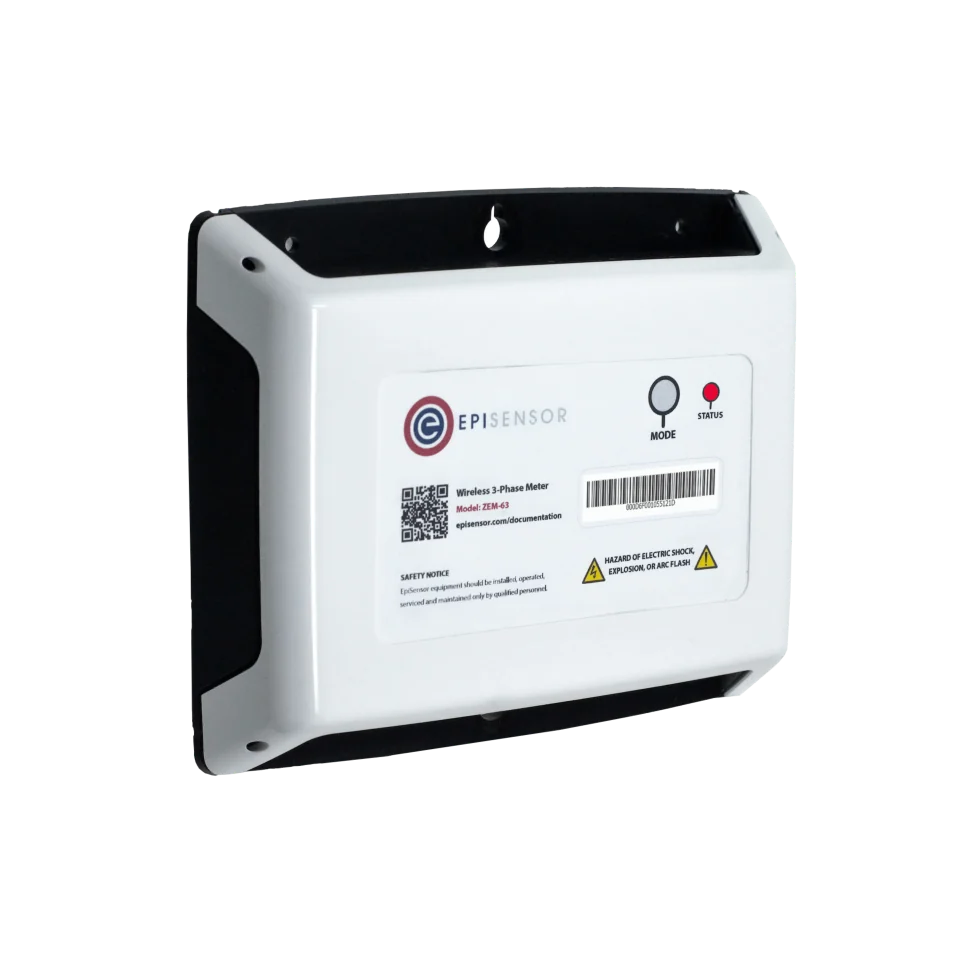
A ZEM measures kW and kWh on each phase of a circuit, so running costs come from the actual load rather than a nameplate.

Related guides

Sources

  1. The International System of Units (SI), 9th edition (opens in a new tab) BIPM, 2019, updated 2022
  2. NIST Guide to the SI, Appendix B.9: factors for units by kind of quantity (opens in a new tab) NIST, Special Publication 811, 2008