Chiller COP calculator

Work out a chiller’s COP, kW per ton and EER from its cooling output and electrical input at the same moment.

HVAC, thermal and process Updated Free, no sign-up

Cooling
Unit
kW
Electrical input
kW

0 for the chiller alone

kW

COP, cooling

5.556

Electrical input per ton
0.633 kW/ton
EER
18.96 Btu/Wh
Cooling in tons
284.3 tons

At this moment only. Rated part-load figures (IPLV, NPLV, SEER) average several operating points.

How it’s calculated
  1. COP = Q ÷ Pin=1,000 ÷ 180=5.556
  2. kW/ton = Pin ÷ tons=180 ÷ 284.3=0.633 kW/ton

Choose the devices to monitor this chiller.

Build a system

1,000 kW of cooling (284.3 tons) for 180 kW of electricity is a COP of 5.556, 0.633 kW per ton or an EER of 18.96.

Tip: Decide whether pumps and cooling tower fans are inside the boundary before comparing figures. The same chiller shows a lower COP when they are included.

How to calculate chiller COP and kW per ton

COP, kW per ton and EER are the same ratio in three units. COP is cooling kW per electrical kW. kW per ton is electrical kW per ton of refrigeration. EER, in its North American sense, is cooling Btu/h per electrical watt. A chiller and its pumps that deliver 300 tons, 1,055 kW, for 200 kW of electricity run at a COP of 5.275, 0.6667 kW/ton and an EER of 18.

The number only means something with its boundary and its operating point attached. The same chiller reads 5.556 on its own and 4.444 with its pumps and tower fans, and both figures change with load and condenser temperature.

COP

COP = cooling (kW) ÷ electrical input (kW)

Both terms are in kW, so COP has no unit. Higher is better. Take the cooling from a heat meter on the chilled water circuit, or from flow and the flow and return temperatures. The heat meter check does that step.

kW per ton

kW/ton = electrical input (kW) ÷ cooling (tons) = 3.517 ÷ COP

One ton of refrigeration is 12,000 Btu/h, or 3.5168525 kW. That is the rate that melts a short ton of ice in 24 hours. Lower is better. North American specifications and ASHRAE 90.1 use it for water-cooled chillers.

EER

EER (Btu/Wh) = COP × 3.412

One watt is 3.412 Btu/h. AHRI and ASHRAE 90.1 rate air-cooled chillers in this unit, so an EER of 10.964 is a COP of 3.21. European datasheets are different. EN 14511 uses EER for cooling kW per electrical kW, which is the same number as COP. An EN 14511 EER of 3.2 is a COP of 3.2, not 0.94. Check the unit before you convert.

Each result applies to one operating point. Efficiency changes with load, with chilled water temperature and with condenser water or outdoor air temperature. Part-load ratings average several points. IPLV, from AHRI 550/590, weights the efficiency at 100, 75, 50 and 25 % load by 1, 42, 45 and 12 %. NPLV uses the same weights at the design conditions of the site. In Europe, Regulation (EU) 2016/2281 sets seasonal ratings instead: SEER for comfort chillers and SEPR for process chillers.

For figures from interval data, calculate the COP of a period from energy totals: cooling kWh divided by electrical kWh. Do not average the interval COPs. Take one hour at 800 kW cooling for 160 kW (COP 5) and one hour at 50 kW for 25 kW (COP 2). The mean of the two COPs is 3.5. The true COP for the two hours is 850 ÷ 185 = 4.59. At low load and during free cooling, small denominators make single intervals swing widely, so exclude intervals with the compressors off.

Temperature error usually dominates COP uncertainty. A chilled water circuit at 7 °C flow and 12 °C return has a ΔT of only 5 K. A 0.1 K error in that difference is a 2 % error in cooling, and therefore in COP. Use a matched pair of sensors, fitted in pockets in straight pipe and immersed to the correct depth.

Chiller efficiency examples

A 300-ton chiller with its pumps

300 tons is 1,055 kW of cooling. The chiller takes 180 kW and its chilled water pumps take 20 kW. The COP inside that boundary is 1,055 ÷ 200 = 5.275, which is 0.6667 kW/ton or an EER of 18.

COP, cooling 5.275 Open in the calculator
A 1 MW chiller on its own

1,000 kW of cooling for 180 kW at the chiller terminals is a COP of 5.556. That is 0.633 kW/ton, or an EER of 18.96 Btu/Wh. This is the figure to compare with the manufacturer’s rating at the same conditions.

COP, cooling 5.556 Open in the calculator

The same chiller as a plant

Add 45 kW for the chilled and condenser water pumps and the tower fans. The plant COP is 1,000 ÷ 225 = 4.444, or 0.791 kW/ton. The chiller has not changed. Only the boundary has, and it moved the result by 20 %. State the boundary with every COP you report.

COP, cooling 4.444 Open in the calculator

kW per ton, COP and EER

Chiller efficiency in each of the three units, from kW per ton.

kW/tonCOPEER (Btu/Wh)
0.457.81526.67
0.57.03424
0.556.39421.82
0.65.86120
0.655.41118.46
0.75.02417.14
0.84.39615
0.93.90813.33
13.51712
1.22.93110
1.52.3458

Download this table (CSV)

Questions about chiller efficiency

What is a good COP for a chiller?

At full load, a new large water-cooled centrifugal chiller rates about 0.50 to 0.56 kW/ton, a COP of 6.3 to 7.0. A new air-cooled chiller rates an EER of about 10 to 11 Btu/Wh, a COP of 2.9 to 3.2, because it rejects heat to outdoor air. US federal procurement (FEMP) asks for 0.501 kW/ton from a centrifugal chiller of 600 tons or more, and an EER of 10.964 from an air-cooled chiller of 150 tons or more. Measured plant COPs, with pumps and fans included, are usually well below these ratings.

Is kW per ton the same as COP?

It is the same ratio inverted and in different units: kW/ton = 3.517 ÷ COP. A COP of 6 is 0.586 kW/ton.

Why does my measured COP fall in summer?

The compressor must lift heat to a higher condensing temperature. On an air-cooled chiller the outdoor air temperature sets that. On a water-cooled chiller, the condenser water temperature from the cooling tower sets it, and the tower approach rises with the wet-bulb temperature. As a guide, each 1 K rise in condensing temperature costs about 2 to 3 % of COP.

What do I need to measure chiller COP continuously?

Measure the electrical input to the chiller, and to the pumps and fans inside your boundary. Measure the cooling with a heat meter, or with flow and matched flow and return temperatures, logged on the same interval as the power. See chiller performance monitoring.

Limits of this result

  • This is the ratio at one moment, not a part-load rating such as IPLV or NPLV.
  • Cooling and electricity must cover the same interval and the same equipment.
  • Load, water temperatures, flow and fouling all change the figure; compare like with like.

Measure it continuously

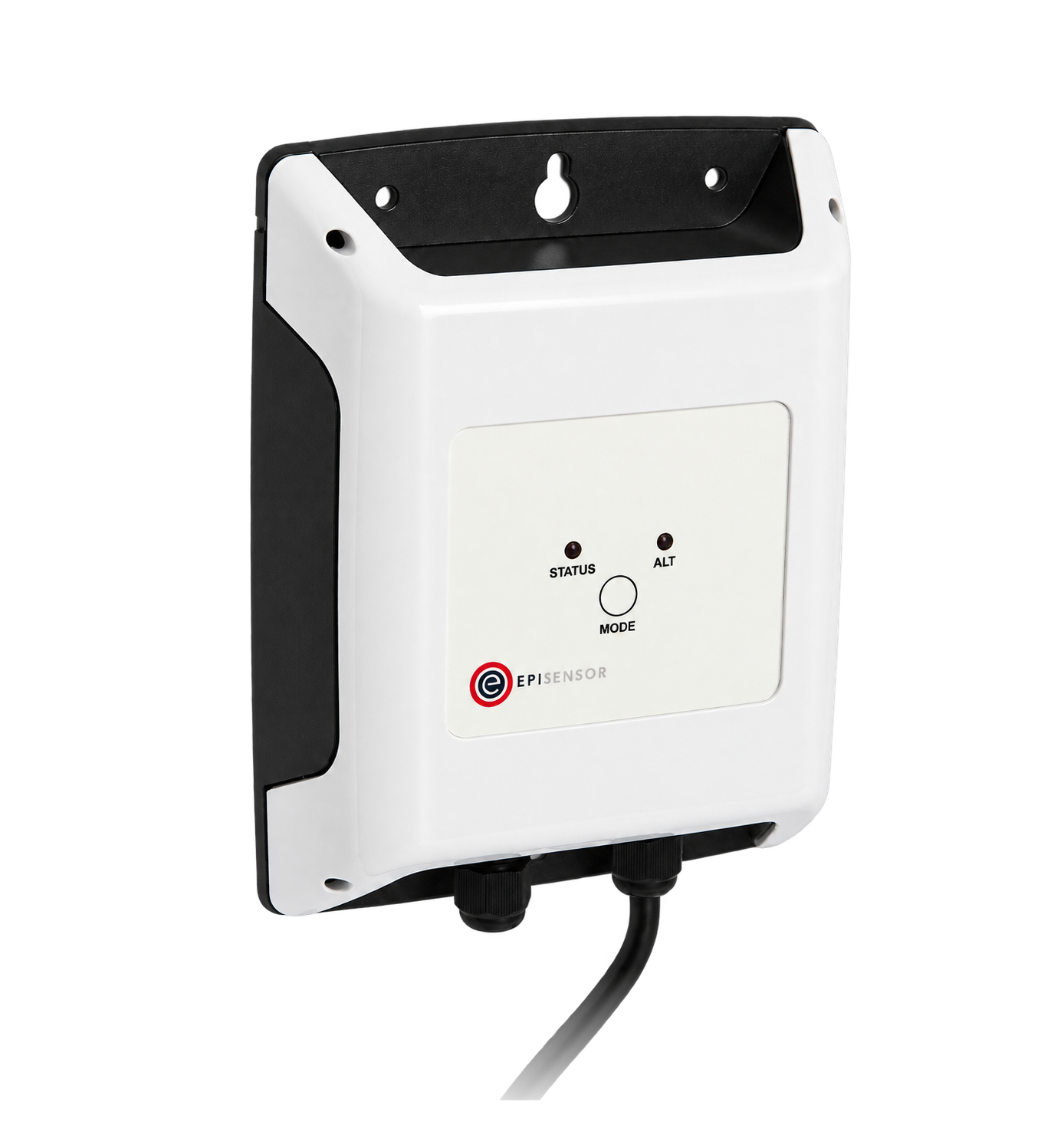
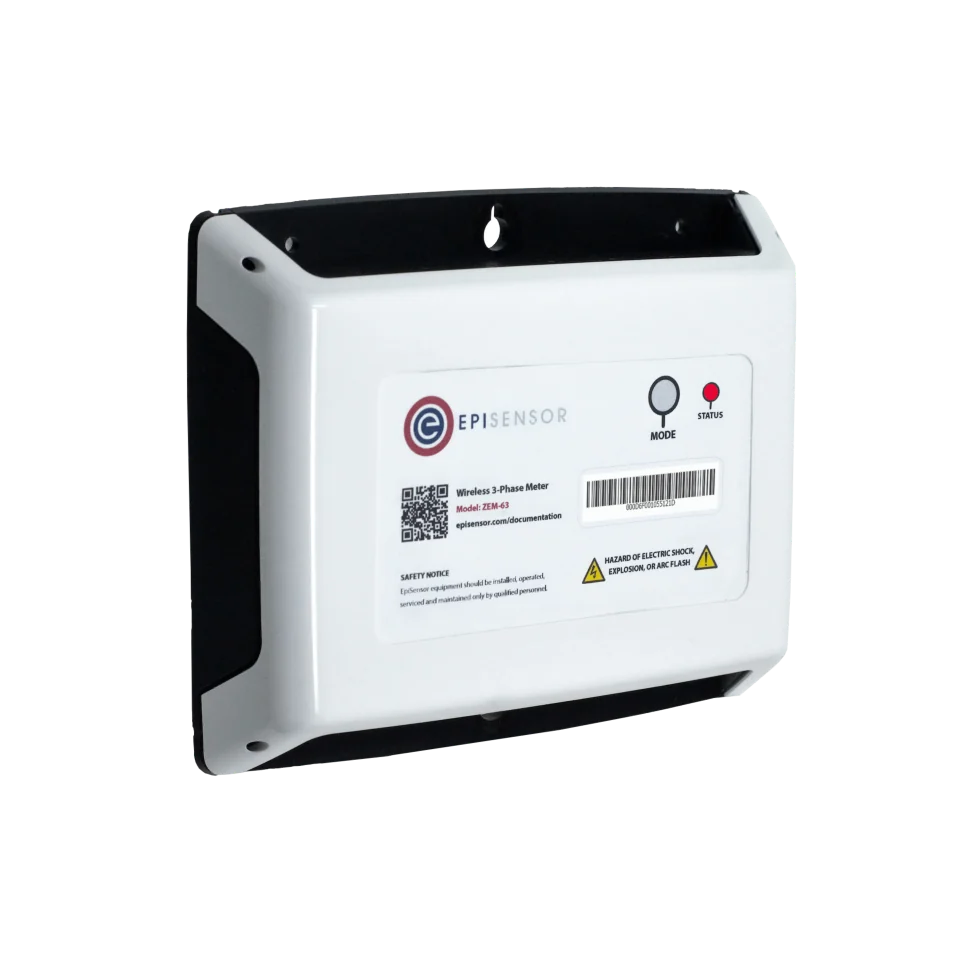
A ZEM measures the electrical input to the chiller and to each pump or fan inside the boundary. A pair of TES probes gives the chilled water flow and return temperatures for the cooling side.

Related guides

Sources

  1. Purchasing Energy-Efficient Electric Chillers (opens in a new tab) US Department of Energy FEMP, updated 2024-10