Heat meter check

Work out the heat a circuit carries from its flow rate and the flow and return temperatures, to check a heat meter reading.

HVAC, thermal and process Updated Free, no sign-up

Example values
Flow
m³/h
°C
°C
Fluid

Common fluids

kg/m³
kJ/(kg·K)

Heat delivered

227.6kW

Temperature difference, flow minus return
20 K
Mass flow
2.716 kg/s

Compare with the heat meter over the same period. A billing heat meter uses its own approved sensors and fluid model.

How it’s calculated
  1. ṁ = V̇ × ρ ÷ 3600=10 × 977.8 ÷ 3600=2.716 kg/s
  2. Q = ṁ × cp × ΔT=2.716 × 4.19 × 20=227.6 kW

Choose how to read this heat meter.

Build a system

10 m³/h with 20 K between flow and return carries 227.6 kW.

Tip: A 1 K error in ΔT is 5% of a 20 K difference. Matched temperature sensors matter more than the flow meter on a low-ΔT circuit.

How to calculate heat from flow and temperature

A heat meter multiplies the flow through a circuit by the temperature difference between flow and return, and by how much heat each cubic metre of the fluid carries per degree. Doing the same sum from independent readings is the quickest check that a meter is reading sensibly: 10 m³/h of water at 70 °C flow and 50 °C return carries 227.6 kW.

Mass flow

ṁ = V̇ × ρ ÷ 3600

V̇ is the volume flow in m³/h and ρ the fluid’s density in kg/m³; dividing by 3,600 gives kilograms per second. Water at 70 °C is 977.8 kg/m³, about 2% lighter than at 20 °C.

Heat

Q = ṁ × cp × (Tflow − Treturn)

cp is the specific heat in kJ/(kg·K): about 4.18 for water across the heating range. With mass flow in kg/s the result is kW. When the return is warmer than the flow, the circuit is taking heat up, as a chilled water circuit does, and the calculator reports it as cooling.

Energy over time

E = Q × hours

A meter’s energy register is this power integrated over time. To check it, compare the change in the register over a period with the average power over the same period multiplied by its length.

For water, ρ × cp ÷ 3600 is close to 1.16 kWh per m³ per kelvin at room temperature and 1.14 at 70 °C, which gives a mental check: flow in m³/h times ΔT in kelvin, times 1.14, is kW. Glycol mixtures carry less: in Dow’s data for its inhibited propylene glycol at 30% by volume, ρ × cp is about 6% below water’s at 10 °C.

Heat meter calculation examples

A heating circuit at 70/50 °C

10 m³/h of water at 977.8 kg/m³ is 2.716 kg/s. Times 4.19 kJ/(kg·K) and a 20 K difference, it carries 227.6 kW. A heat meter on this circuit should add about 228 kWh to its register each hour.

Heat delivered 227.6 kW Open in the calculator
A district heating substation at 80/50 °C

At 2.5 m³/h and a 30 K difference the substation takes 85.35 kW. District heating networks aim for a large difference, because the same pipe then carries more heat for the same pumping energy.

Heat delivered 85.35 kW Open in the calculator

A glycol chilled water circuit

A 30% propylene glycol circuit at 20 m³/h, 6 °C flow and 12 °C return, with Dow’s figures at 10 °C of 1,043.8 kg/m³ and 3.757 kJ/(kg·K), takes up 130.7 kW of heat. The same flow of plain water would read 139.7 kW, so a meter set up for water over-reads by about 7%.

Heat taken up (cooling) 130.7 kW Open in the calculator

Heat carried by water, by flow and temperature difference

Heat in kW for water at 70 °C (977.8 kg/m³, 4.19 kJ/(kg·K)) for each volume flow and flow-to-return difference.

Heat carried by water, by flow and temperature difference, values in kW
Flow (m³/h)ΔT 5 K (kW)ΔT 10 K (kW)ΔT 20 K (kW)ΔT 30 K (kW)
0.52.8455.6911.3817.07
15.6911.3822.7634.14
211.3822.7645.5268.28
528.4556.9113.8170.7
1056.9113.8227.6341.4
20113.8227.6455.2682.8
50284.55691,1381,707
1005691,1382,2763,414

Download this table (CSV)

Questions about heat meter power

Why does my heat meter disagree with this calculation?

Most often because the readings are not from the same moment or the same circuit, or because the temperature sensors are not matched. On a 20 K circuit a 1 K error is 5% of the result; on a 5 K circuit it is 20%. Heat meters use a matched sensor pair for this reason.

Does a heat meter need to know the fluid?

Yes. A meter calibrated for water applies water’s density and specific heat. On a glycol circuit it over-reads unless it is set up for that mixture, so check the meter’s fluid setting before trusting its register.

What does a small temperature difference mean?

Often that too much water is flowing for the load, a problem called low delta-T. It wastes pumping energy and, on district heating and heat pumps, lowers efficiency. It also makes metering less accurate, which is why the calculator flags a difference under 3 K.

How do I read a heat meter remotely?

Many heat meters have an M-Bus port. A wired M-Bus master reads many meters on one cable, or a ZHM reads one meter and reports it wirelessly. See wired M-Bus commissioning for heat meters.

Limits of this result

  • Use the fluid’s properties at its temperature and concentration. The glycol presets are one inhibited propylene glycol at 30% by volume; other products differ.
  • A billing heat meter uses its own approved sensors and fluid model, so small differences are expected.
  • Flow and temperatures must come from the same circuit at the same time.
  • This covers heat carried by a liquid. Steam, condensing and two-phase flow need a different calculation.

Measure it continuously

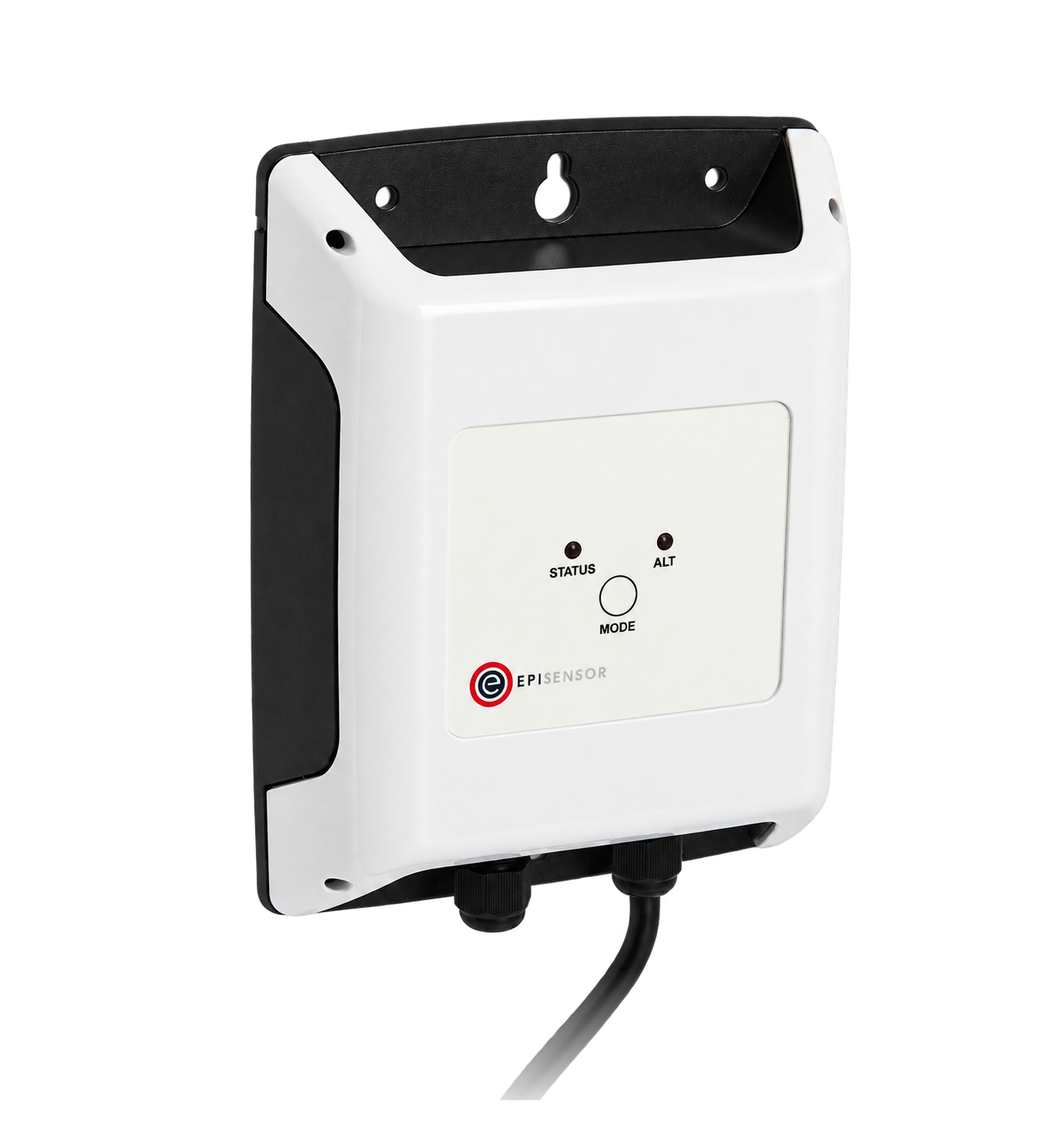
A ZHM reads a heat meter’s M-Bus port and reports its readings wirelessly, so this check can run on live data.

Related guides

Sources

  1. Fundamentals Handbook: Thermodynamics, Heat Transfer, and Fluid Flow, Volume 2 (opens in a new tab) (PDF) US Department of Energy, DOE-HDBK-1012/2-92, Rev. 0, equation 2-15
  2. SonoMeter 30 heat-meter energy verification guide (opens in a new tab) (PDF) Danfoss, VU.SH.I1.02, 2019-10
  3. Engineering and operating guide for DOWFROST and DOWFROST HD (opens in a new tab) (PDF) Dow, form 180-01286, tables 10 and 22