BYD Battery-Max Lite
Commercial high-voltage battery storage system
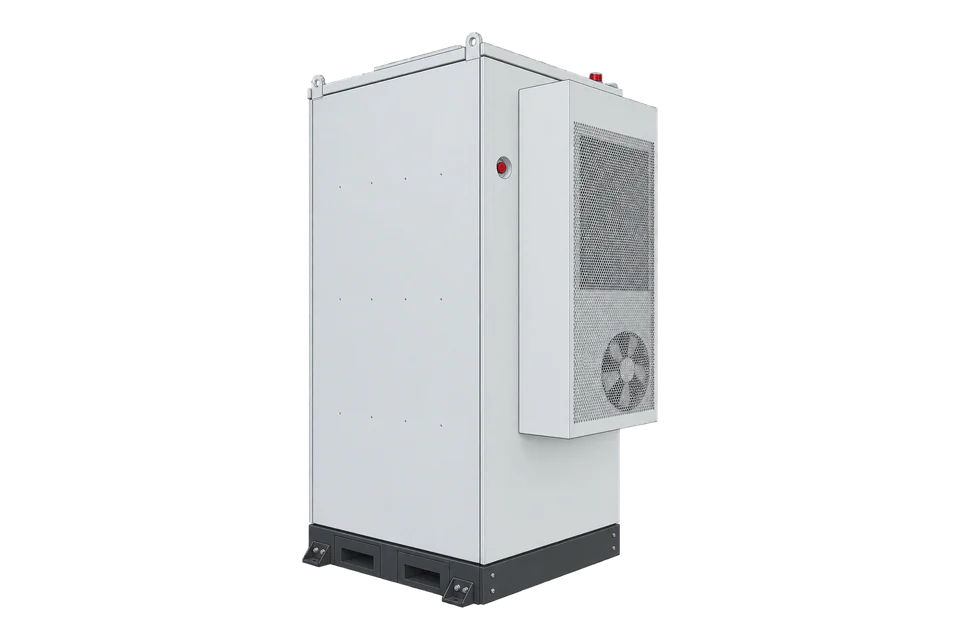
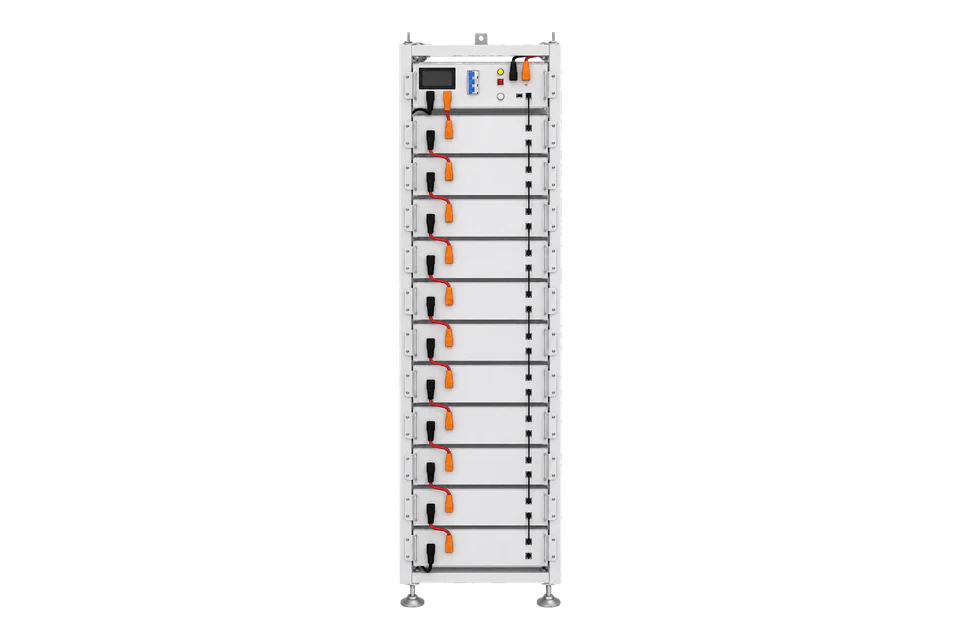
Battery-Max Lite is BYD's C&I battery cabinet: 4 to 12 modules of 7.5 kWh LFP, 30 to 90 kWh per tower and up to ten towers. It talks to an approved hybrid inverter over CAN. On a Deye SUN-29.9K to 50K-SG01HP3-EU system, Edge reads the battery's SOC, voltage and current from the inverter's RS485 port over Modbus RTU, using Deye's three-phase storage protocol.
Compatibility
Compatible with EpiSensor Edge through the inverter that manages the battery
BYD's compatible inverter list V1.4 approves Battery-Max Lite with 4 to 9 modules on the Deye SUN-29.9K to 50K-SG01HP3-EU, linked over CAN to the inverter's BMS1 port. Deye's three-phase storage protocol V105 defines read-only FC03 battery SOC, voltage and current on the inverter's RS485 port. Edge reads them as a Modbus RTU client through a ZMB-31 Modbus Interface or the Gateway's serial port. This is an inverter-mediated route, not a direct Battery-Max Lite interface to Edge.
Battery-Max Lite (LITE 30 to LITE 67.5, 4 to 9 modules) on SUN-29.9/30/35K-SG01HP3-EU-BM3 or SUN-40/50K-SG01HP3-EU-BM4, from datasheet V1.7, compatible inverter list V1.4, operating manual V1.3 and the public V105 protocol copy. Other listed inverters need their own telemetry documents. Site check: confirm the battery on the inverter's Li-BMS page and match the slave address to its Modbus SN. Read-only; no battery or inverter writes.
Connect it with
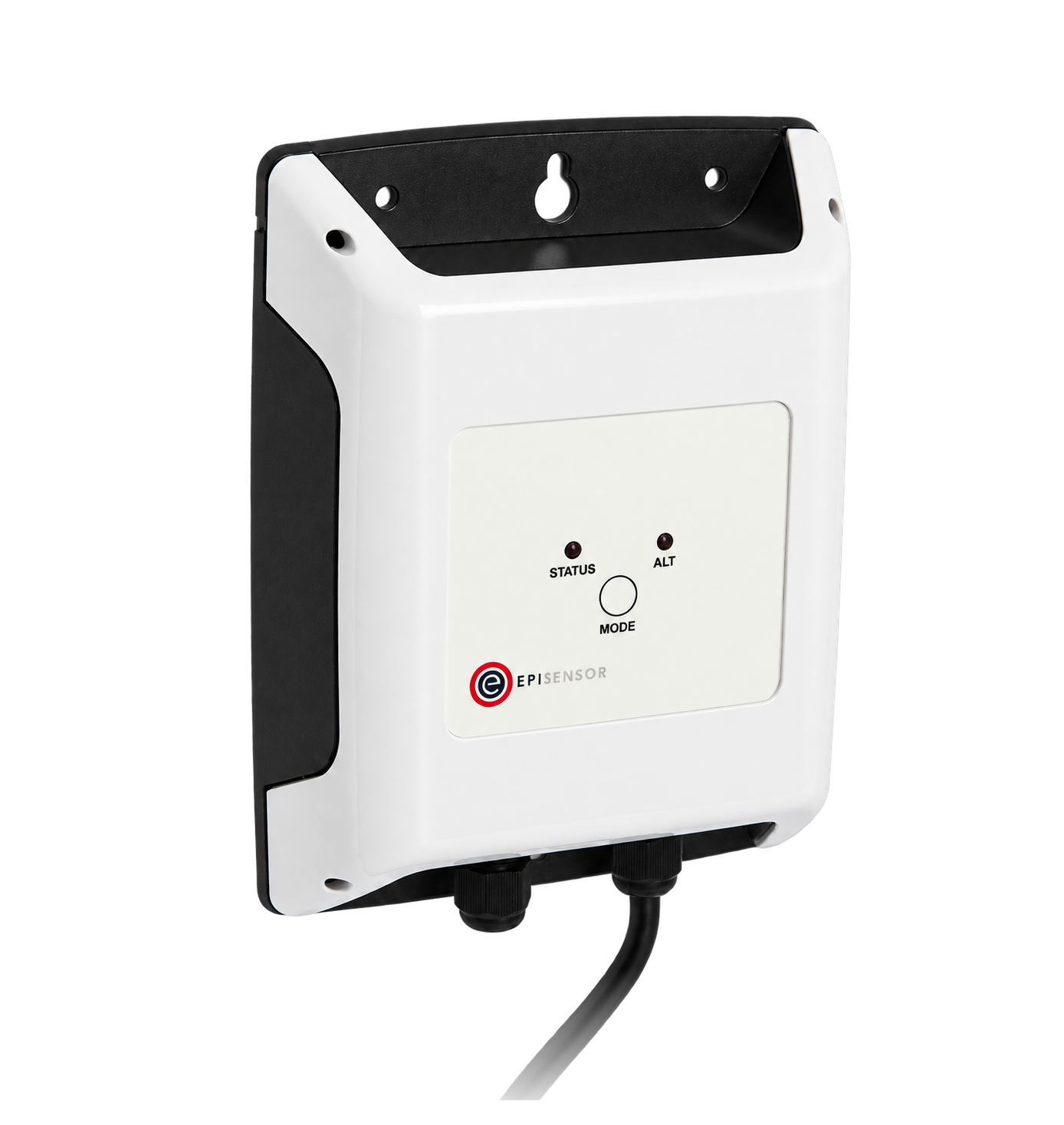
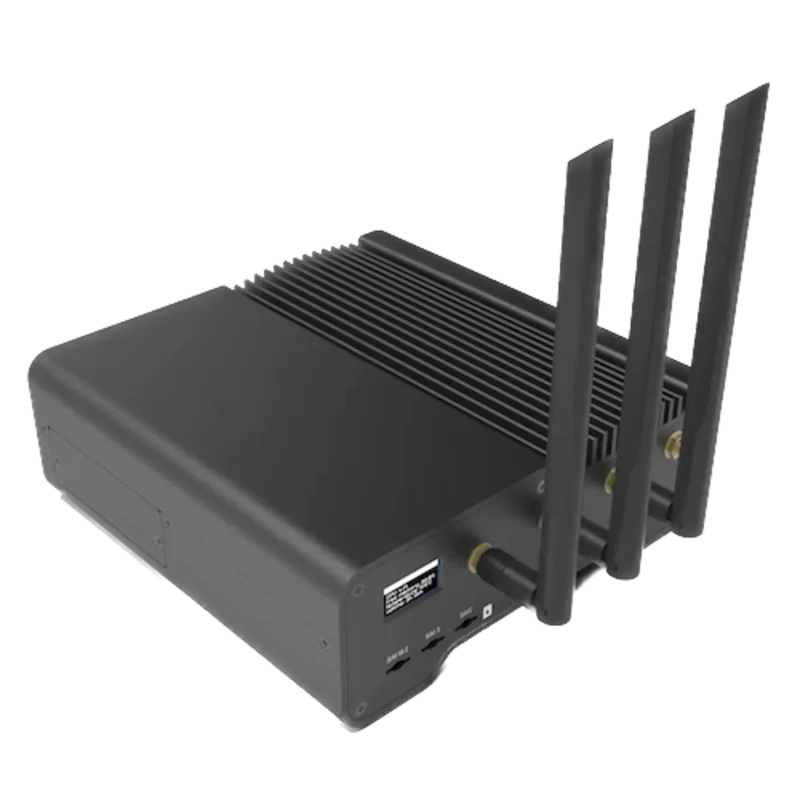
A Battery-Max Lite on an approved Deye SUN-SG01HP3-EU hybrid, with the inverter's RS485 port free for one polling master
- Wired
- Edge
- Platforms
Models
| Models | Interface | Route into Edge |
|---|---|---|
| LITE 30, 37.5, 45, 52.5, 60 and 67.5 (4 to 9 modules) | 7.5 kWh, 76.8 V modules; 30 to 67.5 kWh, 307 to 691 V nominal per tower | Approved on the Deye SUN-29.9K to 50K-SG01HP3-EU in list V1.4. Read through the inverter. |
| LITE 75, 82.5 and 90 (10 to 12 modules) | 75 to 90 kWh, 767 to 921 V nominal per tower | Outside the Deye SG01HP3 range in list V1.4. The Deye SUN-60/70/75/80K-SG02HP3-EU-EM6 takes 4 to 11 modules; use its own protocol before reading it. |
| Other listed inverters: AXITEC AXIhycon, GoodWe GW(40-50)K-ET-10, KACO blueplanet gridsave 92.0 TL3-S, Megarevo, SMA Sunny Island X, Solis S6-EH3P(29.9-50)K-H | Each with its own module range and connection option | The inverter is still the monitoring endpoint; use that inverter's own documented interface. |
| Battery-Max LiteIn | Separate product with its own datasheet, manual and inverter list | Do not transfer Battery-Max Lite ratings or approvals. |
Specifications
A Battery-Max Lite tower holds 4 to 12 LITE modules of 7.5 kWh and 76.8 V, so LITE 30 to LITE 90 give 30 to 90 kWh. Ten towers in parallel reach 900 kWh, each with the same module count.12
- Module
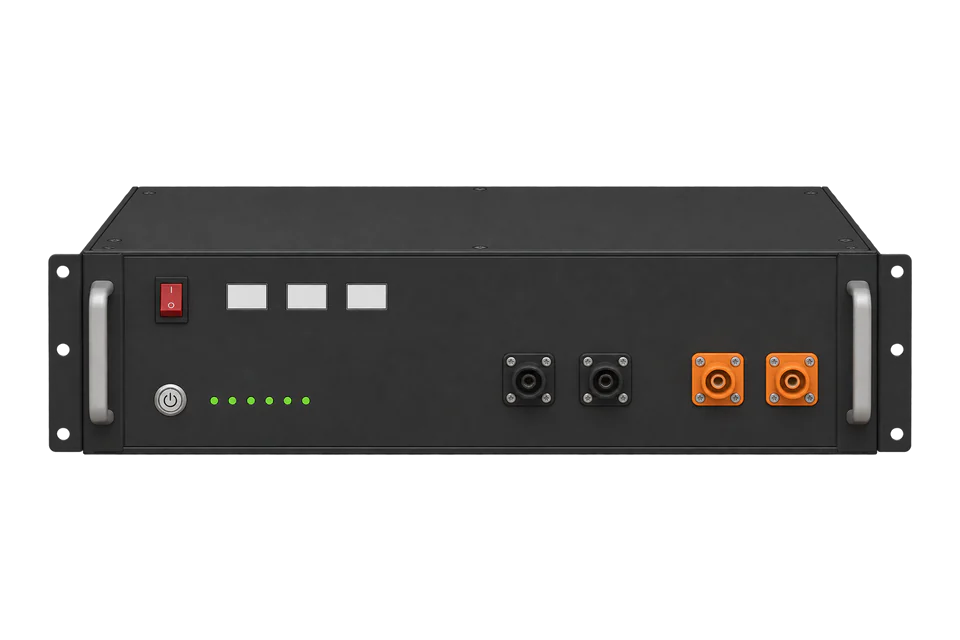
- LITE module: 7.5 kWh, 76.8 V, 75 kg, LFP1
- Usable energy per tower
- 30 / 37.5 / 45 / 52.5 / 60 / 67.5 / 75 / 82.5 / 90 kWh for 4 to 12 modules (100 % DoD, 0.2C at 25 °C)1
- Voltage
- 307 V nominal (259 to 355 V) for LITE 30 up to 921 V nominal (777 to 1065 V) for LITE 901
- Current
- 100 A maximum charge and discharge, 170 A for 3 s; reduced to 70 A and 93 A per cabinet in parallel1
- Environment
- IP55; -20 to +50 °C operating1
- Size and mass
- 2205 x 920 x 1300 mm (H/W/D); 700 kg (LITE 30) to 1300 kg (LITE 90)1
- Applications and certification
- On grid, on grid with backup, off grid, black start; CE, UN 38.3, IEC 62040, IEC 626191
- Deye serial port
- Deye V105: RS485 or RS232, 9600 bit/s, 8 data bits, no parity, 1 stop bit; only 03H and 10H function codes open5
Interface
Documented measurements and integration boundaries for Battery-Max Lite.
- Through the Deye inverter, FC03 at its Modbus SN address: battery 1 SOC 588 and battery 2 SOC 589 (1 %, range 0 to 100). A battery on BMS1 shows on the inverter display as LiBms1; read it as battery 1.
- Battery 1 voltage 587: V105 prints two resolutions, 0.01 V and 0.1 V. A Battery-Max Lite tower runs at 259 V or more, so a raw value that only makes sense at 0.1 V settles it, as the worked read shows.
- Battery 1 current 591 (S16, 0.01 A) and battery output power 590 (S16; V105 prints both 1 W and 10 W). Compare the sign and scale with the inverter display before using them.
- Values the inverter does not pass on, such as cell voltages, module temperatures and battery events, stay in BYD's Max Lite app, Max Lite Plus PC tool and Be Connect monitoring.
- V105 opens 0x10 writes to the 60 to 499 settings range. Leave them unwritten: battery and inverter control is outside this guide and needs the site owner's, BYD's and Deye's agreement.
Assessment
Battery-Max Lite with 4 to 9 modules on the Deye SUN-29.9K to 50K-SG01HP3-EU, BYD list V1.4 and Deye V105. Other inverters, Battery-Max LiteIn and all control are outside this scope.
- InteroperabilitySupported with conditions
- BYD approves the Deye combination and Deye publishes battery registers on the inverter's RS485 port. The battery's own interfaces face the inverter, so the inverter must stay in the path.25
- AccuracyLimited
- SOC has a clear 1 % unit. Voltage, current and power carry two printed resolutions in V105, so each needs a comparison with the display before use.5
- SecurityNot yet assessed
- The serial route has no network exposure, but the documents describe no access control for the inverter's Modbus port or the battery's Ethernet port.35
- ReliabilitySupported with conditions
- The inverter's serial settings and exception responses are defined, and BYD publishes parallel current derating and firmware advice.125
- RuggednessSupported with conditions
- The cabinet is IP55 and operates from -20 to +50 °C.1
Setup
Read Battery-Max Lite SOC and voltage through the Deye inverter
A read-only start from Deye's three-phase storage Modbus RTU protocol V105 (public copy, revision history to January 2025) for a Battery-Max Lite on BMS1. Frames use slave address 1 and include the CRC; the responses are synthetic decoder checks, not captures from a site.
- Serial settings and address
- RS485 at 9600 bit/s, 8 data bits, no parity, 1 stop bit. The slave address is the inverter's Modbus SN setting; these frames use 1.
- Function and address convention
- FC03: V105 makes 500 to 2000 read-only FC03 registers. Decimal register numbers are the wire addresses: 588 is sent as 0x024C, with no 40000 prefix and no offset.
- Battery 1 SOC
- Request 01 03 02 4C 00 01 44 65. Synthetic response 01 03 02 00 4B F8 73: U16 75, so 75 %.
- Battery 1 voltage
- Request 01 03 02 4B 00 01 F5 A4 reads 587. Synthetic response 01 03 02 17 FC B7 F5 is U16 6140. At 0.1 V that is 614.0 V, the nominal voltage of a LITE 60 tower; at 0.01 V it would be 61.40 V, below any Battery-Max Lite range, so use 0.1 V.
- Display comparison
- Compare SOC and voltage with the inverter's Li-BMS page at the same time. A SOC that never moves, or a voltage 10 times off, means the wrong register or resolution.
Acceptance: This reads the battery through the Deye inverter that manages it, using Deye's published map. It is not a direct Battery-Max Lite interface or a physical Edge test, and battery control stays with the inverter and BMS.
-
Check the approved combination
Use compatible inverter list V1.4: the Deye SUN-29.9K, 30K, 35K-SG01HP3-EU-BM3 and 40K, 50K-SG01HP3-EU-BM4 take 4 to 9 modules. Installing an incompatible inverter voids the battery warranty. Parallel towers need the same module count, up to ten.
-
Have the battery commissioned on the inverter
A qualified installer follows BYD Appendix 1, Option a or b, for the CAN link from the PDU to the Deye BMS1 port, and sets the inverter's lithium battery mode. Confirm SOC and voltage on the inverter's Li-BMS page before adding monitoring.
-
Wire Edge to the inverter's RS485 port
Use the RJ45 labelled RS485 on the inverter, not BMS1, BMS2, Meter or Parallel. Connect it to a ZMB-31 Modbus Interface or the Gateway's serial port at 9600 bit/s, 8N1. Keep one polling master on that bus.
-
Read SOC, then voltage
Set the slave address to the inverter's Modbus SN. Read FC03 588 for battery 1 SOC and 587 for battery 1 voltage, as the worked read shows. Compare both with the Li-BMS page at the same time.
-
Keep the boundaries
Inverter AC, PV, grid and battery values are different quantities. A timeout or exception is unavailable data, not an empty battery. Battery settings, firmware and diagnostics stay in BYD's tools.
Common questions
- The datasheet lists Modbus TCP. Can Edge read the battery directly?
- The manual places Modbus TCP among the PDU's inverter communication interfaces, beside RS485 and CAN; no public register map for third-party monitoring was found. Read the battery through the approved inverter that manages it.13
- Which Deye inverters are approved, and for how many modules?
- List V1.4 approves the SUN-29.9K, 30K and 35K-SG01HP3-EU-BM3 and the 40K and 50K-SG01HP3-EU-BM4 with 4 to 9 modules, and the SUN-60/70/75/80K-SG02HP3-EU-EM6 with 4 to 11.2
Related devices
More from BYD
Sources
- Battery-Max Lite datasheet V1.7, 2025-11-05 (opens in a new tab) (PDF)
- Battery-Max Lite Compatible Inverter List V1.4 (opens in a new tab) (PDF)
- BYD Commercial Storage Solution Battery-Max Lite Operating Manual, version 1.3 (opens in a new tab) (PDF)
- SUN-29.9/30/35/40/50K-SG01HP3-EU user manual (opens in a new tab) (PDF)
- Three-phase storage Modbus RTU V105, public copy with January 2025 revision history (opens in a new tab) (PDF)
Further reading
Product names and trademarks belong to their owners. Publication does not imply endorsement or a commercial relationship.