Selecting electricity meters for energy management
A practical reference for choosing electricity meters for an energy management project. It explains what an accuracy class does and does not promise, why system-level accuracy matters more than the meter alone, and gives a question-by-question checklist for comparing suppliers.
About this publication
Meter datasheets quote an accuracy class, but a class is usually a percentage of full scale, measured under reference conditions. The guide shows how the meter, its current transformers, their wiring and the load profile combine into the accuracy you actually get, and works an example: with a Class 1 meter and Class 1 CTs on a 300 A circuit, the reading can be out by up to 2.5% at full load and 9.4% at 80 A.
It then covers the planning questions that decide how many meters a project needs and whether the system can grow, followed by the questions to ask each supplier, with the answers to look for and the red flags to watch.
Written for facilities managers, energy managers and system integrators selecting or upgrading electricity metering.
Key takeaways
- Compare system-level accuracy (meter, CTs and wiring together), not the meter's class on its own.
- An accuracy class quoted against full scale gives a larger relative error at low load. Check performance across the load range you expect.
- IEC 62053-22 Class 0.5S is sufficient for most energy management work. Higher classes add cost without a proportional benefit.
- Choose CTs so the expected load sits within about 20 to 80% of their rating, and consider Rogowski coils for widely varying or very large currents.
- A common rule of thumb is one metering point for every €5,000 to €15,000 of annual electricity spend.
- Prefer interval kWh data, local logging with automatic backfill, encrypted communications and over-the-air updates.
Contents
- Summarypage 3
- Understanding electricity meter accuracypage 4
- Factors affecting meter accuracypage 5
- Energy management project planningpage 14
- Evaluating electricity meterspage 16
- Example: real-world accuracy calculationpage 28
- Advanced metering featurespage 30
- Checklist for evaluating electricity meterspage 32
- Key takeaways and further readingpage 36
Put this into practice
-
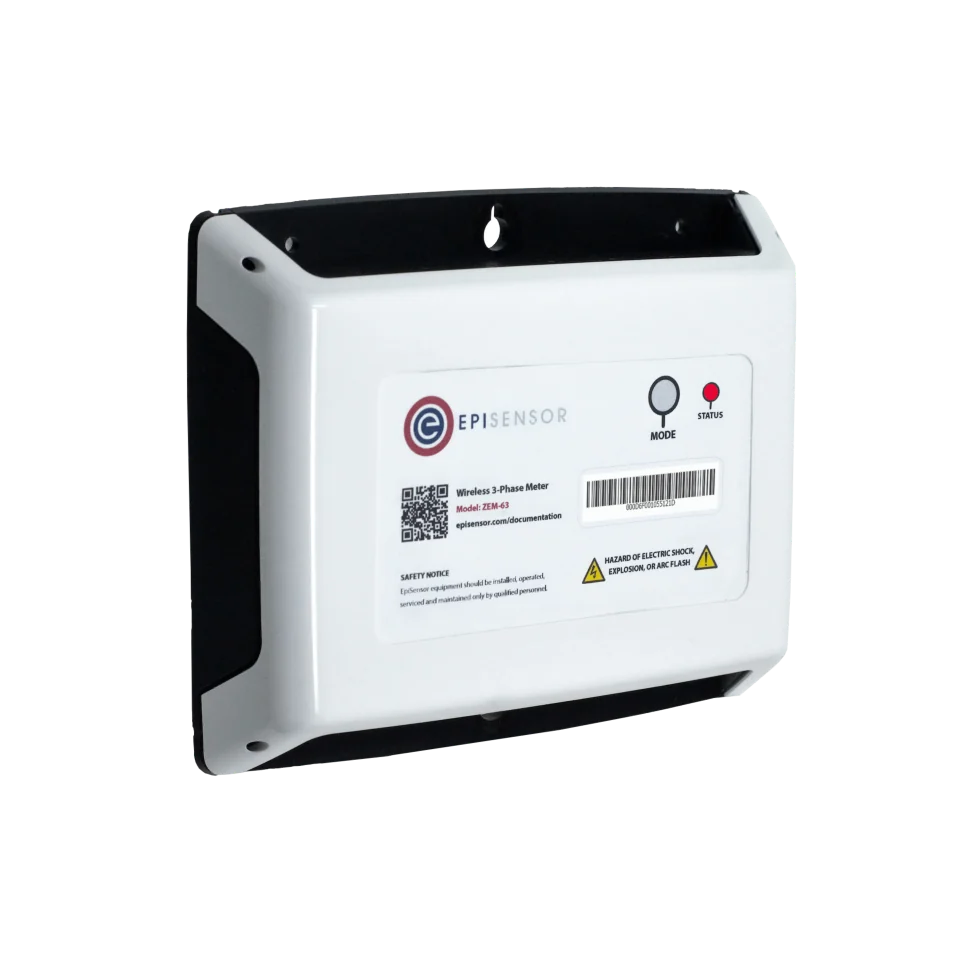 Product ZEM-65
Wireless 3-Phase Electricity Monitor
Three-phase metering to Class 0.5S, with the current sensors calibrated to the meter before it ships.
Product ZEM-65
Wireless 3-Phase Electricity Monitor
Three-phase metering to Class 0.5S, with the current sensors calibrated to the meter before it ships.
- Application guide Tenant submetering and cost allocation Meter each tenancy, the landlord supply and common services, and export a dated record that reconciles with the main meter.
-
 Case study
From a Cardiff pilot to a 40-mail-centre monitoring programme
A Cardiff pilot connected site measurements to the existing EnergyCAP platform, providing the basis for a 40-mail-centre rollout.
Case study
From a Cardiff pilot to a 40-mail-centre monitoring programme
A Cardiff pilot connected site measurements to the existing EnergyCAP platform, providing the basis for a 40-mail-centre rollout.