The hidden costs of traditional control and automation systems
A short guide to the costs that traditional wired control and automation systems add to an energy management project, and how a wireless IoT system avoids them. It compares the two on installation, current transformers, safety, security, data and support.

About this publication
The purchase price of a traditional metering and control system is rarely its full cost. Communications wiring, panel cutting, shutdowns, current transformers bought separately and calibrated on site, and specialist configuration all add time and money, and some add safety risk.
The guide sets these out criterion by criterion against a wireless system with pre-connected, factory-calibrated CTs, encrypted communications and remote updates, then summarises the effect on installation time, accuracy and the cost of extending a system to other utilities.
Written for facilities managers, electrical engineers and system integrators choosing a monitoring and control architecture.
Key takeaways
- Wired communications and panel work add labour, materials and downtime that a wireless system does not need.
- CTs supplied separately must be calibrated on site; factory-calibrated, pre-connected CTs remove that step and its safety risk.
- Unencrypted communications and systems that cannot be updated remotely leave a site exposed over its life.
- A system limited to electricity needs a second system for gas, water or heat; one wireless network can carry all of them.
- Proprietary protocols tie a site to one service contract; open protocols such as Modbus, BACnet, MQTT and HTTP keep options open.
Contents
- Accelerating energy efficiency in buildingspage 2
- Traditional systems compared with wireless IoTpage 3
- Impact on project implementationpage 5
- Security, data and supportpage 6
- Conclusionpage 8
Put this into practice
-
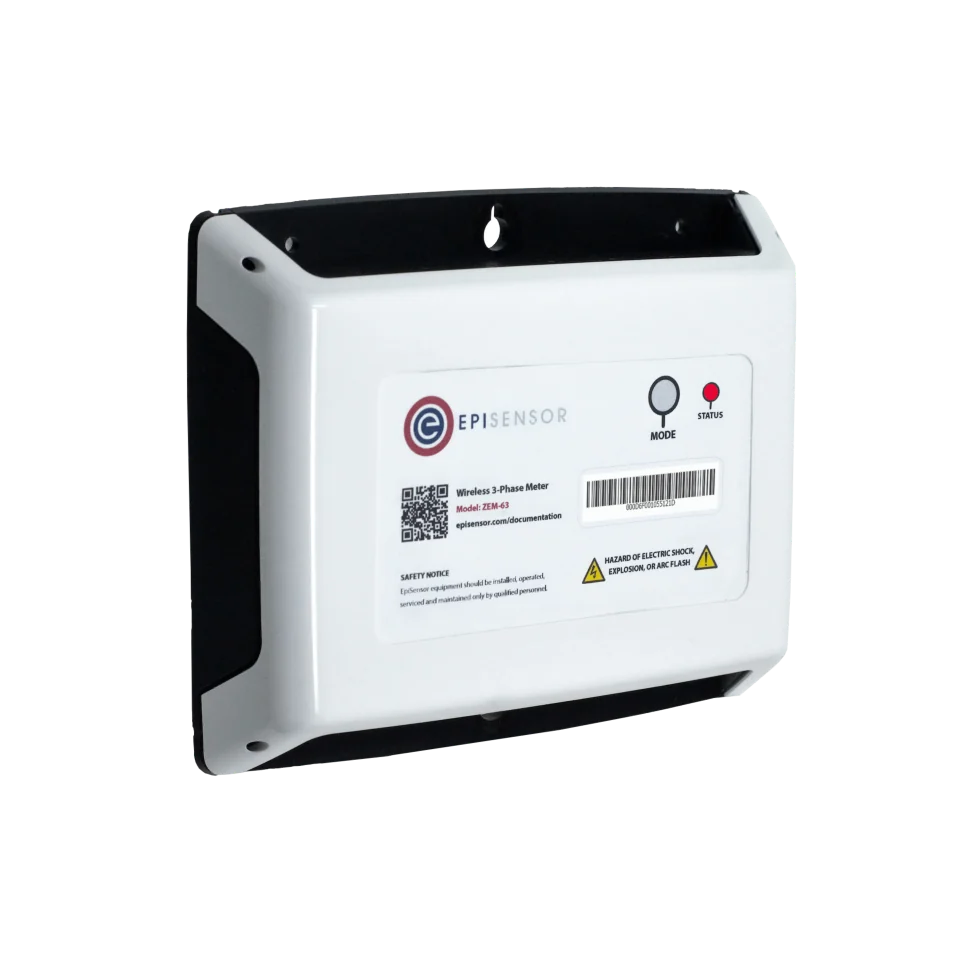 Product ZEM-65
Wireless 3-Phase Electricity Monitor
Three-phase metering to Class 0.5S, with the current sensors calibrated to the meter before it ships.
Product ZEM-65
Wireless 3-Phase Electricity Monitor
Three-phase metering to Class 0.5S, with the current sensors calibrated to the meter before it ships.
- Application guide Transformer and distribution board monitoring A meter at the incomer, meters on the feeders worth explaining, and a temperature probe where loading has to be read against heat.
-
 Case study
Metering that paid for itself in 10 weeks at a manufacturing site
Circuit-level measurements helped CoolPlanet find boiler trips and out-of-hours loads, then target changes to plant operation.
Case study
Metering that paid for itself in 10 weeks at a manufacturing site
Circuit-level measurements helped CoolPlanet find boiler trips and out-of-hours loads, then target changes to plant operation.