An IP code rates an enclosure against solids and water under the tests in IEC 60529. The first numeral, 0 to 6, covers solid objects and dust. The second, 0 to 9, covers water. IP67 is dust-tight (6) and survives temporary immersion (7).
An X replaces a numeral that was not tested. IPX4 passed the splash test and says nothing about dust. Read an X as no rating, not as a pass.
First numeral: solids and dust
IP 0 to 6
1 to 4 are graded by the smallest object kept out: 50 mm (the back of a hand), 12.5 mm (a finger), 2.5 mm (a tool) and 1 mm (a wire). 5 is dust-protected: some dust can enter, but not enough to stop the equipment working. 6 is dust-tight.
Second numeral: water
IP 0 to 9
1 to 4 cover dripping, spraying and splashing water. 5 is a jet from a 6.3 mm nozzle at 12.5 l/min, and 6 is a jet from a 12.5 mm nozzle at 100 l/min, both from 2.5 to 3 m for at least 3 minutes. 7 is 30 minutes under water, with the lowest point 1 m down or the top 0.15 m down, whichever is deeper. 8 is continuous immersion under conditions the manufacturer states, which must be more severe than 7. 9, added in 2013, is 80 °C water at 8 to 10 MPa from 0.10 to 0.15 m.
Optional letters
IP 2 0 B, IP 6 8 M
An additional letter A to D after the numerals says what cannot reach hazardous parts: the back of a hand, a finger, a tool or a wire. A supplementary letter adds H for high-voltage apparatus, M or S for water tests with moving parts in motion or stationary, and W for specified weather conditions.
Water ratings up to 6 include the ones below. An IP66 enclosure also meets IPX5 and IPX4. Ratings 7, 8 and 9 include nothing below them. Still water 1 m deep presses on a seal at about 10 kPa. The IPX6 jet leaves its nozzle at about 14 m/s and can strike from below, straight into a lid joint. A box can pass one test and fail the other. A product that passes both carries both codes, such as IP66/IP67.
The test is done on a new enclosure at room temperature. It does not cover breathing. Air sealed in a box that cools from 20 °C to −20 °C falls to about 86% of its starting pressure, a pull of about 14 kPa. That is more than the 1 m head of the IPX7 test. Each cycle draws damp air in past the weakest gland seal, and the water condenses inside with no way out. Outdoors and in cold stores, put cable entries on the underside, give each cable a drip loop, and fit a pressure-equalising membrane vent where the enclosure takes one.
IP rating examples
IP67: a sensor in a meter pit
A sensor or junction box in a meter pit can sit in standing water after heavy rain. IP67 covers that case: dust-tight, immersion to 1 m, for 30 minutes in the test. It has no jet rating. If the pit is also hosed out, specify IP66/IP67.
A panel beside a production line that is hosed down each shift needs a jet rating, not an immersion rating. IP65 is dust-tight, water jets: it passed the 6.3 mm nozzle at 12.5 l/min. A pressure washer at 100 bar (10 MPa) is the IPX9 test, not the IPX5 test. Where the line is cleaned with hot water at high pressure, specify IPX9.
The two water numerals were tested separately, so the code reads as water jets, immersion to 1 m. Without the IPX5 half, the IPX7 half would say nothing about jets. The X means dust was not tested. For a device on a dusty plant floor, ask the manufacturer for a first numeral.
Both are dust-tight. IP67 is a fixed test: 1 m for 30 minutes. IP68 has no fixed depth or time. The manufacturer states them, and they must be more severe than IP67. An IP68 claim without a depth and a time tells you little, so read both from the datasheet.
Is IP67 better than IP65?
For immersion, yes. For water jets, not necessarily: IP65 was tested with jets and IP67 was not, unless the product carries both codes. Choose by the water the enclosure will actually meet.
Is an IP rating the same as a NEMA rating?
No. NEMA 250 enclosure types, used in North America, also cover corrosion, ice and oil. A NEMA type can be matched to a minimum IP code. An IP code cannot be converted to a NEMA type, because the IP tests leave those hazards out.
What does IP69K mean?
The K comes from DIN 40050-9, now ISO 20653, a road-vehicle standard. It is not part of IEC 60529. It is a wash-down test with hot water at high pressure, common in food processing. In 2013 IEC 60529 added its own numeral 9 for a similar test: 80 °C water at 8 to 10 MPa and 14 to 16 l/min, from 0.10 to 0.15 m.
How do I keep the rating after installation?
The rating holds only with the parts it was tested with. Fit glands rated at least as high as the enclosure, put a sealed plug in every unused entry, and close the covers fully. Choose each gland by the measured sheath diameter of its cable. A 6.5 mm cable fits an M20 gland that clamps 6 to 13 mm, but at the bottom of the range, where the seal grips least. An M16 gland that clamps 4 to 10 mm holds the same cable near the middle of its range. Put one round cable in each single-hole gland. A flat or twin cable leaves a gap that a round seal cannot close.
Limits of this result
An IP code covers the tests in IEC 60529 only. It says nothing about UV, corrosion, impact, temperature or chemicals.
The 8 rating and its depth and duration are agreed between the manufacturer and the user; read the datasheet for the actual conditions.
A rating applies to the enclosure as tested, with its glands, seals and covers fitted. Unused or wrong glands void it.
Measure it continuously
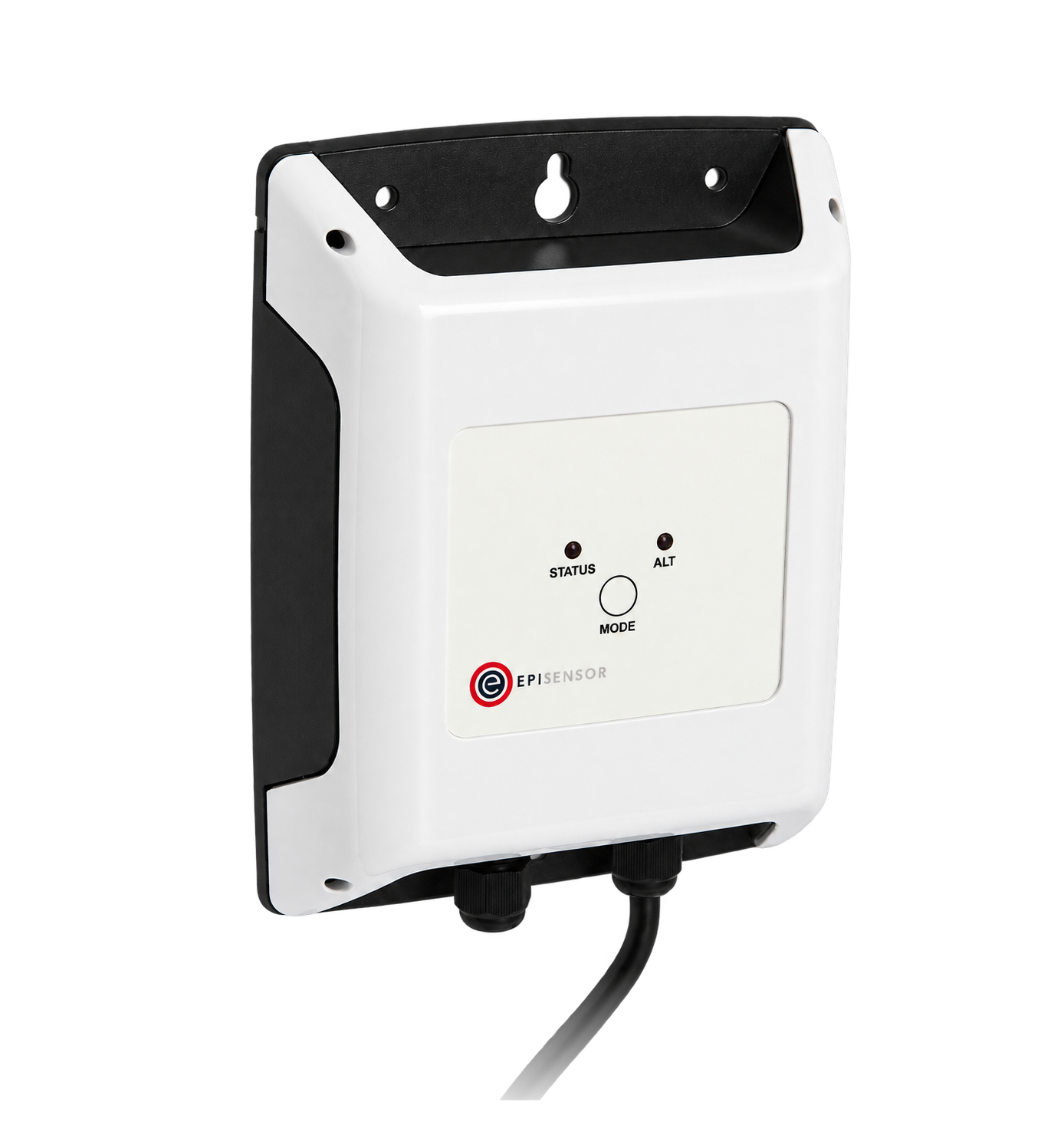
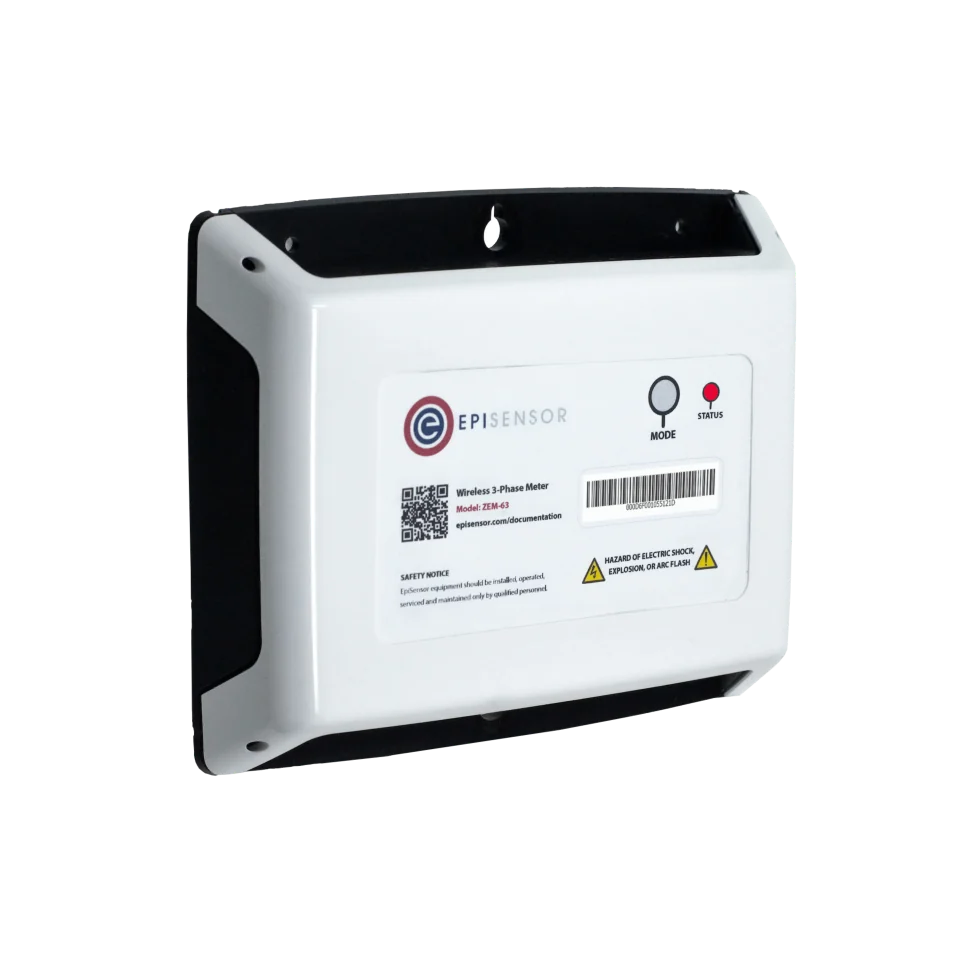
The ZEM energy monitor and the TES temperature sensor both have IP67 enclosures. The ZEM is double insulated and rated from −30 °C to 60 °C, so it can mount outside a panel. The TES operates from −30 °C to 55 °C, and its probes are IP68, so a probe can stay wet through the defrost cycles of a cold store.