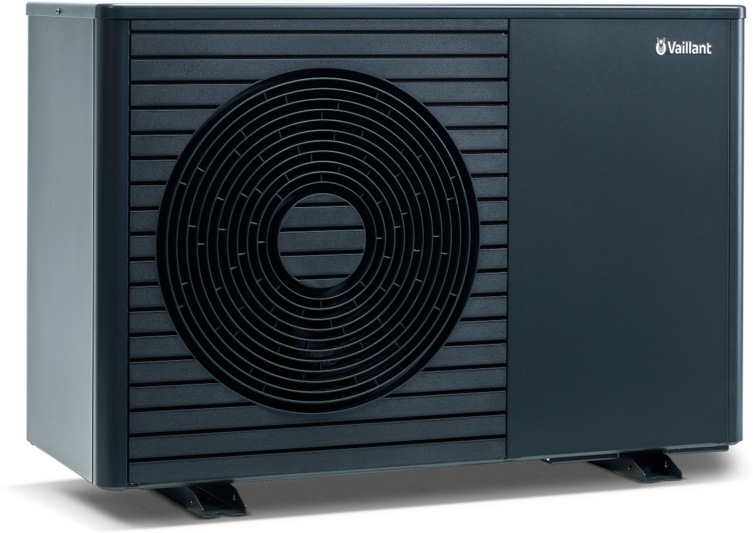
Vaillant aroTHERM plus VWL 75/8.1 A
Residential air-to-water heat pump
Monitor this aroTHERM plus system with independent heat and electricity meters, and use Vaillant’s documented myVAILLANT/EEBUS setup for compatible energy-management partners. The system regulator and internet module define the available integration. This guide gives the pairing steps, partner onboarding and a practical measurement boundary for the exact VWL 75/8.1 A 230V model.
Compatibility
Compatible with EpiSensor Edge through an EpiSensor ZEM on its supply
Vaillant documents local EEBUS pairing and a partner Cloud API through compatible VRC 700(f)/720(f) regulators and VR 920/921/940(f) internet modules, and its outdoor A/B link belongs to the indoor unit. Edge measures the heat pump through an EpiSensor ZEM with a CT on its 230 V supply; a heat meter on the delivered-heat boundary completes the COP.
Identify the installed indoor unit, regulator and internet module. Site check: put the ZEM CT on the circuit that feeds only the heat pump, and add the auxiliary-heater and circulation-pump feeds inside the COP boundary. Preserve the internal outdoor/indoor A/B link. Use the OEM app procedure below for EEBUS or Cloud API partners, and keep control changes within the commissioned heating design.
Connect it with
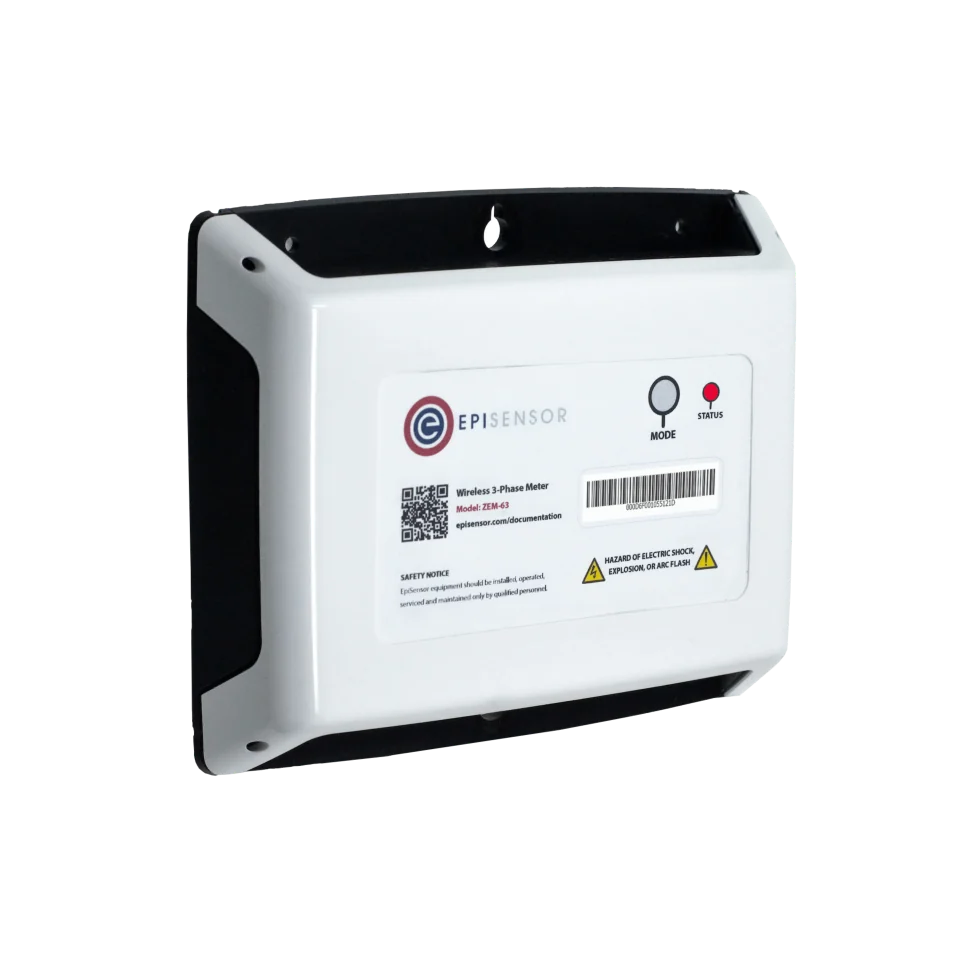
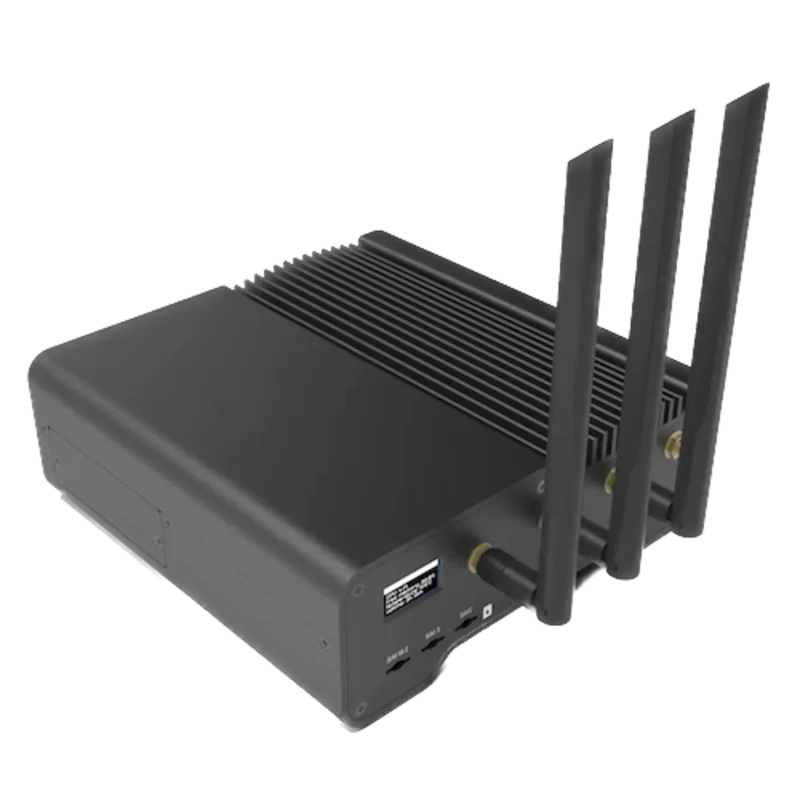
For the electrical input of the outdoor unit and its auxiliary loads, on any VWL 75/8.1 A installation
- Wired
- Edge
- Platforms
Models
| Models | Interface | Route into Edge |
|---|---|---|
| VWL 75/8.1 A 230V, article 8000033711 | R290 monobloc outdoor unit for AT, CH and DE; 230 V compressor supply | The outdoor A/B cable goes to the Vaillant indoor unit; Edge measures the unit’s supply with an EpiSensor ZEM instead. |
| VIH QW 190/7, VWZ MEH 97/7 or VWZ AI /7 230V | The March manual's permitted indoor partners for the /8.1 outdoor family | Identify the installed indoor controller and its system regulator; the VWZ AI /7 belongs to the Vaillant heating system, not a generic Modbus gateway. |
| sensoCOMFORT 720 and myVAILLANT connect VR 940f | One documented VWL 75/8.1 A site uses this regulator and internet module | The phone-app and EEBUS paths serve Vaillant’s energy-management partners; Edge measures the supply with an EpiSensor ZEM. |
| VWL 75/6 A, VWL 75/8.2 AS, VWL 105/8.1 A and aroTHERM perform | Different generations, split/outdoor constructions, rating or electronics | Use the OEM EEBUS pairing or approved partner Cloud API onboarding below; record each available function and keep independent metering for the site performance boundary. |
Specifications
The exact outdoor unit is a 230 V R290 monobloc in Vaillant's 35/55/75/8.1 manual, article 8000033711 for AT, CH and DE. The manual calls it a domestic outdoor heat-pump unit and requires a permitted indoor partner. It is not a stand-alone commercial BMS controller.2
- Exact article and markets
- VWL 75/8.1 A 230V, 8000033711; Austria, Switzerland, Germany2
- A−7/W35 performance
- 6.94 kW heating output / 2.36 kW electrical input; COP 2.94 at the stated test point3
- Refrigerant
- R290, 0.9 kg in the VWL 75/8.1 product table3
- Outdoor to indoor communication
- Two-wire A/B link marked Modbus in the appliance diagram, 50 m maximum; internal Vaillant system connection2
- System regulator link
- eBUS from the indoor unit to a Vaillant system regulator in the manual's typical arrangement2
- Dimensions and mass
- 965 × 1100 × 450 mm (H × W × D), 130 kg3
- Sound power
- 57.4 dB(A) day / 46.2 dB(A) night in the July product table; siting rules still apply3
Interface
Documented measurements and integration boundaries for aroTHERM plus VWL 75/8.1 A.
- The current installation manual's validity table binds VWL 75/8.1 A 230V to article 8000033711 in Austria, Switzerland and Germany. Check that article number rather than the broad aroTHERM plus name, which also covers 400 V and S3 variants.
- The outdoor A/B link connects directly to the Vaillant indoor unit with A-to-A/B-to-B polarity and a 50 m limit. Use the regulator and internet module for system-level integration; preserve this internal appliance cable.
- The March manual permits the outdoor unit with specified VIH QW 190/7, VWZ MEH 97/7 or VWZ AI /7 230V indoor arrangements. It names the indoor regulator and system regulator separately. Confirm the actual hydraulic and controller topology before selecting any external interface.
- Vaillant's July product sheet states 6.94 kW heat output and 2.36 kW electrical input at A−7/W35 for this model (COP 2.94). These are test-point values, not a guaranteed whole-building load or measured seasonal performance. Meter electrical input and delivered heat separately if a site performance claim matters.
- Vaillant documents two system-level integration routes: local EEBUS and its partner Cloud API. Its prerequisites name VRC 700(f)/720(f) and VR 920/921/940(f), commissioned through myVAILLANT. The exact-model case study uses sensoCOMFORT 720 with VR 940f. Pairing and available functions are set by the selected energy-management partner.
- For EEBUS, enable the app’s Network settings > EEBUS, start pairing in the partner system, select that partner and establish trust. Then enable Energy management in the app if the chosen partner requires it. Vaillant currently excludes heat-pump cascades from the energy-management function.
- The partner Cloud API process starts in the partner app with the internet-module serial number. The myVAILLANT account holder receives an email link and approves the connection in the web portal. Use a supported partner rather than assuming the consumer account provides a public API token.
- Vaillant’s EnergiePLUS FAQ allows one energy-management system at a time and excludes a simultaneous connection to another system such as EEBUS. Record the current optimisation owner before pairing a new partner.
Assessment
VWL 75/8.1 A 230V article 8000033711 for AT, CH and DE; Edge measures the supply through an EpiSensor ZEM. Record the installed indoor controller and gateway.
- InteroperabilityLimited
- Vaillant documents local EEBUS pairing and partner Cloud API onboarding through compatible regulator/internet modules. Exposed functions depend on the partner.24
- AccuracyNot yet assessed
- Vaillant publishes no external point map for heat, electrical, state and fault values; a ZEM measures the electrical input and a heat meter the delivered heat.2
- SecuritySupported with conditions
- The OEM EEBUS process establishes trust between partners, and Cloud API onboarding requires account-holder consent via email/web portal.4
- ReliabilityNot yet assessed
- External data freshness, reconnect and fail-safe behaviour need the approved interface and gateway version.2
- RuggednessSupported with conditions
- The current installation manual defines outdoor R290 placement, protection and qualified electrical/hydraulic installation; siting and frost safeguards are design conditions.2
Setup
-
Identify the installed system
Record outdoor article 8000033711 and the indoor unit. Identify the regulator and internet module; Vaillant’s interface guide names VRC 700(f)/720(f) with VR 920/921/940(f). Check that myVAILLANT has been commissioned and the system is online.
-
Define what to measure
Choose heat output, electricity, flow/return temperatures and operating-state observations. Meter all included compressor, auxiliary-heater and circulation-pump inputs, and use a heat meter across the declared delivered-heat boundary. Record interval and units with each source.
-
Pair a local EEBUS partner
Open Network settings > EEBUS in myVAILLANT and enable it. Start the connection in the supported partner’s solution, select that partner in myVAILLANT and establish trust. Open Energy management in the app and enable it where required. Record the data and functions that become available.
-
Or connect an approved cloud partner
Start in the energy-management partner’s app and enter the internet-module serial number. Use the same account email as myVAILLANT, open the emailed web-portal link and approve the connection. Check spam and the serial number if the email does not arrive.
-
Check optimisation ownership
Check whether EnergiePLUS or another energy manager is active. Vaillant allows only one energy-management system at a time. Its current interface guidance also excludes cascade energy management and requires a suitable hot-water or heating buffer for thermal-storage functions.
-
Compare readings and preserve controls
Compare partner values with the local controller and meter displays over matching intervals. Save timestamps and distinguish measured meter totals from controller estimates. Preserve the internal A/B connection and commissioned frost, DHW and comfort settings while establishing monitoring.
Common questions
- Does the outdoor unit have a Modbus port for a BMS?
- The installation drawing labels the outdoor A/B link Modbus, but section 7.8 connects it directly to the Vaillant indoor unit and limits the cable to 50 m. The retained manual provides no third-party register list or permission to share that appliance link.2
- Is VWZ AI /7 a Modbus gateway?
- The manual lists VWZ AI /7 230V as a permitted indoor control arrangement and shows eBUS between the indoor unit and system regulator. It describes no generic BMS Modbus service on VWZ AI.2
- Can a utility signal safely turn off the heat pump for flexibility?
- The manual discusses EVU blocking and indoor-unit S21 as installation choices, but does not grant third-party control authority. The heating-system owner must approve frost, hot-water, comfort and restart behaviour before any site-specific response design.2
- Can EnergiePLUS and another energy manager operate together?
- Vaillant’s current FAQ permits one energy-management system at a time and excludes a simultaneous connection to another manager, including EEBUS. Check the existing optimisation owner before changing the partner connection.6
Sources
- aroTHERM plus /8.1 German product page and VWL 75/8.1 A variant (opens in a new tab)
- aroTHERM plus VWL 35/55/75/8.1 A installation and maintenance manual 8000041775_03, 27 March 2026 (opens in a new tab) (PDF)
- aroTHERM plus /8.1 product information, July 2026 (opens in a new tab) (PDF)
- Vaillant smart heat-pump interfaces and EEBUS overview (opens in a new tab)
- Vaillant VWL 75/8.1 A installed system with VWZ MEH 97/7, sensoCOMFORT 720 and myVAILLANT connect (opens in a new tab)
- EnergiePLUS prerequisites and energy-management coexistence FAQ (opens in a new tab)
Further reading
Product names and trademarks belong to their owners. Publication does not imply endorsement or a commercial relationship.