
AlphaESS
Residential and commercial battery storage systems
Tesla Energy is Tesla's energy generation and storage business. It makes Megapack and Megablock batteries for utilities and large sites, Powerwall for homes and small businesses, and solar panels and Solar Roof, run by its Autobidder and Powerhub software.
Tesla launched Tesla Energy on 30 April 2015 at its Hawthorne design studio, presenting the first Powerwall home battery (7 and 10 kWh) and the Powerpack, a 100 kWh building block for commercial and utility storage scalable to multi-gigawatt-hour systems. Fortune reported that the batteries were priced for installers at $3,000 and $3,500 and $250 per kWh respectively, and that early partners included Amazon, Target, AES and Southern California Edison.
The business grew from a battery line into Tesla's second segment. Tesla bought the solar installer SolarCity in November 2016 (SiliconANGLE), adding residential solar, and the utility product moved from Powerpack to the larger Megapack. In its 2025 annual report Tesla reports energy generation and storage as a separate segment: revenue of $12.8 billion in 2025, up 27%, with a gross margin of 29.8%, and 46.7 GWh of storage deployed.
What sets Tesla Energy apart is vertical integration and volume. It designs the inverter, thermal system and controls, builds the enclosures in its own Megafactories, and runs the fleet through its own market and monitoring software.
Tesla's annual report groups the segment into storage products, generation products and software.
Megapack is the storage product for commercial, industrial, utility and generation customers, grouped into installations of a gigawatt-hour or more. The Megapack 2 XL operates below 1,230 V DC with a 480 V AC connection and weighs up to 38,100 kg. In September 2025 Tesla introduced Megapack 3, about 5 MWh per unit against 3.9 MWh for the Megapack 2 XL, with a silicon carbide inverter, a simplified thermal bay and about 39 tonnes per unit, and Megablock, four Megapack 3 units pre-engineered with a transformer and switchgear into a 20 MWh AC medium-voltage block. Tesla claims 23% faster installation, up to 40% lower construction cost and up to 1 GWh deployed in 20 business days.
Powerwall stores energy for homes and small commercial sites. Tesla sells and leases it directly and through channel partners, and Powerhub aggregates Powerwalls into virtual power plants.
Tesla designs and makes solar panels and Solar Roof glass tiles, uses its own solar inverter, and began delivering a new residential retrofit solar panel in January 2026.
Megapack is sold per project; Powerwall and solar are sold per installation.
Real-time energy control and optimisation platform that dispatches Megapack batteries in energy markets.1
Tesla builds its storage as integrated products: the battery modules, power conversion, thermal management, fire protection and controls ship in one factory-built enclosure, and every product can be improved by firmware updates. Megapack 3 carries Tesla's own silicon carbide inverter, and Megablock adds a flexible busbar that removes above-ground cabling between the Megapacks and the transformer. Tesla rates Megablock at 91% round-trip efficiency at medium voltage including auxiliary loads, a 25-year operating life, more than 10,000 cycles and -40 to 60 °C ambient (ESS News).
Software is the operating layer. The annual report names Autobidder, a real-time energy control and optimisation platform for Megapack batteries, and Powerhub, for distributed energy resources including Powerwall virtual power plants. Tesla's Powerhub support article describes monitoring of site meters and individual battery blocks, historical trends, custom reports and data export, a project API and telemetry integration into third-party distributed energy resource management systems.
The public documentation stops at that software boundary: it does not publish a local register map for Megapack, so site telemetry is arranged through Powerhub, the API or the project's agreed interface. The emergency response guide (revision 2.8) identifies each product family by part number and gives voltage, mass and isolation information for first responders.
Tesla names few storage customers in its filings, but some of its projects are public. The best known is the Hornsdale Power Reserve in South Australia, owned by Neoen and co-located with the Hornsdale Wind Farm. Tesla built it in 2017 at 100 MW / 129 MWh, and a 2020 expansion brought it to 150 MW and about 194 MWh, according to the Open Electricity facility record.
The 2015 launch named Amazon, Target, AES, Southern California Edison, SolarEdge and Advanced Grid Solutions among early partners and customers (Fortune).
On the residential side, Powerwall owners are the base for Tesla's virtual power plants, in which Powerhub coordinates many home batteries to serve a utility or grid operator. Tesla's annual report attributes the 2025 revenue growth to higher Megapack and Powerwall deployments, partly offset by lower Megapack average selling prices, and expects AI-driven load growth to increase demand for batteries that raise the use of existing generation and transmission capacity.
Tesla Energy sells worldwide, with utility-scale Megapack projects the main source of volume. Deployments vary from quarter to quarter with project milestones and logistics: Tesla deployed 46.7 GWh in 2025 and 36.0 GWh in the first nine months of 2026, according to its third-quarter 2026 report.
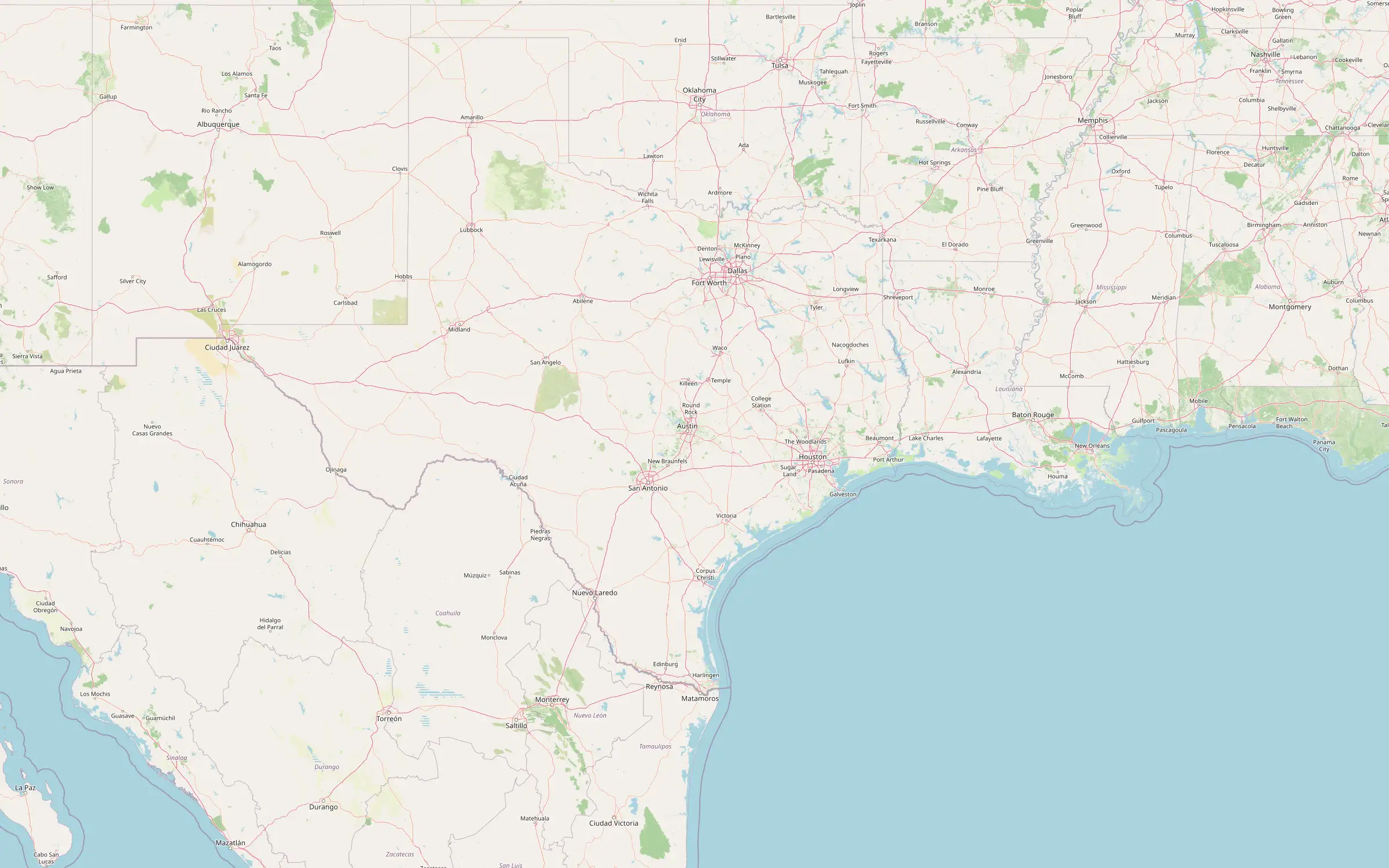
Manufacturing has followed demand into three regions. Megapack is built at Megafactory Lathrop in California and Megafactory Shanghai, which ramped up in 2025, and a third Megafactory near Houston, Texas began production in the third quarter of 2026. ESS News reported that the Houston plant is planned for 50 GWh a year and will make Megapack 3, with deliveries of the new products from the second half of 2026.
Customers fall into utilities and independent power producers building stand-alone or co-located storage, commercial and industrial sites, data-centre and other large loads, and households buying Powerwall with or without solar. Powerwall and solar are sold directly by Tesla and through certified installers and channel partners; Megapack is sold as projects.
Tesla Energy is not a separate company. It is the energy generation and storage segment of Tesla, Inc., which was incorporated in Delaware on 1 July 2003, converted to a Texas corporation on 13 June 2024 and has its principal executive offices at 1 Tesla Road, Austin, Texas (Form 10-K). Tesla's shares trade on the Nasdaq Global Select Market, and the segment's results are reported in its annual and quarterly filings rather than separately.
The segment's main milestones are the April 2015 launch of Powerwall and Powerpack, the November 2016 acquisition of SolarCity, the move from Powerpack to Megapack, the Megafactories in Lathrop and Shanghai, and the September 2025 introduction of Megapack 3 and Megablock, followed by Houston production in 2026.
In 2025 the segment earned $12.8 billion of revenue ($12,270 million of sales and $501 million of leasing) and $3.8 billion of gross profit, against $10.1 billion of revenue in 2024. Tesla does not publish a separate headcount or management team for the energy business.
Residential and commercial battery storage systems

Residential, commercial and utility battery energy-storage systems

Battery cells and stationary energy-storage systems

Home, commercial and industrial battery storage with its own energy management
Commercial and industrial battery storage with energy management

Owner and operator of grid-scale batteries and electric fleet infrastructure
This profile does not imply a commercial relationship with Tesla Energy and may contain inaccuracies.