Hidden costs of traditional control and automation systems
In the world of industrial IoT, energy management IoT infrastructure is crucial to the future of our energy ecosystem, grid stability, and energy efficiency in the built environment. However, the choice between traditional control and automation systems and advanced wireless IoT solutions (like EpiSensor) can significantly impact your energy programme’s cost, complexity, and effectiveness.
This article sets out the costs that traditional industrial energy monitoring systems carry, and a checklist for comparing options.
| Attribute | Traditional control and automation systems | EpiSensor wireless IoT |
|---|---|---|
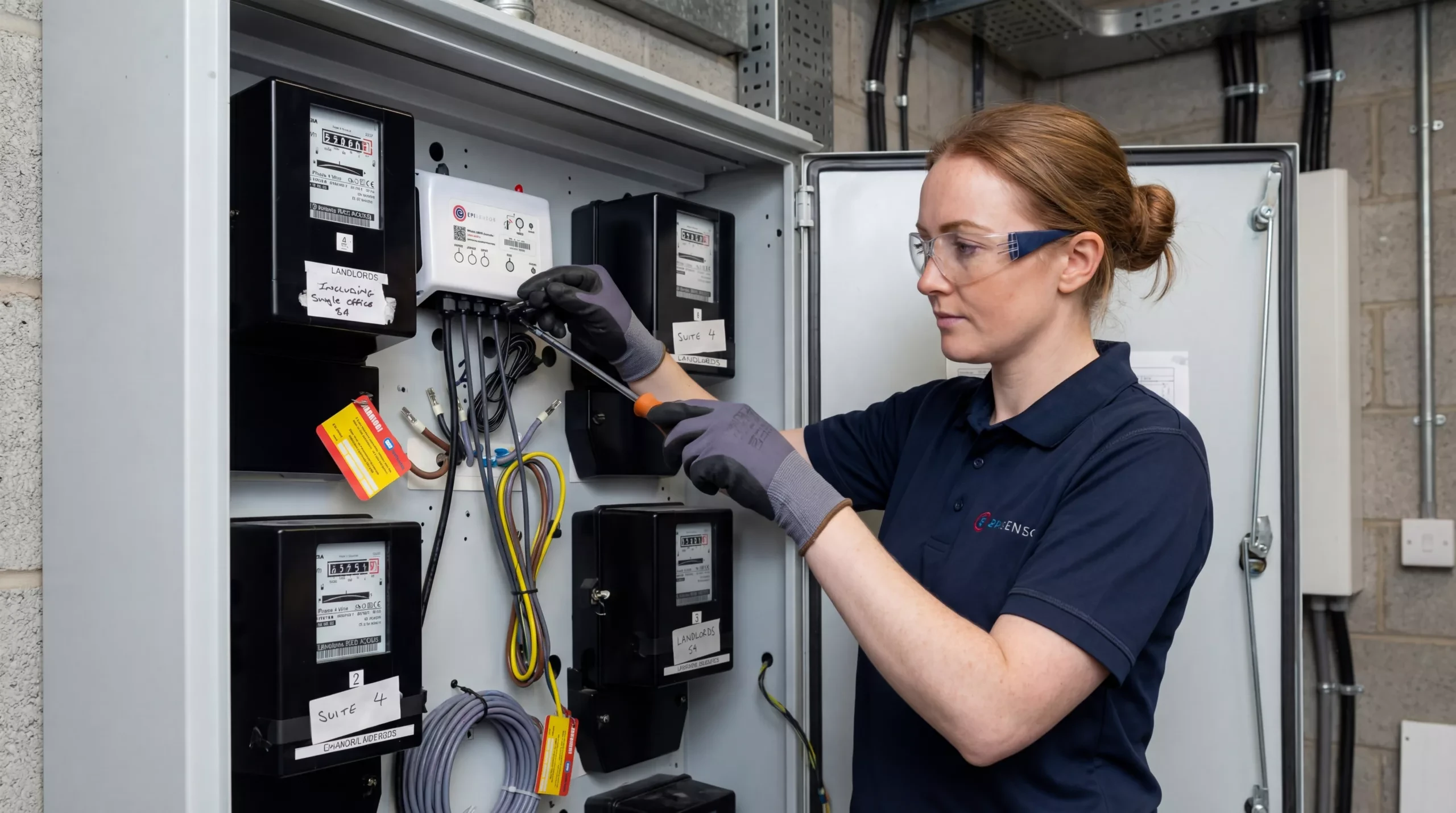
| Complexity | High. Specialist expertise is needed to configure the meters. | Low. Plug and play, electrical installation only. |
| Disruption | High, given the communications wiring and the equipment shutdowns it needs. | Low. Wireless communications, with split-core CTs and Rogowski coils included. |
| Installation | High cost. Communications have to be wired and panels cut to fit the meters; enclosures and accessories usually cost extra. | Low cost. No communications wiring, enclosures are water and dust proof and double-insulated as standard, designed for retrofit, all accessories included. |
| Current transformers | Additional cost. Not included by default, and they need calibration to reach high system-level accuracy. | Included. CTs are pre-installed and pre-calibrated to Class 0.5S system-level accuracy. |
| Safety | Connecting traditional CTs can pose a safety risk. | Protected, pre-connected CTs out of the box, and no communications wiring into high-voltage environments. |
| Security | Plain, unencrypted data on the data wiring, and difficult or impossible to update remotely. | Fully encrypted, with over-the-air software updates as standard. |
| Data | Limited, often only kWh, with licence fees charged per tag. | Up to 50 electrical parameters, with no per-tag licensing. |
| Reliability | Often no local logging if the master goes offline. | Years of non-volatile, time-stamped logging at each meter and sensor. |
| Extensibility | Electricity monitoring only. | The same wireless system monitors gas, water, oil, temperature, steam and heat, unified by the Gateway's Edge environment and its app store. |
| Interoperability | Often proprietary standards designed to lock in service contracts, with no web-native communications. | Modbus, OPC and BACnet alongside MQTT and HTTP, with open data formats. |
| Support | Local, onsite. | Global remote support and system upgrades. |
Overall, during the procurement stage, we recommend you challenge the complexity, installation process, comprehensiveness, accuracy level, and security of the system you are considering as it will inevitably add substantial costs if the system you choose is not aligned with the timeframe and specifications of your energy management programme.
Where the money actually goes
Traditional industrial energy monitoring systems do not lack performance. What they carry is a complex installation process, separate current transformers to buy and calibrate, and limited remote management, and those absorb programme margin before any data arrives. A wireless system with the transformers already connected moves that cost out of the installation and into the bill of materials, where it can be seen in advance.